
Reviewed · BELéM DISTRICT TOURS
Age of Discoveries Walking Tour in Belém
Belém can feel like one big open-air textbook. This walking tour strings together major discovery-era landmarks with a very real food break at Pastéis de Belém, so you learn while you taste. I especially like how the guide connects what you see in squares, monuments, and gardens to how Portugal built its overseas trade and power.
You’ll also get a practical, budget-friendly setup for first-timers: English live guide, a mobile ticket, and a route that ends right by Belém Tower. The one thing to think about first is that you do not go inside every big site. You’ll visit the Jerónimos Monastery church but not the full monastery, and you won’t go inside Padrão dos Descobrimentos or Torre de Belém.
In This Review
- Key takeaways before you lace up your shoes
- Price and logistics: what $3.62 buys you
- Starting at Praça Afonso de Albuquerque: your quick orientation point
- Sala Thai and the hidden connections in trade
- Pastéis de Belém: the tastiest reason to show up hungry
- Chão Salgado and Padrao Memoria: power with a darker edge
- Jerónimos Monastery: church visit and the sea in the details
- Praça do Império gardens: a 1940 “world exhibition” moment
- Rosa dos Ventos: navigation made visible
- Monument to the Discoveries (Padrão dos Descobrimentos) from the outside
- Belém Lighthouse and the riverfront mood
- Torre de Belém gardens: a calm frame for a major finale
- Tower of Belém: UNESCO architecture and why you might return
- When this tour is a smart fit
- The one real tradeoff to plan around
- Should you book this Belém walking tour?
- FAQ
- How long is the Age of Discoveries Walking Tour in Belém?
- Where does the tour start?
- Where does the tour end?
- What language is the tour offered in?
- How much does it cost?
- Is there admission cost for the stops?
- Will we go inside Jerónimos Monastery?
- Will we go inside Padrão dos Descobrimentos and Torre de Belém?
- Can I cancel and get a refund?
- What happens if the weather is bad?
Key takeaways before you lace up your shoes
- A 2.5-hour Belém loop with clear start and finish from Praça Afonso de Albuquerque to the area next to Belém Tower
- Pastéis de Belém stop on the route to try the classic custard tart from the original bakery
- You see Portugal’s “where did we go?” story through monuments and map-like tributes to navigation
- Free admission is part of the listed stops so you mainly pay for the guide
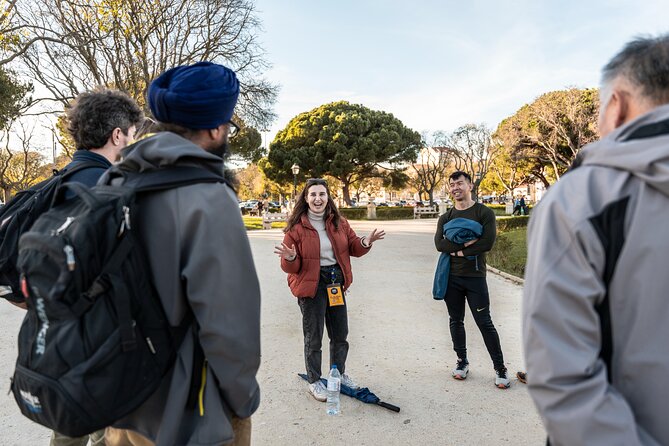
- Small group size, max 25 which usually makes it easier to hear and move
- Season and weather matter since the tour requires good weather
More time around Belem and its tower:
- Private Lisbon Sightseeing Tuk-Tuk Tour: Alfama, Belém & More★ 5.0 · 4,277 reviews
- Lisbon: Bike Tour from Lisbon to Belém + Liquor & Pastry★ 4.7 · 688 reviews
- Bike Tours Lisbon – Center of Lisbon to Belém★ 5.0 · 686 reviews
- Lisbon: Belém Walking Tour with Jerónimos Monastery Ticket★ 4.9 · 637 reviews
Price and logistics: what $3.62 buys you
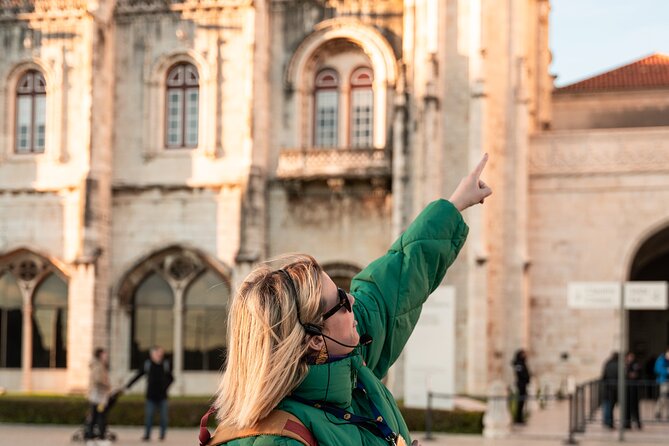
This experience is priced at $3.62 per person, and it’s designed like a low-cost guided walk rather than a packaged premium outing. Your money largely covers the expert and passionate guide, plus you handle any personal extras like what else you want to eat after.
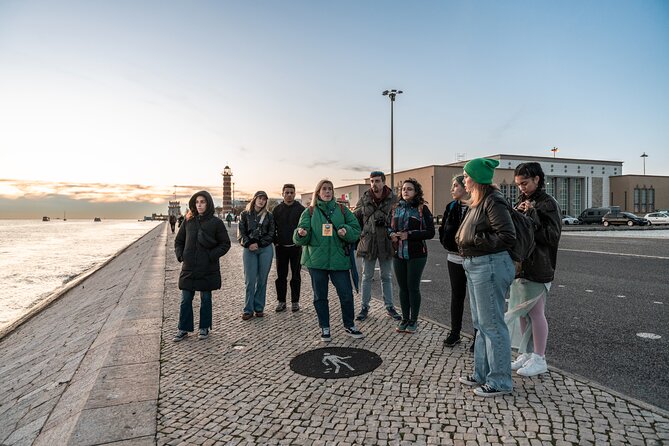
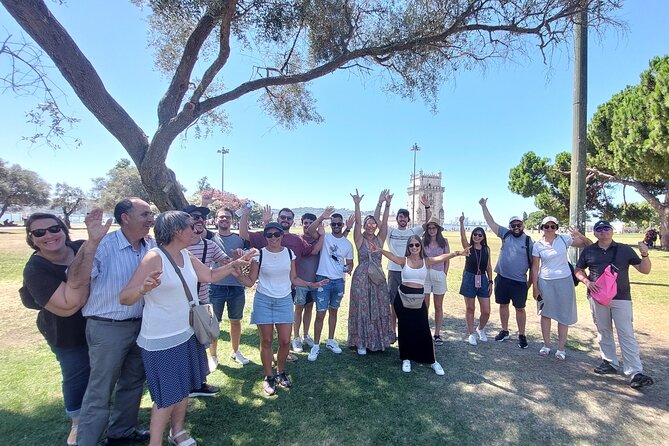
It runs about 2 hours 30 minutes and is offered in English with a mobile ticket. The group cap is 25 travelers, which matters here, because Belém can get crowded near the waterfront and major monuments.
There’s no private transportation included, so plan to walk and use public transit as needed. The good part is you get dropped at a place where you can keep exploring on foot, ending next to Belém Tower on Av. Brasília.
Starting at Praça Afonso de Albuquerque: your quick orientation point
The walk begins at the Garden of Afonso de Albuquerque, Praça Afonso de Albuquerque (1300-004 Lisboa). If you’re new to Belém, this is a smart start because it sets the tone for Portuguese empire leaders and the idea of strategy and reach.
At the garden and square, you focus on Afonso de Albuquerque, described here as Portugal’s viceroy who expanded its eastern empire. You also get a sense of how Belém uses sculpted public space to mark historical figures, not just places.
Time on this stop is brief, around 15 minutes, so don’t expect a long sit-down. Do expect a fast foundation that makes the rest of the walk easier to follow.
Sala Thai and the hidden connections in trade
Next you stop by Sala Thai in the Thai Pavilion. On the surface, it’s a beautiful structure. In the context of this walk, it becomes a map of Portuguese trade routes across Asia, from connections tied to India to courtly links in Thailand and Sri Lanka.
You learn how these connections shaped cultural exchange, including the detail that Portuguese routes eventually helped introduce tea to Britain via Lady Catarina of Bragança. Whether you’re a history person or not, that kind of cause and effect tends to stick.
This stop is about 10 minutes, so it works as a palate cleanser between major monument moments. It also helps you understand why the later “Age of Discovery” sites feel so anchored in navigation and global movement, not just ships and battles.
Pastéis de Belém: the tastiest reason to show up hungry
Then comes the star break for many people: Pastéis de Belém. This is where the tour turns from sightseeing to a real ritual. You stop to buy and eat the legendary custard tart made in Belém, tied to the story of its secret recipe guarded by monks of Jerónimos Monastery.
The stop is about 10 minutes, which is short on purpose. You get a quick taste without turning the walk into a food marathon.
Here’s my practical advice: go into this stop knowing it’s a small window. If you’re ordering and taking photos, keep it moving so you don’t slow down your group.
A key value point for you as a visitor: the tour frames the pastry as more than dessert. It’s part of the same cultural chain as maritime exploration, monasteries, and Portuguese identity. Even if you’ve had similar tarts elsewhere, this one carries its local origin.
More Lisbon miradouros linked on foot:


Chão Salgado and Padrao Memoria: power with a darker edge
After the sweetness, the tour pivots to Padrao Memoria do Chao Salgado. This is a memorial area along Chão Salgado Alley, and the historical focus here is the Marquis of Pombal.
This stop gives you the other side of “progress.” You hear about modernization of Lisbon alongside serious, controversial events like the Távoras Massacre. The point isn’t to turn this into gloomy theater. It’s to show how power, building, and policy all mixed together in Portugal’s story.
Expect about 10 minutes here. It’s enough time to connect the name, the setting, and the themes before moving on. If you only do one quick stop that adds moral context to the Age of Discovery theme, this is one of the better candidates.
Jerónimos Monastery: church visit and the sea in the details
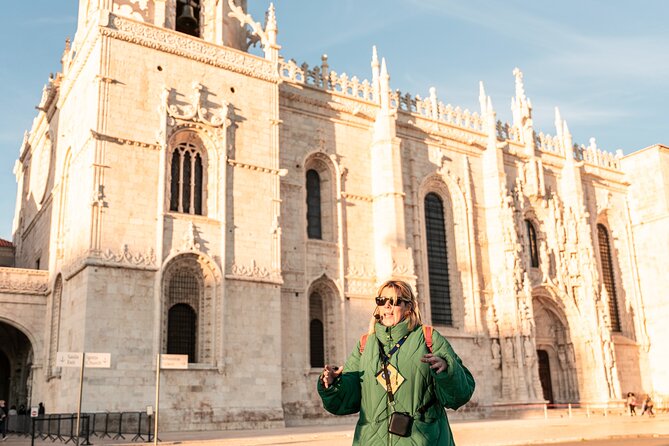
One of the biggest stops is Jerónimos Monastery. The tour note is important: you will not go inside the full monastery, except for the church. Many people choose to visit more on their own afterward, and this tour gives you the starting point.
You’re in about 20 minutes total here. That’s a workable amount to orient yourself with the Gothic architecture and the way the style blends Christian symbolism with sea motifs linked to Prince Henry the Navigator.
If you want a takeaway you can use later, think of this stop as the “visual translation” of the Age of Discovery theme. The tour uses the building to connect exploration ideas to stonework and symbolism, not just dates.
Even with limited interior access, the church visit is still worth it because it keeps you from spending your whole day trapped in long lines and ticket queues on your own. And if you do want more, you’ll already know what you’re looking for.
Praça do Império gardens: a 1940 “world exhibition” moment
From the monastery you move toward Jardim da Praca do Imperio. This area is linked to the 1940 New State World exhibition, and the story here is Portugal marking its endurance and innovation across centuries, from its founding in 1140 through rebirth after Spanish rule in 1640.
You get time to take in the plaza’s gardens and its monumental fountain. The tour framing makes it feel like a living museum, where the outdoor space itself becomes part of the message.
This is around 15 minutes. I like it because it gives you a breather after the more intense monument and church focus. It also helps you regroup if the earlier streets feel like a blur.
Rosa dos Ventos: navigation made visible
Next is Rosa dos Ventos, which centers on a Compass Rose and Mappa Mundi. This stop is one of the most visually satisfying on the walk because the theme is not abstract. It’s geography, routes, and the idea of knowing where to go.
The guide explains the symbolism of the mosaic as a tribute to navigational prowess connected to Portuguese exploration. A specific detail you’ll hear is that it spans 50 meters, so it’s big enough that you’re not guessing. You can actually take it in as a physical map-like installation.
It’s about 10 minutes, and that short time works because it keeps your eyes on what matters: the idea of routes stitching the world together.
If you struggle with the concept of “Age of Discovery” as a slogan, this is where you start seeing it as direction, measurement, and decision-making.
Monument to the Discoveries (Padrão dos Descobrimentos) from the outside
Then you’re at the Monument to the Discoveries, Padrão dos Descobrimentos, on the Belém waterfront. The monument is positioned to point toward the sea, and the lineup of statues ties together major adventurers with their faces turned out to distant horizons.
The tour note here matters again: you will not go inside Padrão dos Descobrimentos. Many people plan a follow-up visit after the tour if they want more access.
Plan on about 15 minutes for this stop. It’s long enough for photos and context, but it’s not a deep museum experience. I suggest you treat it like a “set your mental bookmark” stop. After your walk, you can decide if you want to return for extra views or interior access.
Also, since you end near the water, this is one of the better spots to check the sky. Weather can shift quickly near the Tagus, and you’ll feel it in your plans.
Belém Lighthouse and the riverfront mood
You then reach Belem Lighthouse and walk along the Tagus River bank. This stretch connects everything back to the basic reality of the Age of Discovery: ships needed water access, and Lisbon needed a working edge to the sea.
You also see modern landmarks in the view, including the 25th of April Bridge and the Christ the King statue. The tour connects this to Portugal’s maritime legacy and even ties in aviation pioneer Gago Coutinho and his transatlantic flight, as a later bridge between continents and skies.
Time here is about 10 minutes, and it’s a nice shift from monuments to motion. If you like thinking while walking, this is a good moment to slow your pace and just watch the river.
Torre de Belém gardens: a calm frame for a major finale
Before you hit the tower itself, you stop at the Torre de Belém Garden. This part is about taking a breath and getting the right framing for photographs and orientation.
The gardens offer manicured lawns and panoramic views that make the tower feel less like an object and more like a centerpiece. For many first-timers, this helps you understand why people come back to the waterfront again and again.
Expect about 15 minutes. This stop is useful even if you’re not a “garden person,” because it’s your decompress and plan-your-next-step zone.
Tower of Belém: UNESCO architecture and why you might return
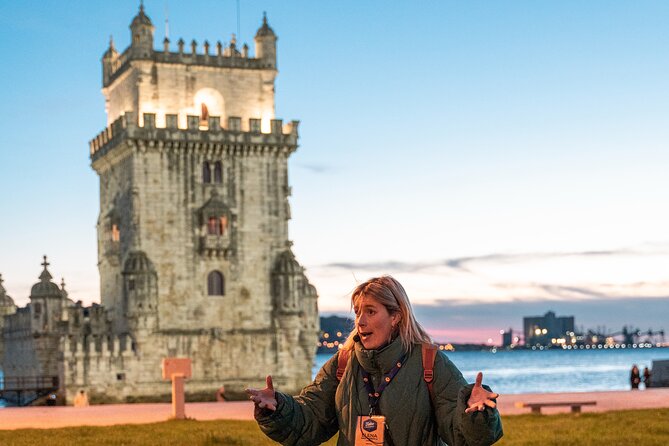
Finally you arrive at Torre de Belém. The tour description highlights it as a UNESCO World Heritage Site with Manueline architecture and battlements that have watched over centuries.
Another key note: you will not go inside Torre de Belém during this tour. Many people choose to visit after, and this is where your own timing matters. If you want interior access, you can likely work it into your remaining time in Belém.
This stop is about 20 minutes. It’s enough to appreciate the architecture and get your riverfront views, and it’s also long enough for photos without turning the last moment into a scramble.
When this tour is a smart fit
This walk is ideal if you are:
- A first-time visitor to Lisbon who wants the Belém highlights without turning it into a ticket queue day
- Traveling on a budget and want to spend money mostly on the guide, not on major paid admissions
- Someone who likes context, not just facts, especially about how Portuguese exploration links to trade and culture
It also fits well if you want a food break that has real local meaning. The Pastéis stop is not just random snacking. It’s part of the narrative thread of monasteries, tradition, and local identity.
The one real tradeoff to plan around
The biggest consideration is that the tour is not built as an inside-everything route. You’ll visit Jerónimos Monastery church, but not the full monastery, and you won’t go inside Padrão dos Descobrimentos or Torre de Belém.
So if your priority is interior access for maximum sightseeing, you’ll likely need to add extra time before or after. The good news is the route ends exactly where you’d want to return anyway.
Should you book this Belém walking tour?
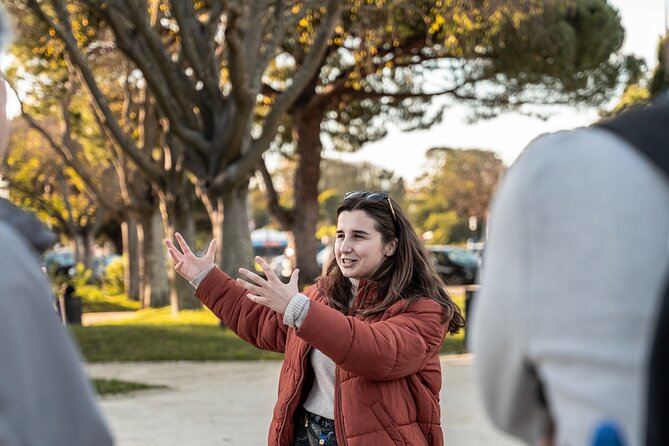
Yes, if you want a low-cost way to connect the dots between Portuguese exploration themes and Belém’s biggest landmarks. For the price, you’re buying an experienced guide, a short and focused route, and a guaranteed stop at Pastéis de Belém at the original bakery.
I would book it especially if you enjoy learning in public spaces, like squares and riverfront viewpoints, where the guide can explain what you’re seeing right now. If you care most about inside access, plan extra time to revisit Torre de Belém and other sites after the walk, since this tour keeps interiors limited.
FAQ
How long is the Age of Discoveries Walking Tour in Belém?
The tour lasts about 2 hours 30 minutes.
Where does the tour start?
It starts at the Garden of Afonso de Albuquerque, Praça Afonso de Albuquerque, 1300-004 Lisboa, Portugal.
Where does the tour end?
The free tour ends next to Belém Tower at Av. Brasília, 1400-038 Lisboa, Portugal.
What language is the tour offered in?
The tour is offered in English.
How much does it cost?
The price is $3.62 per person.
Is there admission cost for the stops?
The itinerary notes free admission for the listed stops.
Will we go inside Jerónimos Monastery?
No. The tour note says you will not go inside Mosteiro dos Jerónimos except for the church.
Will we go inside Padrão dos Descobrimentos and Torre de Belém?
No. The tour note says you will not go inside Padrão dos Descobrimentos or Torre de Belém.
Can I cancel and get a refund?
Yes. You can cancel up to 24 hours in advance for a full refund.
What happens if the weather is bad?
The experience requires good weather. If it is canceled due to poor weather, you will be offered a different date or a full refund.
Fresh across the seven hills
- Porto Private Tour from Lisbon
★ 4.5 · 6 reviews - VIP transfer from the airport to Lisbon hotels
★ 5.0 · 6 reviews - Full-day Private Tour: Fátima Sanctuary, Batalha, Nazaré, Óbidos
★ 5.0 · 6 reviews - Lisbon Photoshoot: Capture Your Adventure
★ 5.0 · 6 reviews - Lisbon: Romantic Sunset Cruise With Wine & Portuguese Tapas
★ 5.0 · 6 reviews - Arrábida Wine Tour – 3 Wineries, Traditions & Views from Lisbon
★ 4.5 · 6 reviews - Lisbon: Sintra, Pena Palace, Belém Tour + sunset Boat Cruise
★ 5.0 · 6 reviews
Belém District Tours, compared.

Private Lisbon Sightseeing Tuk-Tuk Tour: Alfama, Belém & More
Read our review →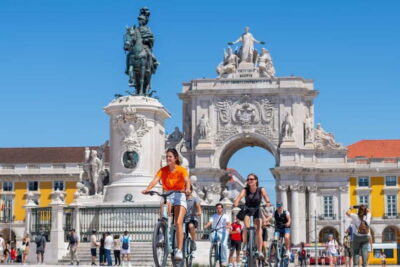
Bike Tour from Lisbon to Belém + Liquor & Pastry
Read our review →
Bike Tours Lisbon – Center of Lisbon to Belém
Read our review →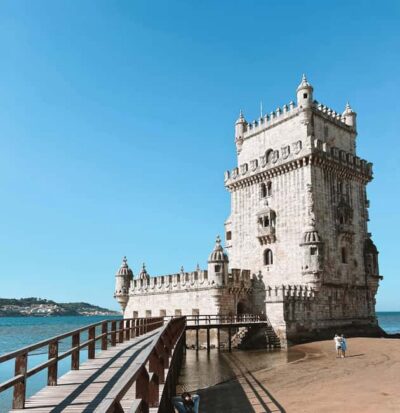
Belém Walking Tour with Jerónimos Monastery Ticket
Read our review →
Belem Walking Tour with Jeronimos Monastery Ticket
Read our review →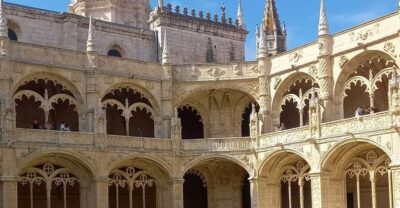
Belem, Jeronimos Monastery, and Coach Museum Tour
Read our review →
Lisbon Hop-On Hop-Off Tour: 48-Hour in Belém & Modern Lisbon
Read our review →Browse the lists this tour appears in