
Reviewed · TRADITIONAL FADO SHOWS
Fado: A Story of Thugs, Harlots and Poets – Private Walking Tour
Fado has street corners and dark alleys. This private walking tour in Lisbon puts you right into Mouraria, the neighborhood that shaped fado, with a route built around stone, legends, and the people behind the songs.
I like how the stops focus on real places tied to fado’s story, from stairways and churches to the streets linked with Fernando Maurício. I also love that the experience leans into listening, with recorded fado samples that help you hear the neighborhood connections instead of just reading about them.
One thing to consider, the walk is outdoors and includes hills, and there are no food or drink offers, so you will want sturdy shoes and a water plan, especially if Lisbon weather turns sloppy.
In This Review
- Key highlights
- Mouraria and fado: why these streets matter
- Escadinhas da Saude: the staircase that holds Mouraria together
- Igreja de Nossa Senhora do Socorro: mosque roots and Jesuit layers
- Rua do Capelão and Monumento Mouraria Berço do Fado
- Casa Fernando Maurício: following the man behind the music
- Capela de Nossa Senhora da Saude: fado as resistance under Estado Novo
- Luis and the fado storytelling you can actually hear
- Price and value for a 2-3 hour private Mouraria walk
- Should you book this fado walking tour?
- FAQ
- How long is the Fado walking tour in Lisbon?
- Is this tour private, or do I join a group?
- What language is the tour offered in?
- What is included in the price?
- Are tickets or admissions required at the stops?
- Is there food or drinks during the tour?
- What is the cancellation and weather situation?
Key highlights

- Mouraria first: you trace fado’s roots street by street, not as a far-off museum topic.
- Free-to-enter stops: the tour’s listed sights have admission-free entries.
- Recorded fado samples: short audio moments help you connect locations to sound and lyrics.
- Fernando Maurício’s streets: you follow the path tied to one of fado’s key figures.
- Resistance in stone: a church stop connects fado and popular culture to political survival.
Other fado evenings around Lisbon:
- Lisbon: Live Fado Show with Port Wine at Lisboa em Fado★ 4.7 · 5,097 reviews
- Lisbon: Fado Show and Wine inside Medieval Walls★ 4.8 · 3,819 reviews
- Lisbon: Fado Show and Portuguese Dinner★ 4.5 · 1,531 reviews
- Lisbon: Alfama Tour and Live Fado with Traditional Dinner★ 4.4 · 970 reviews
Mouraria and fado: why these streets matter
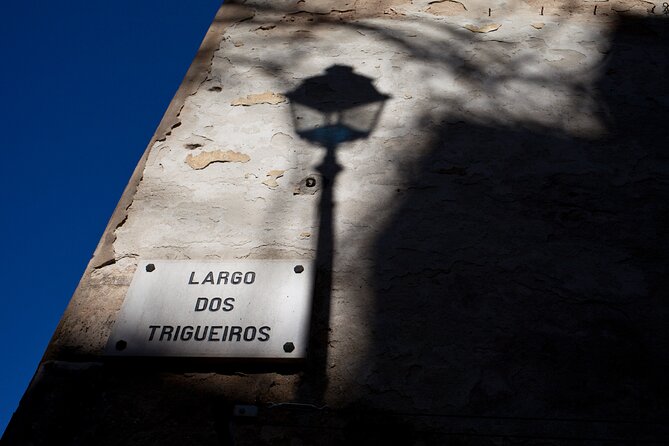
Mouraria is the kind of Lisbon area where the past feels close. The stories that surround fado do not live only in theaters. They live in the layout of the streets, in staircases that force you to slow down, and in religious buildings that have been repurposed again and again.
This tour leans hard into that neighborhood logic. You are not just collecting facts. You are learning why fado grew where it did, and why songs about hardship, longing, and love make sense when you understand the local setting. The focus stays on Mouraria, so each stop adds a piece to the same picture.
I also appreciate that the experience is private. Only your group participates, which makes it easier to ask questions and keep the pace comfortable for your people. It is listed as an English tour, so you can relax if Portuguese is not your thing.
The overall length is about 2 to 3 hours, so you get depth without turning it into a full day commitment. And since it is often booked around 102 days in advance, it is smart to reserve early if your dates are fixed.
Escadinhas da Saude: the staircase that holds Mouraria together
You start at Escadinhas da Saude, a spot that is part wall, part stairway, part shortcut. This is where the medieval backbone of the area comes into view, and you can feel how Mouraria’s older geography still shapes movement today. There is a steep, historic staircase, plus a more modern lift added later, which makes the area easier to navigate.
What I like here is the physical storytelling. When you walk down or up a steep set of steps with a guide explaining what it once protected, you understand the neighborhood as a system, not a postcard. The wall is not just background. It is the reason people built, lived, hid, and gathered the way they did.
Admission is free at this stop, so you do not waste time with extra logistics. It is also a good opening move because it sets expectations for the rest of the walk: yes, there will be hills, yes, you will be walking at neighborhood pace, and yes, the terrain is part of the story.
If stairs are a problem for you, take this as your early warning. Even with the lift nearby, you are still in an area where the street levels shift often. Plan accordingly.
Igreja de Nossa Senhora do Socorro: mosque roots and Jesuit layers
Next up is Igreja de Nossa Senhora do Socorro, described as a place that started life as a big mosque and was later converted into a Jesuit center. That mix matters for your fado context because fado is shaped by centuries of cultural overlap, not by a single, tidy origin story.
This stop is also framed as the heart of the neighborhood. That means you are not just looking at architecture. You are looking at a landmark that would have been part of daily life and community rhythm long before most visitors ever think about fado.
Admission is free at this point, so you can focus on the guide’s explanation without worrying about tickets. And the tour connects it to wider neighborhood links, including connections to fado through nearby areas associated with the art form.
A small caution: since this is a church environment, keep your voice low and be ready to respect the space. You should also expect a moment where the story becomes more layered, because religious history often does.
If you enjoy how one building can reflect multiple eras, you will get a lot out of this stop.
Rua do Capelão and Monumento Mouraria Berço do Fado
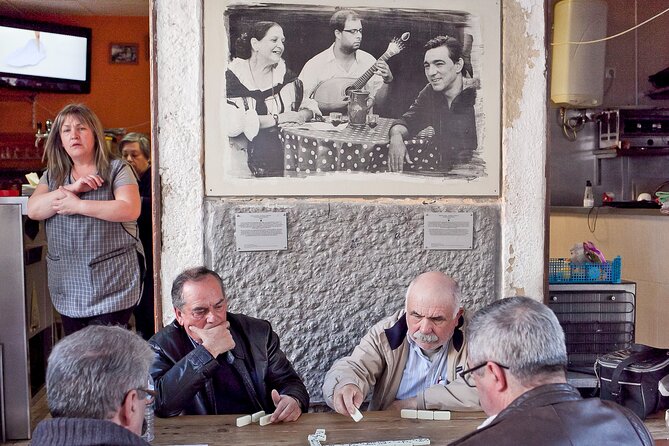
Then you hit the symbolic center of the story: Monumento Mouraria Berço do Fado on Rua do Capelão. This is where the tour leans into scale. You go from a bigger landmark feeling into an incredible tiny street, where the legends about Lisbon song feel almost believable just because of the narrowness of the place.
This is one of my favorite kinds of sightseeing. Instead of chasing a single famous view, you get a geography of sound. The guide talks through legends tied to fado in Lisbon, and you start to see why songs about everyday people fit better here than in a polished performance hall.
Admission is free at this stop, and the time here is short but focused. It is long enough to absorb what makes the street special, without dragging into a slow, museum-style rhythm.
One more practical point: small streets can get crowded. If you are sensitive to tight spaces, hang back a bit while the guide explains the story, then step forward when you can take photos without blocking anyone.
If you want fado’s story to feel local, this is the stop where it clicks.
More Lisbon miradouros linked on foot:



Casa Fernando Maurício: following the man behind the music
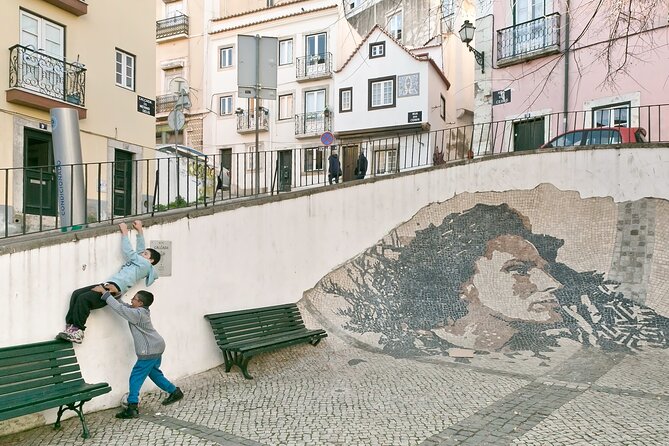
From Rua do Capelão, the tour shifts to Fernando Maurício, one of fado’s legends. Casa Fernando Maurício points you toward the streets where he was born, lived, and died, which turns him from a name on a program into a real person rooted in specific blocks.
I like this approach because it gives you a human anchor. You can connect songs to life, not just to melody. When you hear about someone’s life in the exact street setting the tour describes, the emotional themes of fado feel less abstract.
Admission is free here too, so you can spend time on the explanation rather than logistics. The stop is timed well, so it does not become a lecture, and it also avoids the common mistake of over-glorifying without context. The focus stays on Mouraria as the stage where both life and art formed together.
If you are a fado fan, you will probably leave this stop wanting to listen to Fernando Maurício with new ears. If you are not yet a fado devotee, this is still a strong way in, because the guide uses the location to explain why his story mattered.
Capela de Nossa Senhora da Saude: fado as resistance under Estado Novo
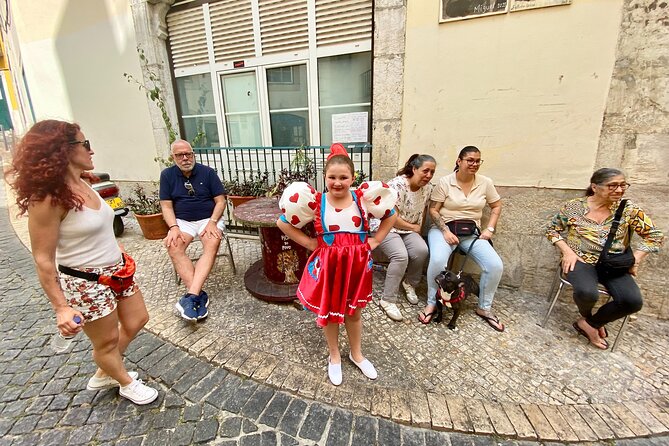
The tour’s final big emotional stop is Capela de Nossa Senhora da Saude, described as a small church tied to one of Lisbon’s popular processions. What makes it more than a pretty building is the framing: it is presented as a symbol of resistance of fado and popular culture against the Estado Novo totalitarian regime, which aimed to destroy Mouraria in the name of progress.
That is heavy stuff, and it changes how you hear the music. Fado is often described as mournful, but here you also learn about survival. The point is not just that people sang. The point is that they sang and kept singing, even when authorities pushed to erase the neighborhood and the culture inside it.
Admission is free at this stop, so you can focus on the narrative. This is also a longer stop on the route, which signals the guide will want time for context.
If you prefer purely light travel, this may feel like a mood shift. But if you want to understand why fado carries both pain and stubborn pride, this is the stop where the meaning becomes clear.
Luis and the fado storytelling you can actually hear

A major reason this tour lands well is the guide energy. Multiple guests highlight Luis as the kind of guide who brings both passion and curiosity, and you can feel the difference between a facts-only walk and a story-driven one.
One detail that really helps: the walk includes samples of recorded fado musings. That is a practical touch, because fado’s themes and performance styles are hard to imagine from text alone. With short audio moments, you connect the places you are standing in to the sound that represents them.
The tour also includes professional support from a local photographer guide. The data you have here does not say how photos are delivered, but it does mean you get on-the-ground guidance from someone who knows the angles and the neighborhood lighting. Even if you just use it for your own pictures, having a photographer in the mix can improve your results.
If you like tours where you leave with a better sense of how the art form works, not just what the art form is, this is your format. It also helps that the guide can tailor pacing for your group, since it is private and only your people participate.
Price and value for a 2-3 hour private Mouraria walk

The price is listed as $31.31 per person, and for a private experience that lasts 2 to 3 hours, that is pretty reasonable. You are paying for more than a route. You are paying for local storytelling, a guide team that includes a local guide plus a photographer guide, and the time it takes to make connections between buildings, people, and music.
To judge value, think about your alternatives in Lisbon. If you book a standard group tour, you might get a quick highlight version of Mouraria. Here, you have space for questions and a slower, more meaningful flow. And because the tour is private, your group can move at the pace that fits your legs and your attention span.
Logistics are also straightforward. It is near public transportation, and you start at R. da Mouraria 16 and end at the Centro Comercial Martim Moniz area on R. da Palma. That ending location matters because it gives you an easy path to continue exploring without retracing every step.
Small practical notes help you enjoy it more:
- Wear shoes for uneven streets and hills.
- Plan water, since there are no food or drink offers.
- Bring a light layer. Lisbon weather can flip fast, and the tour requires good weather.
Should you book this fado walking tour?
Book it if you want fado to feel grounded in real neighborhoods, especially Mouraria, and if you like guides who connect place, people, and sound. This is also a strong choice if you enjoy Portugal’s cultural history with political context, because the Capela stop explains how fado and popular life faced pressure and kept going.
Skip it or think twice if you need a flat, low-effort walk, because Mouraria’s stairways and slopes are part of the experience. Also consider it carefully if you dislike listening sessions or audio moments, since the guide uses recorded fado samples to make the story land.
If your goal is a meaningful, 2-3 hour private introduction to fado’s roots that you can carry into your next fado show, this one is worth your time.
FAQ
How long is the Fado walking tour in Lisbon?
The tour runs about 2 to 3 hours.
Is this tour private, or do I join a group?
It is a private tour/activity, and only your group will participate.
What language is the tour offered in?
The tour is offered in English.
What is included in the price?
The price includes a private guide, a local guide, and a professional local photographer guide.
Are tickets or admissions required at the stops?
The stops listed on the route show admission ticket free.
Is there food or drinks during the tour?
No. This is a walking tour with no food or drink offers.
What is the cancellation and weather situation?
You can cancel for a full refund up to 24 hours in advance. The experience requires good weather, and if it is canceled due to poor weather you will be offered a different date or a full refund.
Fresh across the seven hills
- Full-day Private Tour: Fátima Sanctuary, Batalha, Nazaré, Óbidos
★ 5.0 · 6 reviews - Porto Private Tour from Lisbon
★ 4.5 · 6 reviews - VIP transfer from the airport to Lisbon hotels
★ 5.0 · 6 reviews - Lisbon Photoshoot: Capture Your Adventure
★ 5.0 · 6 reviews - Lisbon: Romantic Sunset Cruise With Wine & Portuguese Tapas
★ 5.0 · 6 reviews - Arrábida Wine Tour – 3 Wineries, Traditions & Views from Lisbon
★ 4.5 · 6 reviews - Lisbon: Sintra, Pena Palace, Belém Tour + sunset Boat Cruise
★ 5.0 · 6 reviews
Traditional Fado Shows, compared.
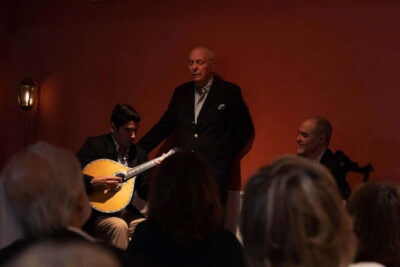
Live Fado Show with Port Wine at Lisboa em Fado
Read our review →

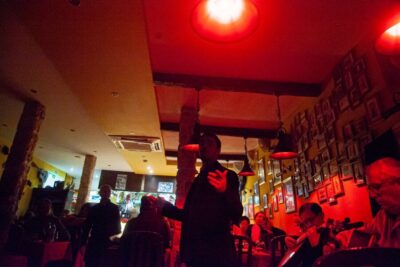
Alfama Tour and Live Fado with Traditional Dinner
Read our review →
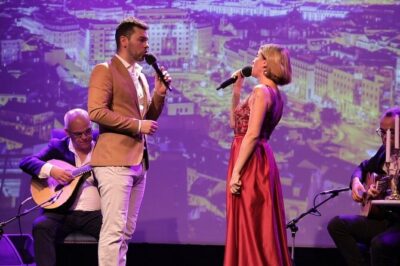
Fado in Chiado – Live Show in Lisbon on Stage for over 15 Years
Read our review →
Live Fado Show in Historic Alfama with Port Wine
Read our review →
Browse the lists this tour appears in