
Reviewed · HISTORICAL TOURS
Half Day Historical Walking Tour about the Slave Trade in Lisbon
Lisbon tells its hardest story. On this Historical Walking Tour about the Slave Trade, you walk from Alfama to Lisbon’s commercial core and learn how Portugal’s Age of Discovery ties into human bondage.
I loved how the tour keeps the focus on place, not vague lectures, so the history feels anchored to real streets. I also liked that the guide, Rui Fernandes, brings in pictures and historical documents and answers questions without dodging discomfort. One consideration: this is a heavy topic, and the route involves moderate walking, so wear comfy shoes and keep your pace.
In This Review
- Key Things to Know Before You Go
- Lisbon’s Hard History, On Foot, in Real Places
- Meet Your Guide, Rui Fernandes, and Set Expectations
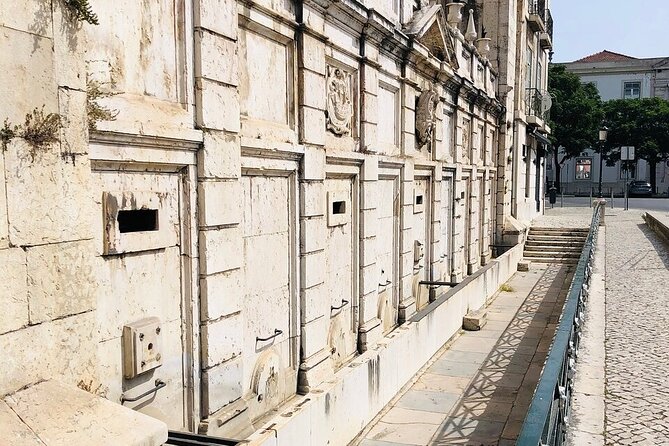
- Stop 1, Largo do Chafariz de Dentro: Where the Story Starts
- Stop 2, Alfama: Older Neighborhood, Longer Shadow
- Stop 3, Campo das Cebolas: A Future Monument to Remember
- Stop 4, Praca do Comercio (Terreiro do Paco): Commerce With Consequences
- Stop 5, Baixa, Rossio, and Restauradores: The Daily Lives Piece
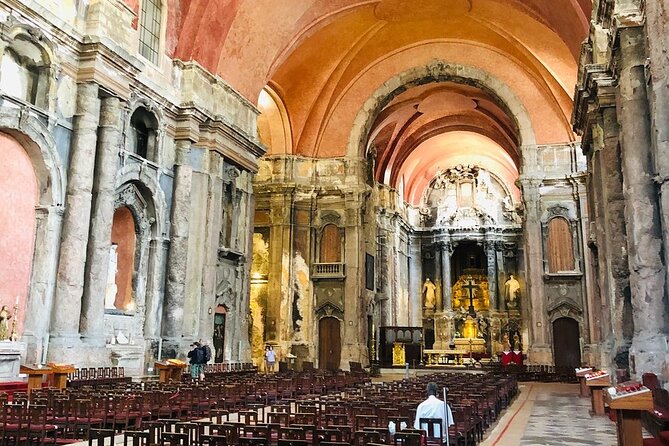
- Stop 6, Igreja de S Domingos: Religion and Real-World Interaction
- Stop 7, Largo do Carmo: 25th of April and the End of Empire
- Price and Value: What You Get for Around $39.78
- Who This Lisbon Slave Trade Walk Is For
- Should You Book This Slave Trade Walking Tour?
- FAQ
- How long is the Half Day Historical Walking Tour about the Slave Trade in Lisbon?
- What is the price per person?
- Is the tour in English?
- How many people are in the group?
- Where do I meet the guide?
- Where does the tour end?
- Is food or hotel pickup included?
- Can I cancel and get a full refund?
- Is the tour suitable if I have walking difficulties?
Key Things to Know Before You Go
- Small group size (max 8) means you get real back-and-forth, not side conversations.
- Rui Fernandes uses visuals and documents to support the story, including how slavery was justified and organized.
- You cover both neighborhoods and institutions, from Alfama’s older layers to places tied to religion.
- You connect commerce to colonial trade, especially around Praca do Comercio.
- You end with the 25th of April era, linking colonial empire decline to modern Portuguese history.
- English with a mobile ticket keeps it straightforward if you are traveling light.
More Lisbon miradouros linked on foot:
- Lisbon: History, Stories and Lifestyle Walking Tour★ 4.8 · 10,902 reviews
- Best of Lisbon Small-Group Guided Walking Tour★ 5.0 · 4,869 reviews
- Lisbon: Food and Wine Small Group Walking Tour★ 4.9 · 4,082 reviews
- Best of Lisbon Walking Tour: Rossio, Chiado & Alfama★ 4.9 · 2,700 reviews
Lisbon’s Hard History, On Foot, in Real Places

If you have visited Lisbon before, you know the postcard version: sunny facades, hills, tiled details, and that big discovery-era story. This tour keeps the same streets, but it removes the rose-colored filter. You learn how slavery was woven into Portugal’s expansion and how Africa’s connections helped shape Portuguese culture and modern history.
What makes this work is the way it ties global events to local geography. You are not just hearing terms like Atlantic Slave Trade and colonial commerce. You are standing where those systems touched daily life, trade routes, and power.
And yes, it is sobering. Still, it is also empowering in a practical way. When you understand the structures behind what you are seeing, Lisbon stops being a mystery and starts making sense.
Meet Your Guide, Rui Fernandes, and Set Expectations
This is a half-day experience in English, running about 3 hours with a small group capped at 8 travelers. That size matters, because questions do not get treated like interruptions. The guide can pause, explain, and support claims with evidence using visuals and documents.
You also get that helpful, human touch from Rui Fernandes. In past tours, he has contacted guests ahead of time with meeting instructions and has shown extra care on rainy days, trying to keep the group out of bad weather as much as possible. You will feel like you are being hosted, not just herded.
The walking is described as moderate. If you are generally comfortable walking around Lisbon, you should be fine, but this is not a sit-and-watch option. If you have walking difficulties, you may want a different format.
Stop 1, Largo do Chafariz de Dentro: Where the Story Starts
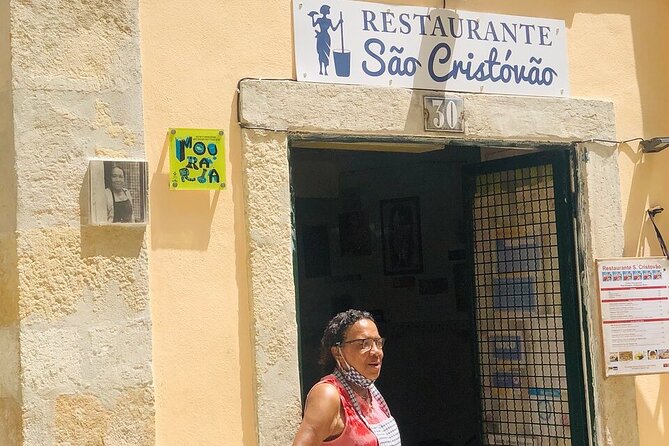
You meet at Largo do Chafariz de Dentro 30, 1100-605 Lisboa. The guide uses this first stop to set the theme, so the rest of the walk has a clear storyline. It is the moment where you learn how the tour frames slavery in Lisbon, including the long arc behind the topic.
A good historical tour does this. Without a starting frame, you end up collecting facts that never connect. Here, the introduction helps you understand why each later location matters, even if the connection is not obvious at first glance.
Stop 2, Alfama: Older Neighborhood, Longer Shadow
Next comes Alfama, Lisbon’s oldest neighborhood. This is where the tour does something important: it widens the lens. You learn how different civilizations that settled in Portugal practiced slavery, from the Romans to the Moors, and then how Portugal became involved in the Atlantic Slave Trade in the mid 15th century.
Alfama is perfect for this kind of lesson because the streets feel layered. You can sense centuries stacking on top of each other, even when buildings look modernized. The guide’s job is to connect that layered setting to how slavery fit into social and economic life over time.
One thing I appreciate here is the balance between broad context and specific place. The tour does not just say slavery existed. It explains how Portuguese involvement grew, and how that shaped Portuguese society as part of the Age of Discovery story you thought you already knew.
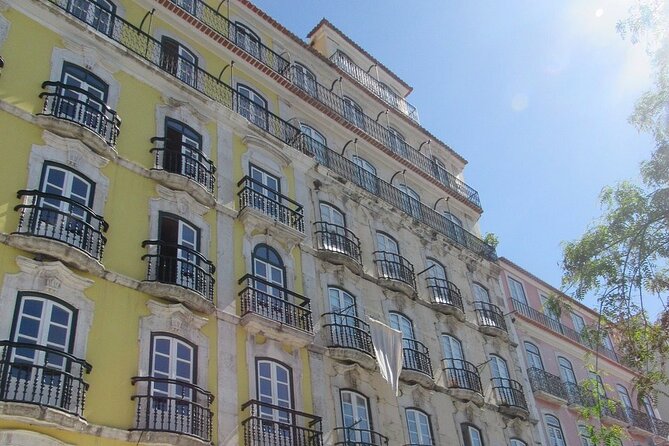
More of pre-earthquake Lisbon, where it survives:




Stop 3, Campo das Cebolas: A Future Monument to Remember
After Alfama, you visit Campo das Cebolas. This stop is short, but it lands an important point: the location is tied to a monument for victims of the Slave Trade that is planned for the future.
This is more than a passing detail. It addresses a big issue in European city tourism, where painful histories are often hidden under polished narratives. Seeing a memorial-related site while you are learning the subject helps you connect education to accountability.
Even if you do not see the monument yet, you leave with the sense that memory and recognition are part of the story, not an optional add-on.
Stop 4, Praca do Comercio (Terreiro do Paco): Commerce With Consequences
Then you head to Praca do Comercio (Terreiro do Paco), the commercial heart of Lisbon. Here the tour makes a direct connection between the slave trade and colonial trade. The message is clear: slavery was not only a moral catastrophe, it also powered business systems.
This is one of the best stops for first-time visitors who only know Lisbon’s grand waterfront look. From Praca do Comercio, the city’s economic ambition is hard to miss. The guide helps you understand how that ambition intersected with forced labor, shipping, and colonial extraction.
There is also a practical tourism advantage. If you have limited time, Praca do Comercio is a natural hub. The walk gives you educational context right where you might otherwise just take photos.
Stop 5, Baixa, Rossio, and Restauradores: The Daily Lives Piece
Next you move through Baixa, Rossio, and Restauradores. This segment focuses on the day-to-day lives of enslaved captives living in Lisbon, from Africa and around the globe. That shift from large systems to lived reality is key.
A lot of tours talk about trade routes. This one also talks about what those routes meant for people on the ground. It pushes you to see enslaved individuals as humans with routines, interactions, and social pressures around them, rather than as nameless units in a ledger.
You also get a bit of breathing room here. The itinerary places this stop long enough to keep the story grounded while the group stays engaged. If you like tours that keep moving but still have time to absorb, you will likely appreciate this pacing.
Stop 6, Igreja de S Domingos: Religion and Real-World Interaction
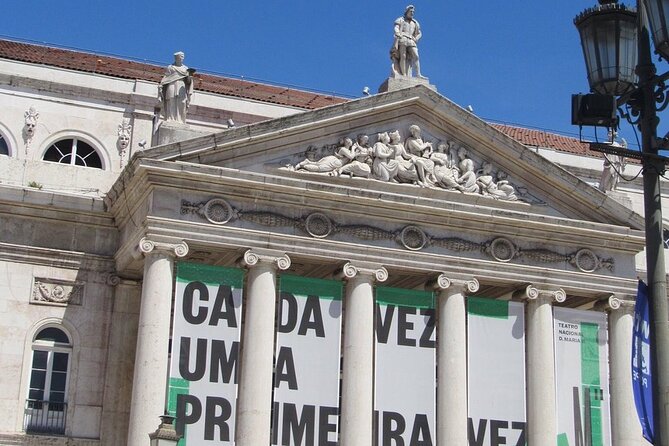
At Igreja de S Domingos, the tour turns to how Lisbon’s enslaved captives interacted with religious organizations. This stop can feel emotionally tense, but it is also intellectually clarifying. The guide explains how institutions and beliefs were part of the system, not separate from it.
Religion shows up in many historical discussions about slavery, but often in abstract ways. Here, the tour helps you connect doctrine, power, and daily life at specific locations in Lisbon. You are not asked to guess what mattered. You are guided through how the interaction worked.
If you are someone who likes clear, factual explanations, this stop is designed for you. And if you prefer sensitive but direct history, it tends to land well because the guide respects the topic while staying grounded in evidence and context.
Stop 7, Largo do Carmo: 25th of April and the End of Empire
The final stop is Largo do Carmo. You learn about how this area is associated with the 25th of April coup and revolution, and how the subsequent decline of Portugal’s colonial empire unfolded in the mid 1970s.
This ending matters because it takes you beyond the “then and there” mindset. The slave trade and colonial empire are historical topics, but their outcomes did not stay buried in the past. They shaped institutions, social attitudes, and national narratives.
One review detail that stuck with me: the guide used a combination of scholarship and clarity, linking religious justifications, economic and political forces, and the long legacy of racial hierarchy in Lisbon. Ending at a place tied to revolution helps close the circle, showing how modern Portugal had to reckon with an empire that depended on exploitation.
Price and Value: What You Get for Around $39.78
At about $39.78 per person for roughly 3 hours, this tour is priced like a standard guided walking experience. The value comes from what is included: a professional guide, local taxes, and a mobile ticket.
Food and drinks are not included, so plan to grab something after. The good news is that the route stays in central areas, so you should have plenty of options nearby when you are done.
The bigger value is the topic itself. This is not the usual “Age of Discovery” route that stops when the ships sailed. You get a rarely addressed angle: how African connections and Portuguese roles in slavery helped shape Portugal’s economic and cultural development.
Also, the small group size changes the experience. When you can ask questions and get clear answers, you absorb more than you would in a big tour where everyone is just trying to keep up.
Who This Lisbon Slave Trade Walk Is For
This tour is a strong fit if you want Lisbon in a fuller, more honest way. If you are the type who likes history that connects to systems, institutions, and modern impact, you will probably feel engaged from the first introduction at Largo do Chafariz de Dentro.
It is also a good option for families or teens who can handle serious topics without getting shut down by heavy content. One review noted that teenagers stayed focused the entire time, which suggests the guide can explain complex ideas without getting childish or vague.
If you have limited mobility, take the walking factor seriously. The tour is not recommended for travelers with walking difficulties. If hills and uneven terrain are a struggle for you, you might feel rushed, and that reduces the quality of the experience.
Finally, if you hate tours that politely avoid tough questions, this likely appeals. Rui Fernandes is known for answering questions directly and correcting misinformation without sugarcoating the subject.
Should You Book This Slave Trade Walking Tour?
If you want the Lisbon that tourists often skip, yes, book it. This is the kind of half-day walk that turns scattered facts into a coherent story, tied to streets, plazas, and institutions you can actually point to.
I would especially recommend it if you are planning a classic Lisbon tour too, because this one gives the missing context. The standard neighborhood highlights show the beauty. This walk helps you understand the machinery behind the beauty.
Just go in ready for heavy history. Wear comfy shoes, set aside real attention time, and treat it like learning that matters, not like a quick sightseeing add-on. If you do that, the experience will stick long after you leave the final stop at Largo do Carmo.
FAQ
How long is the Half Day Historical Walking Tour about the Slave Trade in Lisbon?
The tour lasts about 3 hours.
What is the price per person?
The price is $39.78 per person.
Is the tour in English?
Yes, it is offered in English.
How many people are in the group?
The tour has a maximum group size of 8 travelers.
Where do I meet the guide?
You meet at Largo do Chafariz de Dentro 30, 1100-605 Lisboa, Portugal.
Where does the tour end?
The tour ends at Largo do Carmo, 1200-092 Lisboa, Portugal.
Is food or hotel pickup included?
No. Food and drinks are not included, and hotel pickup and drop-off are not included.
Can I cancel and get a full refund?
Yes, you can cancel for a full refund if you cancel up to 24 hours in advance of the experience start time.
Is the tour suitable if I have walking difficulties?
It is not recommended for travelers with walking difficulties, and it requires moderate physical fitness.
Fresh across the seven hills
- Full-day Private Tour: Fátima Sanctuary, Batalha, Nazaré, Óbidos
★ 5.0 · 6 reviews - Porto Private Tour from Lisbon
★ 4.5 · 6 reviews - VIP transfer from the airport to Lisbon hotels
★ 5.0 · 6 reviews - Lisbon Photoshoot: Capture Your Adventure
★ 5.0 · 6 reviews - Lisbon: Romantic Sunset Cruise With Wine & Portuguese Tapas
★ 5.0 · 6 reviews - Arrábida Wine Tour – 3 Wineries, Traditions & Views from Lisbon
★ 4.5 · 6 reviews - Lisbon: Sintra, Pena Palace, Belém Tour + sunset Boat Cruise
★ 5.0 · 6 reviews
Historical Tours, compared.

Daytime or Sunset Boat Cruise with History and Wine
Read our review →
Explore Lisbon by Tuk Tuk: History and Viewpoints
Read our review →
Private Tuk Tuk Tour Through Lisbon’s Historical Streets
Read our review →
Lisbon Sunset Sailing with Portuguese Wine and History
Read our review →
Live Fado Show in Historic Alfama with Port Wine
Read our review →
Private Lisbon-Arrábida Wine Tour: 3 Wineries, Coast & Heritage
Read our review →
Browse the lists this tour appears in