
Reviewed · HISTORICAL TOURS
Lisbon: African History and Heritage Walking Tour
Lisbon has an African story you can actually walk. This 3.5 hour tour connects Alfama’s Moorish origins to the city’s later role in the transatlantic slave route, using real street corners and monuments to make the history feel close. I love the way it brings together daily city design, like fountains and churches, with big world events, like European involvement in dividing Africa into colonies, so it all clicks. I also like that the tour keeps its tone honest, not vague, but the one drawback to plan for is the walking, including uphill stretches, so comfortable shoes matter.
It’s led by a live guide in English, Spanish, or Portuguese, and you meet at A Padaria Portuguesa. At $176 per person, it’s not the cheapest way to see Lisbon, but the cost makes sense if you want context you will reuse all week.
One more practical note: this experience is not suitable for people with mobility impairments, since it’s a walking route through hilly neighborhoods and historic streets.
In This Review
- Key highlights you will feel as you walk
- Alfama to get the roots right, not just the facts
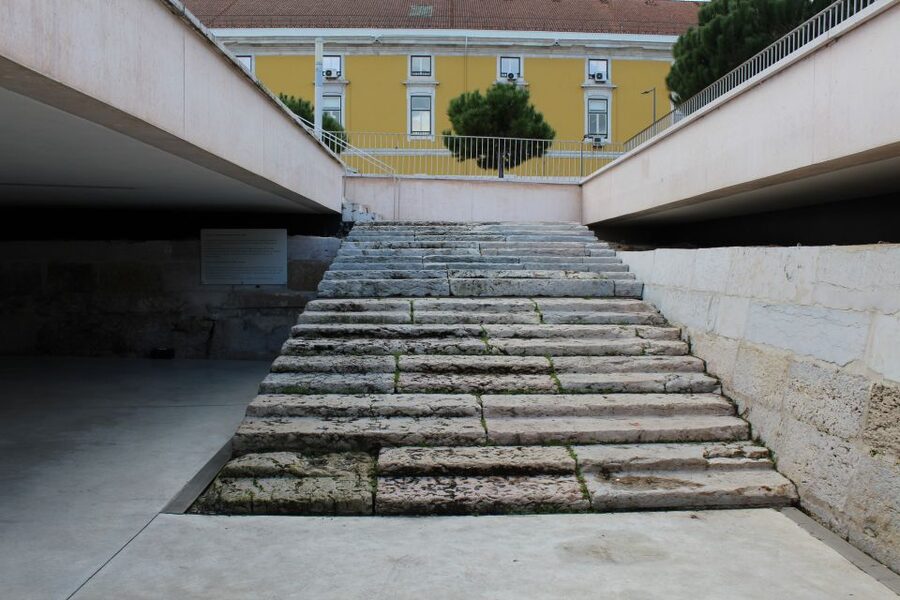
- Chafariz d’El Rei: a fountain that tells you who mattered
- Campo das Cebolas: when you connect a street to a port
- Praça do Comércio and Baixa: power, tragedy, and rebuilding
- Rua Cor de Rosa: daily life, services, and social reality
- Rossio: integration in public, colonies in the background
- Church of S. Domingos: faith, mixing, and visible achievements
- Rossio train station: Manueline style meets empire era politics
- Guides like Jose, Al, and Alcides make the route click
- Value and planning: is $176 worth it?
- Who this tour suits best (and who might want a different plan)
- Should you book this Lisbon African History and Heritage walking tour?
- FAQ
- How long is the Lisbon African History and Heritage Walking Tour?
- What is the price per person?
- Where do I meet the guide?
- What is included in the tour?
- Are food and drinks included?
- What languages is the live guide available in?
- Is hotel pickup or drop-off included?
- Is the tour suitable for people with mobility impairments?
- What are the cancellation terms?
Key highlights you will feel as you walk
- Alfama as a starting point that ties Moorish beginnings to Africa’s presence in Lisbon’s roots
- Chafariz d’El Rei as a visible map of medieval social classes, including African representation
- Campo das Cebolas at the old port tied to the first African slaves arriving in Europe
- Praça do Comércio and Baixa as major stages for slave trade history and post-1755 rebuilding
- Rua Cor de Rosa, Rossio, and S. Domingos showing how African people integrated into Portuguese society and Catholic life
- Rossio train station as a 19th century statement of empire, connected to Berlin Conference era colonial divisions
More Lisbon miradouros linked on foot:
- Lisbon: History, Stories and Lifestyle Walking Tour★ 4.8 · 10,902 reviews
- Best of Lisbon Small-Group Guided Walking Tour★ 5.0 · 4,869 reviews
- Lisbon: Food and Wine Small Group Walking Tour★ 4.9 · 4,082 reviews
- Best of Lisbon Walking Tour: Rossio, Chiado & Alfama★ 4.9 · 2,700 reviews
Alfama to get the roots right, not just the facts
Most Lisbon walks start with viewpoints and photo stops. This one starts with understanding, and Alfama is the right place to do it. It’s the oldest neighborhood in the city and was founded by the Moors, so you get an early reminder that Portugal did not grow up in isolation. The guide uses this starting point to introduce Africa’s roots and connections, including the links that shaped Iberian life over centuries.
What I like about starting here is that it sets the tone for the whole route. You are not bouncing between unrelated stops. Instead, you start thinking like a historian, even if you just want a satisfying walk with real context.
And yes, you will be walking. Reviews for this tour specifically warn about uphill parts, so plan for it. If your feet are happy, your brain will have an easier time staying focused.
Chafariz d’El Rei: a fountain that tells you who mattered
Next comes Chafariz d’El Rei, and it works because it is such a simple object. Fountains look neutral, but this one is tied to the medieval idea of social hierarchy. You will see how space and access reflected class divisions, and the tour points out that Africans were present in those layers, not pushed into some separate footnote.
This is one of those stops that changes how you look at the city. You start noticing that built features, not only documents, can carry social information. In Lisbon, many stories are literally written into stone, tile, and public space.
If you like architecture and urban design, this moment is worth paying attention to with your full attention for a minute. It’s quick, but it lands.
Campo das Cebolas: when you connect a street to a port
Then you reach Campo das Cebolas, tied to the old port of Lisbon, where the first African slaves arrived in Europe. That sentence is heavy enough on paper. The tour approach makes it feel more immediate because you’re standing in the city where maritime commerce mattered.
This stop is valuable because it reframes Lisbon’s waterfront history. You are not only learning that the slave trade happened. You are learning how Lisbon’s geography and economy helped move it along. That matters, because a city’s role is not just about dates. It is about infrastructure, routes, and access.
A practical tip: keep asking yourself what the guide is training you to notice. If you do that, even the quieter streets start telling a story.
Praça do Comércio and Baixa: power, tragedy, and rebuilding
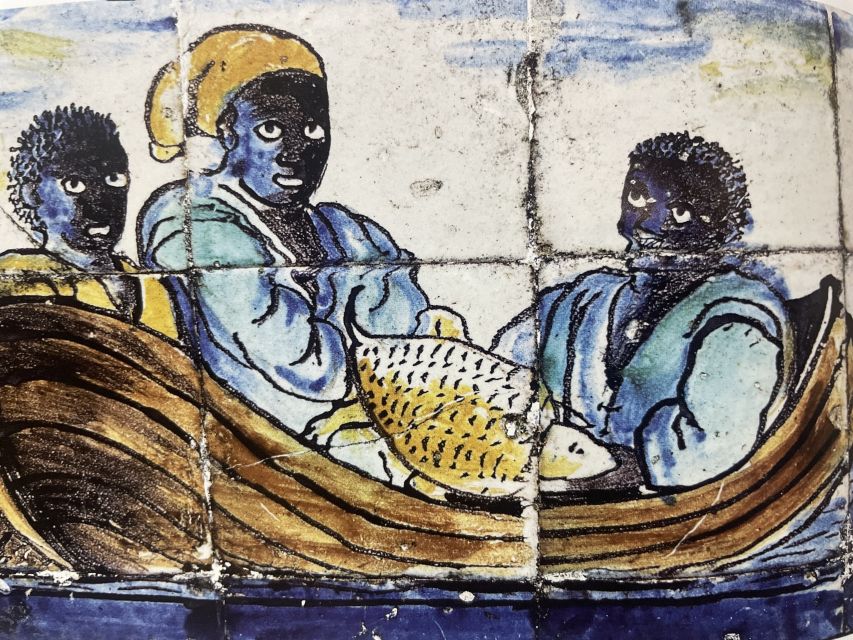
From the port connection, the tour moves to Praça do Comércio, one of Lisbon’s most emblematic squares. This is where major events played out in Portuguese history, and the tour explicitly connects the square to the slave trade. Standing there, it’s hard not to see how public spaces can be used for private, profitable systems. The contrast is part of the point.
Next is Baixa, the central neighborhood that was destroyed by the 1755 earthquake and later rebuilt. The tour uses Baixa as a perfect setting to talk about interaction between Africans in Portuguese society. When you hear this kind of story while walking among rebuilt streets, you start understanding how societies absorb change, even when the process is brutal.
One reason this part of the route works for many people is that Lisbon’s layout helps you picture the movement of goods, people, and money. It becomes easier to grasp how one part of town relates to another.
Also, if you are doing this early in your trip, this section helps you get your bearings fast. You will understand why certain areas feel central and why some feel like they carry layers of time.
More of pre-earthquake Lisbon, where it survives:




Rua Cor de Rosa: daily life, services, and social reality
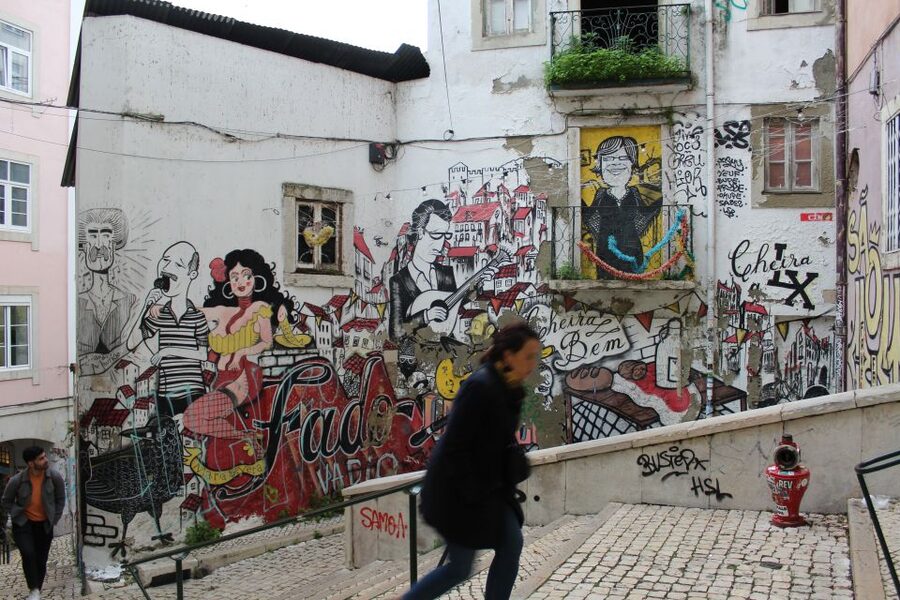
Rua Cor de Rosa is where the tour turns from big systems to human routines. The route explains that this was a place where several African women provided services. That detail is not there for shock value. It’s there because integration is complicated, and Lisbon history includes both community and exploitation.
This stop is a good example of why the tour is described as historically honest. It doesn’t only highlight architecture. It points to social life and the realities behind it.
If you tend to skip over street names, slow down here. You’re learning how identities and labor were shaped by the city’s structure and rules.
Rossio: integration in public, colonies in the background
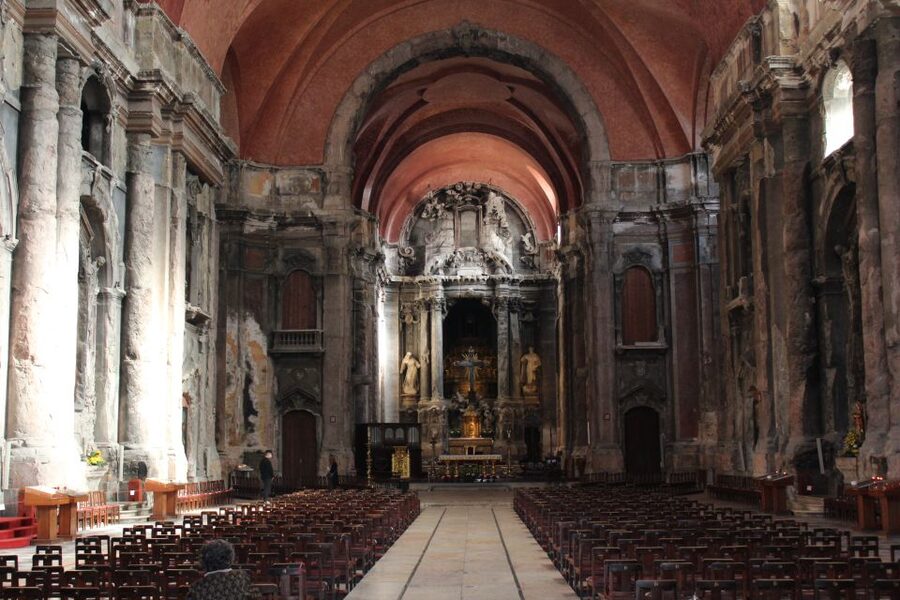
The tour continues to Rossio, one of Lisbon’s central and busiest places. Here, the focus shifts toward integration of Africans and the creation of colonies. It’s an important change in angle. Instead of only tracing origins and commerce, the tour looks at what happened inside Portuguese society after the arrival and settlement processes.
Rossio’s energy can make it feel like pure everyday life. The guide helps you read the space underneath the movement, so you catch the history while still experiencing the present.
If you want a tour that makes you feel Lisbon as a living city, not a museum, this section does that job.
Church of S. Domingos: faith, mixing, and visible achievements
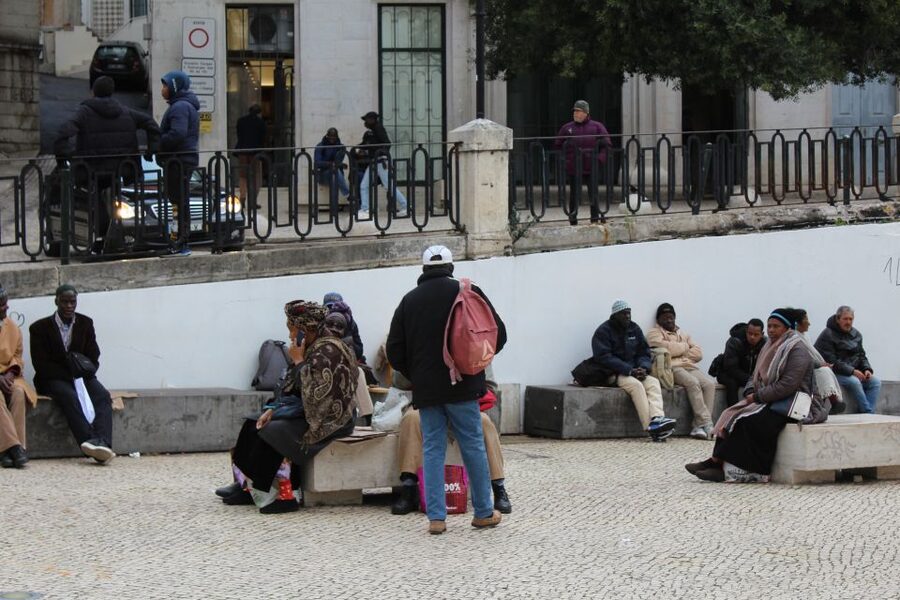
At Church of S. Domingos, the tour tackles religious integration. You’ll understand how Africans integrated into the Catholic religion and what achievements came with that process.
This stop is meaningful because it avoids a simplistic either/or story. The tour treats religion as a social system that many people navigated. You see how conversion and participation were not just abstract ideas, but lived experiences that shaped community life.
If you like tours that connect people across time, this is one of the better stops. It keeps the focus on how communities actually functioned.
Rossio train station: Manueline style meets empire era politics
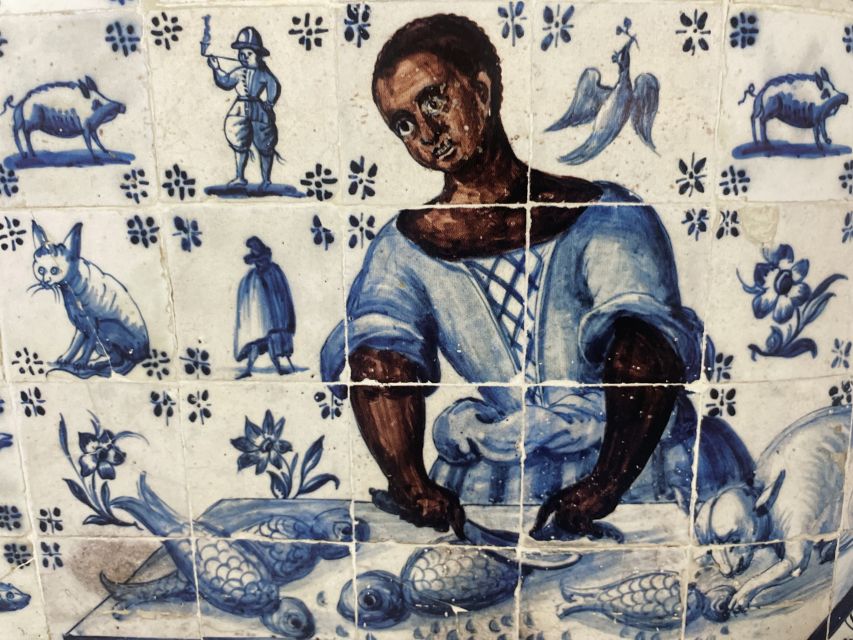
The route ends at the train station of Rossio, built during the 19th century with Manueline architectural style. The guide explains that it reflects the country’s golden times and a desire to claim a place among European nations.
Then comes the crucial link. The tour connects that European self-image to the Berlin Conference of 1884, when European powers divided Africa into colonies. In other words, you’re looking at a beautiful building and being asked to consider the political system powering the era.
This is the tour’s strongest “aha” moment for a lot of people. It turns style into evidence. It makes you ask why certain countries looked to Europe as a badge of legitimacy, while also engaging in colonial control abroad.
Take an extra minute here if you like architecture. You’re not just looking at decoration. You’re reading historical ambition in stone.
Guides like Jose, Al, and Alcides make the route click
What elevates this tour beyond a simple list of stops is the guide. Multiple guides have been praised for being friendly and professional, and for answering questions without dodging tough points.
Names that came up include Jose, Al, and Alcides. One guide was described as weaving together a vivid story from Moorish exploration and conquest through modern day, including connections from coastal West Africa to Spain, Rome, and the Americas. That kind of storytelling matters because it helps you see Lisbon as part of a wider human network, not a standalone history project.
There’s also mention of a snack break, described as tasty. Since the tour does include water, that small pause can help keep the walking manageable. Even if you’re not hungry, it’s nice to reset.
The overall vibe from guide comments is that the tour balances solemnity with real warmth. It’s serious, but it’s not dreary.
Value and planning: is $176 worth it?
At $176 per person for a 3.5 hour walking tour, you should decide based on what you want from Lisbon. If you only want quick highlights and views, this might feel pricey compared to classic free-walking options.
If you want context that will change how you read the city, it starts to feel fair. The stops are specific and linked to major global processes: Moorish roots in Alfama, public markers of social class at Chafariz d’El Rei, port history at Campo das Cebolas, slave trade connections at Praça do Comércio, Portuguese social interaction in Baixa, and the empire era link at Rossio station tied to Berlin Conference 1884.
That’s a lot to cover in one route, and you get a live guide plus water. Food and drinks are not included, so bring your own snack if you tend to get hungry, or plan to use Lisbon’s cafes after.
For best results, I’d book this for your first few days. It gives you a framework for everything else you see. And because it’s not a quick walk with constant stops for photos, being mentally ready helps you get the most out of each site.
Who this tour suits best (and who might want a different plan)
This tour is a strong match if you:
- Want African heritage in Lisbon explained through real locations, not only general lectures
- Like historical context tied to architecture and street space
- Prefer asking questions and getting clear answers in English, Spanish, or Portuguese
- Plan to walk around Alfama and central Lisbon anyway, so the route feels efficient
It may not fit you if:
- You have mobility limitations, since the tour is not suitable for people with mobility impairments
- You need low-walking, flat surfaces
- You want food included as part of the experience, since drinks and meals are not part of the package
Should you book this Lisbon African History and Heritage walking tour?
Yes, I’d book it if you care about understanding Lisbon beyond postcard angles. The route is built from Lisbon’s own geography, so you learn how African presence and Portuguese history are connected through specific places. You also get the kind of guide attention that makes the story clear and answerable, not just announced.
Skip it only if you can’t handle uneven, uphill walking, or if you prefer a purely light, casual sightseeing day with no heavy context.
If you do book it, wear comfortable shoes, bring water or be ready to use the provided bottle, and come with curiosity. Lisbon’s streets have layers. This tour helps you read them.
FAQ
How long is the Lisbon African History and Heritage Walking Tour?
The tour lasts 3.5 hours.
What is the price per person?
The price is $176 per person.
Where do I meet the guide?
Meet your guide at A Padaria Portuguesa.
What is included in the tour?
Included are a guide, a walking tour, and a bottle of water.
Are food and drinks included?
Food and drinks are not included.
What languages is the live guide available in?
The live tour guide is available in English, Spanish, and Portuguese.
Is hotel pickup or drop-off included?
No, hotel pickup and drop-off are not included.
Is the tour suitable for people with mobility impairments?
No, it is not suitable for people with mobility impairments.
What are the cancellation terms?
You can cancel up to 24 hours in advance for a full refund.
Fresh across the seven hills
- Full-day Private Tour: Fátima Sanctuary, Batalha, Nazaré, Óbidos
★ 5.0 · 6 reviews - Porto Private Tour from Lisbon
★ 4.5 · 6 reviews - VIP transfer from the airport to Lisbon hotels
★ 5.0 · 6 reviews - Lisbon Photoshoot: Capture Your Adventure
★ 5.0 · 6 reviews - Lisbon: Romantic Sunset Cruise With Wine & Portuguese Tapas
★ 5.0 · 6 reviews - Arrábida Wine Tour – 3 Wineries, Traditions & Views from Lisbon
★ 4.5 · 6 reviews - Lisbon: Sintra, Pena Palace, Belém Tour + sunset Boat Cruise
★ 5.0 · 6 reviews
Historical Tours, compared.

Daytime or Sunset Boat Cruise with History and Wine
Read our review →
Explore Lisbon by Tuk Tuk: History and Viewpoints
Read our review →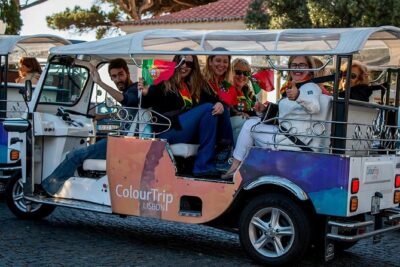
Private Tuk Tuk Tour Through Lisbon’s Historical Streets
Read our review →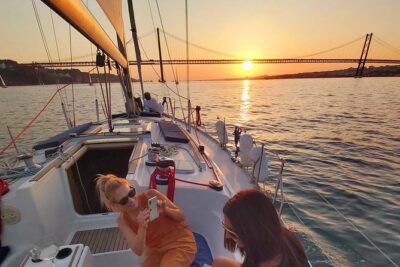
Lisbon Sunset Sailing with Portuguese Wine and History
Read our review →
Live Fado Show in Historic Alfama with Port Wine
Read our review →
Private Lisbon-Arrábida Wine Tour: 3 Wineries, Coast & Heritage
Read our review →
Browse the lists this tour appears in