
Reviewed · HISTORICAL TOURS
Lisbon: Jewish History Private Tour
Lisbon hides Jewish clues in plain sight. This private 4-hour tour brings Jewish Lisbon into focus, linking Sephardic life, Renaissance learning, and the hard turns of the Inquisition in a city you already thought you knew. I love seeing Lisbon through a Jewish lens, because it changes how you read neighborhoods, monuments, and names.
I also like the way you start high, at Miradouro da Senhora do Monte, so the streets and quarters make sense before you start walking. From that viewpoint, the route feels logical, not random, which matters when you are dealing with steep hills and tight alleyways.
One caution: a couple of museum stops have day-of-week limits, and Alfama is old and hilly. Bring comfortable shoes and be ready for some uphill walking, even though you also get time in a vehicle.
In This Review
- Key highlights worth your attention
- Jewish Lisbon, explained in the streets and in the evidence
- Starting at Miradouro da Senhora do Monte, where the city finally makes sense
- Alfama and the clues of Jewish life that survived
- Baixa and Commerce Square, Lisbon’s rebuild and the story beneath the stone
- The Money Museum wall, a thousand-year hint you can actually see
- Rossio Square and the 1506 memorial, where persecution becomes specific
- Chiado’s influential families and how Crypto Judaism shaped identity
- Largo do Carmo Square and the Carmo Convent, archaeology you can stand beside
- Private format, small group size, and why it feels different in Lisbon
- Price and value, what you’re really paying for
- Who should book, and who should consider a different day
- Should you book this Lisbon Jewish History private tour?
- FAQ
- How long is the Lisbon Jewish History private tour?
- Is this a private group, and how many people can join?
- Do I get hotel pickup and drop-off?
- What languages are the live guides?
- What’s included in the price?
- Are there any day-of-week closures at the museums?
- Is the tour suitable for wheelchair users?
Key highlights worth your attention
- Alfama’s street-level traces: second-oldest European district, where small signs still hint at earlier Jewish presence
- Small Jerusalem after 1755: you see how catastrophe and rebuilding shaped what remained
- Money Museum wall stories: a medieval wall described as holding a millennium of secrets
- Rossio Square and the Inquisition: history tied directly to a major memorial site
- Carmo Convent archaeology: 14th to 15th century setting with old Jewish finds
- Private guidance from real experts: guides like Daniel, Diogo, and Vasco are repeatedly praised for clarity and patient answers
More of pre-earthquake Lisbon, where it survives:
- Lisbon: History, Stories and Lifestyle Walking Tour★ 4.8 · 10,902 reviews
- Lisbon: Daytime or Sunset Boat Cruise with History and Wine★ 5.0 · 1,053 reviews
- Explore Lisbon by Tuk Tuk: History and Viewpoints★ 5.0 · 840 reviews
- Private Tuk Tuk Tour Through Lisbon’s Historical Streets★ 5.0 · 734 reviews
Jewish Lisbon, explained in the streets and in the evidence
If you want Lisbon history without the usual one-track route, this tour gives you a second map. You do not just hear dates. You watch the city reveal patterns, like how a community’s presence can survive in street shapes, symbols, and museum artifacts even when official records have gaps.
What makes this experience especially good is the balance between visible places and historical context. You get the Renaissance-era side of Portuguese Jewish life, including references to intellectual culture and religious practice, and then you move into the harder chapters: the Inquisition period, persecution, and the long practice of faith in secret known as Crypto Judaism.
And you get one more layer that helps it all click: Lisbon’s role as a refuge during World War II. That thread turns the story from museum facts into something more human, because you are seeing how the same city that restricted Jewish life later became a place where people tried to survive.
Starting at Miradouro da Senhora do Monte, where the city finally makes sense
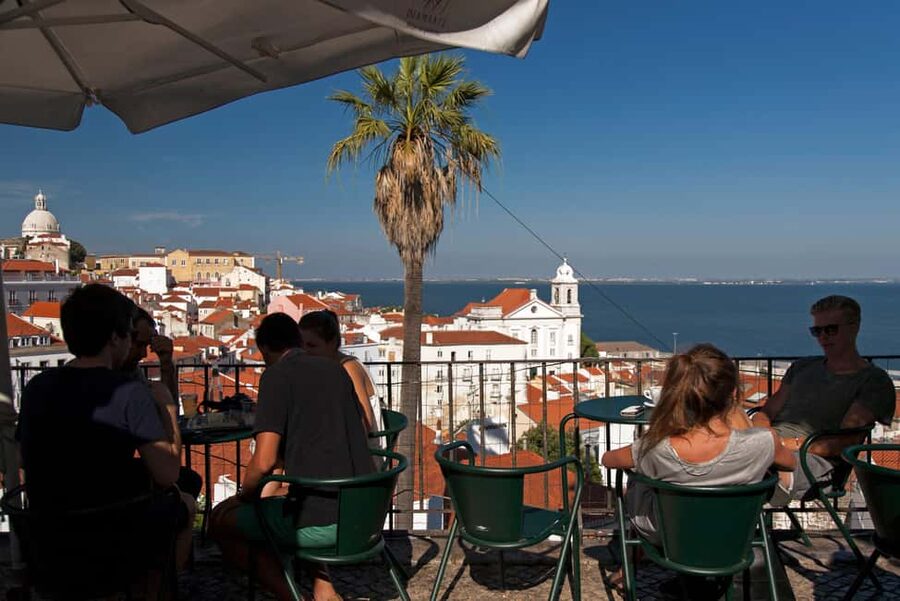
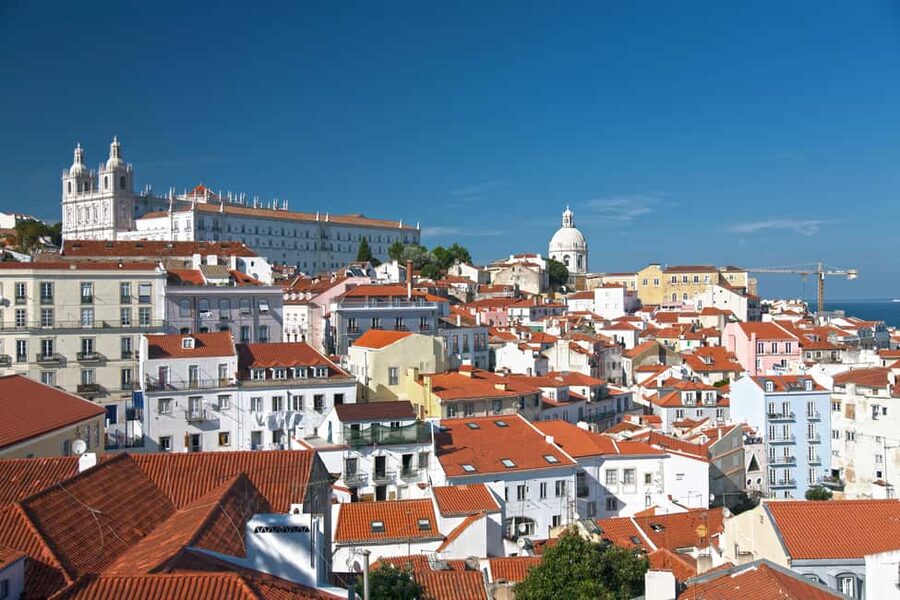
The tour begins at one of Lisbon’s highest hills. From Miradouro da Senhora do Monte, the city spreads out in a way that normal sightseeing routes rarely manage. You can see where the older neighborhoods sit, how the slopes descend, and why Alfama’s street plan is the way it is.
This first stop matters more than it sounds. If you start in the low streets first, you spend the day guessing where everything is relative to everything else. Starting high helps you understand the “why” behind the route: this is a city built on hills, and Jewish quarters were shaped by where people could live, work, and gather.
Your guide also uses the view to set expectations for what you will find later. Instead of promising a giant museum of Jewish Lisbon, they prepare you for a more realistic approach: physical traces are limited, but meaning is not. You learn how to read small details.
Alfama and the clues of Jewish life that survived
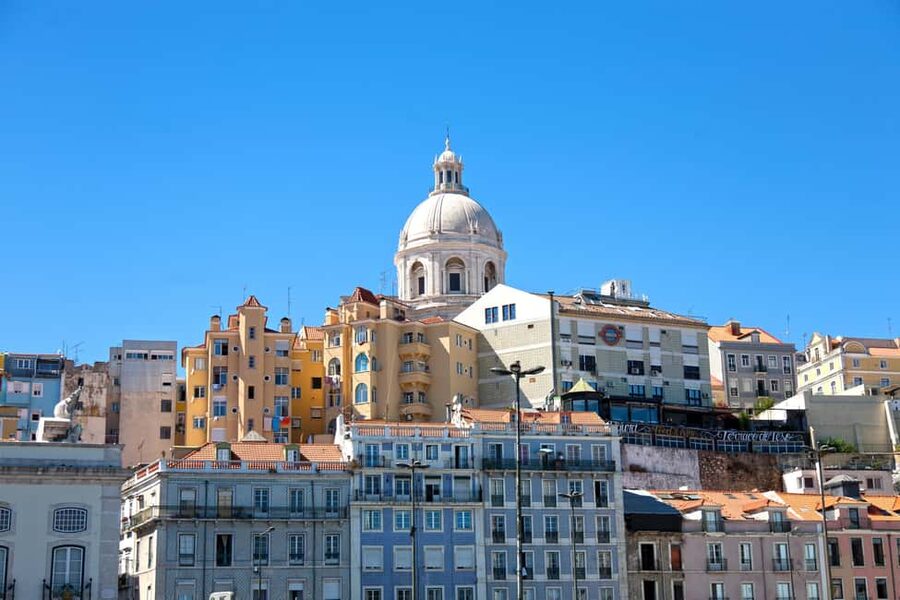
Next comes Alfama, described as the second oldest district in Europe. This is where the tour earns its keep, because the neighborhood’s narrow streets and ancient buildings do the work of turning abstract history into something you can feel.
You walk through areas where physical signs of Jewish presence still linger. That phrasing is important. You should not expect dramatic, modern monuments everywhere. Instead, you look at the city itself: the spatial logic of a community, how daily movement works in tight lanes, and how history can “stay” even when outward traces are faint.
A major focus here is the idea of “Small Jerusalem,” once described as the largest Jewish quarter in Europe before it was devastated by the 1755 earthquake. You do not just mention the earthquake and move on. The guide connects the disaster to what changed in the urban fabric, and why some traces endured while others disappeared.
Walking in Alfama is also a practical test. The streets are old, and the terrain can be uneven. You will want to go slow where your guide asks you to pause, because that is often where the story points: a corner, a street pattern, an architectural feature, or a symbol tied to earlier life.
Baixa and Commerce Square, Lisbon’s rebuild and the story beneath the stone
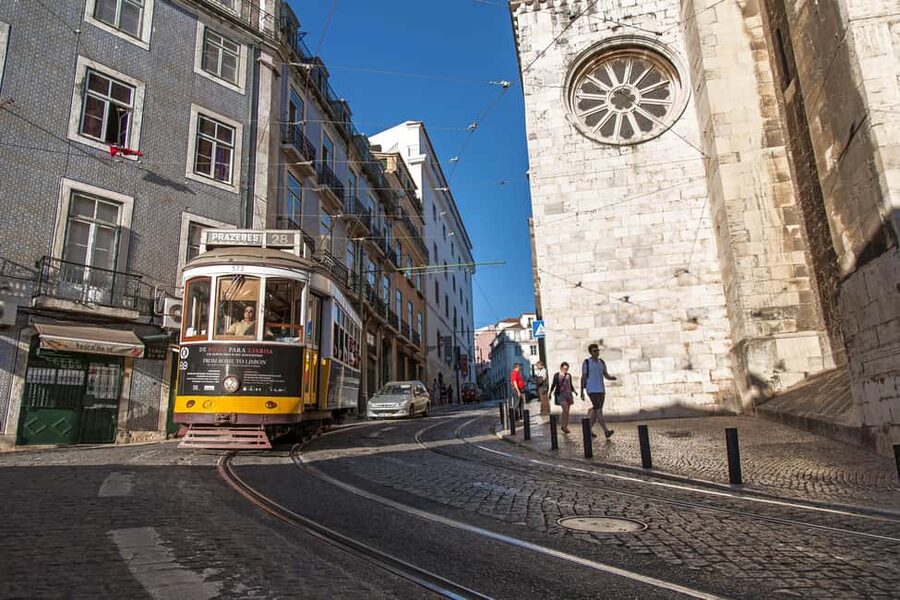
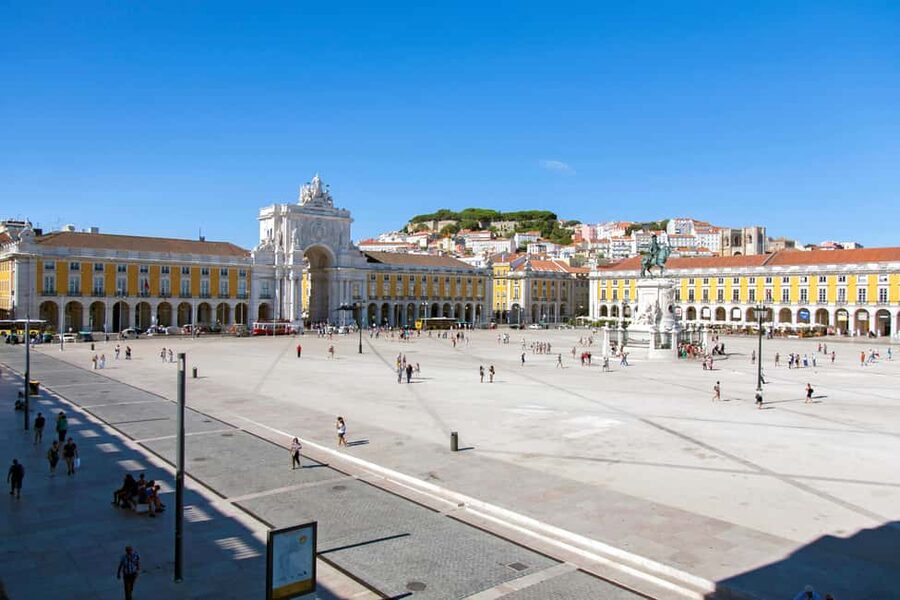
After the hill district feel, the tour shifts toward Baixa de Lisboa and Commerce Square. This part is useful because it shows you Lisbon as a city of rebuilding and reorganization, not just survival.
Why should you care on a Jewish history tour? Because community life is always linked to the city around it. When Lisbon reorganized after major turning points, neighborhoods changed, pathways changed, and official structures changed too. Even when Jewish presence was restricted or forced into new realities, the city’s layout still shaped where people could gather and how they could move.
You get a sense of Lisbon’s power centers and public spaces, which becomes a helpful setup later when the tour moves into Inquisition history. A lot of the darkest chapters were not hidden. They were carried out through public institutions and visible decisions. Standing in the right kinds of squares helps you understand why.
If you are prone to tour fatigue, this is where the driving time can help. You get air-conditioned vehicle transport between areas, and water is included, which keeps the day comfortable even when the history gets heavy.
Some other seven-hills days worth pricing up



The Money Museum wall, a thousand-year hint you can actually see
One of the most intriguing stops is at the Money Museum. You are told you will see a medieval wall described as holding 1000 years of secrets. That is the kind of detail that turns a museum visit from passive to meaningful.
This stop works well for two reasons. First, it grounds the story in a physical structure. Instead of relying only on explanations, you can point to an object, wall section, or exhibit and say, this is part of the city’s earlier layers. Second, money and governance were tied to power, and power affects who lives where and under what rules.
You also learn how older Lisbon intersected with Jewish life. Even if you do not have a lot of surviving monuments to point to outside museums, places like this can act as an anchor. They let you trust that the story is not just legend.
Practical note: the Money Museum is closed on Mondays and Tuesdays. If your dates fall on those days, plan around it, because this stop is part of the tour’s sequence.
Rossio Square and the 1506 memorial, where persecution becomes specific
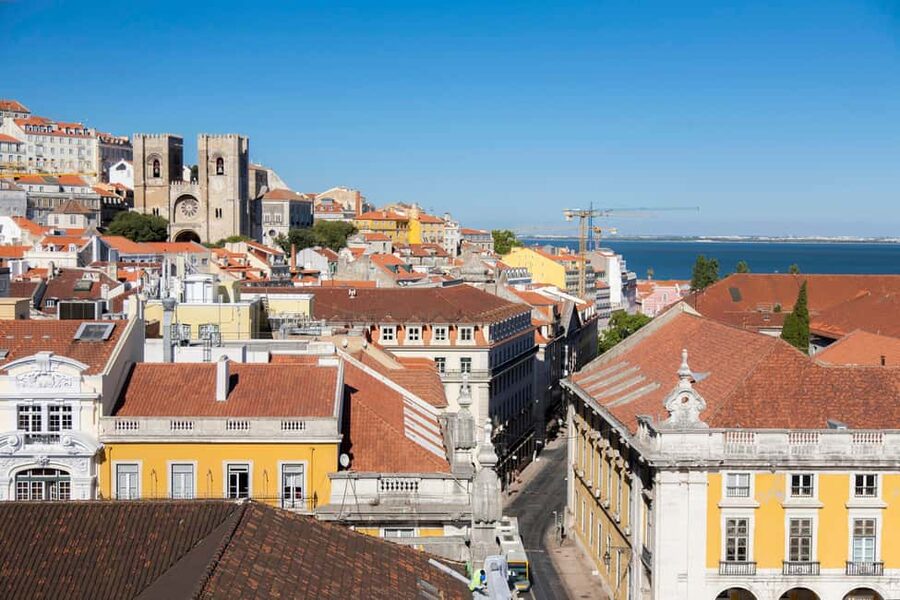
At Rossio Square, the tour focuses on the dark side of Portuguese religious history. You learn about the Portuguese Inquisition and how it operated, then you connect that to a major memorial site linked to Jewish history: the 1506 Jewish Massacre Memorial.
This is the moment where the tour stops being “interesting history” and becomes “important history.” The guide’s job here is to keep it clear, not vague, because the Inquisition theme can turn into generalities if you are not careful. You should walk away with a concrete sense of what changed in public life, what fear looked like, and how violence shaped community survival.
If you are the kind of traveler who hates being rushed through heavy topics, this part is a good fit because you spend time at the square and memorial area rather than only passing by it from a bus window.
Also, since this is Portugal, the city’s everyday rhythm continues around you. That contrast is part of the effect. The story is difficult, yet the streets still feel like living Lisbon.
Chiado’s influential families and how Crypto Judaism shaped identity
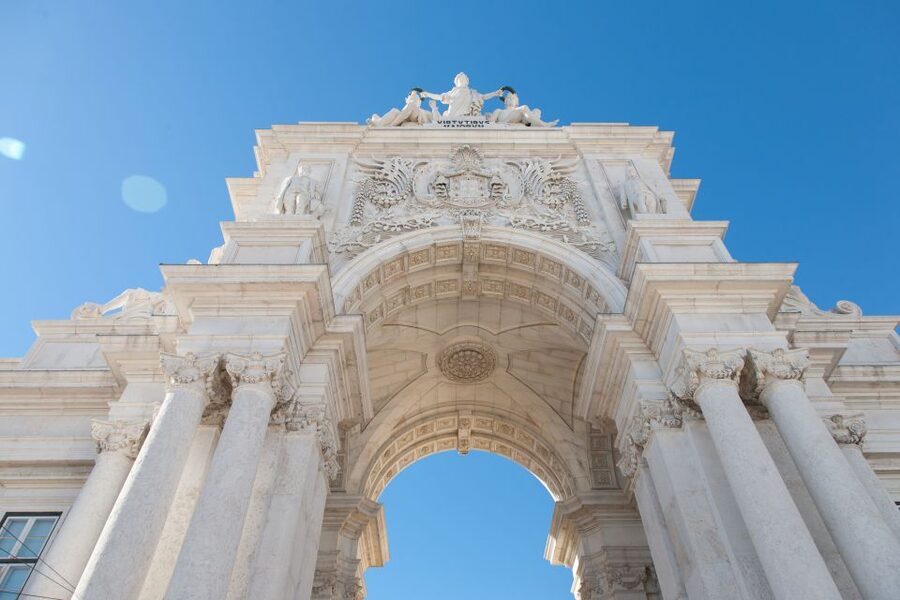
From Rossio, the route moves toward Chiado, a district where history and modern shopping streets sit side by side. Here, you learn about some of the most influential Jewish families of the Portuguese kingdom.
This matters because it complicates the story. Jewish Lisbon was not only about persecution and restriction. There was also a Renaissance-era side of Jewish life where intellectual and religious scholarship played a role, including references to mathematicians and cabalists as part of that cultural landscape.
Then the tour links those earlier chapters to Crypto Judaism, described as an integral part of Portuguese identity. The point is not just that people hid their faith. The point is that secrecy became part of how families navigated society for centuries, shaping language, community bonds, and how identity lived in public and private spaces.
Chiado is a good setting for this theme because it reminds you that identity can be layered. In the same day, you might go from memorial seriousness to a neighborhood that feels everyday and modern. The contrast makes the story feel more believable.
Largo do Carmo Square and the Carmo Convent, archaeology you can stand beside
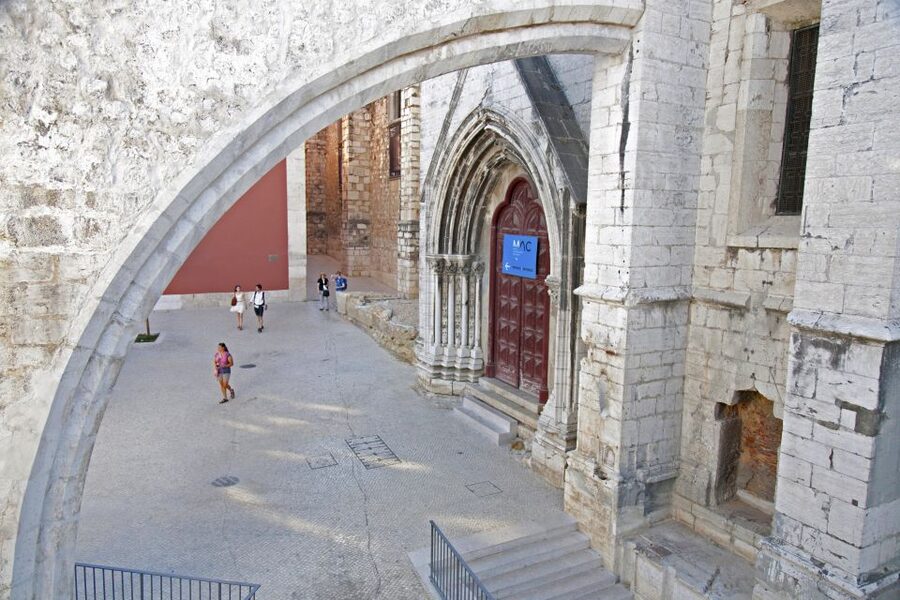
The tour ends with Largo do Carmo Square and a visit to Carmo Convent, where you see the Carmo Archaeological Museum. The convent setting dates back to the 14th to 15th centuries, which helps you understand the age of the place you are walking around.
This stop is specifically valuable for people who want evidence. You see old Jewish archaeological finds, and the exhibits connect the Jewish past to contributions to Portuguese society and to everyday spiritual practices. In other words, you get more than “great events happened.” You get a sense of how daily life could look.
You should know one key scheduling issue: Carmo Convent cannot be visited on Sundays. If you are traveling on a Sunday, confirm your dates before counting on this museum stop.
Time-wise, you should also expect a slower, more observational pace. Museums reward attention. If you rush, you miss what makes the artifacts meaningful.
Private format, small group size, and why it feels different in Lisbon
This is a private tour with a maximum of 8 participants. That size is ideal in Lisbon because you get enough flexibility to pause for questions, but still keep the flow tight in a city where walking can turn into a workout.
The guide also works as a driver/guide, using an air-conditioned vehicle when you need it and switching to walking when you do not. That mix is a practical win, especially with Alfama’s hills.
You will also notice a common theme in how guides deliver this tour. In multiple guide names, including Daniel, Diogo, and Vasco, guests highlight patient answering, strong storytelling, and a habit of supporting explanations with facts. The effect for you is simple: you can ask follow-up questions without the guide giving you a short, unclear answer and moving on.
Another small but real comfort: water is included, and pickup and drop-off in central Lisbon is included. That reduces decision fatigue, which matters when you are trying to cover a focused history in only four hours.
Price and value, what you’re really paying for
At $137 per person for 4 hours, you are paying for more than a checklist of stops. You are paying for local context and for a route that links visible places to specific historical themes.
Here is how I think about value on a tour like this:
- Private access means you are not stuck following a huge group line through spots with limited time.
- Entrance fees are included, so you do not lose time at ticket counters.
- The vehicle transport between hill areas can save energy, especially if you have knee stiffness or you hate sprinting from one viewpoint to another.
- The guide’s topic focus is narrow on purpose, Jewish Lisbon, so the explanations stay tight rather than becoming a general city overview.
Food is not included. That can be a drawback if you want the tour to be a full-day plan. On the plus side, it gives you freedom to choose where you eat based on your tastes. Just plan for a meal before or after, not during.
Who should book, and who should consider a different day
This tour fits you if you want Lisbon to be more than scenery. If you care about how communities lived, adapted, and sometimes survived by keeping faith private, this route gives you structure and places to attach the story.
It is also a great pick if you already like history tours but find many of them too broad. This one is focused, and the stops are chosen to connect the story across centuries.
It might not be the best match if you need step-free access, because it is not suitable for wheelchair users. It is also not designed for unaccompanied minors, so families should plan adult supervision carefully.
And if you are traveling on a schedule day that hits Monday or Tuesday, remember the Money Museum closure. If you are traveling Sunday, remember Carmo Convent is off-limits.
Should you book this Lisbon Jewish History private tour?
I would book it if your goal is a concentrated, guided understanding of Jewish Lisbon that connects neighborhoods, public history, and archaeological evidence in one smooth morning or afternoon. The private format and small group size make it easier to ask questions, and the range of stops helps you understand why Lisbon can have only a few obvious monuments yet still carry strong traces of Jewish life.
I would think twice if your travel dates land on a Sunday or on Monday or Tuesday, since two key museum components can be closed. Also, if hills and uneven streets are a major issue for you, plan to take it at an easy pace and bring supportive shoes.
If you want Lisbon history with sharper edges and clearer context, this is one of the more purposeful ways to spend half a day in the city.
FAQ
How long is the Lisbon Jewish History private tour?
The tour lasts 4 hours.
Is this a private group, and how many people can join?
Yes. It is a private group, with a maximum of 8 participants.
Do I get hotel pickup and drop-off?
Yes. Pickup and drop-off are included from hotels in central Lisbon.
What languages are the live guides?
The live tour guide offers English and Portuguese.
What’s included in the price?
The price includes a private tour, a driver/guide, water, hotel pickup and drop-off in Lisbon, transportation by air-conditioned vehicle, and entrance fees.
Are there any day-of-week closures at the museums?
Yes. Carmo Archaeological Museum cannot be visited on Sundays. The Money Museum is closed on Mondays and Tuesdays.
Is the tour suitable for wheelchair users?
No. The tour is not suitable for wheelchair users.
Fresh across the seven hills
- Full-day Private Tour: Fátima Sanctuary, Batalha, Nazaré, Óbidos
★ 5.0 · 6 reviews - Porto Private Tour from Lisbon
★ 4.5 · 6 reviews - VIP transfer from the airport to Lisbon hotels
★ 5.0 · 6 reviews - Lisbon Photoshoot: Capture Your Adventure
★ 5.0 · 6 reviews - Lisbon: Romantic Sunset Cruise With Wine & Portuguese Tapas
★ 5.0 · 6 reviews - Arrábida Wine Tour – 3 Wineries, Traditions & Views from Lisbon
★ 4.5 · 6 reviews - Lisbon: Sintra, Pena Palace, Belém Tour + sunset Boat Cruise
★ 5.0 · 6 reviews
Historical Tours, compared.

Daytime or Sunset Boat Cruise with History and Wine
Read our review →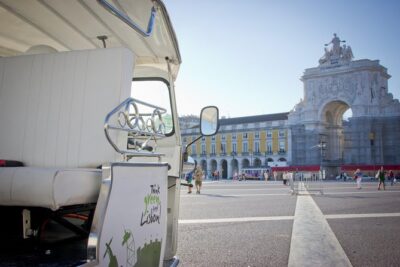
Explore Lisbon by Tuk Tuk: History and Viewpoints
Read our review →
Private Tuk Tuk Tour Through Lisbon’s Historical Streets
Read our review →
Lisbon Sunset Sailing with Portuguese Wine and History
Read our review →
Live Fado Show in Historic Alfama with Port Wine
Read our review →
Private Lisbon-Arrábida Wine Tour: 3 Wineries, Coast & Heritage
Read our review →
Browse the lists this tour appears in