
Reviewed · ALFAMA QUARTER TOURS
Lisbon Tour: Walled City, Alfama & Viewpoints
Lisbon’s walls lead to great views. I love how this Alfama walk mixes everyday alley life with real wall traces, and I love the pay-off: three viewpoints over Lisbon and the Tagus. The only drawback is the hilly, uneven walking, so plan for sturdy shoes.
Our guide, Tiago, brought the city to life in a practical way, not a lecture way. You get the sense of a small group pace, with time to ask questions and pause for photos, and the route can even flex a bit to match what your group cares about.
You’ll also learn how the 1755 earthquake reshaped Lisbon’s streets and architecture, then see how those changes still show up when you’re walking. It’s a relaxed two-hour loop through Lisbon’s oldest and most atmospheric neighborhoods, finishing at Miradouro da Graça.
In This Review
- Key things that make this Lisbon walled-city walk worth your time
- Entering Alfama: why the route feels smarter than a checklist tour
- From Praça do Comércio to Campo das Cebolas: starting at the river and going up
- Casa dos Bicos and Porta do Mar: where the city’s old layers start showing
- Lisbon Cathedral and the Saint Anthony stop: religion, streets, and the human scale
- Alfama, the medieval walls, and the 1755 earthquake connection
- Arco de Jesus, São Miguel, and São Estevão: short stops that add depth
- Santo Estevão Belvedere and Largo Portas do Sol: two viewpoints close together
- Miradouro da Graça finale: the big panoramic payoff
- What the guide adds: Tiago’s customization and the small-group feel
- Price and value: why a symbolic booking price can still feel fair
- Who this tour suits best, and who should skip it
- Should you book this Walled City, Alfama and Viewpoints walk?
- FAQ
- How long is the Lisbon Walled City, Alfama and Viewpoints tour?
- What language is the guided tour in?
- Is the tour mostly uphill walking?
- Does the price include food or drinks?
- How many viewpoints do you visit?
- Where do I meet the guide?
Key things that make this Lisbon walled-city walk worth your time
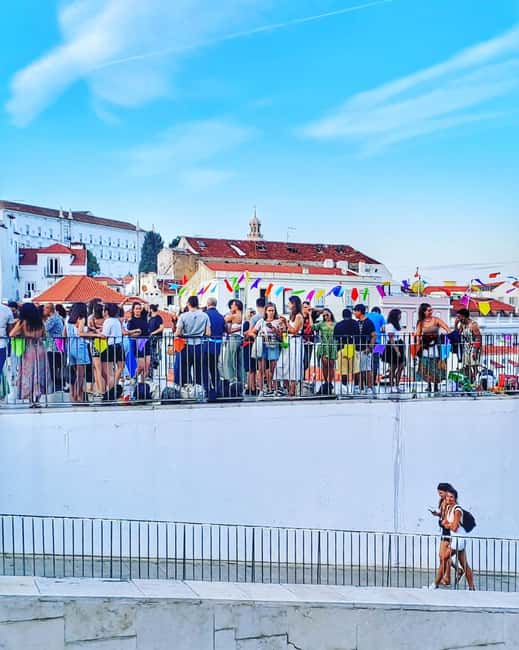
- Alfama at walking speed, where history and local life share the same narrow streets
- Three viewpoint stops, built into the route so you’re not just wandering for photos
- Wall traces and Moorish-medieval connections, explained as you move, not as an abstract story
- The 1755 earthquake story, tied to what you can actually see in street patterns
- Almost-secret side spots, the kind of places a local guide tends to point out
- Tiago-style guiding, tuned to your group with real answers and strong energy
More wandering through Alfama:
- Alfama Tour in Lisbon Old Town★ 5.0 · 4,936 reviews
- Private Lisbon Sightseeing Tuk-Tuk Tour: Alfama, Belém & More★ 5.0 · 4,277 reviews
- Lisbon: Hills, Alfama, and Mouraria Tour by Electric Bike★ 4.8 · 3,438 reviews
- Best of Lisbon Walking Tour: Rossio, Chiado & Alfama★ 4.9 · 2,700 reviews
Entering Alfama: why the route feels smarter than a checklist tour
This tour works because it’s built like a story you walk through. You start near the river, then gradually climb into the older neighborhoods where Lisbon’s layout starts to make sense. The streets are tight, the corners keep coming, and that’s the point, you get to experience how the city actually moves on foot.
Two things I really value are the combination of daily-life streets plus big-sky viewpoints, and the fact that you’re not stuck in one kind of sightseeing. You’ll spend time on the ground in Alfama, then you’ll look outward over Lisbon from spots with city and Tagus views. That rhythm keeps your brain engaged, and your camera busy.
One more reason it feels good for most schedules: it’s a two-hour commitment. You get a strong slice of Lisbon without burning your whole morning or afternoon. If you’re trying to pack in highlights across a first trip, this is a tour that helps you place neighborhoods in your mental map.
From Praça do Comércio to Campo das Cebolas: starting at the river and going up
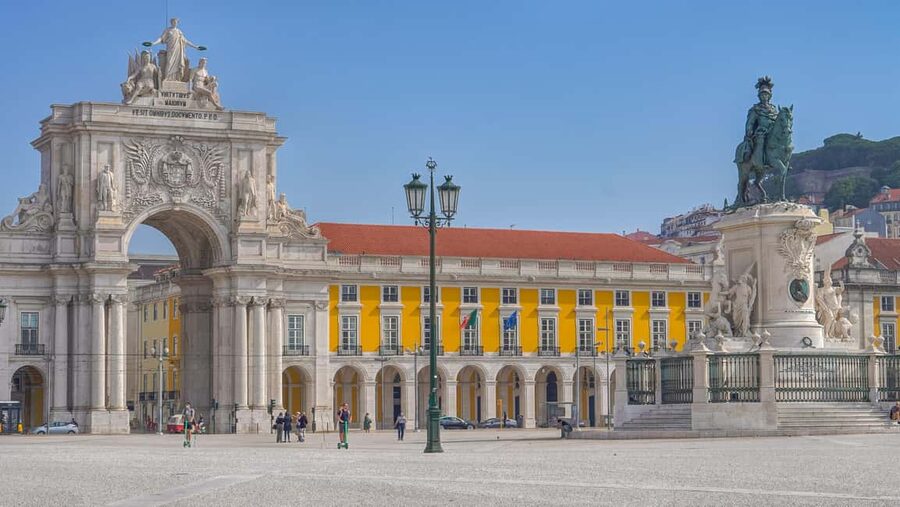
You begin at Praça do Comércio, which is a smart launch point because it anchors you in central Lisbon before the climb. From there, you move toward the Campo das Cebolas area, with a short guided segment around the EMEL parking zone. Think of this as an orientation moment, just enough time to get your bearings and start the uphill transition.
If you arrive early, you’ll likely notice the contrast right away. Flat, open surroundings give way to denser, older streets as you progress. That’s where a good guide matters, you want someone who can connect what you’re seeing at street level with what you’re about to see at viewpoint level.
Comfort tip: early on, you’ll set your walking pace for the rest of the tour. Don’t rush. Lisbon rewards slow steps on uneven ground, and your legs will thank you before you reach the higher terraces.
Casa dos Bicos and Porta do Mar: where the city’s old layers start showing
Next comes Casa dos Bicos, followed by Porta do Mar. These are quick, guided stops, about ten minutes each, so you’re not going to sit still forever. Instead, you’re getting context while you’re still close to the route, which makes the stories easier to remember later when the streets twist and rise.
This is one of those parts where the tour does something practical. It doesn’t just name places, it connects them to the bigger picture of Lisbon’s older street fabric. You’ll get explanations about culture and architecture as you move, so when you later hear how the 1755 earthquake reshaped Lisbon, it won’t feel like a random fact.
If you like to photograph street details, keep your camera ready. The best shots in Lisbon’s old areas often come from looking up slightly and catching the geometry between buildings, not from only shooting wide-angle panoramas.
Lisbon Cathedral and the Saint Anthony stop: religion, streets, and the human scale

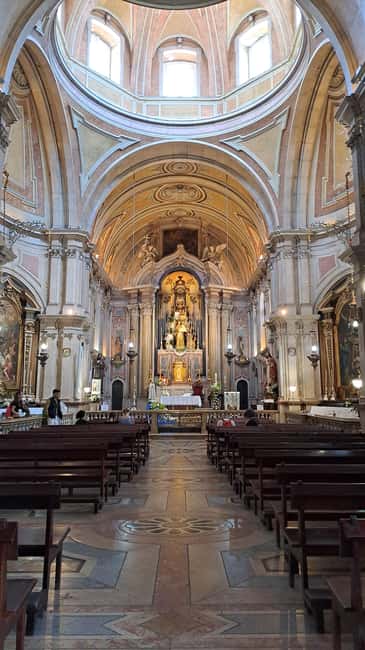
After Casa dos Bicos and Porta do Mar, the tour turns toward the Church of Saint Anthony of Lisbon and then the Lisbon Cathedral area. There’s also a short stop for Lavabos Públicos, plus guided time at each location. Even though these moments are brief, they matter because they slow the tour just enough to remind you this is a living city, not a movie set.
Expect your guide to frame these sites within the neighborhood story, especially how Lisbon’s past lives inside today’s street flow. This is where you learn how the old city keeps shaping daily movement, from where people gather to how streets funnel through older blocks.
Small consideration: churches and landmark exteriors can feel similar if you’re rushing. The tour is scheduled tightly, but the pacing is still relaxed enough that you can slow down for a better look. Bring the mindset of a walker, not a stamp collector.
Some other seven-hills days worth pricing up


Alfama, the medieval walls, and the 1755 earthquake connection
When you finally reach Alfama, you’ll get a longer guided segment, about twenty minutes. This is the heart of the tour, and it’s where the route earns its name. You’ll follow the traces of medieval and Moorish walls, then connect those physical remnants to the way Lisbon grew and changed over time.
The 1755 earthquake story is a key thread on this tour. You’ll hear how it reshaped Lisbon’s streets and architecture, and the timing of that explanation is smart. You’re already in the older part of town, surrounded by tight streets and historic references, so the story lands in the place where you can feel the results.
I also like the way the tour mentions traditional azulejos and local life. Even if you’re not an art specialist, azulejos are one of those Lisbon signals that instantly tells you you’re in the real old city. And local life, the small routines and everyday energy, is what keeps Alfama from turning into a theme park for photos.
Here’s what you should do during this stretch: look for street patterns. When streets run steep, turn sharply, or feel like they were built for smaller movements, that’s part of the story. Your guide helps connect those shapes to the city’s changes after 1755.
Arco de Jesus, São Miguel, and São Estevão: short stops that add depth
After Alfama, the tour keeps moving through a string of landmark points, each with a short guided walk. You’ll pass Arco de Jesus, Chafariz d’El-Rei, Igreja Paroquial de São Miguel, and Church of Saint Estevao. It’s a lot of names, but your guide ties them together instead of dumping them on you.
Why this matters: these stops help you understand Lisbon’s layering. You’re not seeing one era. You’re seeing a city that keeps stacking changes. The short pauses also work well if you’re the type who gets bored on long museum-style tours. Here, the scenery changes every few minutes.
This portion also includes Lavabouro Publico do Beco do Mexias, plus a guided stop along Rua dos Cegos. These are the kinds of places that feel quieter and more local. That matches the promise of almost secret spots shown by a guide who knows where to look.
One practical reminder: old streets can be uneven and sometimes slippery. If the weather is damp, slow down. You’ll get better photos anyway when you’re not rushing.
Santo Estevão Belvedere and Largo Portas do Sol: two viewpoints close together
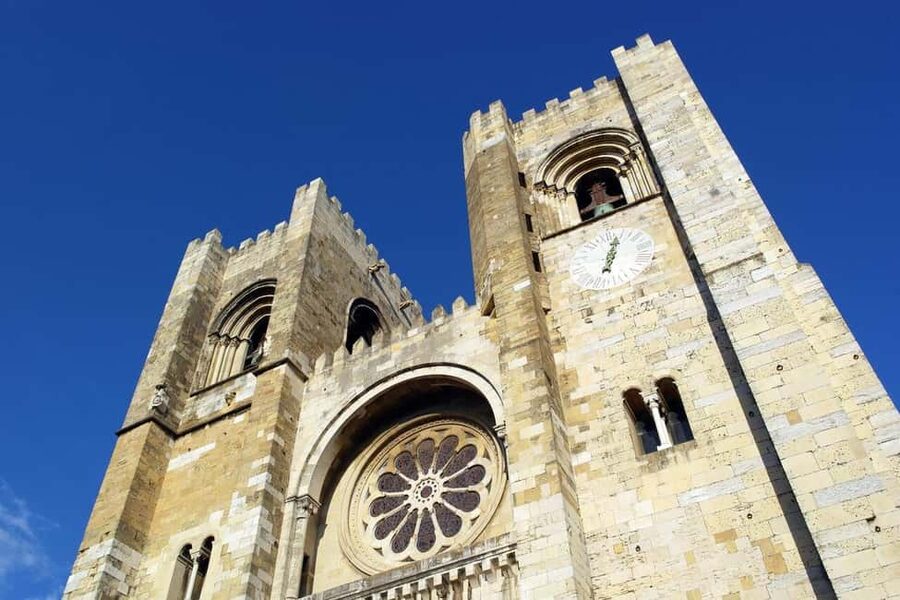
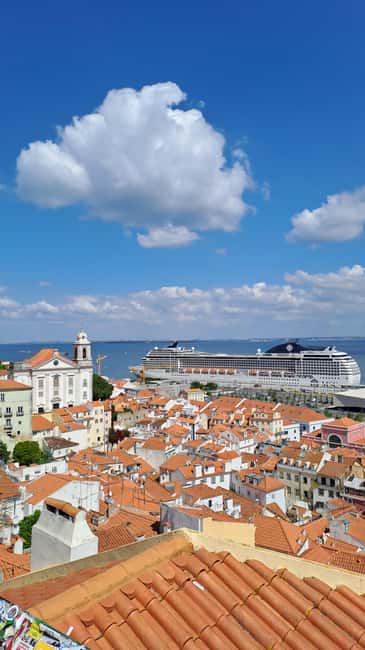
You’ll hit Santo Estevao Belvedere as a photo stop, then soon after you get Largo Portas do Sol as another break and photo stop. These viewpoint moments are short, but that’s also the beauty. They’re built into the route, so you’re not wasting time traveling between distant scenic points.
From here, you’ll see Lisbon opening up in layers. You get a sense of the steep hills, the density of older neighborhoods, and the way the Tagus River area sits nearby. Even if you don’t plan your day around a specific sunset moment, these views give you a strong sense of geography, which makes the rest of Lisbon easier to explore on your own later.
Photo tip: on windy viewpoints, keep your hands steady and your camera strap tight. Also, don’t just take one wide shot and move on. Turn slightly, check different angles, then shoot again. Lisbon’s viewpoints often reward small changes.
Miradouro da Graça finale: the big panoramic payoff
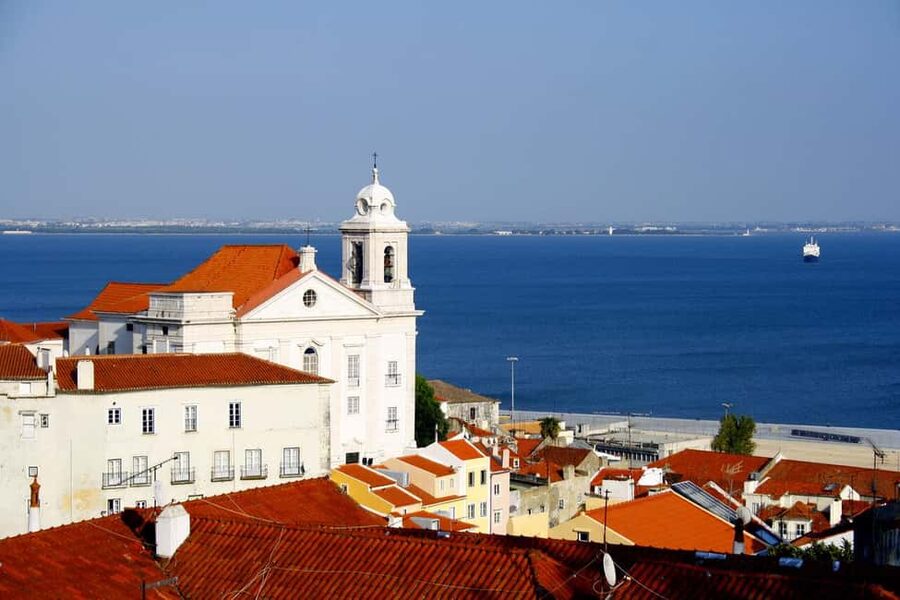
The tour ends at Miradouro da Graça, one of Lisbon’s most beautiful panoramic terraces. This is where everything you walked through starts to click. Alfama’s tight lanes, the wall traces, and the earthquake-era street reshaping all become part of the bigger city picture when you look out over the rooftops and the river.
This finish also feels like a good reset. You start near the river, you climb into old city streets, and then you arrive at a final wide-open view. It’s a classic Lisbon rhythm, and it suits most travelers because it gives you both connection and payoff.
If you’re planning the rest of your day, this is also a great place to stop and orient. You can use the view to decide where you want to wander next, whether that’s back toward central Lisbon or deeper into neighborhoods you’ve just learned how to read.
What the guide adds: Tiago’s customization and the small-group feel
The most praised part of this experience is the guiding. Tiago stands out for how well he knows the city and for how much he can show beyond what you’d find on your own. That means you’re not just walking past famous names, you’re understanding why those places matter in the bigger story of Lisbon.
Another big plus is customization. If the group is more into architecture details, street history, or simply getting to the best viewpoints efficiently, the tour can adjust. That’s a real value, because it reduces the chance you’ll feel stuck on topics that don’t interest you.
And because the tour is set up like a small-group walk, the pace feels considerate. You get room to take photos, pause when you want, and ask questions without feeling like you’re in everyone’s way. On narrow Alfama streets, that difference matters.
Price and value: why a symbolic booking price can still feel fair
The listed price is $1.18 per person. That’s a symbolic booking cost, not a full payment in the usual sense, and the tour also welcomes tips at the end based on your enjoyment and budget. So the value isn’t just the number, it’s what you get for a small time window.
You’re getting an English guided walking tour, multiple historic neighborhood stops, walking along parts of old city walls, and three scenic viewpoints. You also get insider tips and local recommendations, which is exactly what helps you after the tour, when you’re deciding where to eat or where to go next.
Is it always a perfect fit? Only if you’re comfortable with active walking. This tour involves hilly, uneven terrain. If you want flat surfaces and minimal steps, you might find the climb tiring.
If you are okay with the walking and you want a guide to connect the dots, this is one of those Lisbon deals that feels unusually efficient.
Who this tour suits best, and who should skip it
This is a great match if you want to see Lisbon’s older neighborhoods without getting lost, and if you enjoy stories tied to what you can actually see while walking. It’s especially good for first-timers who want a grounding in Alfama and viewpoints in one compact timeframe.
You’ll also like it if you want a guide who answers questions well. Tiago’s style, described as knowledgeable about the city and enthusiastic, comes through in how the tour feels paced and responsive.
You might want to skip or choose something else if you have mobility limits related to hills and uneven streets. Also, if you hate walking for two hours and prefer to sit down for long chunks of time, you might feel stretched thin by the constant movement.
Should you book this Walled City, Alfama and Viewpoints walk?
Yes, you should book it if you want the classic Lisbon experience with real street context. The mix of Alfama, wall traces, the 1755 earthquake explanation, and three built-in viewpoints is a smart use of time. And the guiding, especially Tiago’s customization and small-group feel, is a major reason people leave happy.
I’d only hesitate if you know you struggle with uphill walking on uneven ground. If that’s you, save your energy and pick a flatter option.
If you can handle the climb, this is one of the best ways to get oriented fast, then keep exploring Lisbon with better instincts and better photos.
FAQ
How long is the Lisbon Walled City, Alfama and Viewpoints tour?
It lasts 2 hours.
What language is the guided tour in?
The tour is guided in English.
Is the tour mostly uphill walking?
Yes. The tour involves walking through hilly and uneven terrain.
Does the price include food or drinks?
No. Food and drinks are not included.
How many viewpoints do you visit?
The tour includes stops at three scenic viewpoints.
Where do I meet the guide?
Meet in front of the Lisboa Story Centre. You should spot someone in a green shirt or coat with a Lisbon Free Tours identification badge.
Fresh across the seven hills
- Full-day Private Tour: Fátima Sanctuary, Batalha, Nazaré, Óbidos
★ 5.0 · 6 reviews - Porto Private Tour from Lisbon
★ 4.5 · 6 reviews - VIP transfer from the airport to Lisbon hotels
★ 5.0 · 6 reviews - Lisbon Photoshoot: Capture Your Adventure
★ 5.0 · 6 reviews - Lisbon: Romantic Sunset Cruise With Wine & Portuguese Tapas
★ 5.0 · 6 reviews - Arrábida Wine Tour – 3 Wineries, Traditions & Views from Lisbon
★ 4.5 · 6 reviews - Lisbon: Sintra, Pena Palace, Belém Tour + sunset Boat Cruise
★ 5.0 · 6 reviews
Alfama Quarter Tours, compared.

Private Lisbon Sightseeing Tuk-Tuk Tour: Alfama, Belém & More
Read our review →
Hills, Alfama, and Mouraria Tour by Electric Bike
Read our review →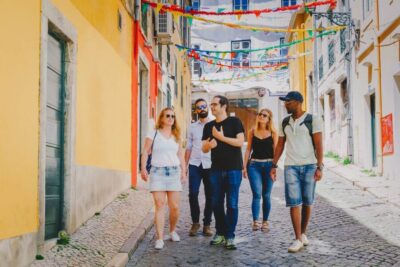
Best of Lisbon Walking Tour: Rossio, Chiado & Alfama
Read our review →
Lisbon Small-Group Food Tour with 18 Tastings in Alfama District
Read our review →
Lisbon E-Bike Tour Commerce Square, Mouraria and Alfama
Read our review →
Old Town TukTuk Tour and Scenic Viewpoints in Alfama
Read our review →
Alfama Tour and Live Fado with Traditional Dinner
Read our review →Browse the lists this tour appears in