
Reviewed · ÉVORA DAY TRIPS FROM LISBON
Tour Évora and Alentejo in a private tour
Cork, bones, and a medieval city in one day. I like how this private Évora and Alentejo tour stitches together a real-life cork workshop with a guided walk through a UNESCO World Heritage city center. Hotel pickup and round-trip transport keep the day from feeling like a logistics puzzle.
I especially love the mix of Corticarte cork production and the big-city learning you get from a guide who can explain Portugal in plain language. You’ll also see the town’s most famous shocks and beauties, from the Chapel of Bones to the Roman Temple of Diana and the granite cathedral.
One consideration: it is a long full day, with substantial time on the road from Lisbon and a couple of sites that require extra paid entry.
In This Review
- Key highlights worth planning for
- The value question: why this private day trip works
- Starting early from Lisbon, then settling into Évora time
- Corticarte (cork factory) is the best kind of surprise
- Évora’s historic center: UNESCO walls and layers you can see
- Aqueduct of Água de Prata: Renaissance engineering with staying power
- The Chapel of Bones: short, eerie, and oddly human
- Igreja de São Francisco and Praça do Giraldo: Manueline details and civic pride
- Convent of Nossa Senhora da Graça: Renaissance style with face-to-face symbolism
- Temple of Diana and Évora Cathedral: Roman-to-Gothic in the same mental frame
- Timing, tickets, and lunch: keep your budget realistic
- Who this private Évora and Alentejo tour fits best
- What I’d do to get the most out of the day
- Should you book this tour?
Key highlights worth planning for
- Corticarte cork-factory tour: learn the full process, not just the souvenir aisle
- UNESCO walled Évora old town: narrow lanes, white houses, and Roman-to-Gothic layers
- Chapel of Bones: a short, memorable reflection stop (separate ticket needed)
- Temple of Diana and Évora Cathedral: Roman and medieval architecture close together
- Guides like João or Anastasia: strong storytelling and patient, helpful pacing
- Private format with pickup: you can move at your group’s speed
More days out east to Evora:
- Évora and Megaliths Full-Day Tour from Lisbon★ 4.7 · 456 reviews
- From Lisbon: Évora and Monsaraz with Regional Wine Tasting★ 4.7 · 345 reviews
- Évora and Monsaraz with Regional Wine Tasting from Lisbon★ 4.5 · 229 reviews
- Private Day Tour With Guide to Évora and Monsaraz★ 5.0 · 134 reviews
The value question: why this private day trip works
At $169.31 per person, the price makes sense if you hate the usual day-trip tradeoffs. You’re paying for three things that add up fast on your own: private guide time, round-trip transport, and door-to-door pickup.
This tour is also the type of day trip that can save energy. Driving yourself means parking stress, ticket lines, and scrambling for meeting points. Here, you spend your energy on the sights, not on logistics.
The format is straightforward: a single, guided route through Évora with a cork-factory stop first. That keeps the day focused, and it helps if you only have one day in the Lisbon area.
Starting early from Lisbon, then settling into Évora time
The tour starts at 8:30 am with pickup at your accommodation (including locations like Porto de Cruzeiros). You travel in an air-conditioned vehicle, with WiFi on board, which sounds small until you’re staring at a road trip for most of a day.
From Lisbon, it’s roughly about 90 minutes each way in typical conditions, so you should treat this as a true day trip, not a quick outing. Once you reach Évora, everything gets more interesting because the town is walkable and compact inside its medieval walls.
My practical take: if you’re prone to getting stiff on long rides, bring a layer. Alentejo mornings can be cooler than you expect, and cars can swing between too-cold and too-hot.
Corticarte (cork factory) is the best kind of surprise
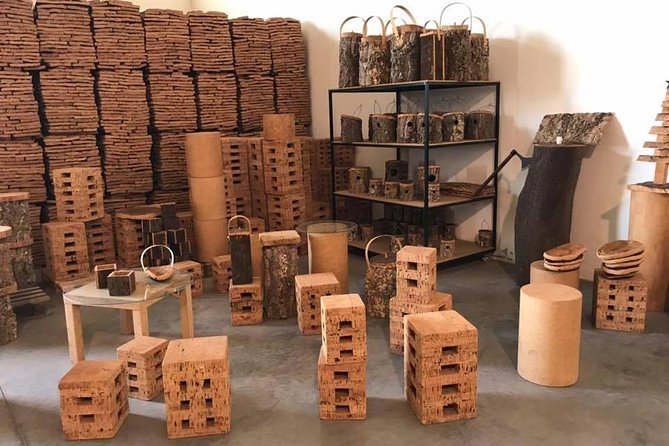
The day begins at Corticarte – Arte em Cortica, where you’ll tour a traditional cork factory and learn the process from the cork oak tree all the way to finished products. This is not just a “watch and buy” stop.
You’ll hear how cork production works in cycles. The bark grows back, and it needs to be removed about every nine years, reaching roughly 25 centimeters thick. Cork is prized because it’s naturally resistant to heat, cold, and fire.
Then the tour connects cork to the modern world you actually recognize. Yes, wine stoppers come up. But you’ll also hear how cork shows up in things like sports equipment and even in household and design products.
One reason this stop lands well is that it gives you a mental model. After you see cork harvested and prepared, you stop treating a bottle stopper like a throwaway item. You start noticing the material.
Admission here is marked as free, which helps your budget and keeps the day feeling good value.
Évora’s historic center: UNESCO walls and layers you can see
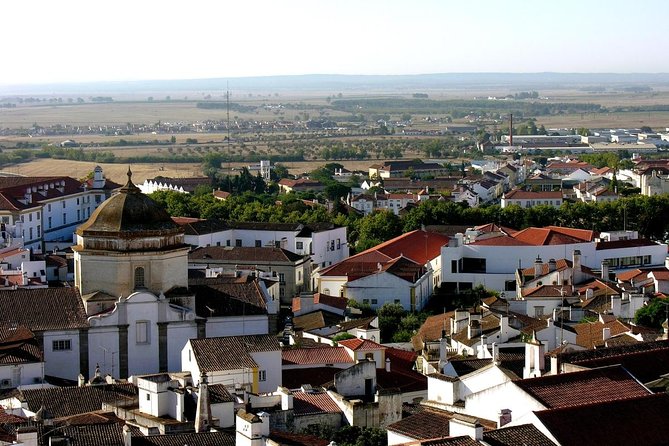
Next you’re inside the Historic Center of Évora, a UNESCO World Heritage site since 1986. The area sits inside medieval walls that define the city-museum feeling. The walled area covers about 107 hectares and stretches over more than 3 kilometers.
This stop is all about reading the town. Évora isn’t one era. It’s a stack: Roman roots, then influence from Celts, Romans, Arabs, Jews, and Christians. You’ll also see the “golden age” energy from the 15th century, when Évora became closely tied to Portuguese royal life.
A helpful detail here is how the architecture behaves. The city is famous for the look of white houses, decorated tile work, and wrought iron balconies. Even if you only have 45 minutes, the guide helps you not just look, but understand why the street shapes matter.
My tip: slow down at the turns. The alleyways and patios are part of the point. If you keep walking fast, you’ll miss the small visual clues.
Some other seven-hills days worth pricing up



Aqueduct of Água de Prata: Renaissance engineering with staying power
Between the old streets and the churches, there’s time for a look at the Aqueduto da Água da Prata, also known as the Água de Prata Aqueduct.
This is a Renaissance hydraulic work inaugurated in 1537, built under King João III and designed by Francisco de Arruda. The aqueduct transports water from springs near Graça do Divor, and it covers about 18 kilometers.
You might not think “aqueduct” is a top sightseeing moment. But in a place like Évora, it becomes proof that big history is also daily infrastructure. It’s the kind of monument that makes you appreciate how cities worked before modern water systems.
Expect it to feel like a photo and explanation stop, not a long linger. If you love architecture and engineering, ask your guide for the practical details about where water comes from and where it goes.
The Chapel of Bones: short, eerie, and oddly human
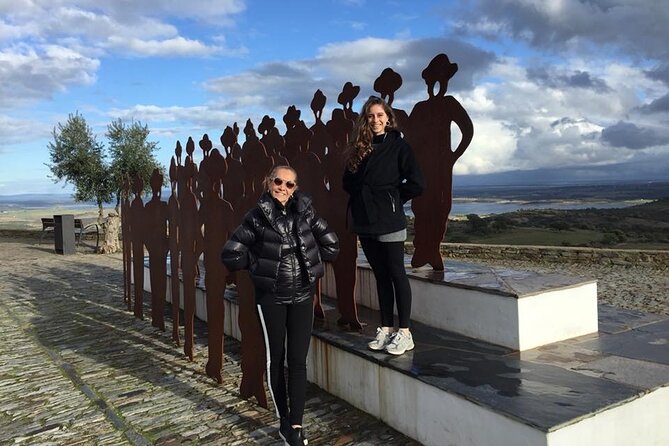
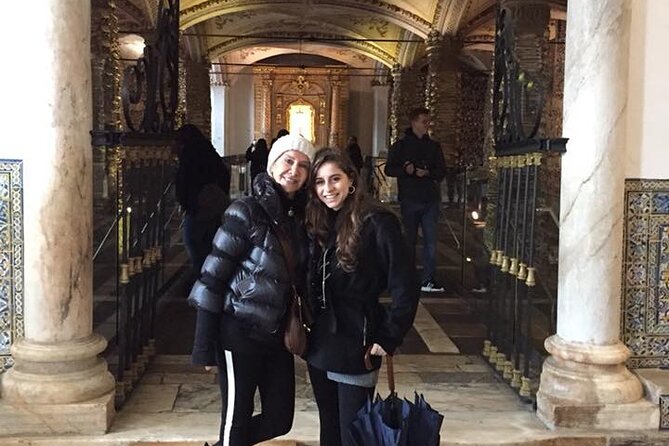
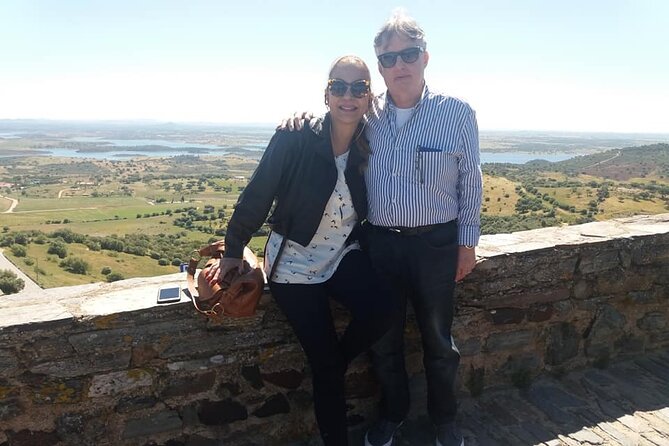
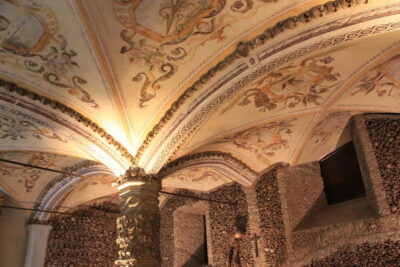
Then comes the Capela dos Ossos, the famous Chapel of Bones. It’s scheduled for about 30 minutes and it’s marked as not included for admission.
The chapel is lined with human bones and skulls, and it’s estimated to represent more than 5,000 monks. The point isn’t shock for shock’s sake. The tone is reflective, with a message about waiting and life.
I like this stop because it’s fast and it changes how you look at everything else in Évora. Once you’ve seen the bones, the stone churches and cathedral feel less like sightseeing props and more like places built for a community’s questions.
If you’re sensitive to this kind of content, you can treat it as an optional brief visit. But the tour builds in time for it, so you may want to brace yourself mentally for something darker than the rest of the day.
Igreja de São Francisco and Praça do Giraldo: Manueline details and civic pride
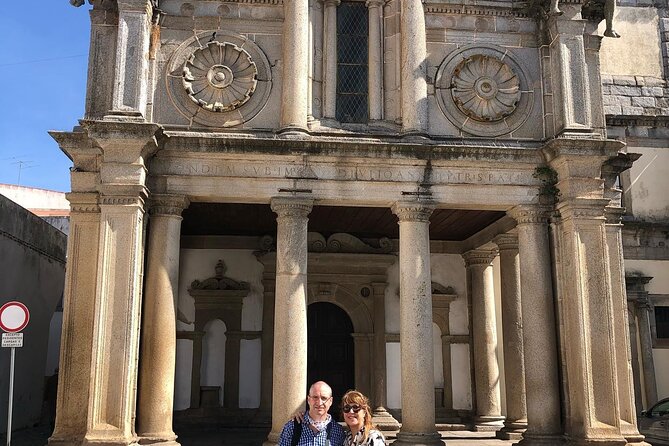
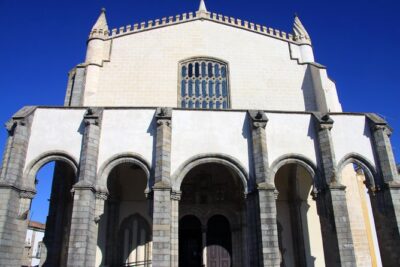
After the bones, you’ll visit Igreja de São Francisco, built between 1480 and 1510 with Gothic-Manueline architecture. It’s free to enter and scheduled around 20 minutes.
This is a church where details matter. The guide can point you to the symbols tied to Portugal’s maritime expansion era, including the cross of the Order of Christ and emblems connected to kings such as D. João II and D. Manuel I.
Then you’ll reach Praça do Giraldo, the town’s central square. It’s been the hub since the square’s construction around 1571 to 1573. The square is linked to Geraldo Geraldes, Sem Pavor, who conquered Évora from the Moors in 1167. The square’s long civic memory gives the town a heartbeat.
These stops work well because they break up the heavier monuments. You get a church, then an open square, then you reset your eyes and legs.
Convent of Nossa Senhora da Graça: Renaissance style with face-to-face symbolism
The Igreja do Graça / Convent of Nossa Senhora da Graça brings Renaissance style to the façade, and it’s one of the stops where Évora’s character shows up fast.
The monastery was founded in 1511, designed by architect Miguel de Arruda. The standout element is the façade decoration with famous “Atlantean” figures the locals call Meninos da Graça.
This is the kind of detail that you’ll miss if you’re rushing. But with a guide, you’ll learn what you’re looking at and why locals kept a nickname for those figures for centuries.
If you’re traveling with someone who loves visual stories, this is a great midpoint in the day.
Temple of Diana and Évora Cathedral: Roman-to-Gothic in the same mental frame
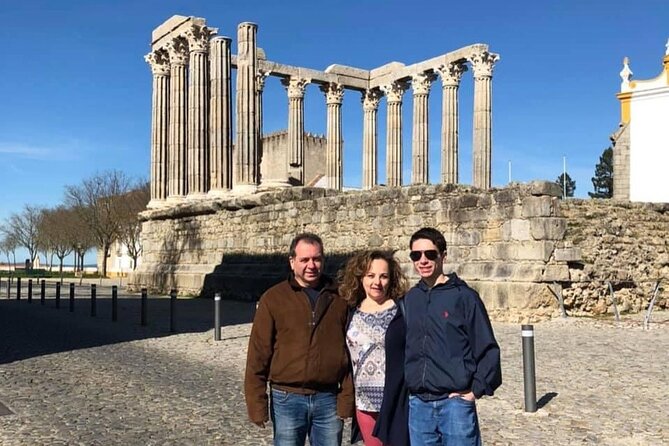
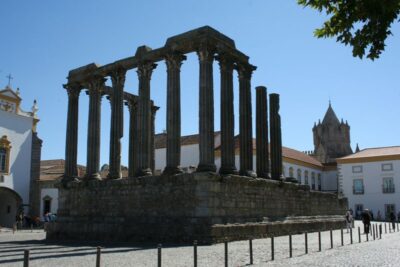
Next is the Templo Romano de Évora, commonly called the Temple of Diana. It’s scheduled about 15 minutes and entrance is marked free.
It sits near the cathedral area and helps you connect Évora’s Roman importance to what came later. The area also ties into the “Water of the Silver” aqueduct story, including how some arches remained visible and how a later 16th-century system helped with water transportation.
Then you reach the big centerpiece: the Se Catedral de Évora. Cathedral entry is marked as not included, and the stop is around 45 minutes.
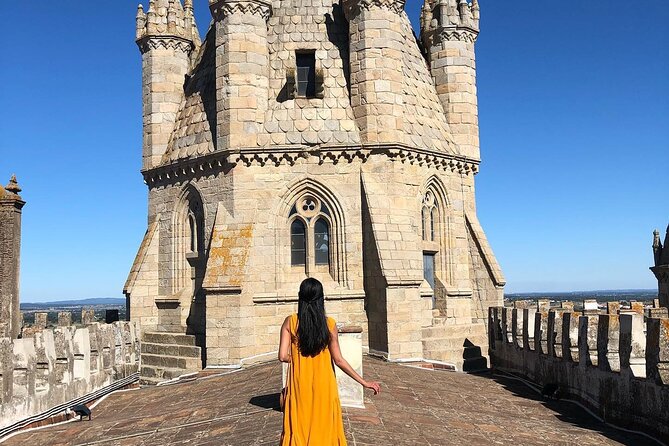
The cathedral construction began in 1186, was consecrated in 1204, and finished around 1250. It’s built in granite and shows a transition from Romanesque to Gothic styles. Two medieval towers frame the façade, and the portal features sculpture work attributed to Mestre Pêro.
Outside, the most dramatic feature is the dome, often described as the cathedral’s signature look. It also connects to maritime-era symbolism through the lantern tower detail.
Practical note: cathedral interiors can be cool and dim compared to outdoor streets. Wear something you can layer, and expect a slower pace here so you can absorb the scale.
Timing, tickets, and lunch: keep your budget realistic
This tour includes guided visits and transport, but it does not include lunch. Museum and monument tickets are also partially separate.
Here’s the budget reality from the tour details:
- Some major sights are free on the tour schedule, including the cork factory, historic center time, and multiple churches and the Temple of Diana.
- Chapel of Bones and the cathedral are marked as not included.
- There’s also a line for Entrance fee – Tickets for Museums €10.00 per person.
So plan on spending extra for at least the chapel and cathedral, and possibly the museum ticket fee. It’s usually a small add-on compared to the cost of getting a private driver plus guide time, but don’t assume everything is included.
For lunch, you’re on your own. This can be a good thing. Évora has plenty of options inside or near the old streets, and with your guide, you can usually get pointed to a spot that fits your pace. If you want a sit-down meal, plan for slower time. If you prefer a lighter lunch, you can keep moving and use lunch time as recovery from the morning.
Who this private Évora and Alentejo tour fits best
This is a strong choice if:
- You want a one-day concentration on Évora’s main monuments without planning the route.
- You care about explanation, not just photos.
- You prefer a calmer day than big group tours, since it’s private and you’re traveling as your own group.
- You like hands-on learning, and the cork factory appeals even if you don’t care about wine.
It might be less ideal if:
- You hate long rides. The road time is real from Lisbon.
- You want a purely “outdoors and views” day, because a big chunk is church and historic-site time.
- You don’t want to pay any extra for entrances. A couple of key stops require separate admissions.
What I’d do to get the most out of the day
A few small habits make a difference:
- Wear comfortable shoes with grip. Évora streets and cathedral areas involve uneven paving and stairs.
- Bring a light layer for churches and shaded interiors.
- Have cash or card ready for the separate entrance fees marked not included.
- If you’re interested in cork products, budget time after the factory for a quick look at what’s for sale. That’s where the learning connects to souvenirs that feel more meaningful.
If you get a guide like João or Anastasia, you’re in good hands for pacing and storytelling. Many guests highlight how helpful and adaptable these guides can be, and it shows in how the day feels easy rather than rushed.
Should you book this tour?
I’d book it if you want the best version of a Lisbon-based Évora day: private comfort, guided interpretation, and a first stop that teaches you something you’ll remember. Cork and Évora sound like two unrelated topics on paper, but the day works because the guide ties the whole Alentejo story together, from local materials to long-lived architecture.
Skip it only if you’re extremely time-sensitive or you strongly dislike paying extra for a couple of entrances and a longer day overall.
If Évora is on your Portugal list and you want to do it in one smart move, this is a very solid choice.
Fresh across the seven hills
- Full-day Private Tour: Fátima Sanctuary, Batalha, Nazaré, Óbidos
★ 5.0 · 6 reviews - Porto Private Tour from Lisbon
★ 4.5 · 6 reviews - VIP transfer from the airport to Lisbon hotels
★ 5.0 · 6 reviews - Lisbon Photoshoot: Capture Your Adventure
★ 5.0 · 6 reviews - Lisbon: Romantic Sunset Cruise With Wine & Portuguese Tapas
★ 5.0 · 6 reviews - Arrábida Wine Tour – 3 Wineries, Traditions & Views from Lisbon
★ 4.5 · 6 reviews - Lisbon: Sintra, Pena Palace, Belém Tour + sunset Boat Cruise
★ 5.0 · 6 reviews
Évora Day Trips from Lisbon, compared.
Évora and Monsaraz with Regional Wine Tasting from Lisbon
Read our review →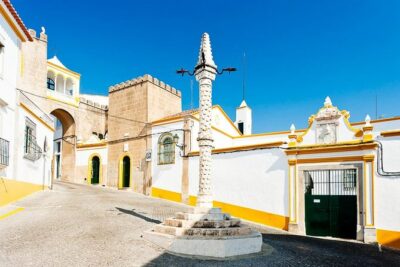
Private Day Tour With Guide to Évora and Monsaraz
Read our review →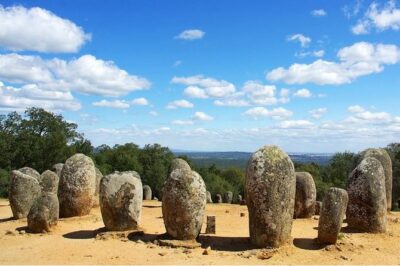
From Lisbon to Alentejo: Évora and Megaliths Full-Day Tour
Read our review →
From Lisbon to Alentejo: Évora and Megaliths Full-Day Group Tour
Read our review →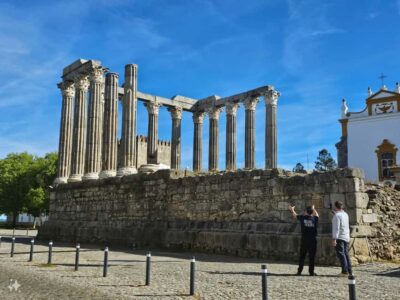
Évora (w/ Cathedral & Bones), Cartuxa & Cork Factory
Read our review →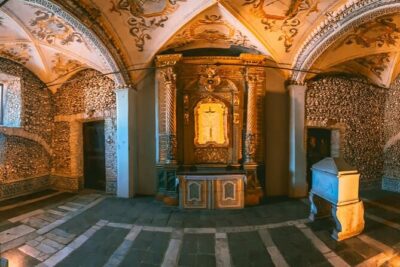
Évora + Chapel of Bones + Monsaraz + Alentejo Wines
Read our review →Browse the lists this tour appears in