
Reviewed · STREET ART
3-Hour Guided Street Art Walking Tour of Lisbon
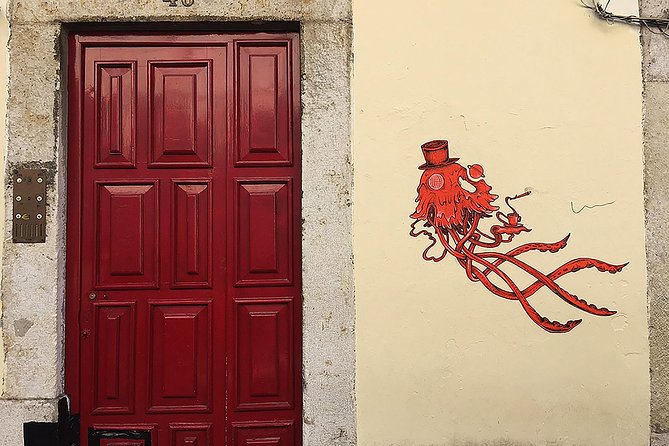
Lisbon’s street art rewards slow walking. With a local guide and a small group, you get focused stops and you won’t waste time wandering. The catch is simple: you are walking a hilly route on uneven ground, so bring grippy shoes.
What I like most is the way the art gets put in context. Guides such as Erika and Maria show how graffiti, murals, and even tile work connect to Lisbon’s social and political life. If you like photos, this tour feeds that too, because you are stopping for big visual moments, not just quick peeks.
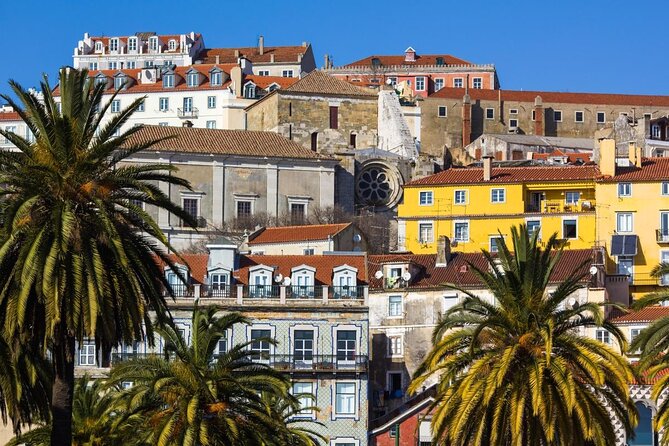
You cover five neighborhoods in about three hours, with a rest break mid-way. The walk ends near the Miradouro da Graça area, so you finish with views as a bonus.
In This Review
- Key things I’d watch for on this Lisbon street art walk
- Street art Lisbon, guided: why this feels better than going solo
- Price and timing: what $42.27 buys you in real terms
- Meeting points and the route flow (what your legs will notice)
- Stop 1: Bairro Alto street art tied to nightlife traditions
- Stop 2: Elevador da Gloria and Calçada da Glória as an urban art gallery
- Stop 3: Baixa de Lisboa, azulejos and cobblestones with meaning
- Stop 4: Miradouro da Graça (Sophia de Mello Breyner Andresen) and worker-rights street art
- Stop 5: Alfama’s Chão do Loureiro, a five-floor car-park turned gallery
- Photography and walking tips that make the tour smoother
- Guides, pacing, and the style of explanation you can expect
- Who should book this 3-hour Lisbon street art tour
- Should you book it?
- FAQ
- FAQ
- How long is the Lisbon street art walking tour?
- How much does the tour cost?
- Is the tour offered in English?
- How many people are in the group?
- What is included in the tour?
- Is hotel pickup or drop-off included?
- Where does the tour start and where does it end?
- What should I wear for this tour?
- Are food and drinks included?
- What is the cancellation policy, and what if weather is bad?
Key things I’d watch for on this Lisbon street art walk
- Small group size (listed at up to 12, with a maximum activity limit of 15) means your guide can respond to questions
- English-speaking guides with strong follow-through, including guides named in feedback like Erika and Maria
- Five specific stops across Bairro Alto, Gloria, Baixa, Graça, and Alfama, each with a different street art theme
- Half-way rest break so the route feels manageable, not constant marching
- Photography-friendly variety, from walls and murals to azulejos and cobblestone details
- You need solid walking legs, because you must handle unpaved or uneven terrain and hills
More Lisbon miradouros linked on foot:
- Lisbon: History, Stories and Lifestyle Walking Tour★ 4.8 · 10,902 reviews
- Best of Lisbon Small-Group Guided Walking Tour★ 5.0 · 4,869 reviews
- Lisbon: Food and Wine Small Group Walking Tour★ 4.9 · 4,082 reviews
- Best of Lisbon Walking Tour: Rossio, Chiado & Alfama★ 4.9 · 2,700 reviews
Street art Lisbon, guided: why this feels better than going solo
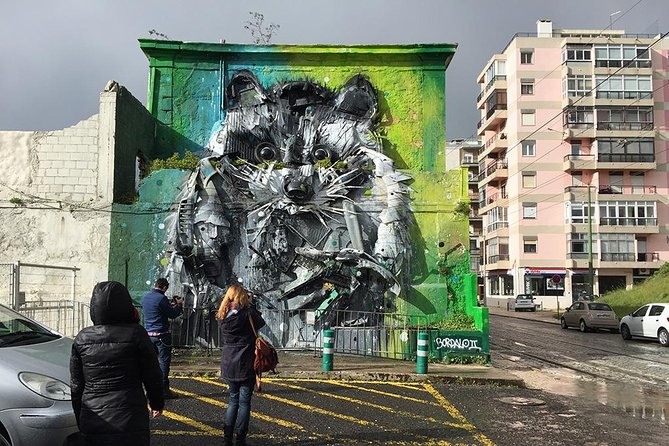
Lisbon street art is everywhere, but “everywhere” can also mean “nowhere,” fast. A guided route matters because it helps you spot what you might otherwise miss and understand why it’s there. Instead of just seeing color on a wall, you start noticing patterns, symbols, and neighborhood moods.
The small group setup is a real plus. On this kind of tour, you want time for questions. And when your guide can explain how the art connects to place, you end up looking differently even after the tour ends.
Price and timing: what $42.27 buys you in real terms
This is priced at $42.27 per person for about 3 hours. At first glance, that may sound like a “just walking” cost, but it includes the main value: a local guide plus a rest break during the walk.
Each stop is designed to be walk-through time, not ticket time. The itinerary marks admissions as free at the stops, so you keep your attention on what you came for: the art, the walls, the street scenes, and the stories behind them.
One more practical point: this tour is booked about 26 days in advance on average, which usually means you should plan ahead if you are traveling in a busy season. Also, you receive confirmation at booking, so it is not a vague wait-and-see situation.
Meeting points and the route flow (what your legs will notice)
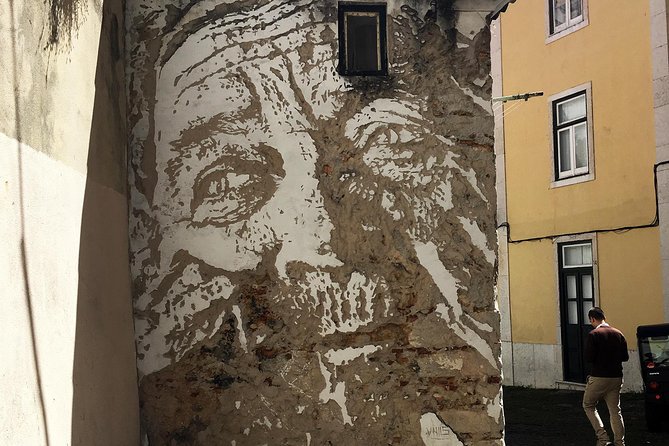
The tour starts at R. Luz Soriano 67, 1200-246 Lisboa and ends at Miradouro da Graça, Calçada da Graça, 1100-265 Lisboa.
Why this matters: it’s not a figure-eight where you finish exactly where you began. You start in one part of Lisbon and drift toward the viewpoint area. That is great for avoiding backtracking, but it does mean your shoes need to handle hills.
You will also want to show up with realistic expectations. This is a walking tour that requires you to be able to walk on unfaved or uneven terrain. If that is a problem for you, this is not the best fit.
Stop 1: Bairro Alto street art tied to nightlife traditions
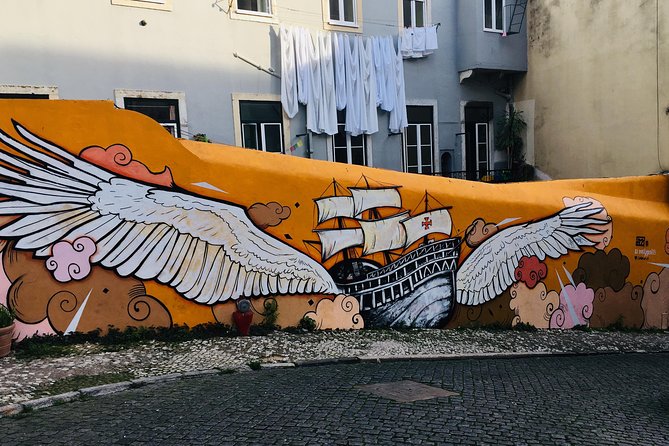
Your first stop is Bairro Alto, and the street art focus here is linked to the neighborhood’s nightlife traditions. This is where the tour mindset shifts from “street art as decoration” to “street art as part of a social scene.”
You spend about 30 minutes here. That time is short enough that you will likely feel a little sprinty as you look around, but long enough to understand what makes the walls feel of-the-moment.
A small consideration: Bairro Alto’s atmosphere is tightly connected to the neighborhood’s energy. If you are sensitive to crowds and noise, keep that in mind when you pick your time slot.
Some other seven-hills days worth pricing up


Stop 2: Elevador da Gloria and Calçada da Glória as an urban art gallery
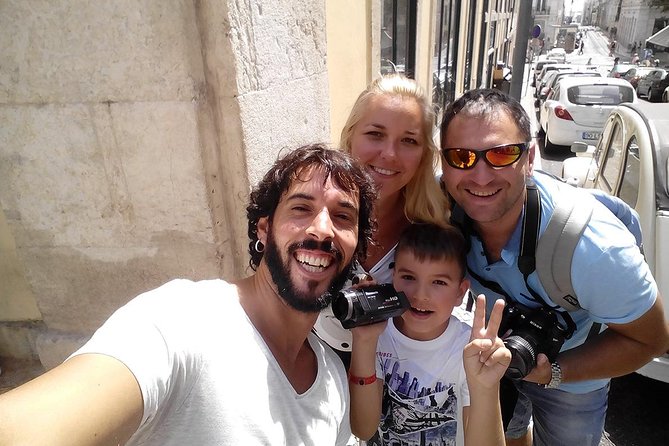
Next you head to Elevador da Gloria, specifically Calçada da Glória, described as one of Lisbon’s Urban Art Galleries. The key idea here is that artists from all over the world create projects that show up in this space.
Again, you get about 30 minutes. This stop is valuable because it shows street art as a global language. You are not only looking at local references, you are also seeing how Lisbon fits into the wider street art world.
If you care about photos, this is the kind of location that rewards slow scanning. Look at angles, not just the biggest piece. The best images often come from the small details around a main mural, especially where street surfaces and wall edges meet.
Stop 3: Baixa de Lisboa, azulejos and cobblestones with meaning
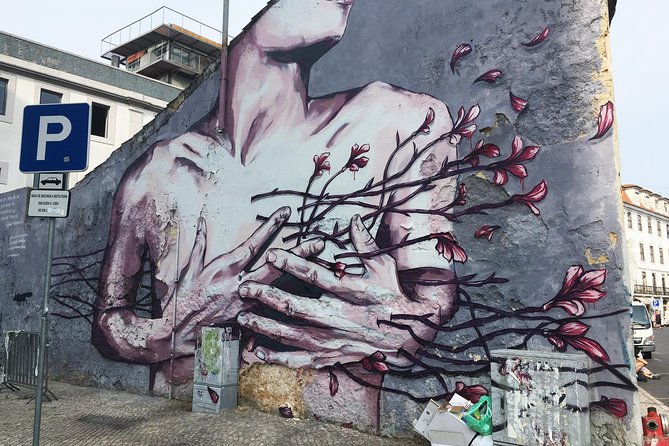
Then it is Baixa de Lisboa, where the tour turns to the stories behind Lisbon’s azulejos and cobblestone streets. This stop is a smart reminder that street art in Lisbon is not limited to spray paint and tags.
Azulejos are a public art form you see while you walk, and the tour framing helps you notice how design choices and symbols carry meaning at street level. It’s also a good chance to rest your eyes after the more mural-heavy stops.
This part is about “what you are seeing,” not “what you are reading.” The symbolism and design feel easier to grasp when you know what to look for, and a guide helps with that.
Stop 4: Miradouro da Graça (Sophia de Mello Breyner Andresen) and worker-rights street art

At Miradouro da Graca (Sophia de Mello Breyner Andresen), the tour shifts into a more political and community-focused theme. Bairro da Graça is described as a residential district with a legacy tied to Portugal’s workers unions and workers rights, and the street art here reflects that history.
You spend about 30 minutes. This is one of the most meaningful stops because it shows how street art can act like public memory. You are not just collecting images, you are learning why some art is made to be seen and understood.
The practical side: miradouros usually involve terrain and changing views, so this is where the “hills and uneven ground” note becomes real. Go slow, take the rest break mid-tour seriously, and keep your balance in mind.
Stop 5: Alfama’s Chão do Loureiro, a five-floor car-park turned gallery
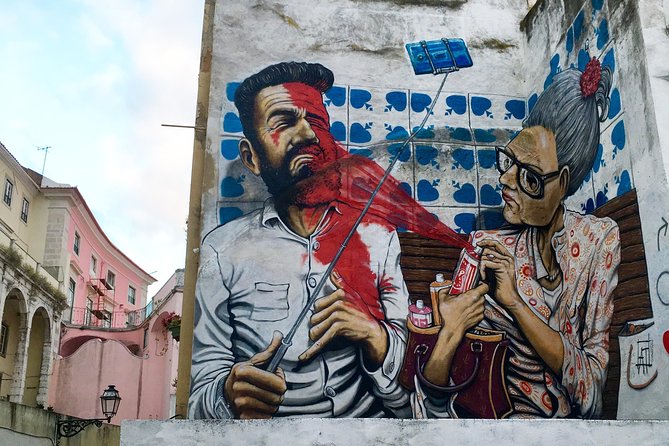
Finally, you reach Alfama, and specifically Chão do Loureiro, described as a car-park transformed into a street-art gallery. This is a multi-level setup, a five-floor building that showcases prominent street-artists of Lisbon’s south margin.
This stop is the “wow” stop for a lot of people, because your eye has room to roam vertically. You can shoot photos from different levels, and you see how a single location can hold many styles at once.
It also changes how you experience street art. A traditional street-level mural can feel like a one-off moment. Inside a multi-floor space, street art becomes a full environment.
If you like street art but you also care about context, this is a strong pairing: you get visuals plus neighborhood framing, so it feels less random.
Photography and walking tips that make the tour smoother
This tour is great for cameras, but the best results come from basic planning. Wear comfortable clothes and shoes, and choose something you trust on cobblestones and uneven patches.
A few tips I’d follow:
- Bring a camera strap you can manage while climbing and turning corners. Your hands need to stay free.
- Watch your footing first. Lisbon photos are worth it, but slips are not.
- Since food and drinks are not included, plan to carry water or snacks if you know you get hungry on walks. (You do get a rest break, but you should not count on it being a full meal stop.)
- If you want a better shot, pause before you shoot. A guide often points out details you might miss at first glance.
Also, keep in mind the group limit. When the group is small, you can take your time. When it is not, you feel rushed. This one is designed for attention, not crowd herding.
Guides, pacing, and the style of explanation you can expect
The strongest praise in the feedback centers on the guide experience. Names that come up often include Erika, Maria, Leigh, and Laith. The themes are consistent: the guide connects street art to its social, cultural, and historical context, and they explain how murals, graffiti, and tile-based art fit into Lisbon’s broader story.
A fun extra detail from the feedback: one guide named in reviews, Lait, is described as a street artist who even brought a spray can for participants to try. That does not mean every guide will do the same thing, but it signals how hands-on some of the guides can be.
On pacing, you get roughly 30 minutes at each stop, plus a rest break around the mid-point. Most people feel it covers a lot without dragging, but there is one caution worth noting: if you hate long walks, this route can feel like a lot. Hills are part of the deal, so prepare for that upfront.
Who should book this 3-hour Lisbon street art tour
Book it if you:
- Love photos and want a route with strong visual stops
- Want street art explained beyond aesthetics
- Prefer a small group with real chances to ask questions
- Are curious about how street art connects to politics, workers rights, nightlife culture, and public design like azulejos
Skip it or consider another option if:
- You have mobility issues. It is not recommended for travelers with mobility issues.
- Uneven or unpaved terrain is a no-go for you.
- You want a low-effort, minimal-walking experience. This is a walking tour through Lisbon’s hills.
Should you book it?
If your goal is to see Lisbon’s street art in a way that makes you look twice after the tour, this is a solid choice. The price feels fair when you count what you get: a local guide, multiple neighborhood themes, and a rest break, all in about three hours.
I would book it if you are comfortable with hills and can handle uneven terrain. I would skip it if you need step-free routes or you want a mostly flat walk. If you are on the fence, remember this tour ends near a viewpoint area, so you get a better payoff than a quick wall-hunt.
FAQ
FAQ
How long is the Lisbon street art walking tour?
It is approximately 3 hours.
How much does the tour cost?
The price is $42.27 per person.
Is the tour offered in English?
Yes, it is offered in English.
How many people are in the group?
The maximum group size is listed as 12 people, with a maximum activity limit of 15 travelers.
What is included in the tour?
Included: a local guide, a rest break at the half way point, and a small group tour.
Is hotel pickup or drop-off included?
No. Hotel pickup and drop-off are not included.
Where does the tour start and where does it end?
It starts at R. Luz Soriano 67, 1200-246 Lisboa, Portugal and ends at Miradouro da Graça, Calçada da Graça, 1100-265 Lisboa, Portugal.
What should I wear for this tour?
Wear comfortable clothes and shoes for a walking tour, and be prepared for unpaved or uneven terrain.
Are food and drinks included?
No. Food and drinks are not included.
What is the cancellation policy, and what if weather is bad?
You can cancel for a full refund up to 24 hours in advance. If the tour is canceled due to poor weather, you are offered a different date or a full refund.
Fresh across the seven hills
- Full-day Private Tour: Fátima Sanctuary, Batalha, Nazaré, Óbidos
★ 5.0 · 6 reviews - Porto Private Tour from Lisbon
★ 4.5 · 6 reviews - VIP transfer from the airport to Lisbon hotels
★ 5.0 · 6 reviews - Lisbon Photoshoot: Capture Your Adventure
★ 5.0 · 6 reviews - Lisbon: Romantic Sunset Cruise With Wine & Portuguese Tapas
★ 5.0 · 6 reviews - Arrábida Wine Tour – 3 Wineries, Traditions & Views from Lisbon
★ 4.5 · 6 reviews - Full Day Tour in Évora from Lisbon
★ 5.0 · 6 reviews
Street Art, compared.




Lisbon Street Art – Private Guided Tour in a Electric Tuk Tuk
Read our review →Browse the lists this tour appears in