
Reviewed · ALFAMA QUARTER TOURS
Alfama and Mouraria Tour – The oldest neighbourhoods in Lisbon
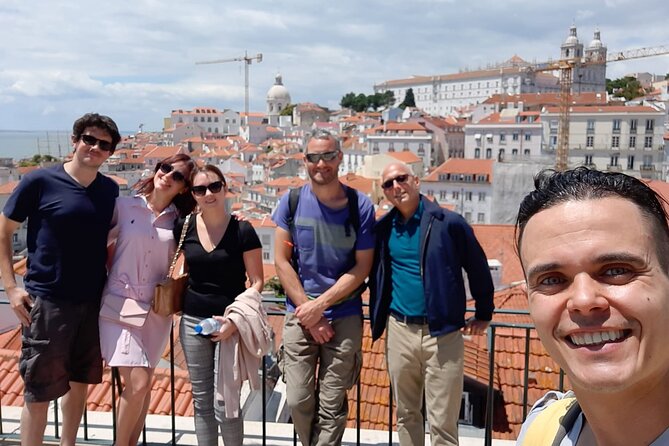
Alfama and Mouraria feel like Lisbon’s past. This walking tour strings together classic landmarks and unforgettable miradouro views across the city’s oldest districts. I also like the practical rhythm: short photo stops, quick context, then moving on before the hills grind you down too hard.
My only caution is the terrain. Plan for uphill walking and stairs, and you’ll have the best time if you come with comfortable shoes and a calm pace in mind.
In This Review
- Key highlights to know before you go
- Alfama and Mouraria: why these streets still matter
- Price and Logistics: a 2.5-hour guided bargain
- Start at Praça do Comércio, and find your guide fast
- D. José I to Praça do Comércio, Lisbon’s grand gateway
- St. Anthony’s birthplace church: religion with a story
- Casa dos Bicos: Manueline style up close
- Alfama’s streets: where the neighborhood becomes the attraction
- Lisbon Cathedral and the Pantheon stop you can’t miss
- Miradouro Portas do Sol and Santa Luzia: the view payoff
- Castelo de São Jorge: Moorish roots and big stamina tests
- Mouraria Berço do Fado and Igreja de São Vicente de Fora
- Walking style and comfort tips that actually help
- Should you book the Alfama and Mouraria tour?
Key highlights to know before you go
- Orange-umbrella start at the D. José I area near Praça do Comércio, so you can spot the guide quickly
- Bargain pricing for a 2.5-hour guided route through major Lisbon highlights
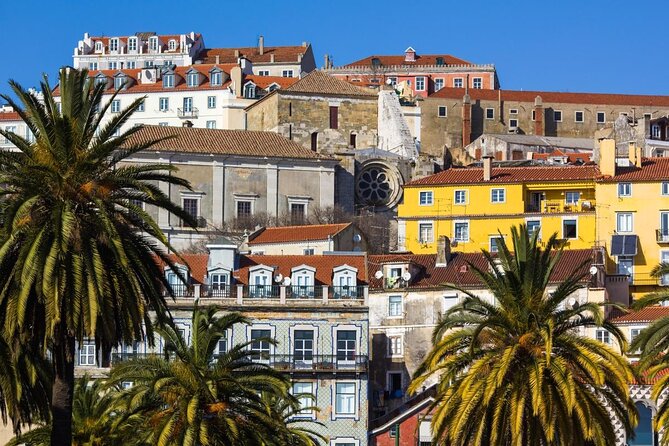
- Multiple miradouros with classic Lisbon skyline and river-region views
- Stop mix that makes sense: churches, Manueline architecture (Casa dos Bicos), cathedrals, and castle viewpoints
- Small group size (up to 20) keeps the walk friendly and manageable
- Fado-focused Mouraria section tied to the Mouraria Berço do Fado monument
More wandering through Alfama:
- Alfama Tour in Lisbon Old Town★ 5.0 · 4,936 reviews
- Private Lisbon Sightseeing Tuk-Tuk Tour: Alfama, Belém & More★ 5.0 · 4,277 reviews
- Lisbon: Hills, Alfama, and Mouraria Tour by Electric Bike★ 4.8 · 3,438 reviews
- Best of Lisbon Walking Tour: Rossio, Chiado & Alfama★ 4.9 · 2,700 reviews
Alfama and Mouraria: why these streets still matter
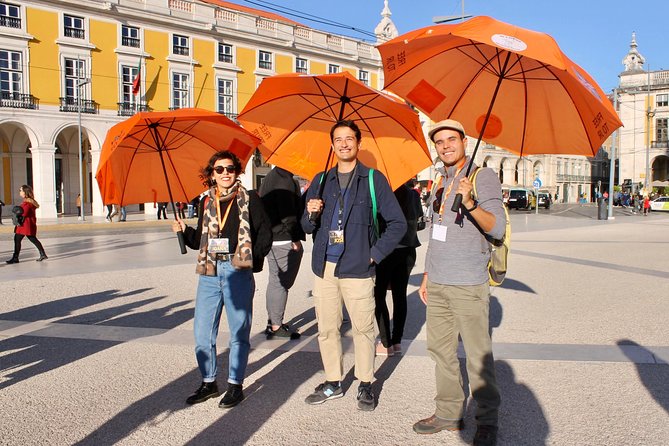
Lisbon has a lot of postcard views, but Alfama and Mouraria are where the city feels older in your legs and eyes. You walk through winding streets where churches, monuments, and hilltop viewpoints sit close together, so the story of Lisbon’s past keeps popping up without feeling like a museum checklist.
This tour works because it moves through layers. You start at the grand riverside square, then step into the older maze of Alfama. After that you climb toward the castle views, then end in Mouraria, where the city’s musical identity comes into focus around the Berço do Fado monument.
And yes, it’s a walking tour. If you like short stops that actually explain what you’re seeing, this one fits your style.
Price and Logistics: a 2.5-hour guided bargain
The price is listed at about $1.25 per person, which is unusually low for a guided route that lasts about 2 hours 30 minutes. When the cost is this small, the value comes from the structure: you’re not just wandering, you’re walking a route designed to make sense of the neighborhoods you’re passing.
A few practical points that matter on the ground:
- Small group: up to 20 people, which helps you keep track of the guide in narrow streets
- Language: offered in English
- Ticket: you’ll use a mobile ticket
- Route flow: it starts at Praça do Comércio and ends around Praça do Rossio
- Timing: booked on average about 17 days in advance, so you’ll want to grab a slot when your dates lock in
- Weather: the tour requires good weather, and it can be rescheduled or refunded if it has to be canceled
Also, while the stops are listed as free to enter, always keep a simple mindset: check what’s actually payable on-site. Some areas can have separate rules than the landmark frontage, so don’t assume every door is the same.
Start at Praça do Comércio, and find your guide fast
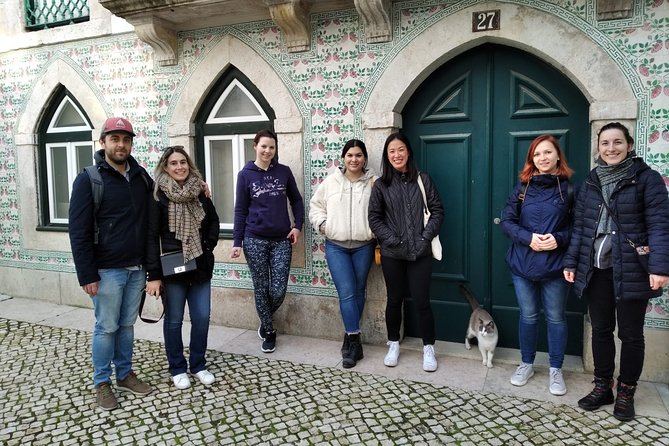
You begin at Praça do Comércio, Lisbon’s big, open-sky welcome mat. It’s a smart first step because the square gives you orientation before the streets start twisting.
Right near the start area, there’s a statue of D. José I. The key detail here is how to spot the guide: look for your team with an orange umbrella between the big arch and the statue in the middle. That’s your visual cue, and it saves you from the real problem of this kind of tour, getting turned around in a crowded meeting zone.
Tip for staying stress-free: arrive a few minutes early with your mobile ticket ready. If you’re late, you can spend your time searching instead of walking.
D. José I to Praça do Comércio, Lisbon’s grand gateway
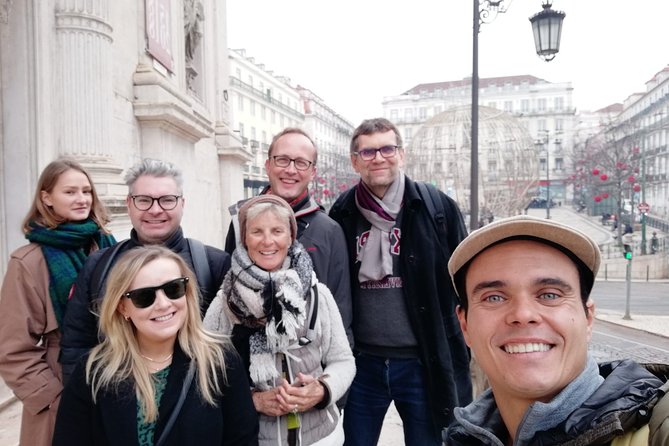
The D. José I statue is not just decoration. It frames the shift from royal Lisbon’s formal face into the older, more intimate neighborhoods that follow.
Then you step into Praça do Comércio, described as Lisbon’s most important square. Even if you’ve seen big squares before, this one sets the tone. It’s wide, bright, and easy to understand, so you can mentally map where the hills will carry you next.
It’s the kind of start that makes the entire day feel organized, even when the rest of the route turns into stairs and alleyways.
Other trips that start in Lisbon and end well:



St. Anthony’s birthplace church: religion with a story
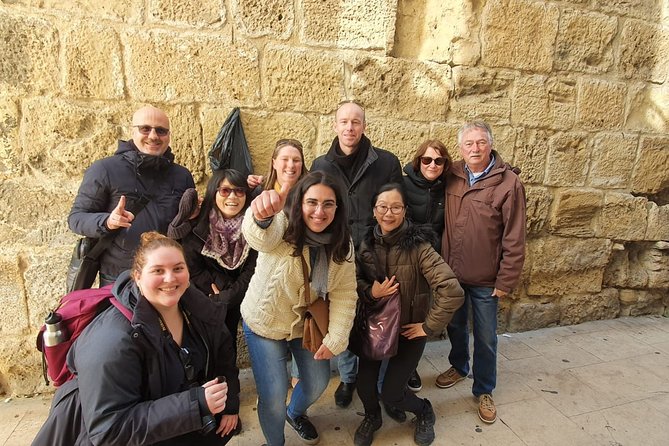
Next comes the Church of St. Anthony, connected to the place where St. Antony of Padua was born. This stop is short, but it lands because it explains why the saint is so woven into Portuguese culture.
What I like about stops like this is that they give you a way to look at buildings beyond their exterior. You start noticing details and symbolism because the guide has already handed you the “why this matters” part.
If you’re the type who reads signage and wants context, this is where the tour starts paying off.
Casa dos Bicos: Manueline style up close
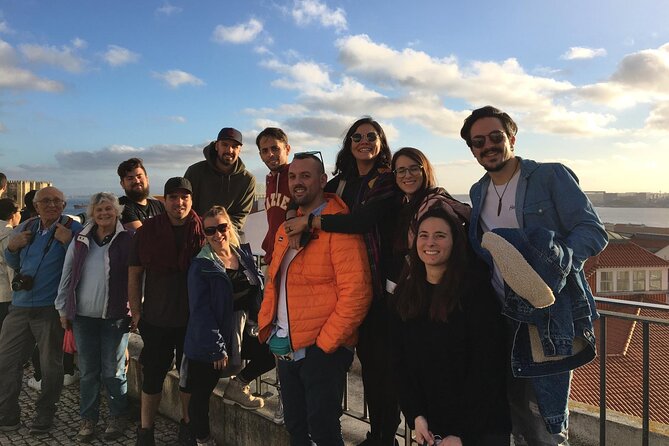
Then you reach Casa dos Bicos, one of Lisbon’s oldest houses and built in Manueline style. Manueline architecture has a specific, ornamental flavor, and this is the kind of place where the details are the point.
This is a great mid-walk pause because it’s not a viewpoint. It’s architecture you can study while you catch your breath. And because it’s early in the route, it helps you understand what “old Lisbon” looks like before you start climbing.
Alfama’s streets: where the neighborhood becomes the attraction
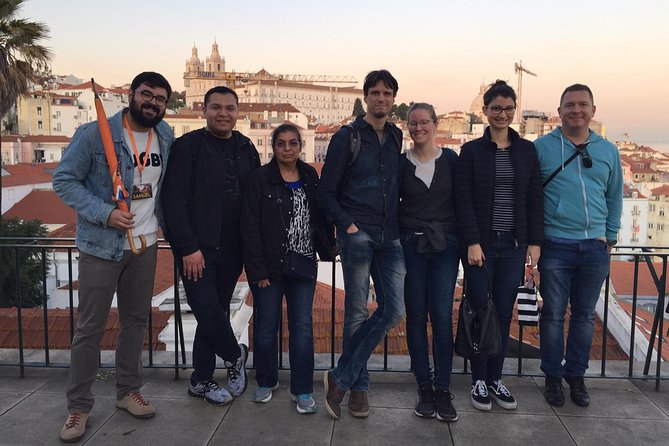
After the monuments, you transition into Alfama proper, walking through its narrow lanes and older street layout for about 20 minutes. This is the heart of the whole experience. Alfama is less about one single sight and more about how the place feels.
You’ll get moving “street views” instead of only standing around. That matters because Alfama is built for surprise turns. One corner looks ordinary, then suddenly a church façade, an arch, or a stairway pulls you toward the next photo moment.
Keep an eye on the rhythm the guide sets. Even when you’re moving uphill, a good guide keeps stops frequent enough that you don’t feel like you’re trudging.
Lisbon Cathedral and the Pantheon stop you can’t miss
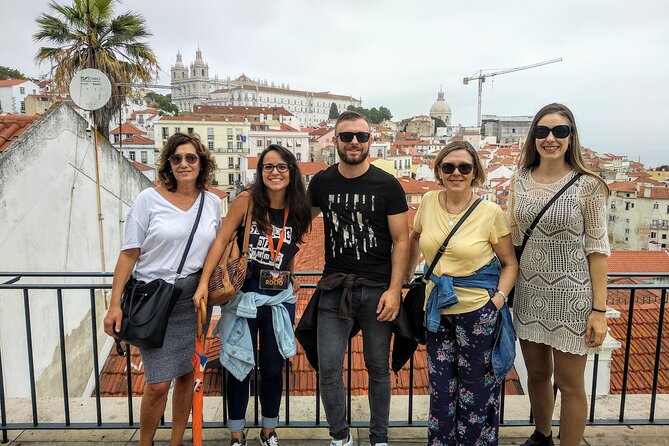
From Alfama, you visit Lisbon Cathedral, described as the oldest church in Lisbon. Even if you only take in the exterior at this point, knowing it’s the oldest church changes how you see the building. You start looking for continuity, for what survived, and for how power and faith shaped this part of the city over time.
Then comes Panteão Nacional, the National Pantheon of Lisbon. This one is quick, but it’s an excellent contrast. In a few minutes you’re shifting from medieval roots to a national memorial space, which helps you understand Lisbon’s timeline instead of flattening everything into one “old building” category.
Miradouro Portas do Sol and Santa Luzia: the view payoff
The tour turns into pure Lisbon optics when it hits the viewpoints. First is Miradouro das Portas do Sol, known for some of the city’s most beautiful views.
Then later you reach Miradouro de Santa Luzia, a charming viewpoint that often feels like you’ve stepped into a postcard with real people in it.
Here’s how to use these stops well:
- Don’t just shoot photos. Look for the big shapes first, river, rooftops, and the direction of the hills.
- Take a breath. This is where your legs thank you.
- If it’s hot, plan to slow your pace and stay hydrated, since you’ll be climbing after the viewpoints too.
These are the moments that make the uphill effort feel worth it.
Castelo de São Jorge: Moorish roots and big stamina tests
Next up is Castelo de São Jorge, with the tour noting the castle’s origins tied to the Moors in the 8th century. It’s a short stop, but it’s high impact. When you look out from this area, you feel why castles became the ultimate vantage points.
The practical part: this is where you’re most likely to feel stairs and steep bits. The good news is that some guides pace the climb in sections, so it feels less like one long push and more like a sequence of manageable steps. If you prefer less suffering, pick a guide known for staging and keep a steady pace for the group.
One balanced note: the castle and surrounding areas are sometimes treated differently than simple free entrances. The tour lists free entry for this stop, but on-site policies can be changeable, so don’t build your day around a single assumption. If the castle is open, enjoy it. If not, you still get the viewpoint value.
Mouraria Berço do Fado and Igreja de São Vicente de Fora
After the castle area, the walk shifts into Mouraria, including about 20 minutes of walking through its charming streets. This is tied to Monumento Mouraria Berço do Fado, which frames Mouraria as a major thread in Lisbon’s fado tradition.
Even if you’re not deep into fado, the point is simple: you’re in the neighborhood where that music identity took hold. The monument helps you connect what you hear later in Lisbon with the physical place you’re standing in now.
Then the tour finishes with Igreja de São Vicente de Fora, built in honor of St. Vincent. This stop is brief, but it’s a strong ending because it returns you to church architecture and older Portuguese devotion right before you walk back toward the transit-friendly area around Rossio.
Walking style and comfort tips that actually help
A bunch of people love this tour because it gives structure without feeling like a lecture. The guides tend to answer questions and keep the pace friendly, with frequent stops that prevent the hills from taking over.
That said, be honest with yourself about your stamina. This route includes:
- Uphill sections
- Stairs
- Short viewpoint waits where you’re standing more than you’re walking
To prepare:
- Wear shoes with grip you trust on cobblestones
- Bring water, especially in warmer months
- Give yourself time to take photos without sprinting to the next corner
- If you want group interaction, you’ll probably enjoy the small-group feel more than a big bus tour
Also, the experience is listed as near public transportation, which helps if you need to adjust your day plan or shorten a route after the tour ends.
Should you book the Alfama and Mouraria tour?
I’d book it if you want a 2.5-hour walking route that hits multiple “must-see Lisbon” moments while teaching you how the neighborhoods connect. It’s especially worth it for first-timers who want to get bearings fast, and for people who like churches, viewpoints, and street-level atmosphere more than one single landmark.
Skip it or rethink it if:
- You strongly dislike hills or stairs
- You need a mostly flat walking experience
- You want a slow paced sit-down day rather than moving between spots
If you’re flexible, bring good shoes, and show up ready to walk, this is one of those Lisbon tours that feels like a shortcut to understanding the city without rushing past the details.
Fresh across the seven hills
- Full-day Private Tour: Fátima Sanctuary, Batalha, Nazaré, Óbidos
★ 5.0 · 6 reviews - Porto Private Tour from Lisbon
★ 4.5 · 6 reviews - VIP transfer from the airport to Lisbon hotels
★ 5.0 · 6 reviews - Lisbon Photoshoot: Capture Your Adventure
★ 5.0 · 6 reviews - Lisbon: Romantic Sunset Cruise With Wine & Portuguese Tapas
★ 5.0 · 6 reviews - Arrábida Wine Tour – 3 Wineries, Traditions & Views from Lisbon
★ 4.5 · 6 reviews - Lisbon: Sintra, Pena Palace, Belém Tour + sunset Boat Cruise
★ 5.0 · 6 reviews
Alfama Quarter Tours, compared.

Private Lisbon Sightseeing Tuk-Tuk Tour: Alfama, Belém & More
Read our review →
Hills, Alfama, and Mouraria Tour by Electric Bike
Read our review →
Best of Lisbon Walking Tour: Rossio, Chiado & Alfama
Read our review →
Lisbon Small-Group Food Tour with 18 Tastings in Alfama District
Read our review →
Lisbon E-Bike Tour Commerce Square, Mouraria and Alfama
Read our review →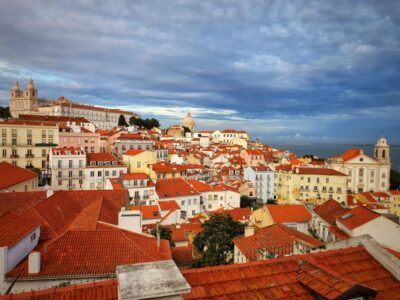
Old Town TukTuk Tour and Scenic Viewpoints in Alfama
Read our review →
Alfama Tour and Live Fado with Traditional Dinner
Read our review →Browse the lists this tour appears in