
Reviewed · ALFAMA QUARTER TOURS
Alfama: The Kaleidoscopic District – Private Walking Tour
Lisbon’s Alfama moves in layers. This private walking tour strings together top views and architecture-heavy stops so you understand what you are actually looking at, not just where to stand. You also get a guide who is a professional photographer, so the walk has a strong eye for detail and angles.
What I like most is the pacing, each stop is short, focused, and free to enter, so you keep momentum in a neighborhood that can feel like a maze. I also like the tone, the guide is friendly and professional, and you get the kind of historical context that sounds human, not scripted. One thing to consider: there is no food or drink included, so plan to eat before or after if you want the day to feel complete.
In This Review
- Key Highlights You Will Notice Right Away
- Why Alfama Feels Like a Puzzle Worth Solving
- Starting at Largo Portas do Sol, Then Finding the Right Angles
- Miradouro de Santa Luzia: The View That Sets Your Mental Map
- Lisbon Cathedral: Half Church, Half Fortress Energy
- A Medieval Fake Window and a Tile Covered Smithy
- Igreja Sao Joao da Praca and the Fado Around the Corner
- Casa de Fado Porta d’Alfama: Where the Neighborhood Name Makes Sense
- Casa dos Bicos and Foundation José Saramago
- Rua dos Bacalhoeiros: From Onion Market Energy to a Garden and Shops
- Porta do Mar: One of Twelve City Doors and a Photo Frame Moment
- Price and Time: Is $36.12 for 3 Hours Worth It?
- The Guide Makes the Difference, Especially If You Want It Unscripted
- Should You Book This Alfama Private Walking Tour?
- FAQ
- How long is the Alfama private walking tour?
- What is the price per person?
- Is this tour private?
- Is the tour offered in English?
- Are there different departure times?
- What stops are included on the route?
- Are admission tickets included?
- What does the tour include?
- Where does the tour start and end?
- Can I cancel for a full refund?
Key Highlights You Will Notice Right Away
- Private guide, your group only: tailored explanations instead of one-size-fits-all group chatter
- Professional photographer leading the way: better sightlines and practical “what to look for” tips
- Choice of morning or afternoon: you can match your energy and light
- Free entry stops all the way: you are paying for the experience, not admission fees
- Short segments at each highlight: efficient touring that still feels unrushed
More wandering through Alfama:
- Alfama Tour in Lisbon Old Town★ 5.0 · 4,936 reviews
- Private Lisbon Sightseeing Tuk-Tuk Tour: Alfama, Belém & More★ 5.0 · 4,277 reviews
- Lisbon: Hills, Alfama, and Mouraria Tour by Electric Bike★ 4.8 · 3,438 reviews
- Best of Lisbon Walking Tour: Rossio, Chiado & Alfama★ 4.9 · 2,700 reviews
Why Alfama Feels Like a Puzzle Worth Solving

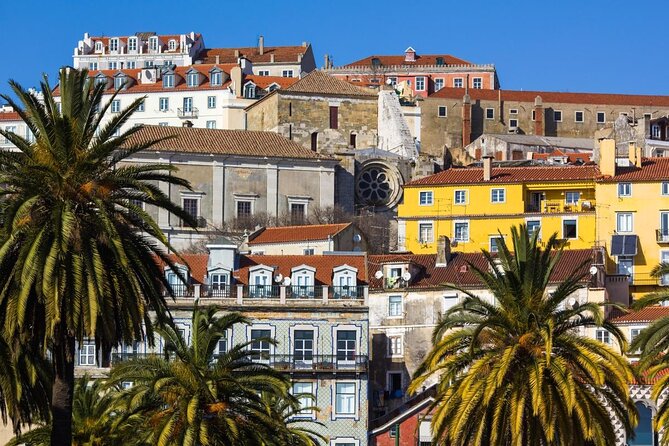
Alfama is the part of Lisbon that looks like it grew organically, because it did. Narrow lanes, uneven terrain, and sudden open spots make it a neighborhood you experience with your feet as much as your eyes. This tour helps you read that chaos by moving through a sequence of viewpoints and landmarks that connect visually and historically.
I like that the route is designed to keep you oriented. You are not just walking from one famous postcard spot to the next. Instead, you stop at places that explain each other, a view first, then the city’s early religious and civic character, then the smaller details that make Alfama feel lived in.
The private format matters here. If you pause to take a photo, ask a question, or want clarification, the guide can adjust. In a neighborhood where you can easily lose your bearings, that attention is real value.
Starting at Largo Portas do Sol, Then Finding the Right Angles
The walk begins at Largo Portas do Sol, in the area of Portas do Sol, which is a good anchor point when you are trying to understand Alfama. From there, you head toward Miradouro de Santa Luzia, where the first payoff is immediate: an open view over Alfama’s skyline, plus a look across the water to the South Bank.
This is also a practical moment to set yourself up for the rest of the tour. A good guide uses the first stop to teach you how to “read” the neighborhood from a distance, then you confirm it on the ground. That makes the rest of the walking feel like progress, not wandering.
And because it is private and offered in English, you can move at a comfortable pace without worrying about catching up to a larger group. The tour runs about 3 hours, and the stops are timed in a way that keeps you from spending too long in one place.
Miradouro de Santa Luzia: The View That Sets Your Mental Map
You spend about 20 minutes at Miradouro de Santa Luzia, and that time is enough to do two things well: take in the panorama and get your first “ah, I see it now” moment. This is the kind of viewpoint that helps your brain connect streets to skyline, because you can see how Alfama’s form changes as you move along the slope.
The tour framing here is smart. Instead of only telling you to look at the water and city, the guide uses the view to set up what comes next, so the later stops do not feel random. If you care about photography, this is also where you can start thinking about light and composition early.
What to watch for during your time here:
- The way Alfama’s buildings stack and curve along the hillside
- The broad sweep toward the South Bank
- Any street geometry you can later spot from below
If you are the type who usually rushes through viewpoints, slow down here. This stop is meant to give you a reference point for the rest of the walk.
Lisbon Cathedral: Half Church, Half Fortress Energy

After the panoramic start, the tour moves to Lisbon Cathedral, where you spend about 15 minutes. The big idea is that this monument carries a strong sense of protection and permanence. It is described as the first and only Romanesque monument remaining in town, and the character is very physical, almost like a fortress.
A great thing about stopping here on a walking tour is how quickly you can spot the logic of the place. When a building blends sacred space with defensive feel, it changes how you understand the neighborhood around it. You stop being a visitor looking at old stones, and you start seeing the architecture as part of the city’s survival story.
Two additional details make this stop especially useful:
- It is described as half church, half fortress, which gives you a lens for what to notice
- It was radically rebuilt in the 1930s, so you get a sense that history is not frozen in one moment
You will likely spend part of your time just looking, then asking questions when something clicks.
More Lisbon miradouros linked on foot:


A Medieval Fake Window and a Tile Covered Smithy
Right near the Cathedral, you get a short, fun stop at the façade at Rua das Cruzes da Se 13-15. You only spend about 10 minutes, but that is exactly the point. This is the kind of place you would miss if you were rushing or moving only by major landmarks.
The highlight here is the medieval fake window, a playful detail placed on the south wall of the Cathedral’s cloister. Across the road, you also see a XIXth century smithy with a façade covered in rare ceramic tiles.
This is one of the most satisfying stops on the route because it rewards close attention. Photography helps, but you do not need to be a pro. Just stand in the right spot, and let your eyes travel across the materials and textures.
Why it works on a tour like this:
- It shows how Alfama mixes eras side by side
- It trains you to look for details, not just big monuments
- It adds humor and surprise to an otherwise serious architecture day
Igreja Sao Joao da Praca and the Fado Around the Corner

Next is Igreja Sao Joao da Praca, with about 10 minutes on the clock. The way it is framed here is memorable, a place of miracles and public hangings, which sounds dark until you realize it is describing how public life and religion overlapped in older cities.
The best part for many people is what is nearby: one of the best fado houses and a wonderful baroque small church. Even if you do not go inside both, the guide can point you in the right direction so you understand why this area feels like a cultural stage, not just a museum district.
This stop is also where you start connecting Alfama to sound. Fado is not treated like a random entertainment add-on. It is linked to the neighborhood’s identity, and it shows why certain streets and churches have a reputation beyond their architecture.
Casa de Fado Porta d’Alfama: Where the Neighborhood Name Makes Sense

Another short stop, about 10 minutes, brings you to Casa de Fado Porta d’Alfama. Here is where the tour gets especially satisfying if you like meaning and origins, because this is described as the place where you find out what Alfama means.
It also connects that meaning to something you can actually experience. There is a fado restaurant with an archaeological museum inside. That combo is practical: you can pair storytelling about the neighborhood with tangible objects in the same stop.
For your planning, treat this as a preview moment. Even if you are not planning a full fado evening, this stop helps you understand the cultural weight of fado in daily Lisbon life.
Casa dos Bicos and Foundation José Saramago
The route then heads to Casa dos Bicos – Museu de Lisboa for about 15 minutes. This manor house is described as one of the rare surviving buildings from the Age of Maritime Exploration, which gives you a different angle on Lisbon than churches and rooftops.
You also get a modern literary layer because it hosts Foundation José Saramago. On top of that, the ground floor includes astonishing archaeological findings.
This stop is a strong reminder that Alfama is not only about what is old, it is also about what gets preserved and repurposed. The building itself acts like a bridge between eras, and your guide can help you spot why those survival details matter.
What to do during your time here:
- Look at the façade and think about the building’s age and function
- Listen for how maritime-era Lisbon connects to the city’s identity
- Ask what archaeological findings you should pay attention to
If you tend to skip museums during walking tours, this is one of the easier reasons to slow down. The site is framed as part of the story, not a detour.
Rua dos Bacalhoeiros: From Onion Market Energy to a Garden and Shops
Then comes Rua dos Bacalhoeiros for about 15 minutes. The description calls it the old Onion Market, now converted into a garden, with refurbished shops around it. It is one of the liveliest places in town at that moment, and it feels like Alfama’s everyday life rather than an isolated monument corridor.
This stop is valuable because it shifts you from “history and architecture” to “how people use these streets now.” You can look at the market-to-garden transformation as a sign of Lisbon adapting old commercial spaces into new public rhythms.
Even if you do not buy anything, you benefit from the change in atmosphere. It breaks up the heavier sites and makes the whole walk feel more realistic.
Porta do Mar: One of Twelve City Doors and a Photo Frame Moment
The final major landmark stop is Porta do Mar, about 10 minutes. This is framed as one of the 12 doors that were daily opened in Medieval Lisbon, and it is presented with strong visual context: it is framed by two noble houses, one waiting to be refurbished, and the other a five stars hotel with its own archaeological treasures.
Even with short time, this is a high-impact stop for two reasons. First, it helps you understand how medieval Lisbon functioned, with gated access points guiding movement. Second, the doorway setting makes it easy for your guide to point out how architecture channels views.
If you like photos, treat Porta do Mar as your closing photo frame. You have walked through details, views, and buildings, and now you get a concentrated architectural moment that feels like the neighborhood’s entrance logic made visible.
Price and Time: Is $36.12 for 3 Hours Worth It?
At $36.12 per person for about 3 hours, this is not a “see the highlights, done” deal. You are paying for a private walking tour with a professional local photographer guide, plus a local guide contribution. Every stop along the way is listed as free to enter, so the cost is mostly about interpretation and time with your guide.
So who gets the best value?
- You want a personal pace in a maze-like neighborhood
- You care about photos and want help finding better angles
- You want context that connects different types of landmarks
- You like structured walking without feeling herded
One drawback for some people is also simple: there is no food or drinks included. If you need a meal built into your plans, you will have to handle it before or after. Also, hotel pickup and drop-off are not included, so you should be ready to start at the meeting point on foot or via public transport.
The Guide Makes the Difference, Especially If You Want It Unscripted
The strongest theme in how this tour is described is the guide’s approach. One guide named Luis is noted as extremely knowledgeable and professional, with prepared materials that help you get more out of Lisbon and Alfama. He is also described as someone who peppers tours with fun facts, and who speaks like an educator, not a performer.
That last part matters. When a guide chats through historical events in a ready, natural way, you feel like you are learning in real time. You can ask follow-up questions, and the answer stays connected to what you are seeing.
Because the tour is private, that style lands harder. You do not have to wait for the group to catch up, and you do not have to tune out your guide while others ask different questions.
Should You Book This Alfama Private Walking Tour?
Book it if you want a three-hour, photo-minded walk that helps you understand Alfama as more than a collection of pretty streets. The mix of views, cathedral fortifications, tile and façade surprises, and cultural stops linked to fado makes the neighborhood easier to grasp, and the free-entry stops help keep the trip feeling efficient.
Skip it or consider a different option if you mainly want food-focused experiences, since this tour does not include meals or drinks. Also, if you dislike walking or want minimal time on your feet, a walking tour in old streets may feel like too much.
If your goal is to leave Alfama with real clarity, plus a set of photos you actually feel good about, this tour is a smart way to spend half a day.
FAQ
How long is the Alfama private walking tour?
It runs for about 3 hours.
What is the price per person?
The price is $36.12 per person.
Is this tour private?
Yes. It is a private tour, and only your group will participate.
Is the tour offered in English?
Yes, it is offered in English.
Are there different departure times?
Yes, there is a choice of morning or afternoon departure.
What stops are included on the route?
The tour includes Miradouro de Santa Luzia, Lisbon Cathedral, a façade at Rua das Cruzes da Se 13-15, Igreja Sao Joao da Praca, Casa de Fado Porta d’Alfama, Casa dos Bicos – Museu de Lisboa, Rua dos Bacalhoeiros, and Porta do Mar.
Are admission tickets included?
The stops listed on the route show admission tickets as free.
What does the tour include?
It includes a professional local photographer guide, a private walking tour, and a local guide.
Where does the tour start and end?
It starts at Largo Portas do Sol, 1100-411 Lisboa, Portugal. It ends at Chafariz d’El-ReiR. do Cais de Santarém, 1100-104 Lisboa, Portugal.
Can I cancel for a full refund?
Yes, you can cancel up to 24 hours in advance for a full refund.
Fresh across the seven hills
- Full-day Private Tour: Fátima Sanctuary, Batalha, Nazaré, Óbidos
★ 5.0 · 6 reviews - Porto Private Tour from Lisbon
★ 4.5 · 6 reviews - VIP transfer from the airport to Lisbon hotels
★ 5.0 · 6 reviews - Lisbon Photoshoot: Capture Your Adventure
★ 5.0 · 6 reviews - Lisbon: Romantic Sunset Cruise With Wine & Portuguese Tapas
★ 5.0 · 6 reviews - Arrábida Wine Tour – 3 Wineries, Traditions & Views from Lisbon
★ 4.5 · 6 reviews - Lisbon: Sintra, Pena Palace, Belém Tour + sunset Boat Cruise
★ 5.0 · 6 reviews
Alfama Quarter Tours, compared.

Private Lisbon Sightseeing Tuk-Tuk Tour: Alfama, Belém & More
Read our review →
Hills, Alfama, and Mouraria Tour by Electric Bike
Read our review →
Best of Lisbon Walking Tour: Rossio, Chiado & Alfama
Read our review →
Lisbon Small-Group Food Tour with 18 Tastings in Alfama District
Read our review →
Lisbon E-Bike Tour Commerce Square, Mouraria and Alfama
Read our review →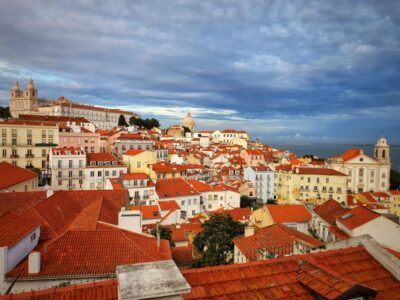
Old Town TukTuk Tour and Scenic Viewpoints in Alfama
Read our review →
Alfama Tour and Live Fado with Traditional Dinner
Read our review →Browse the lists this tour appears in