
Reviewed · CRUISES & BOAT TOURS
Boat tour in Lisbon with local sailors
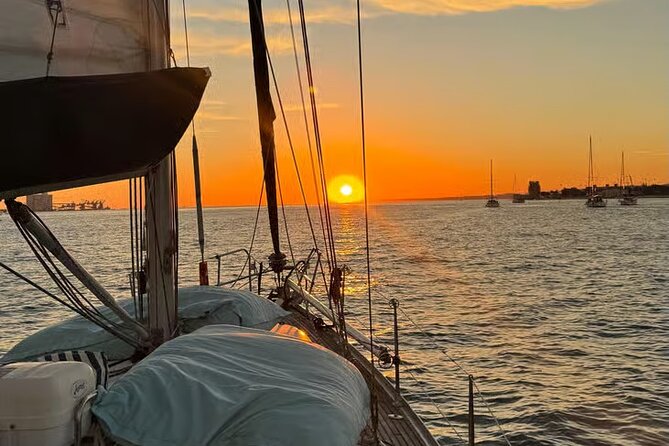
Lisbon hits different from the water. This two-hour Tagus River boat tour puts you close to the big landmarks, and you get explanations in plain, fun language from a local crew.
I especially like the small-group feel, with a max of 10 people, so you can actually hear what’s going on and ask questions. I also love how the route strings together major sights, from the 25 de Abril Bridge to Belém’s maritime monuments. One thing to think about is weather. Good conditions matter, and if it is poor, the tour may shift dates or get refunded.
In This Review
- Key Highlights You’ll Remember
- Why This Lisbon Tagus Boat Tour Feels Special
- Price and Logistics (Without the Headaches)
- 25 de Abril Bridge and Praça do Comércio: Lisbon’s Big Picture in Minutes
- São Jorge Castle, Alfama, and Mouraria: Old Lisbon From a Higher Angle
- Cristo Rei in Almada: One Monument, One Clear Message
- Belém’s Age of Discovery Corridor: Monuments That Explain the River
- MAAT and the Tejo Power Station Story: Modern Lisbon on the Waterfront
- What the Crew Style Means for Your Experience
- Practical Tips So You Enjoy Every Minute
- Should You Book This Lisbon Boat Tour?
- FAQ
- How long is the boat tour in Lisbon?
- How much does the boat tour cost?
- What language is the tour offered in?
- How many people are on the boat?
- Where does the tour start and end?
- Is the tour dependent on weather?
Key Highlights You’ll Remember
- Local-sailor style narration that is friendly and funny, not lecture-y
- Small group (max 10) for better sightlines and smoother pacing
- Major Lisbon landmarks in one loop, including 25 de Abril Bridge and Praça do Comércio
- Belém Tower and the Age of Discovery corridor from the river for a new viewpoint
- MAAT and Tejo Power Station pairing, where modern design meets Lisbon’s old power story
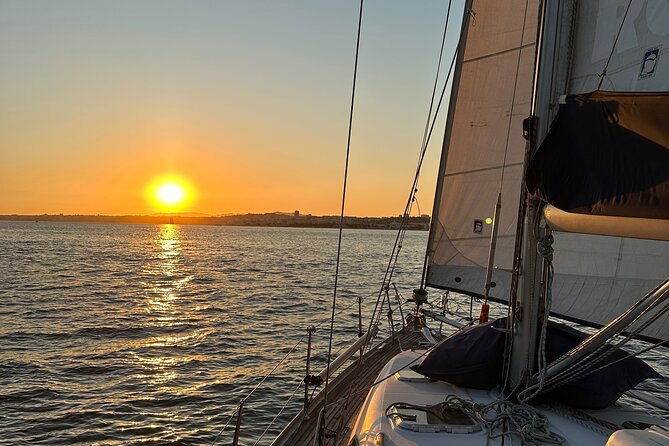
- A classic photo path that works especially well when the light turns warm
More hulls pushing off the Tagus quays:
- Lisbon: Sunset Boat Party Cruise with DJ and Open Bar★ 4.5 · 10,378 reviews
- Lisbon: Sunset Boat Tour with Music and Drinks★ 4.6 · 3,908 reviews
- Lisbon: Tagus River Cruise with Welcome Drink★ 4.2 · 3,717 reviews
- Lisbon: Daytime/Sunset/Night City Sailboat Tour with Drink★ 4.9 · 3,114 reviews
Why This Lisbon Tagus Boat Tour Feels Special
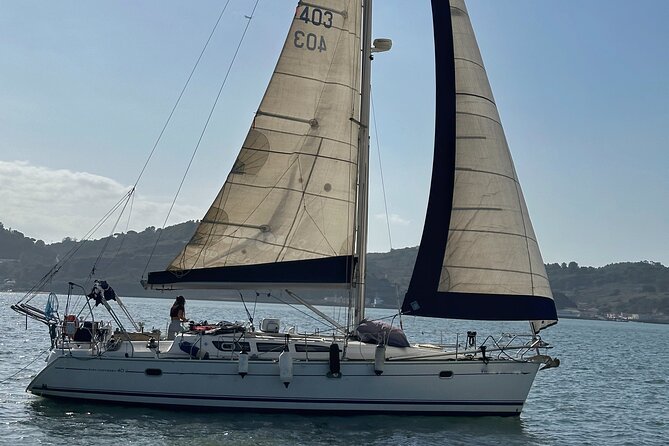
If you have only a short time in Lisbon, a boat tour is one of the fastest ways to get your bearings. You watch the city stack up in layers, from hills and forts to bridge engineering and riverfront history. Instead of running around streets, you get the whole geography at once, and it clicks fast.
You also get a crew-led vibe. The tone is kind, and the energy is playful. That matters more than it sounds. When people are relaxed and a bit hilarious, you end up listening because you want to, not because you feel obligated.
And the itinerary makes practical sense. In about two hours, you pass multiple must-see spots along the Tagus and its estuary. That means you are not trying to cram too many things into one day on foot.
Price and Logistics (Without the Headaches)
At $42.05 per person for about two hours, this is priced like a value sightseeing experience rather than a premium private charter. For me, the question is simple: do you get enough time with enough landmark views? You do here, since the route covers several of Lisbon’s top river sights rather than focusing on one single point.
A few details help it run smoothly:
- You get a mobile ticket
- The tour is offered in English
- It runs near public transportation
- It ends back where it starts, so you are not stranded across town
The meeting point is listed as R. da Cintura do Porto de Lisboa 1399, 1350-355 Lisboa, Portugal. Plan to arrive a few minutes early so you are not rushing in. And since the tour relies on good weather, check forecasts close to departure.
25 de Abril Bridge and Praça do Comércio: Lisbon’s Big Picture in Minutes
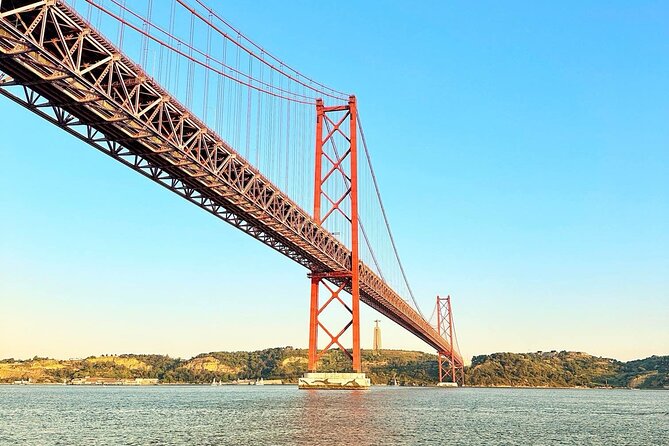
The tour starts by showing you the river’s main stage: the bridge crossings and the downtown waterfront. First up is the 25 de Abril Bridge, opened in 1966 and originally named after Salazar. After the Carnation Revolution in 1974, it was renamed. From the water, it is easy to see why it gets compared to San Francisco’s Golden Gate Bridge, including the orange color and the design inspiration credited to an American company.
This stop matters because it gives you an immediate mental map of Lisbon. You learn where the city’s two sides connect and how the Tagus frames the whole urban plan. Even if you have seen photos, the scale can surprise you in person.
Next comes Praça do Comércio, also called Terreiro do Paço. It overlooks the Tagus and is one of Lisbon’s iconic squares. The square was rebuilt after the devastating 1755 earthquake, becoming the centerpiece of Lisbon’s Pombaline downtown plan. It also served as the home for important Portuguese government departments since the 19th century.
From the boat, Praça do Comércio feels open and dramatic, because you are looking up from the river level. You can spot the square’s shape and understand why it became such a focal point after rebuilding. If you like history but want it tied to real space, this is a good early segment.
São Jorge Castle, Alfama, and Mouraria: Old Lisbon From a Higher Angle
As the boat continues along the river, you get a sweeping view of São Jorge Castle, which sits on one of Lisbon’s hills. Over centuries it has served as a royal residence, a military stronghold, and an archive. The view is grand, but the details are what make it stick.
Right below the castle is Alfama, Lisbon’s oldest quarter. It largely survived the 1755 earthquake, which is part of why the area carries such a deep sense of continuity. Seeing Alfama from the water helps you understand its survival. You can make out how the hill and the river edge shaped neighborhoods and movement.
Nearby is Mouraria, once home to Lisbon’s Muslim population after the Christian reconquest. Today it is a lively mix of old and everyday life. From the boat, you get the “where” even when you are not stepping into the streets yet.
A practical note: when you are on a boat, you will sometimes look slightly upward or downward depending on the angle. It is worth having your phone ready, but also enjoy the moment without filming every second. The water views pass quickly, and you will want time to look, not just capture.
Other trips that start in Lisbon and end well:




Cristo Rei in Almada: One Monument, One Clear Message
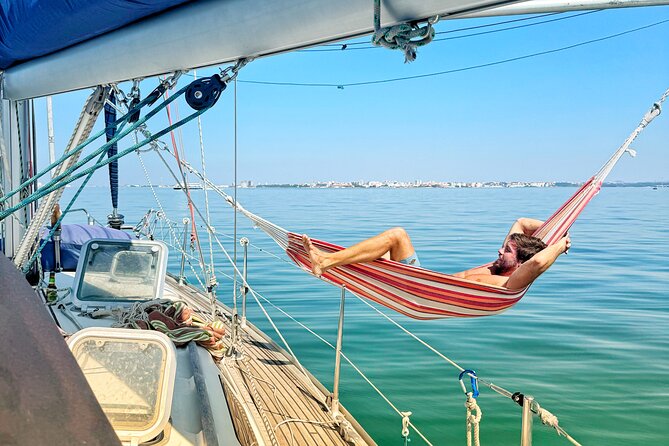
Across the river, you will see Cristo Rei in Almada. This towering monument was inspired by Christ the Redeemer in Rio de Janeiro, and it faces Lisbon with arms open in a classic welcoming pose.
On land, you might experience Cristo Rei as a destination you hike to or drive up to. From the river, it reads like a visual anchor. The message is simple and strong: faith and peace, turned into a landmark you can spot while watching Lisbon’s skyline move.
This section is also great for photos because the monument gives you a strong focal point. You will also appreciate the geography, since it reminds you that Lisbon’s story is not just on one bank.
Belém’s Age of Discovery Corridor: Monuments That Explain the River
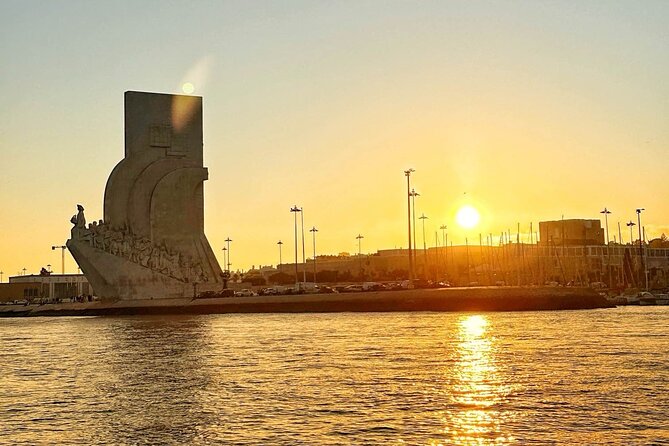
After the central-city sights, the tour shifts toward the Belém stretch, where the Tagus becomes more historical and more maritime. Here you pass the Monument of the Discoveries, located on the northern bank near the Tagus estuary.
The monument celebrates Portugal’s Age of Discovery, especially the 15th and 16th centuries. It connects directly to the river’s role in travel, trade, and exploration. The key detail you get from the narration is that this is where ships departed for the India and the Orient routes.
It is one thing to see a monument on a postcard. It is another thing to understand it as part of a working route that once sent ships out and brought them back. From the water, you can almost see the line of logic: river to ship to voyage to return.
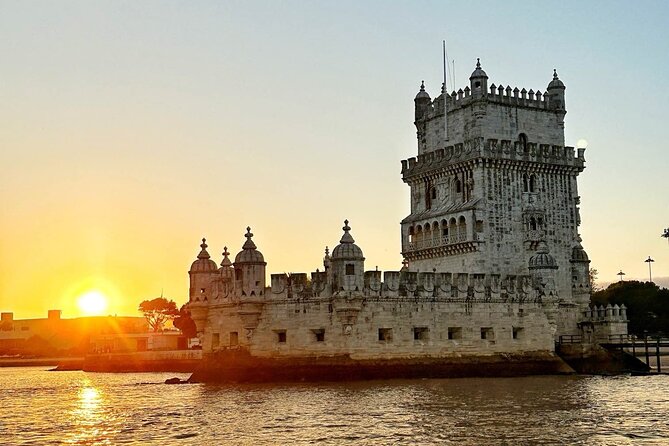
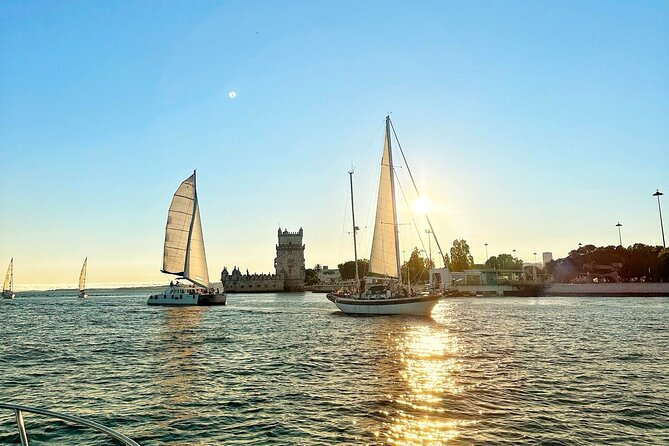
Then you come to the Belém Tower, officially the Tower of Saint Vincent. This 16th-century fortification served as a point of departure and a ceremonial gateway to Lisbon for Portuguese explorers. From the boat, the tower feels like it is positioned for a reason. It is not just decoration, it is a defensive structure tied to maritime movement.
You finish this historical run with the Bugio Lighthouse on a small island within the Fort of São Lourenço. The lighthouse guides vessels safely through the estuary and acts as a distinct maritime landmark. Seeing a lighthouse on the move, from the water, hits differently than seeing one from a fixed viewpoint. It brings home the idea of navigation, safety, and the real-world work the coastline once demanded.
MAAT and the Tejo Power Station Story: Modern Lisbon on the Waterfront
One of the coolest surprises on this route is the modern arrival: MAAT. This riverside museum explores the intersection of art, architecture, and technology. It is designed by Amanda Levete Architects and built with a reported €20 million investment.
What I like about MAAT in this context is that it links old and new rather than treating them like separate worlds. It connects modern design with the historic Tejo Power Station. From the boat, you do not just see a building. You see how Lisbon layers eras along the same shoreline.
If you are the type who likes to understand how cities evolve, this moment is worth paying attention to. It changes the emotional tone from medieval forts and exploration monuments to a present-day cultural space.
What the Crew Style Means for Your Experience
A good boat guide can make or break the trip. Here, the crew energy is a major strength. Based on what I know about the kind of sailing team this is, you should expect a mix of clear explanations and humor. It is the sort of crew that keeps people engaged without turning it into a stuffy talk.
That aligns with why the tour earns high marks. People highlight that the team is kind and funny, and that the information is shared in a way you actually remember. For you, that likely means less time scrolling on your phone and more time noticing details, like which bridge elements match the Golden Gate comparison or why those forts and lighthouses sit where they do.
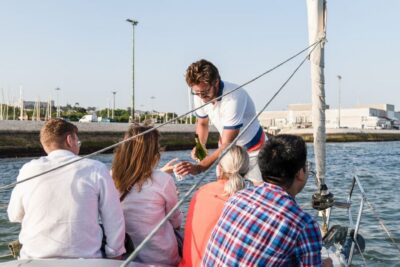
You should also feel comfortable in a group of up to 10. Small groups are not automatically better, but they usually improve sound and attention. It helps when the boat is moving and the city changes quickly outside the windows.
Practical Tips So You Enjoy Every Minute
You do not need a lot of planning, but a little prep makes it smoother:
- Bring a light layer, even in mild weather. Being on water changes how wind feels.
- Have your camera ready for the bridges and the Belém monuments, since those are your biggest photo moments.
- Ask one or two questions early. With a max of 10 people, you are more likely to get real answers.
- If you care about photos, pay attention when the route approaches the orange bridge and the Belém area. Those are the segments with strong sightlines.
Also, pick your mindset. This is not a one-building museum. It is a moving view. The best results come when you treat it like a guided photo walk, except the pavement is water.
Should You Book This Lisbon Boat Tour?
I think you should book this if you want an efficient Lisbon experience with real payoff. It is short enough to fit into a busy itinerary, but it covers the kind of landmarks that give you real understanding of the city layout: bridges, downtown square, hilltop castle area, the Almada monument across the water, and then Belém’s exploration sites and maritime structures.
It is also a good choice if you value the human side of travel. The crew style is a big part of the appeal, so you are not just buying a ride, you are getting a story told in a way that keeps you interested.
Skip it if you are the kind of traveler who hates being on the move at all, or if weather is questionable when you plan to go. Since the tour depends on good conditions, you need at least some flexibility.
If your goal is to see Lisbon’s river personality in about two hours, this one makes a lot of sense.
FAQ
How long is the boat tour in Lisbon?
The tour runs for about 2 hours.
How much does the boat tour cost?
The price is $42.05 per person.
What language is the tour offered in?
The tour is offered in English.
How many people are on the boat?
This activity has a maximum of 10 travelers.
Where does the tour start and end?
It starts at R. da Cintura do Porto de Lisboa 1399, 1350-355 Lisboa, Portugal, and it ends back at the same meeting point.
Is the tour dependent on weather?
Yes, it requires good weather. If it is canceled due to poor weather, you will be offered a different date or a full refund.
Fresh across the seven hills
- Private Tour from Porto to Lisbon with Stops
★ 5.0 · 6 reviews - Lisbon: Private Highlights Tuk-Tuk Tour with Tapas and Wine
★ 5.0 · 6 reviews - Lisbon: The Ultimate Food Tour with a Local
★ 3.7 · 6 reviews - Treasures of Lisboa : Alfama Food Tour with 18 Tastings
★ 5.0 · 6 reviews - Lisbon: Portuguese Petiscos Cooking Class
★ 4.7 · 6 reviews - Seixal Sailing Cruise – Lunch in a typical restaurant
★ 5.0 · 6 reviews - Nature, Wines and Ceramic Tiles: Private Tour
★ 4.0 · 6 reviews
Cruises & Boat Tours, compared.

Sunset Boat Party Cruise with DJ and Open Bar
Read our review →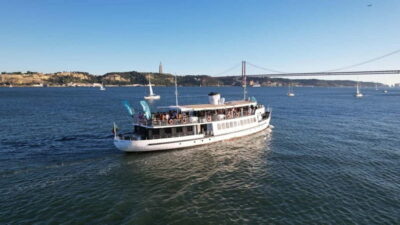
Daytime/Sunset/Night City Sailboat Tour with Drink
Read our review →

Tagus River Cruise to the Ocean & Dolphin Watching
Read our review →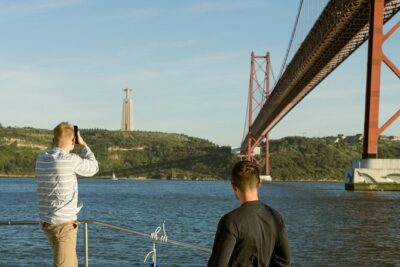
Sunset Catamaran Boat Tour with Music and Drinks
Read our review →
Browse the lists this tour appears in