
Reviewed · LISBON
Discover Bairro Alto’s Hidden Gems and Stunning Viewpoints
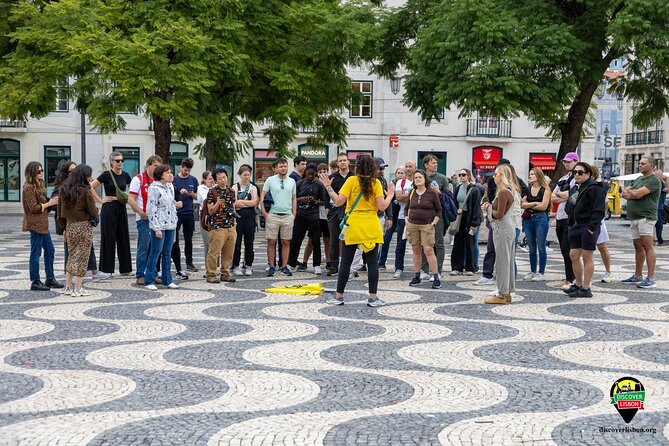
Bairro Alto tells stories at street level. I love how this walk starts in Praça Dom Pedro IV and links the historic sights of Rossio and Bairro Alto with the life of Luís de Camões, so you understand Lisbon’s big picture fast.
My second favorite part is standing in front of the Estação do Rossio façade, with those twin horseshoe portals that almost look like they belong on a temple. One consideration: you’ll want moderate walking fitness, since this is a hillside neighborhood and you’ll move at a steady pace between stops.
In This Review
- Key moments you will remember
- Why Bairro Alto works so well for your first Lisbon orientation
- Praça Dom Pedro IV to Rossio, the city’s everyday starting line
- Estação do Rossio and the Neo-Manueline façade you will want to stare at
- Praça Luis de Camões, where literature becomes a Lisbon landmark
- Bairro Alto’s changing city plan, plague pressures, and a Saint Roque story
- Largo do Carmo: Carmelite vows, a battlefield win, and a church built on promises
- Miradouro de Santa Catarina, the viewpoint close to the final story
- Price and value: why this tour feels like a bargain
- What the tour setup means for your day (group size, language, tickets)
- Who should book this Bairro Alto walking tour
- Should you book this tour?
- FAQ
- How long is the Bairro Alto walking tour?
- Where does the tour start?
- Where does the tour end?
- Is the tour offered in English, and do I need a paper ticket?
- Are there entrance fees for the stops?
- What is the walking difficulty level?
- How many people are in a group?
- Can I cancel for a full refund?
Key moments you will remember
- Rossio Train Station’s Neo-Manueline façade, built 1886 to 1890, with intertwined horseshoe portals
- Luís de Camões in Praça Luis de Camões, including Os Lusíadas and his Ceuta battle story
- Bairro Alto’s medieval layout, including the Fernandine wall, earlier city gates, and later church changes after the earthquake
- A plague-era geography shift, when victims and the sick gravitated toward the Saint Roque hermitage area
- Largo do Carmo’s Carmelite church and convent, tied to Nuno Álvares Pereira’s vow and the Battle of Aljubarrota
- Ending at Miradouro de Santa Catarina, so the tour closes with views you can use right away
Deciding between days out? Here are a few more from Lisbon:
- Lisbon City Center Tour – The Unmissable Lisbon★ 5.0 · 22,234 reviews
- Lisbon: Sintra, Pena, Regaleira, Cabo da Roca & Cascais★ 4.7 · 19,656 reviews
- Lisbon Card: 24, 48, or 72-Hour Pass★ 4.5 · 17,944 reviews
- Lisbon: Jerónimos Monastery Entrance Ticket★ 4.1 · 14,164 reviews
Why Bairro Alto works so well for your first Lisbon orientation
If you have ever gotten to Lisbon and thought, Wait, how do these neighborhoods connect?, this route is a smart answer. You begin at Praça Dom Pedro IV, the public-squares crossroads that helps you get your bearings. From there, the walking path guides you toward the hillier part of the city, where Lisbon’s layers show up in street layouts and architecture.
What I like most is that the tour does not treat Bairro Alto like a party zone or a photo stop. It frames the neighborhood as a place that changed because of growth, war, illness, and rebuilding. You walk away with a sense of how Lisbon evolved, not just a list of sights.
Praça Dom Pedro IV to Rossio, the city’s everyday starting line
The tour starts at Praça Dom Pedro IV, right where many visitors begin. That matters because it is easy to find, and it keeps the morning from feeling chaotic. Here, you get an intro to what you are about to see in the Rossio area and why this stretch has been important for so long.
There is also a practical benefit: you are not thrown straight into tiny alleys. You get a gradual shift from open square to old urban streets. It is a gentle on-ramp to Bairro Alto, which is exactly what you want when you are trying to learn while walking.
Estação do Rossio and the Neo-Manueline façade you will want to stare at
Estação do Rossio is the kind of building that makes you do a double take. Instead of a plain station front, you get a Romantic, neo-Manueline recreation of the Manueline style from early 16th-century Portugal. The façade almost reads like a temple.
Here are the details that make this stop worth your attention:
- The station was designed by architect José Luís Monteiro, with dates given as commissioned in the late 1800s, designed between 1886 and 1887, and completed in 1890.
- You will hear how it connected Lisbon to the region of Sintra, which is a key piece of how Lisbon expanded beyond its immediate boundaries.
- The entrance features two intertwined horseshoe portals with signage that reads Central Station.
Why this matters for you: it is easy to think of stations as modern leftovers. This one is a statement building, showing how Lisbon wanted style, identity, and drama in public spaces. When your guide points out the façade concept, it helps you notice similar design flourishes elsewhere in the city.
Praça Luis de Camões, where literature becomes a Lisbon landmark
Next you head to Praça Luis de Camões, and the tour ties a literary figure directly to place. This is not just a statue stop. You learn why Luís de Camões matters and how his story links to Portugal’s language and identity.
What you will take away:
- Camões is the author of the epic poem Os Lusíadas, which centers on Vasco da Gama’s sea route to India.
- It is said Camões lost one eye in a battle in Ceuta.
- The influence of Os Lusíadas is so strong that Portuguese is sometimes called the language of Camões.
That last point is the kind of tidbit that changes how you see the city. Once you know this, you start noticing how often Portuguese culture points back to Camões, even in everyday references. This stop gives you context you can carry into museums, churches, and even street names.
Other trips that start in Lisbon and end well:


Bairro Alto’s changing city plan, plague pressures, and a Saint Roque story
When the tour reaches Bairro Alto, it slows down the way your brain likes it to. You start hearing how this neighborhood worked before it became known for nightlife and views. The guide explains that Lisbon’s growth after the Age of Discovery created pressure to enlarge the center, and Bairro Alto’s story is tied to how that space was organized.
A few specific details that make this stop feel real:
- The area that is now associated with Camões square was once an entrance area to the city.
- Older defenses and gates mattered, including the Fernandine wall and the door of Santa Catarina.
- The area’s layout shifted over time, and after the earthquake, you see how churches such as Encarnação and Loreto appear where you would not expect them at first glance.
Then comes one of the most striking narratives. The tour connects demographics and illness to geography. In the late 15th century, the hills here held a cemetery of victims of the Black Plague. Later, King Manuel I requested a relic of Saint Roque from Venice and placed it in a hermitage near that cemetery. Because the sick and less fortunate moved closer to where they hoped for help, the neighborhood’s character and planning changed to receive them.
Why you will probably enjoy this: it gives Bairro Alto a human story. You are not just looking at walls. You are seeing how people adapted when life got hard, and how the city rearranged itself around those realities.
A quick consideration: this is where you feel the neighborhood’s slopes. You do not need to be an athlete, but comfortable shoes matter. If you take your time, it is very manageable.
Largo do Carmo: Carmelite vows, a battlefield win, and a church built on promises
The final major historical stop is Largo do Carmo, home to the Carmelite church and convent. This place has a strong story line that your guide will connect to Portuguese history, not just religious architecture.
Here is what makes this stop special:
- The church and convent were built starting in 1389.
- The story traces back to Nuno Álvares Pereira, a general helping King João repel the Castilian troops.
- In 1385, during the Battle of Aljubarrota, Nuno Álvares Pereira vowed to build what was described as the world’s most beautiful church if Portugal came out victorious.
- After the Portuguese win, he kept his word and funded the construction.
- The construction was completed in 1423, and later he joined the Carmelite order, spending the rest of his life in the convent.
For you, that adds weight to what you see. Instead of treating the church like a pretty landmark, you understand it as the physical result of a vow tied to a turning point in Portuguese politics and military history. It makes the stones feel like they have a pulse.
One practical note: the tour ends near a viewpoint. So you will want to keep your camera ready but also give your eyes a moment here before moving on.
Miradouro de Santa Catarina, the viewpoint close to the final story
The tour’s listed end point is Miradouro de Santa Catarina. In Lisbon, ending at a viewpoint is not just a nice finish. It is a way to make the walking route feel complete.
You can use the final minutes to:
- Take a few photos with a clear overview of the city’s hills and rooftops
- Catch your breath after the walking segments
- Reframe what you learned, because from up high, the neighborhood shapes start to make sense
You do not have to turn it into a long detour. Just use it as a final punctuation mark, then head back into Lisbon at your own pace.
Price and value: why this tour feels like a bargain
The price listed is $3.61 per person, and the duration is about 2 hours 30 minutes. That is the kind of pricing that makes you think, What am I really paying for?
You are paying for a local expert guide plus interpretation that ties architecture, poetry, and neighborhood evolution into one route. The tour includes:
- A dedicated guide with cultural and historical context
- Explanations of Lisbon’s earthquake history and past destruction
- Highlights and fun facts about famous monuments
- Discount offers for booking other experiences later in the day or night
What is not included is also worth noting. There is no mention of paid entry during stops, and the itinerary marks each main stop as admission ticket free. You do not need to plan for extra site tickets here.
You should also think about the guide contribution. The tour notes a contribution range of 10 to 20 euros, which is typical in this style of walking tour. If you value good interpretation, budgeting something for the guide feels fair.
Overall, if you like stories that connect places, this is strong value. If you only want quiet photo time and zero explanation, you might feel the price is low, but the tour format still requires your attention.
What the tour setup means for your day (group size, language, tickets)
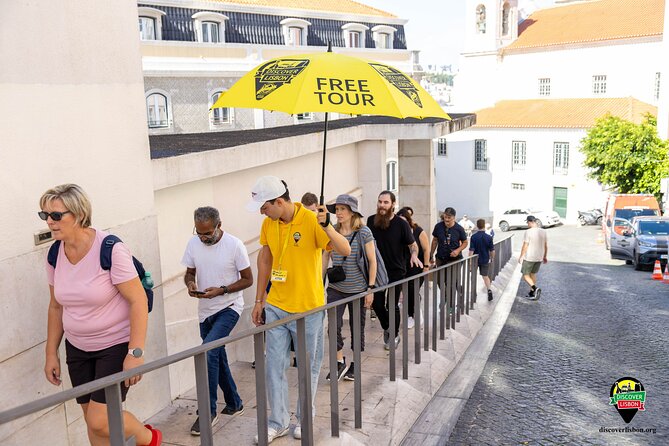
This experience is offered in English and uses a mobile ticket, which keeps your planning simple. The group size has a cap of 50 travelers, so it stays in the category of manageable rather than packed wall-to-wall.
It is also described as near public transportation, which helps if you are bouncing between sights in the center of Lisbon. If you are doing other activities the same day, the timing and transit access make it easier to fit in.
And yes, it has a moderate physical fitness requirement. That means you should expect walking on uneven streets and some uphill sections as you move between Lisbon’s levels. Comfortable shoes will be your best friend.
Who should book this Bairro Alto walking tour
You should book if you want:
- A clear intro to Bairro Alto’s historical layers
- Strong context for Luís de Camões and Os Lusíadas
- Architecture spotting at Estação do Rossio and its neo-Manueline façade
- A finish that rewards you with Lisbon views at Miradouro de Santa Catarina
You might skip it if:
- You want a mostly passive sightseeing day with minimal walking
- You already know Camões and Portuguese history and just want pure scenery
- You were hoping this would include a lift ride, since Santa Justa elevator entry is not included
Should you book this tour?
Yes, I would book it if your goal is to understand Bairro Alto in a way you can actually remember. The combination of Rossio station architecture, Camões’s story, Bairro Alto’s evolution through growth and plague pressures, and the Carmelite saga gives you a route that feels connected instead of random.
If you are on a tight schedule, this length is about right. If you are sensitive to hills, take it slow and wear good shoes. Lisbon rewards patience, and this tour is designed for exactly that.
FAQ
How long is the Bairro Alto walking tour?
The tour duration is about 2 hours 30 minutes.
Where does the tour start?
It starts at Praça Dom Pedro IV, 1100-581 Lisboa, Portugal.
Where does the tour end?
It ends at Miradouro de Santa Catarina, 1200-262 Lisboa, Portugal.
Is the tour offered in English, and do I need a paper ticket?
The tour is offered in English, and you receive a mobile ticket.
Are there entrance fees for the stops?
The listed stops are marked as admission ticket free. Entry to the Santa Justa elevator is not included.
What is the walking difficulty level?
The tour requires moderate physical fitness level, since you will walk through the neighborhood.
How many people are in a group?
The tour has a maximum of 50 travelers.
Can I cancel for a full refund?
Yes. You can cancel up to 24 hours in advance for a full refund. If you cancel less than 24 hours before the start time, the amount paid is not refunded.
Fresh across the seven hills
- Full-day Private Tour: Fátima Sanctuary, Batalha, Nazaré, Óbidos
★ 5.0 · 6 reviews - Porto Private Tour from Lisbon
★ 4.5 · 6 reviews - VIP transfer from the airport to Lisbon hotels
★ 5.0 · 6 reviews - Lisbon Photoshoot: Capture Your Adventure
★ 5.0 · 6 reviews - Lisbon: Romantic Sunset Cruise With Wine & Portuguese Tapas
★ 5.0 · 6 reviews - Arrábida Wine Tour – 3 Wineries, Traditions & Views from Lisbon
★ 4.5 · 6 reviews - Lisbon: Sintra, Pena Palace, Belém Tour + sunset Boat Cruise
★ 5.0 · 6 reviews