

Reviewed · CITY TOURS
Explore the Heart of Portugal with Our Exclusive City Tours
Lisbon can be a maze, but this tour maps it fast. I love the photo-friendly viewpoints that come with real context, and I also love how Hélton keeps things upbeat, friendly, and easy to follow. One possible drawback: it is a short 1 hour 10 minutes, so if you want lots of museum time or a long Alfama wander, you may want to book extra time afterward.
The format is built for people who want to see the main highlights without feeling herded. It is a private group up to 6 with pickup offered, and most key stops have free entry. The only cost wrinkle is that the Museu do Fado stop is listed with admission not included, so plan for that final taste of ginjinha and any add-ons.
In This Review
- Key Highlights You’ll Actually Care About
- Lisbon Cathedral and the Roman Theater Museum Start Strong
- Santa Luzia and Portas do Sol Give You the Tejo View, With Answers
- Senhora do Monte: The High-Point Photo Moment You’ll Remember
- Alfama Start Point, Flexible Stops, and Explanations When You Ask
- Museu do Fado, Ginjinha, and Traditional Fado House Pointers
- Price, Private Value, and Why Up to 6 Matters
- Timing, Pace, and the Moderate Fitness Part
- When Hélton’s Style Makes the Difference
- Who This Tour Is Best For
- Should You Book This Lisbon Heart Tour?
- FAQ
- How long is the Lisbon city tour?
- What is the group size for this private tour?
- Is pickup offered?
- What language is the tour offered in?
- Is the tour ticket mobile?
- Are admission tickets included for all stops?
- Do you visit Lisbon Cathedral and the Roman theater museum?
- Which viewpoints are included?
- Do you stop for ginjinha?
- What are the opening hours and cancellation options?
Key Highlights You’ll Actually Care About
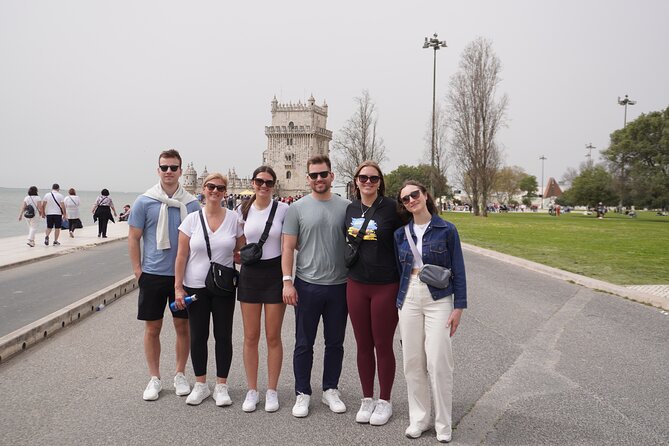
- Private group up to 6 so you can ask questions without shouting
- Multiple free-admission stops early on, including Lisbon Cathedral and Museu de Lisboa Teatro Romano
- Three viewpoint moments at Santa Luzia, Portas do Sol, and Senhora do Monte for classic Lisbon views
- Alfama access starting at the Museu do Fado area, plus extra explanations if you ask
- Ginjinha taste and practical pointers on traditional fado houses at the end stretch
- Hélton’s engaging, accommodating style, including help with photo stops
Some other seven-hills days worth pricing up
- Lisbon City Center Tour – The Unmissable Lisbon★ 5.0 · 22,234 reviews
- Lisbon: Daytime/Sunset/Night City Sailboat Tour with Drink★ 4.9 · 3,114 reviews
- Lisbon: City Highlights and Viewpoints E-Bike Tour★ 4.9 · 1,556 reviews
- Lisbon: City Sightseeing Hop-On Hop-Off Bus Tour★ 3.8 · 1,220 reviews
Lisbon Cathedral and the Roman Theater Museum Start Strong

The tour kicks off at Lisbon Cathedral, a place where the stone tells the story. You get a brief history rundown and time to take a quick look inside. Even though the visit is short, it is a smart opener because it gives you landmarks you can later picture when you move through Alfama.
A key value here is how the stops are layered. You are not just standing at pretty buildings. You are building a mental map of Lisbon’s different eras, right from the first minutes. If you like history that is practical and tied to places you can still see, this pacing works.
From there you head to Museu de Lisboa, Teatro Romano. This is one of those stops that can feel underappreciated on your own because it is easy to miss, even if you have heard the name. In this tour, you get a short guided look and time to go inside and take photos. That makes a big difference, because the Roman presence in Lisbon can feel abstract until someone frames what you are looking at.
One small consideration: both of these first stops are deliberately brief. If you are the type who wants to linger for an hour in one museum, this tour’s strength is not slow, deep exploration. It is getting you orientated quickly and then feeding you more viewpoints and neighborhood context.
Santa Luzia and Portas do Sol Give You the Tejo View, With Answers
Next come two classic miradouros, Santa Luzia and Portas do Sol, where the city spreads out and the Tagus River does its magic. These are the “postcard places,” but they are not just for photos here. The tour uses the viewpoints as story stations.
At Santa Luzia, you take in the view and also get a hidden-history angle that helps the scenery make sense. That is a good trick in Lisbon. Views can feel like scenery, or they can feel like a stage for centuries of change. This tour leans toward the latter.
Portas do Sol is where the tour turns more into a timeline. You get an overview of Portugal’s sweep of eras, from Phoenicians and Romans to the Moorish invasion, then the earthquake, the monarchy, and the later revolutions. The details are presented through caricatures by Nuno Saraiva, which is a clever way to keep the story human instead of textbook-only.
Why I like this approach for you: it lowers the effort required to “learn as you go.” You do not need to memorize dates. You just need to understand that Lisbon has been rebuilt, reshaped, and rebranded more than once. When you hit the next stop at the highest viewpoint, all of that will feel connected.
Possible drawback: these viewpoints can be crowded on popular days. Since your time per stop is set, the tour helps you move through without getting stuck in a long queue or waiting forever for a clear photo angle.
Senhora do Monte: The High-Point Photo Moment You’ll Remember

Then you get the most anticipated viewpoint at Senhora do Monte, sitting at over 800 feet above sea level. This is the payoff stop, and the tour gives it 15 minutes, which is longer than the earlier viewpoints. In plain terms: you get more time to soak it in and get your best shots.
This is also where the tour explains how the city is divided, so you can look down and actually understand what you are seeing. Lisbon from above is gorgeous, but it can also feel confusing. The explanation helps you connect neighborhoods, streets, and elevation to the way Lisbon grew and functions today.
For practical planning, wear shoes you feel good walking in, because even if the time is short, the routes around miradouros can involve hills and uneven ground. The tour says moderate physical fitness is recommended, and this stop is where that really matters. It is not a workout, but it is not flat either.
I also like that you get photo time here that feels less like a rushed camera sprint. If you care about pictures, this is the one stop where you will likely feel grateful for the extra minutes.
Alfama Start Point, Flexible Stops, and Explanations When You Ask
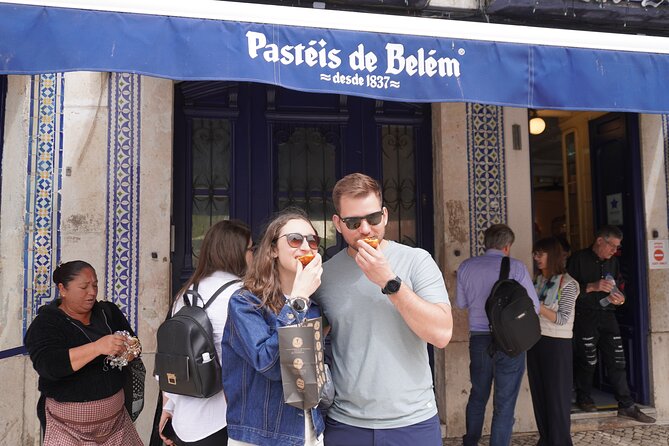
After the highest view, the tour heads toward the Alfama area. The Museu do Fado stop is described as the main entrance to Alfama, which is useful because it means you are not just “going to a museum.” You are entering the neighborhood with context.
There are also built-in moments for flexibility. You keep moving, and stops only happen if requested. You can also ask for pauses and deeper explanations as you move into Alfama. That matters because Alfama is not a place where everyone experiences the same thing. Some people want street-level stories, others want architecture pointers, and many just want the guide to slow down so they can look up at walls and doorways they would otherwise miss.
From a value standpoint, this flexible structure is a win. A rigid tour can feel annoying if you suddenly spot something interesting and want a quick explanation. This one is designed to bend a bit, as long as you ask.
The one thing to keep in mind is that because the overall tour is limited to about 1 hour 10 minutes, your best chance to maximize Alfama is to use those optional pauses strategically. Ask before you feel rushed. If you want more detail on why the streets are shaped the way they are, ask while you are still in motion, not after you are already leaving the neighborhood.
Other trips that start in Lisbon and end well:



Museu do Fado, Ginjinha, and Traditional Fado House Pointers
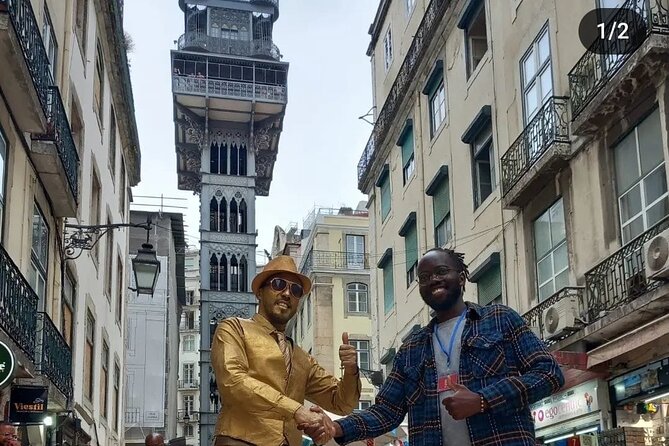
The tour finishes with the Museu do Fado stop area, and this is where the experience gets cultural in a very Lisbon way. You get a taste of ginjinha, a traditional cherry liqueur. You also get introductions to the best and most traditional fado houses.
Even if you do not plan to book a fado show immediately, this is still useful. Fado is one of those topics that can feel confusing from the outside because there are many venues and many price points. Getting pointers from a guide helps you separate “famous because it is famous” from “traditional because it is actually part of the story.”
Here is the practical part: the tour lists admission ticket not included for this final stop. That lines up with the idea that the experience is built around access and guidance, while your drink or any museum entry details can be an extra. So bring a little buffer money for the ginjinha taste and any optional follow-up.
I also like how the tour sets you up for future decisions. You leave knowing where to go for fado if you want a night plan, instead of guessing in the dark once you are hungry and tired.
Price, Private Value, and Why Up to 6 Matters

The price is $228.30 per group for up to 6 people, for about 1 hour 10 minutes. On the surface, that can sound steep if you compare it to solo walking tours. But with private tours, the math changes. If you have even two or three people in your group, you are essentially paying for guide time plus a guided route that hits high-impact viewpoints fast.
The free-entry nature of most stops also helps the value. Lisbon Cathedral and Museu de Lisboa, Teatro Romano are listed with free admission tickets for the quick visit and museum look. Miradouro stops are free by default since they are viewpoints. Your potential extra cost is concentrated at the Museu do Fado area, where admission is listed as not included.
Pickup offered is another value lever. In Lisbon, getting from one hill area to another can eat up time. When pickup is included, you are spending your limited tour window on the fun parts, not on figuring out logistics.
And one more thing that you might appreciate: this is in English. If you are traveling with someone who does not want to rely on a phone for every explanation, that matters.
Timing, Pace, and the Moderate Fitness Part

This tour is about 70 minutes, give or take, and it is structured with set time windows at each stop. That makes it easy to plan around meals, rest breaks, and other activities.
The moderate fitness note is realistic. You will be near public transportation, but you will also be walking and moving between viewpoints and old-town streets. The Santa Luzia, Portas do Sol, and Senhora do Monte sequence is where the uphill factor becomes noticeable. Nothing sounds extreme, but you should come prepared with comfortable shoes and a light water plan.
Also consider the photo factor. If you want lots of pictures, build in a little patience. Senhora do Monte gets the longer photo window, so that is where you can go a bit slower without breaking your pace.
Since the tour is private, it is easier to manage the pace. If someone in your group needs extra time at a stop, you can usually request it. But do not wait until the last second. The tour runs on a tight schedule, so quick requests work best.
When Hélton’s Style Makes the Difference

The tour’s standout theme in the feedback is not just the route. It is the guide experience. Hélton is described as friendly, engaging, and accommodating. People also highlighted that he brings visitors to places they might not find on their own, plus makes the trip fun even when the streets are tight and the walking is steep.
One thing that comes through strongly is photo support. The itinerary includes multiple viewpoint stops, and the feedback mentions photo-focused moments. In practice, that means you are more likely to come home with good pictures and less likely to waste time figuring out angles.
Another thing to note is that the tour can feel more than a straight highlight loop. Some people go in expecting a quick round trip and come out feeling like they learned how Lisbon connects, era by era, from cathedral stones to Roman remains to fado culture.
So if you value a guide who explains what you are seeing, and not just where to stand, this tour will likely fit your style.
Who This Tour Is Best For
This is a strong fit if:
- You want the big Lisbon viewpoints, plus a neighborhood entry into Alfama
- You have limited time and want a guided route that does not waste hours
- You travel in a small group up to 6 and want flexibility to ask questions
- You like history tied to actual buildings and streets, not just names on a sign
- You care about photos and want help timing them
It might not be the best fit if:
- You want long museum time or slow browsing
- You dislike hills or uneven walking (even though the fitness requirement is moderate)
- You plan to do fado in depth right away, since the tour provides pointers rather than a full performance package
Also, the tour schedule is shown for Tuesdays from 10:00 AM to 5:00 PM. If your trip days are different, you will need to check the available dates that fall within the listed range.
Should You Book This Lisbon Heart Tour?
I think you should book if you want an efficient, meaningful Lisbon highlight circuit that still leaves room for questions. The combination of free-admission stops, three major miradouros, and a guided entry into Alfama makes it feel like more than a quick scenic tour.
Skip it or add time elsewhere if you are looking for a long, slow exploration of one museum or one neighborhood. This is designed to give you orientation, viewpoints, and next-step guidance. It is ideal for first-time Lisbon days, especially if you want a plan that feels fun and not stressful.
If you do book, come with comfortable shoes, decide ahead of time which viewpoint you care about most, and use Hélton’s flexibility in Alfama to ask the questions you would otherwise forget while walking uphill.
FAQ
How long is the Lisbon city tour?
It runs for approximately 1 hour 10 minutes.
What is the group size for this private tour?
It is a private tour/activity, and the group size is up to 6 people.
Is pickup offered?
Yes, pickup is offered.
What language is the tour offered in?
The tour is offered in English.
Is the tour ticket mobile?
Yes, a mobile ticket is offered.
Are admission tickets included for all stops?
Admission tickets are listed as free for the early stops, including Lisbon Cathedral and Museu de Lisboa, Teatro Romano. The Museu do Fado stop lists admission ticket not included.
Do you visit Lisbon Cathedral and the Roman theater museum?
Yes. There is a brief look inside Lisbon Cathedral, and you also explore Museu de Lisboa, Teatro Romano, including going inside.
Which viewpoints are included?
You stop at Miradouro de Santa Luzia, Miradouro Das Portas Do Sol, and Miradouro Da Senhora Do Monte.
Do you stop for ginjinha?
Yes. At the Museu do Fado stop, the tour includes a taste of ginjinha.
What are the opening hours and cancellation options?
The listed opening hours show Tuesdays from 10:00 AM to 5:00 PM. For cancellation, you can cancel for a full refund up to 24 hours in advance of the experience start time.
Fresh across the seven hills
- Full-day Private Tour: Fátima Sanctuary, Batalha, Nazaré, Óbidos
★ 5.0 · 6 reviews - Porto Private Tour from Lisbon
★ 4.5 · 6 reviews - VIP transfer from the airport to Lisbon hotels
★ 5.0 · 6 reviews - Lisbon Photoshoot: Capture Your Adventure
★ 5.0 · 6 reviews - Lisbon: Romantic Sunset Cruise With Wine & Portuguese Tapas
★ 5.0 · 6 reviews - Arrábida Wine Tour – 3 Wineries, Traditions & Views from Lisbon
★ 4.5 · 6 reviews - Lisbon: Sintra, Pena Palace, Belém Tour + sunset Boat Cruise
★ 5.0 · 6 reviews
City Tours, compared.
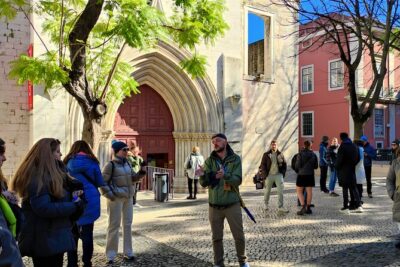
Lisbon City Center Tour – The Unmissable Lisbon
Read our review →
Daytime/Sunset/Night City Sailboat Tour with Drink
Read our review →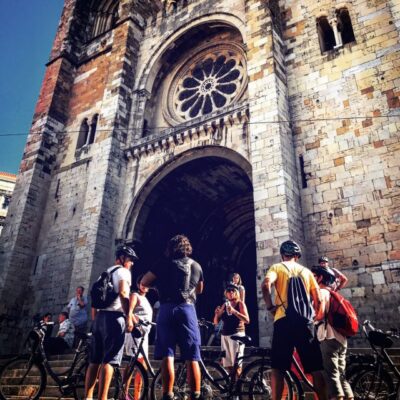



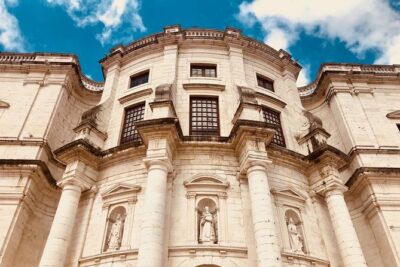

Express Lisbon | City Center and Old Town Tuk Tuk Tour
Read our review →Browse the lists this tour appears in