Reviewed · TICKETS
Lisbon: Entry Tickets to Mosteiro de São Vicente de Fora
Lisbon hides a lot in plain sight. São Vicente de Fora is one of those places where you get serious wow value without a long line or a guided-tour babysitter.
I love the amount of in-place azulejos you can actually study up close, plus the church and inner rooms that feel grand in a very Portuguese way. My other favorite is the panoramic view over the city and the river, which turns a ticket into a full Lisbon moment.
One consideration: this is self-guided and there’s no audio guide, so if you want a lot of live storytelling, you may feel like you have to read the panels slowly.
In This Review
- Key things to know before you go
- Where São Vicente de Fora fits in Lisbon
- Finding the ticket office inside the Church of São Vicente de Fora
- The self-guided circuit, and how to make it feel effortless
- The azulejo obsession: in-place tiles with real visual impact
- The church inside: beauty without needing a sermon
- The cistern that still works, a medieval tech flex
- The sacristy with inlaid marbles, a royal finishing touch
- The Royal Pantheon of the Bragança Dynasty
- Jean de La Fontaine on glazed tile panels
- The panoramic view over Lisbon and the river
- What the $9 ticket really buys you
- Timing your visit for a calmer feel
- Who this ticket suits best
- Practical tips to get the most from your visit
- Should you book a ticket to Mosteiro de São Vicente de Fora?
- FAQ
- Where is the meeting point for the ticket office?
- What’s included with the entry ticket?
- Is there a guided tour or audio guide included?
- How long is the activity valid, and can I choose a time?
- Are food, drinks, and luggage allowed inside?
- What languages are available for the host or greeter?
Key things to know before you go

- Huge in-place azulejos: A massive collection of glazed tiles stays where they were made, in situ.
- Royal history in one stop: The Bragança royal pantheon and connected royal spaces give context fast.
- A cistern that still works: You can see medieval engineering doing its job, even today.
- Jean de La Fontaine on tile panels: 38 fables appear through glazed-tile storytelling.
- Mannerism-style architecture: You’ll notice the building’s look reflects shifting power and taste over centuries.
- Great city and river views: The viewpoint is part of the ticket, not a separate mission.
Some other seven-hills days worth pricing up
- Lisbon: Jerónimos Monastery Entrance Ticket★ 4.1 · 14,164 reviews
- Lisbon: Oceanário de Lisboa Entrance Ticket★ 4.6 · 9,943 reviews
- Lisbon: São Jorge Castle E-Ticket and Audio Guide★ 4.3 · 2,182 reviews
- Lisbon: 72/96-Hour Hop-On Hop-Off Bus, Tram & Boat Ticket★ 4.4 · 2,170 reviews
Where São Vicente de Fora fits in Lisbon
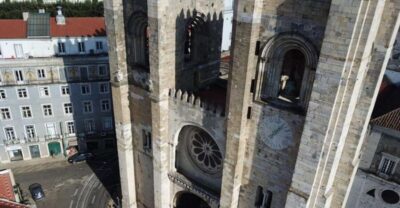
São Vicente de Fora sits in Lisbon’s fabric, tied to power, faith, and art in a way you can feel as soon as you step in. This monastery complex is not just a pretty stop. It’s a layered time capsule, shaped by royal families and rebuilt as styles changed.
The monastery’s story starts in the 12th century, founded by D. Afonso Henriques. Then it was rebuilt in the 16th century by D. Filipe I (II of Spain), which matters because it helps explain the building’s Mannerism style and the way it looks compared with older or more baroque-heavy sites.
If you care about how Portugal projected royal authority, this place delivers. You’re walking through spaces that were used and reused as different dynasties took control.
Finding the ticket office inside the Church of São Vicente de Fora
Your meeting point is simple: the ticket office is inside the Church of São Vicente de Fora. That matters because it signals you should arrive ready to enter right away, not hunt for a separate museum entrance.
This is also why the experience feels smooth. You buy entry, then follow the visit circuit through the monastery and exhibitions. There’s no “meet at a plaza, wait for the group” moment.
You should also plan for the rules. Food and drinks are not allowed, smoking is not allowed, and you can’t bring large bags or luggage. If you’re traveling with a big backpack, expect to leave it behind or travel lighter before you come.
The self-guided circuit, and how to make it feel effortless
This ticket gets you into the monastery and all exhibitions and areas in the visit circuit. You also get informative explanatory panels around the site and a flyer with a map and brief descriptions.
That setup is great for people who like to move at their own pace. You can pause where your eyes want to pause, and you can skip where you’d rather spend that time elsewhere.
The one drawback is that it is self-guided and there’s no audio guide. If you prefer a lot of spoken narration, you’ll rely on the panels. My practical advice: take 10 seconds at the start to scan the flyer map. Then you’ll spend less time guessing and more time looking.
Also, note that access out of the circuit is not included. So keep your energy for the rooms you can enter.
The azulejo obsession: in-place tiles with real visual impact
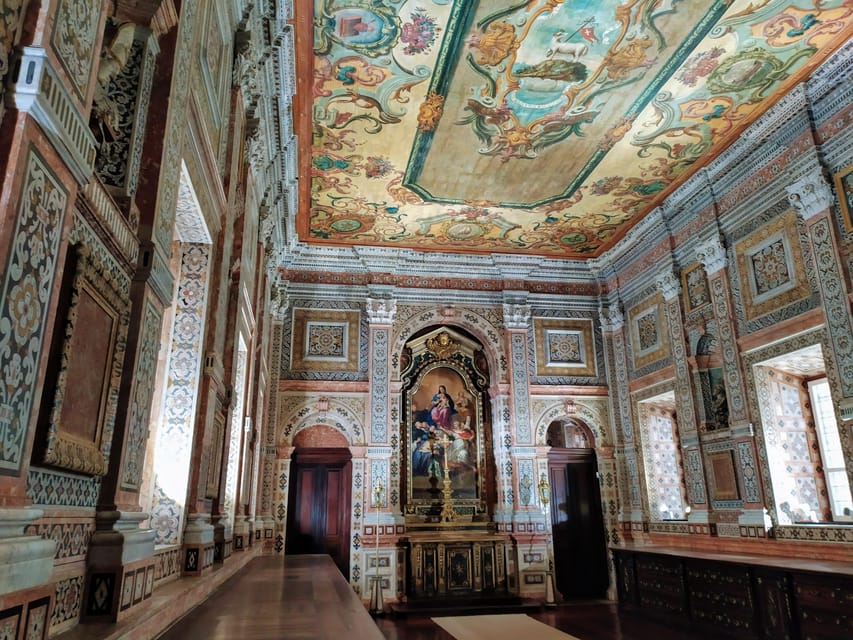
The biggest reason to come is the largest collection of baroque glazed tiles in their original place, in situ. And yes, the monument is also noted as the second monument in the world with the most tiles in their original place. That sounds like a number game until you see how the tiles work like a designed environment.
In practical terms, the tiles are not just wall decoration. They shape your movement. As you walk, your focus keeps getting pulled from floor level up toward scenes and patterns. It turns a visit into slow looking, which is exactly what you want here.
I especially like that the tiles are still where they belong. You don’t have to imagine the original setting. You’re seeing the building as it was meant to be seen, with artwork integrated into architecture.
If you like Portuguese art, this is one of the few places where you can study it without feeling rushed. If you do not normally care about tiles, you’ll probably still notice because the tiles help you understand the monastery’s mood, faith, and royal taste.
Other trips that start in Lisbon and end well:



The church inside: beauty without needing a sermon
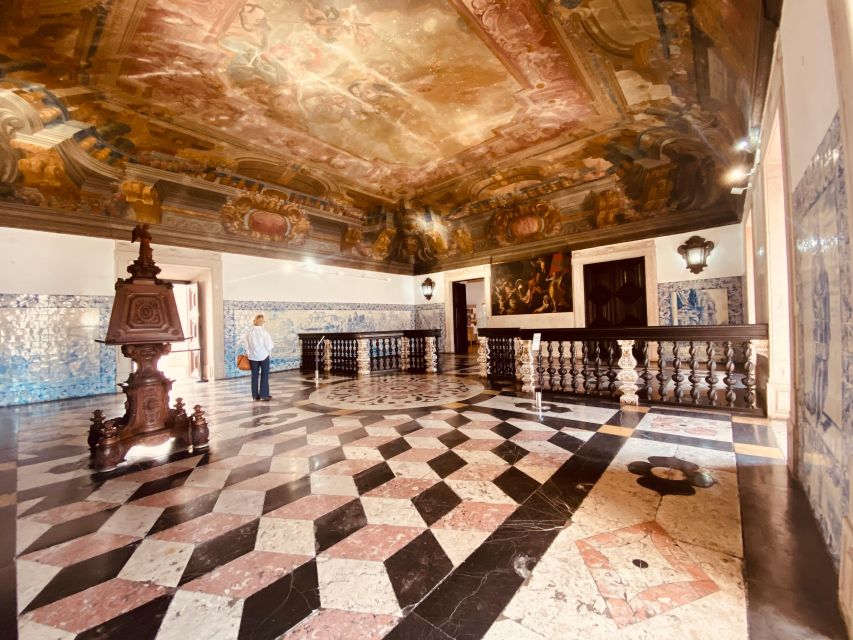
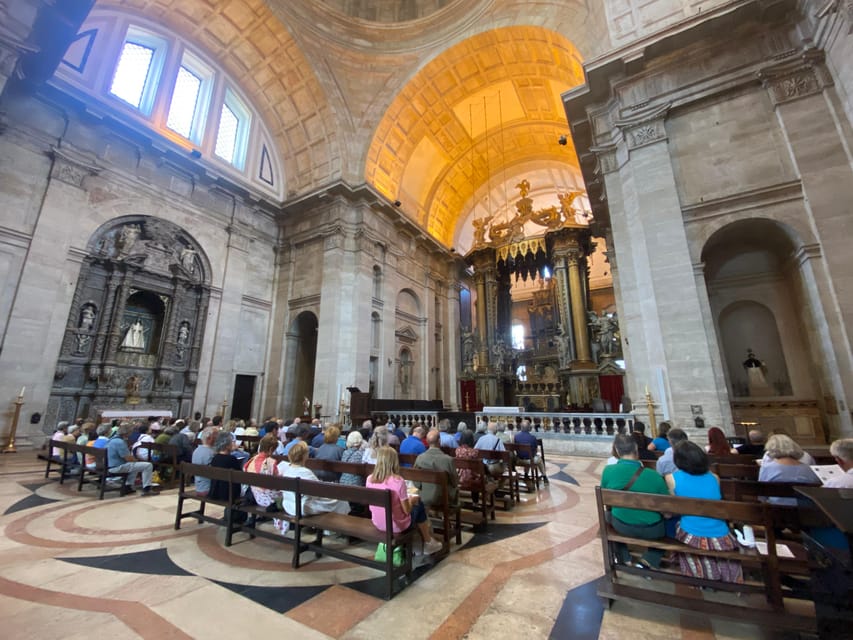
The church is richly decorated, and it’s a strong starting point for the visit. Even without a guided explanation, you can see the care put into decoration and how the church fits the broader monastery complex.
The panels throughout the visit help connect what you’re seeing to Portuguese history and royal power across different dynasties. That means the church is not only a pretty room. It’s one piece of the bigger puzzle.
If you’re a “look first, read later” visitor, you can do that here. The church gives you the visual hook, then the rest of the monastery provides the context as you go.
The cistern that still works, a medieval tech flex

Next up is a medieval cistern that still works. This is the kind of detail that makes old buildings feel alive rather than just old.
Why it matters for your visit: most heritage sites show you what things look like. Here, you’re shown what a medieval system was built to do. You can connect the engineering to daily life in the monastery and to how the building supported a community across centuries.
It’s not a flashy room, but it’s memorable. I like it because it breaks up the pure art focus with something practical and real.
The sacristy with inlaid marbles, a royal finishing touch

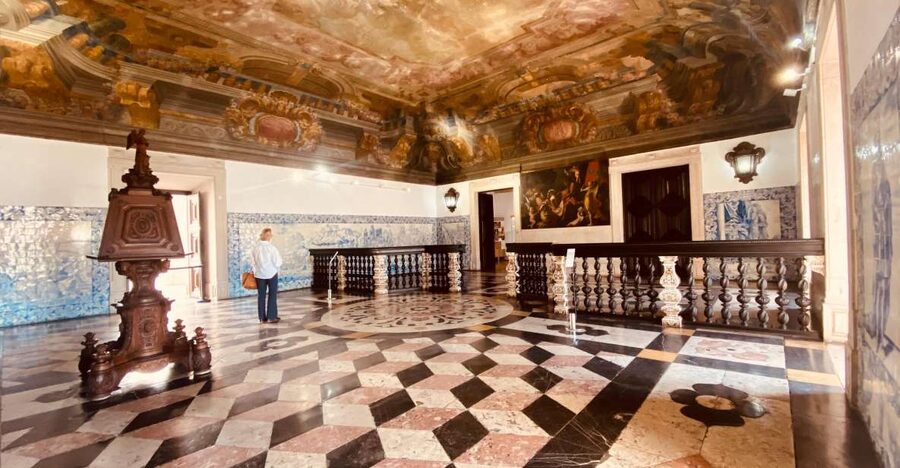
The sacristy is fully decorated with inlaid marbles. This is another place where the monastery shows its royal side. The materials and craftsmanship aren’t subtle, and that’s the point. It communicates status, power, and how rulers wanted places of worship to feel.
For you, the takeaway is simple: you get variety inside one ticket. Tiles, then church decoration, then a working cistern, then marble detail. That rhythm keeps the visit from turning into one long “same-looking hallway” experience.
If you like interiors and materials, the sacristy is a must-see stop.
The Royal Pantheon of the Bragança Dynasty
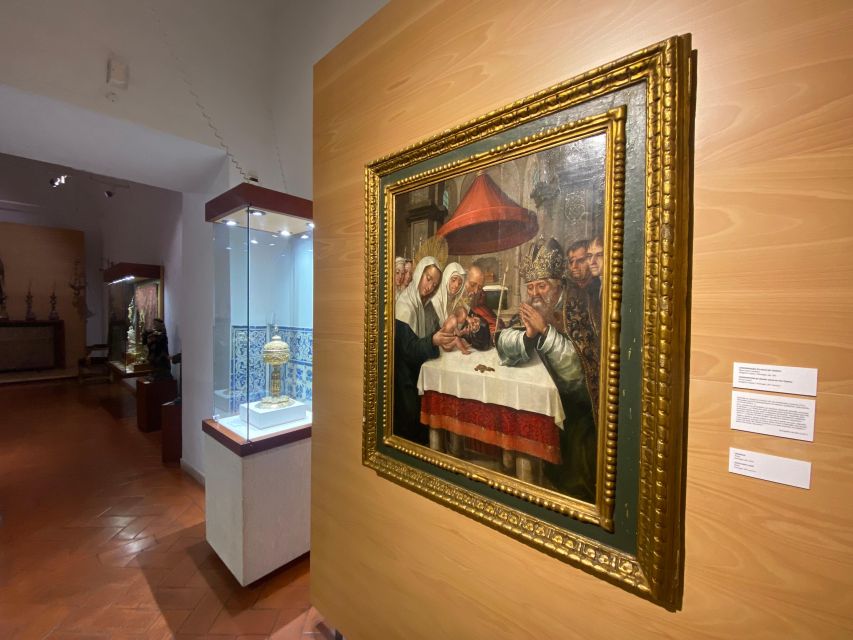
The Royal Pantheon of the Bragança Dynasty is one of the most important places to slow down. This is where the last Portuguese royal family is entombed, so you’re not just looking at art. You’re seeing a final resting place tied to national story.
Even if you’re not a deep Portugal-royalty nerd, this section gives weight. It helps you understand why the monastery was reappropriated by successive kings of the Bragança Dynasty and why it carries so much meaning today.
I recommend taking a quiet moment here. The rooms invite it, and it’s also the place where the rest of the visit clicks into focus.
Jean de La Fontaine on glazed tile panels
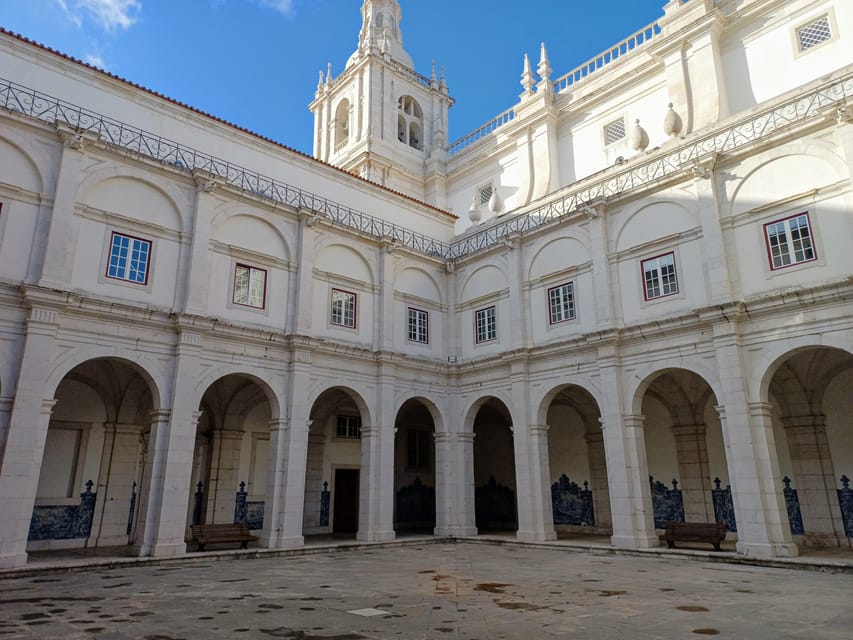
One standout exhibition is based on 38 fables written by Jean de La Fontaine, depicted in glazed tile panels. That’s a clever way to mix literature and Portuguese visual art traditions in a format you can actually walk through.
For you, the benefit is that it’s approachable. You don’t have to be fluent in art history to follow the concept. The tiles turn storytelling into a visual sequence. You can connect the fable idea to how the scenes are framed and repeated.
If you travel with kids, this is also the kind of exhibition that can hold attention, because you can turn it into a game: spot the scene, identify the story, and ask what the moral might be.
The panoramic view over Lisbon and the river
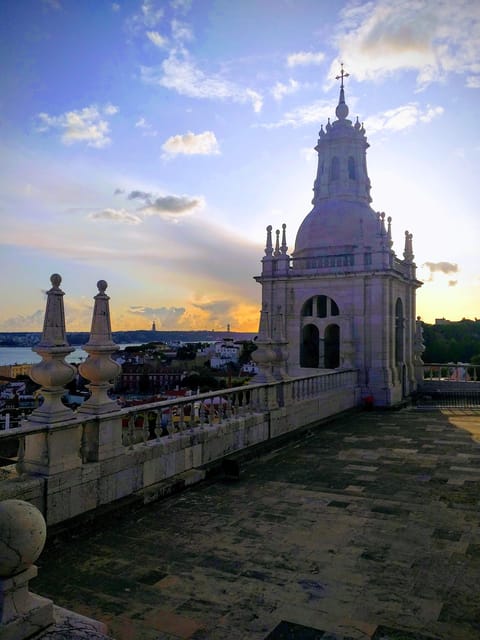
After the art and history, you’ll get a panoramic view over the city and the river. This is one of those additions that makes an entry ticket feel like you bought a complete experience.
Why it’s worth it: it gives your brain a reset. You’ve been focused on walls, panels, and details. Now you step back and see Lisbon as a whole, which helps you place everything you saw earlier.
If you’re the kind of visitor who likes to end a site with a payoff, build in time here. Don’t rush your last room because you want clear time for looking out.
What the $9 ticket really buys you
Let’s talk value, because this one is hard to beat. The price is $9 per person, and you’re not paying extra for a guided tour or an audio device.
What you do get:
- Entry to the monastery
- Access to exhibitions and areas within the circuit
- Bathroom access
- Informative explanatory panels
- A flyer with a map and brief descriptions
That package is the sweet spot for independent travelers. You control the pacing, you still get support through signage and a map, and you can spend more time where your interests hit.
The main tradeoff is what you don’t get: no guided tour, no audio guide, and no access to areas outside the circuit. If you want someone explaining everything out loud, this ticket won’t scratch that itch.
But if you’re happy reading panels and letting the building do the talking, $9 feels like a bargain.
Timing your visit for a calmer feel
The highlight notes a monument that’s not crowded, and that aligns with the best way to enjoy tile-heavy places like this: you need space to look.
Aim to avoid the busiest moments of the day if you can. When it’s calmer, the viewing experience improves fast. You can stand close to the tiles without feeling rushed, and you can read the panels without moving every 20 seconds.
Also, because this is self-guided, you’re less tied to a group’s schedule. You can start, break, and finish in a rhythm that suits you.
If you want the view to look its best, think about daylight. Lisbon’s light can be great, but clarity changes. If the sky is hazy, you’ll still get the sense of place, but you may want to spend extra time inside earlier.
Who this ticket suits best
This is a great fit if you:
- Care about Portuguese history and royal dynasties
- Love azulejos and want to see them where they belong
- Want architecture and interior rooms, not just an exterior photo stop
- Prefer to explore on your own, using panels and a map
It may be less ideal if you:
- Strongly prefer guided storytelling
- Need an audio guide to follow context
- Travel with large luggage, since luggage or large bags are not allowed
Practical tips to get the most from your visit
A few small moves make a big difference here:
- Use the flyer map early, then follow the circuit in a logical order so you don’t backtrack.
- Save the viewpoint for the latter part of your visit, after your eyes have been focused on details.
- When you’re in the azulejo areas, move slowly and look at how the artwork interacts with the architecture. It’s part of why the tiles feel special.
- Bring shoes you’re comfortable standing in. This is an interior-heavy experience with a lot of time spent looking around.
Also, since food and drinks are not allowed, plan to eat before or after your visit. Bring patience instead of snacks.
Should you book a ticket to Mosteiro de São Vicente de Fora?
Yes, I’d book it if you want a value-packed, self-guided Portuguese history and art experience in one place. For $9, you’re getting major royal context, the huge in-place tile collection, a working medieval cistern, marble sacristy decoration, an exhibition of Jean de La Fontaine fables on glazed panels, and a panoramic city and river view.
Skip it only if you need a full guided tour or an audio guide to make history click. If you’re okay with panels and your own pace, São Vicente de Fora is the kind of stop that makes Lisbon feel thoughtful, not rushed.
FAQ
Where is the meeting point for the ticket office?
The ticket office is inside the Church of São Vicente de Fora.
What’s included with the entry ticket?
Your ticket includes entry to the monastery, access to all exhibitions and areas within the circuit, bathroom access, informative explanatory panels, and a flyer with a map and brief descriptions.
Is there a guided tour or audio guide included?
No. A guided tour and an audio guide are not included.
How long is the activity valid, and can I choose a time?
The ticket is valid for 1 day. You can check availability to see starting times.
Are food, drinks, and luggage allowed inside?
No. Food and drinks are not allowed, and luggage or large bags are not allowed.
What languages are available for the host or greeter?
The host or greeter is available in English, Spanish, French, Portuguese, and Italian.
Fresh across the seven hills
- Porto Private Tour from Lisbon
★ 4.5 · 6 reviews - VIP transfer from the airport to Lisbon hotels
★ 5.0 · 6 reviews - Full-day Private Tour: Fátima Sanctuary, Batalha, Nazaré, Óbidos
★ 5.0 · 6 reviews - Lisbon Photoshoot: Capture Your Adventure
★ 5.0 · 6 reviews - Lisbon: Romantic Sunset Cruise With Wine & Portuguese Tapas
★ 5.0 · 6 reviews - Arrábida Wine Tour – 3 Wineries, Traditions & Views from Lisbon
★ 4.5 · 6 reviews - Lisbon: Sintra, Pena Palace, Belém Tour + sunset Boat Cruise
★ 5.0 · 6 reviews
Tickets, compared.



72/96-Hour Hop-On Hop-Off Bus, Tram & Boat Ticket
Read our review →
Lisbon Oceanario: Aquarium Entrance Ticket
Read our review →
Sintra, Pena, Cascais & Cabo Day Tour With Tickets
Read our review →
Boat Tour Ticket and Hop-on Hop-off 48-Hour Bus.
Read our review →