Reviewed · TOURS
Lisbon: Highlights and Hidden Gems Tour
Lisbon history comes with street art and earthquake scars. This small-group walk in Lisbon’s Graça, Castle, and Baixa areas connects what you see today to the long story of Portugal, with stops that include the portrait of Amalia Rodrigues and traces of the 1755 Lisbon earthquake. I love how the guide links the city’s layers to real places, not just big-name landmarks.
I also like the pacing and the hands-on feel of the route, with time in places like Alfama and the views from higher ground. One thing to consider: this is a mostly history-led tour, so if you want a heavy dose of modern Lisbon nightlife or fashion spots, you may prefer a different style of walk.
In This Review
- Key highlights worth marking on your map
- Getting oriented in Lisbon, the practical way
- Where you’ll meet, and how the start sets the tone
- Church of Our Lady of Grace and the Graça neighborhood story
- São Vicente monastery, royal burials, and a Fado connection
- Castle Quarter walls, Roman ruins, and medieval Lisbon up close
- Alfama break time, then Santa Maria Maior
- Dictatorship-era prison traces and the earthquake’s physical aftermath
- Ending at Praça do Comércio, where the Royal Palace once stood
- Price and what you truly get for $41
- Who this tour fits best, and who should skip it
- Should you book this Lisbon history walk?
- FAQ
- How long is the Lisbon Highlights and Hidden Gems walking tour?
- How much does the tour cost?
- Where do we meet?
- What is included in the tour price?
- How big is the group?
- What languages are the guides available in?
- Is it refundable if my plans change?
- Is this tour suitable for wheelchair users or young children?
Key highlights worth marking on your map
- Portrait of Amalia Rodrigues in the street art: You’ll see a Fado icon made visual right in the neighborhood.
- 1755 earthquake damage, including a buried street: You learn how the disaster changed the city layout you still walk through.
- São Vicente monastery and royal burial connections: You’ll visit the monastery tied to the Portuguese royal family and the Queen of England.
- Castle Quarter walls plus major historic layers: Expect medieval walls, a Roman theatre, and the Cathedral area (including stables).
- A dictatorship-era prison stop: You’ll see how 20th-century power left physical marks in the city.
- Finish at Praça do Comércio: You end at a dramatic square where the Royal Palace once stood, plus stories behind the statues.
Deciding between days out? Here are a few more from Lisbon:
- Lisbon City Center Tour – The Unmissable Lisbon★ 5.0 · 22,234 reviews
- Lisbon: Sintra, Pena, Regaleira, Cabo da Roca & Cascais★ 4.7 · 19,656 reviews
- Lisbon Card: 24, 48, or 72-Hour Pass★ 4.5 · 17,944 reviews
- Lisbon: Jerónimos Monastery Entrance Ticket★ 4.1 · 14,164 reviews
Getting oriented in Lisbon, the practical way

If you only have a short window in Lisbon, the route makes smart sense. You start up in Graça and work your way down toward Baixa and Praça do Comércio, so you naturally see how neighborhoods relate to each other.
The tour is 2.5 hours and keeps a tight, walkable rhythm. It’s also limited to up to 8 participants, which helps in smaller lanes where the group needs to move as one.
One more practical point: expect uneven sidewalks and some stairs in this part of town. It’s marked as not suitable for wheelchair users or people with mobility impairments, and children under 5 aren’t included.
Where you’ll meet, and how the start sets the tone
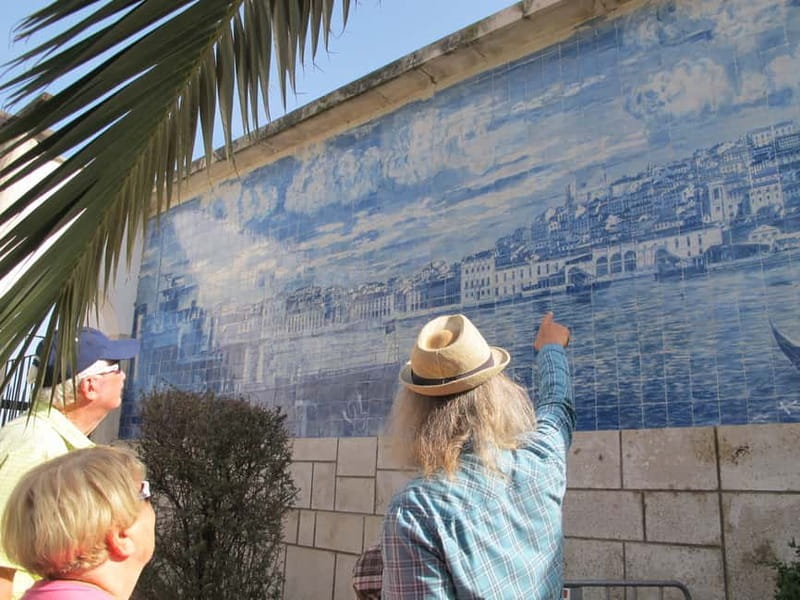
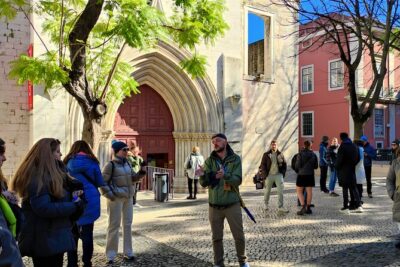
Your meeting point can vary depending on the option you book: Miradouro da Graça or the Church of Our Lady of Grace. Either way, you begin with the Graça area in front of you, which is the perfect setup for a history-focused walk because the streets and viewpoints do the explaining.
I like that the start isn’t an airport-style lecture spot. You’re already in the city’s terrain, so the stories feel tied to what you’re seeing right away.
Church of Our Lady of Grace and the Graça neighborhood story
The first stop is the Church of Our Lady of Grace. From there, you move through the Graça historic district, where the tour’s theme becomes clear: Lisbon’s past is not hidden, it’s just layered under daily life.
You’ll hear guide stories that cover many eras, including Celts, Romans, Visigoths, Arabs, and Portuguese. That kind of timeline matters here because Lisbon’s neighborhoods keep showing traces from multiple periods.
This is also where you’ll get the feel for working-class Lisbon in the old district. The walk includes a look at older workers’ housing nearby, which adds a grounded angle compared to tours that only chase royal palaces.
São Vicente monastery, royal burials, and a Fado connection
Next comes the São Vicente monastery, a standout stop because it connects Lisbon’s religious history to famous political figures. You’ll visit a place tied to the Portuguese royal family, and the burial connection includes the Queen of England.
After that, the route shifts into the street-art side of the experience. You’ll walk past great street art, including a portrait of Fado singer Amalia Rodrigues. For many visitors, this is the moment the tour stops feeling like a museum and starts feeling like Lisbon itself.
This stop is also a good reminder that Fado is part of local identity, not just a performance you catch at night. Seeing it referenced in everyday walls is a fast way to understand how the city keeps its cultural memory visible.
Other trips that start in Lisbon and end well:


Castle Quarter walls, Roman ruins, and medieval Lisbon up close
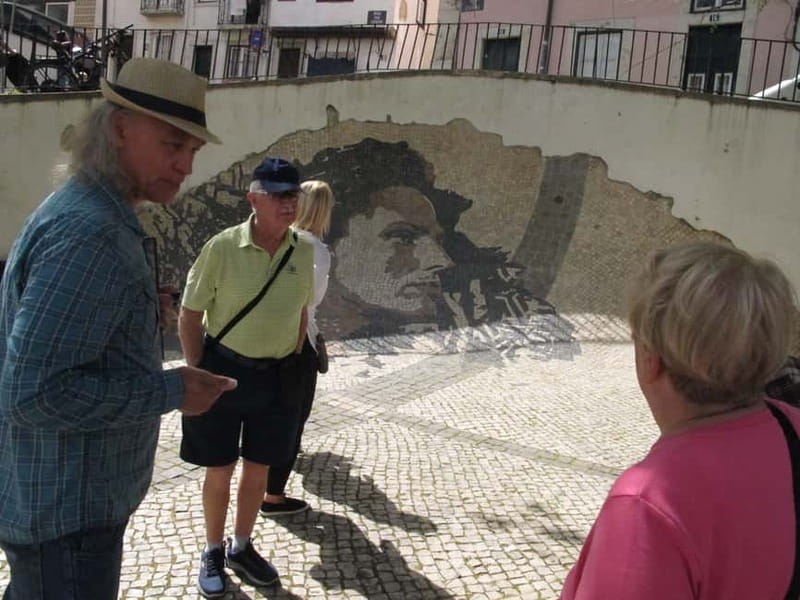
When you head into the Castle area, you’re stepping into a different kind of scale. The tour includes the medieval walls, and you’ll have time to wander and look closely rather than just pass through.
Expect a few headline sights packaged with useful context:
- a Roman theatre
- the Cathedral area
- and the Cathedral stables
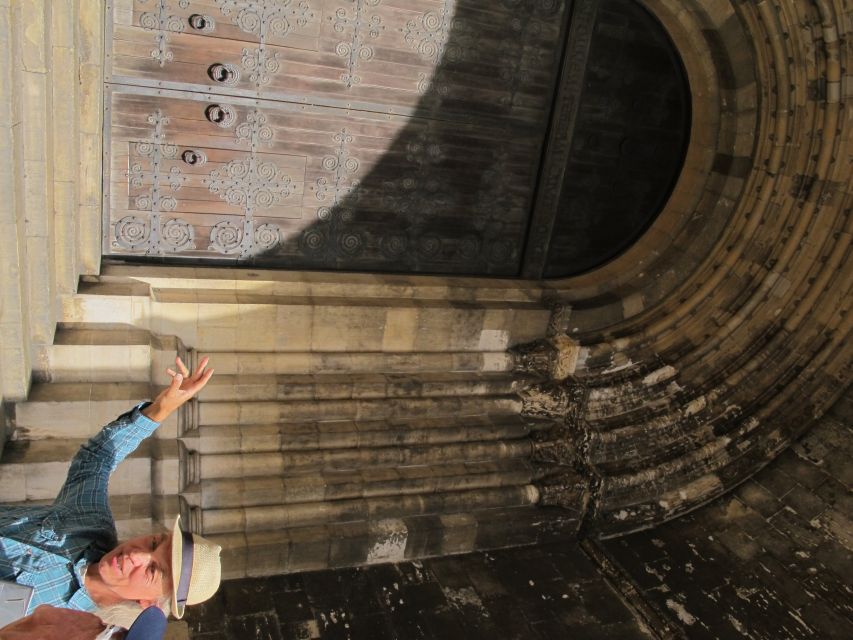
What I like about this part of the walk is the mix of time periods side-by-side. Roman Lisbon shows up in one direction, medieval fortifications in another, and all of it fits together because you’re walking the actual ground.
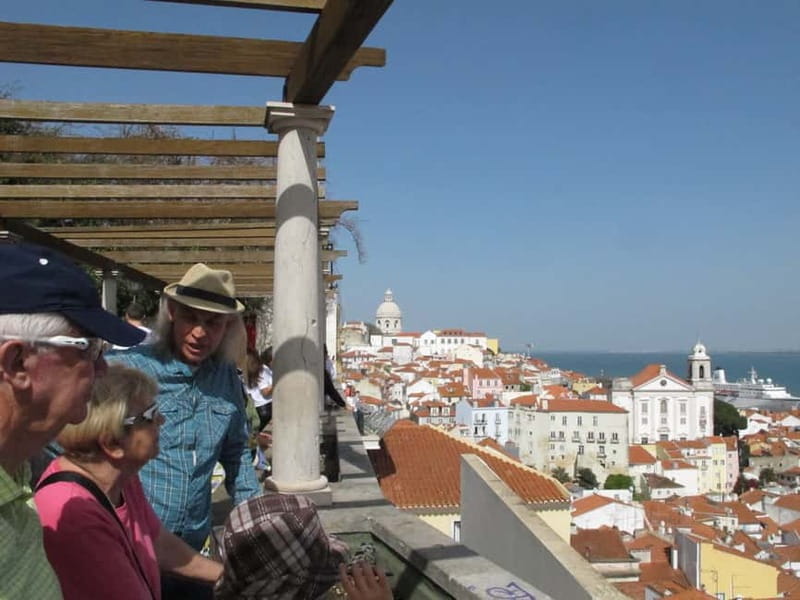
You’ll also pause at a viewpoint partway through this zone. It’s a simple break, but it helps you mentally map where Graça ends and where the route will eventually land down in Baixa.
Alfama break time, then Santa Maria Maior
You get a break time in Alfama, which is smart. This neighborhood can feel intense if you try to sprint through it. Even a short pause helps you take in the streets and gives your legs a breather.
Then the walk continues with Santa Maria Maior. This part of the route helps knit together the earlier Graça story with the larger city picture, so you’re not just collecting sights. You’re building a sense of how different districts held together over time.
If you’re the type who likes to understand why a neighborhood exists where it does, this is the zone where the guide’s background stories start to click.
Dictatorship-era prison traces and the earthquake’s physical aftermath
One of the most memorable parts of the tour is what happens when the guide turns to the 20th century and the 1755 earthquake. The route includes a stop tied to a prison from the dictatorship, which anchors modern political history in a real, visitable place.
From there, the tour moves to the city’s earthquake damage, including a buried street and areas with earthquake-resistant buildings in the Baixa district. This is the practical part of the history: you learn that Lisbon’s survival also meant building differently afterward.
This section is also why the walking route matters. You can read about disasters all day, but you only understand urban change when you see it along the path you’re walking.
Ending at Praça do Comércio, where the Royal Palace once stood
The tour finishes at Praça do Comércio, one of Lisbon’s most striking squares. This is where you’re told what happened at this site over the centuries, and you also get help interpreting the meaning of the statues around the square.
You can feel the contrast immediately. The earlier parts of the walk are about walls, churches, and tight streets. Praça do Comércio is open, ceremonial, and built to impress, and that makes the stories hit harder.
If you want a souvenir in the form of a mental image, this ending delivers it. By the time you reach the square, you’ve already seen enough layers of Lisbon’s past to understand why this place became so important.
Price and what you truly get for $41
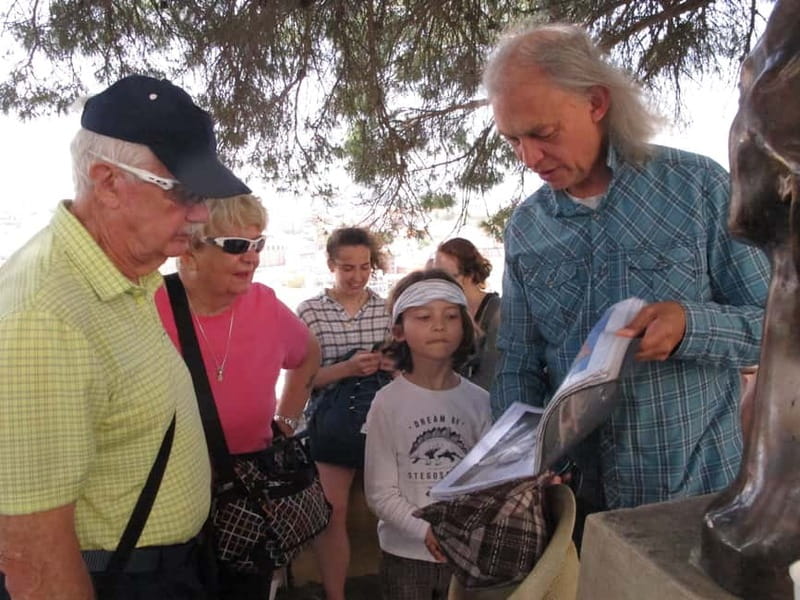
At $41 per person for 2.5 hours, the value comes down to three things: the guide-led depth, the small group size, and what’s included to keep the experience human.
You’re not paying for a long ride or a big bus schedule. This is walking time in the historic core, and the guide is actively telling stories as you move. The small-group limit of 8 participants helps the tour feel less rushed, especially in tighter spaces where groups normally stretch out and lose cohesion.
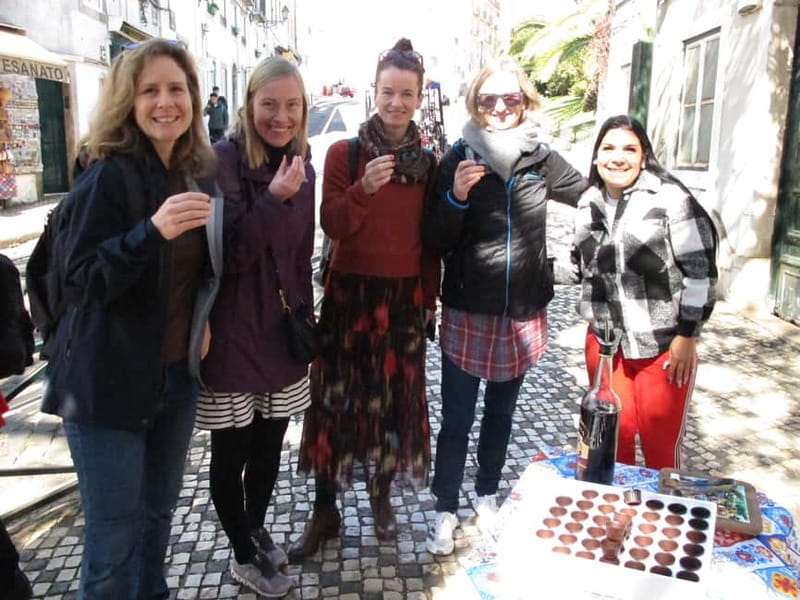
Also, the tour includes a taste at no extra cost: pastel de nata (cream tart) OR ginginha (cherry liqueur). In practice, this kind of included stop is more useful than it sounds, because it gives you a clear endpoint and a moment to slow down.
Who this tour fits best, and who should skip it
This tour is a great match if you like history that points to what you can actually see. It’s also ideal if you want more context on Lisbon than the quick-hit version, since the route covers multiple eras, from ancient layers to the dictatorship period and the earthquake aftermath.
It’s less ideal if your trip style is mostly food crawling, nightlife, or contemporary design hunting. The tour is very history-based, so your expectations should match that.
One more fit note: it’s not designed for wheelchair users or people with mobility impairments, and it’s not for children under 5. Wear comfortable shoes, plan for steady walking, and you’ll be in good shape.
Should you book this Lisbon history walk?
Book it if you want to understand Lisbon as a city of visible layers, not just a list of attractions. You’ll get the kind of details that help everything else make sense, especially once you’ve seen the earthquake scars and the burial connections at São Vicente monastery.
Skip it if you’re hoping for a primarily modern Lisbon experience or a mostly relaxed, casual stroll with minimal storytelling. For history lovers who like learning while they walk, this one is a strong way to spend 2.5 hours and come away with a clearer map of the city’s past.
FAQ
How long is the Lisbon Highlights and Hidden Gems walking tour?
The tour lasts 2.5 hours.
How much does the tour cost?
The price is $41 per person.
Where do we meet?
The meeting point may vary depending on the option booked, with starting options that include Miradouro da Graça and the Church of Our Lady of Grace.
What is included in the tour price?
The tour includes either a pastel de nata (cream tart) or ginginha (cherry liqueur).
How big is the group?
The group is small, limited to 8 participants.
What languages are the guides available in?
The live tour guide is available in English and French.
Is it refundable if my plans change?
Free cancellation is available up to 24 hours in advance for a full refund.
Is this tour suitable for wheelchair users or young children?
No. It is not suitable for wheelchair users or people with mobility impairments, and children under 5 are not suitable.
Fresh across the seven hills
- Full-day Private Tour: Fátima Sanctuary, Batalha, Nazaré, Óbidos
★ 5.0 · 6 reviews - Porto Private Tour from Lisbon
★ 4.5 · 6 reviews - VIP transfer from the airport to Lisbon hotels
★ 5.0 · 6 reviews - Lisbon Photoshoot: Capture Your Adventure
★ 5.0 · 6 reviews - Lisbon: Romantic Sunset Cruise With Wine & Portuguese Tapas
★ 5.0 · 6 reviews - Arrábida Wine Tour – 3 Wineries, Traditions & Views from Lisbon
★ 4.5 · 6 reviews - Lisbon: Sintra, Pena Palace, Belém Tour + sunset Boat Cruise
★ 5.0 · 6 reviews
Tours, compared.
Lisbon City Center Tour – The Unmissable Lisbon
Read our review →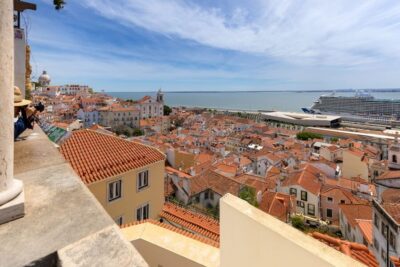

True 4Hour Private Tuk Tuk Tour: Discover Lisbon with a Local!
Read our review →
Winner 2025 Undiscovered Lisbon Food & Wine Tour by Eating Europe
Read our review →
Sintra, Pena, Cabo da Roca, Cascais Tour with Pickup
Read our review →
Best of Lisbon Small-Group Guided Walking Tour
Read our review →