
Reviewed · HISTORICAL TOURS
Lisbon: Jewish History Tour of Lisbon
Lisbon’s Jewish story lives in the streets. This Lisbon Walker tour follows the traces of medieval Jewish life from Praça do Comércio up through Alfama and Baixa. You also get the modern layer, including the 1940s refugee passage connected to IIWW.
I love how the route ties big landmarks to real turning points, like the Exodus origin connection at Praça do Comércio and the medieval segregation logic in Alfama. Second, I like the private, live guide approach, where you can ask questions and actually keep moving without feeling rushed.
One drawback to plan for: physical remains are scarce, so you’ll rely heavily on storytelling and place-based interpretation rather than lots of surviving artifacts.
In This Review
- Key things that make this tour worth your time
- Jewish Lisbon, mapped from Praça do Comércio to Rossio
- Alfama’s streets and the medieval segregation story you can picture
- Baixa and forced conversions, explained through city routing
- Rossio, the 1506 Pessah massacre, and how Lisbon tension shaped events
- Hidden layers: Resistance museum, Mouraria, and the modern Lisbon connection
- Price and what you actually get for $106
- Who this tour suits best
- Should you book Lisbon Walker’s Jewish History Tour of Lisbon?
- FAQ
- How long is the Lisbon Jewish History Tour?
- What does the tour cost?
- Is this a private group tour?
- What languages are available?
- Where do we meet the guide?
- What’s included in the price?
- Are food and drinks included?
- Is hotel pickup or drop-off included?
- Does the tour help with ticket lines?
- What should I bring?
- What’s the cancellation policy?
Key things that make this tour worth your time
- Private group pace with a guide who can keep the group engaged for the full walk
- Big-place to neighborhood detail, linking squares and streets to what life looked like in different centuries
- Alfama and Baixa connections to medieval Jewish segregation and forced conversions
- Rossio’s 1506 Pessah massacre moment, placed in the context of Lisbon’s tensions
- Modern follow-through, including the 1940s refugee passage tied to IIWW
- You walk more than you museum-stroll, so bring comfortable shoes and expect a solid city circuit
More of pre-earthquake Lisbon, where it survives:
- Lisbon: History, Stories and Lifestyle Walking Tour★ 4.8 · 10,902 reviews
- Lisbon: Daytime or Sunset Boat Cruise with History and Wine★ 5.0 · 1,053 reviews
- Explore Lisbon by Tuk Tuk: History and Viewpoints★ 5.0 · 840 reviews
- Private Tuk Tuk Tour Through Lisbon’s Historical Streets★ 5.0 · 734 reviews
Jewish Lisbon, mapped from Praça do Comércio to Rossio
The tour starts at Praça do Comércio, Lisbon’s wide, iconic riverfront square, and it makes a point of using place as the main teaching tool. The guide meets you under the big triumph arch, and the opening connection you’ll hear is the Exodus origin idea tied to this part of the city. Even if you have read about the Jewish story in Portugal before, this start helps you see how Lisbon’s geography shaped movement, fear, and hope.
From there, you’ll pass several central streets and landmarks that act like a timeline bridge. You’ll go by Praça do Município and Rua do Comércio, then through the area around Casa dos Bicos and Ribeira. These aren’t random stops. They’re meant to help you understand how the city’s core connected trading life, power, and the lived experiences of communities over time.
One practical note: this is not a sit-down lecture. It’s an active, walking-focused format, so your attention matters. The guides you might meet include people like Filipa, Jose, Rita, Sofia, Jorge, and José Antunes, and the consistent pattern in their style is simple: they keep you talking and thinking. The upside for you is that it stays lively for the full session instead of flattening into a history recitation.
Alfama’s streets and the medieval segregation story you can picture
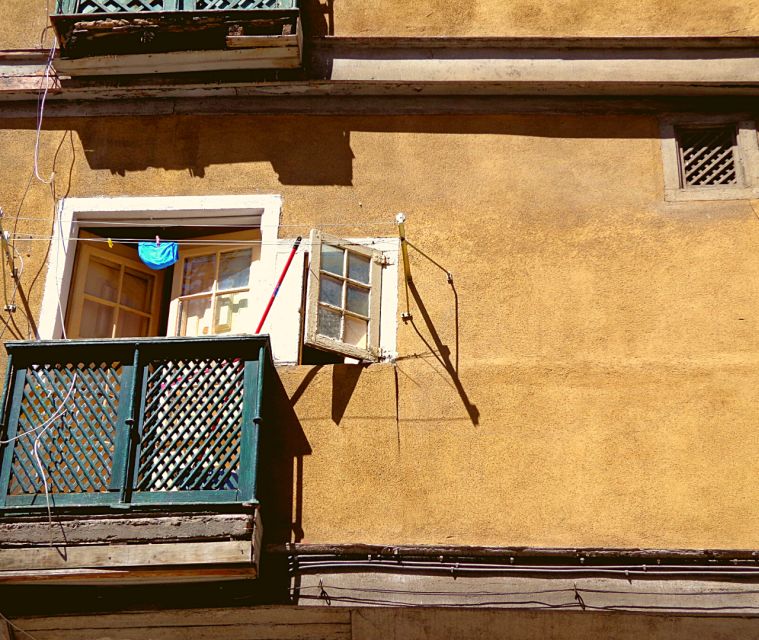
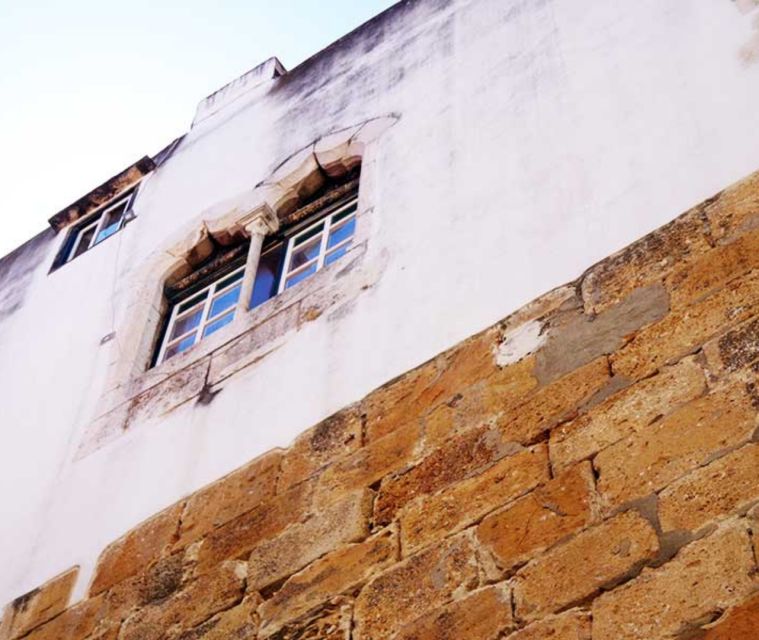
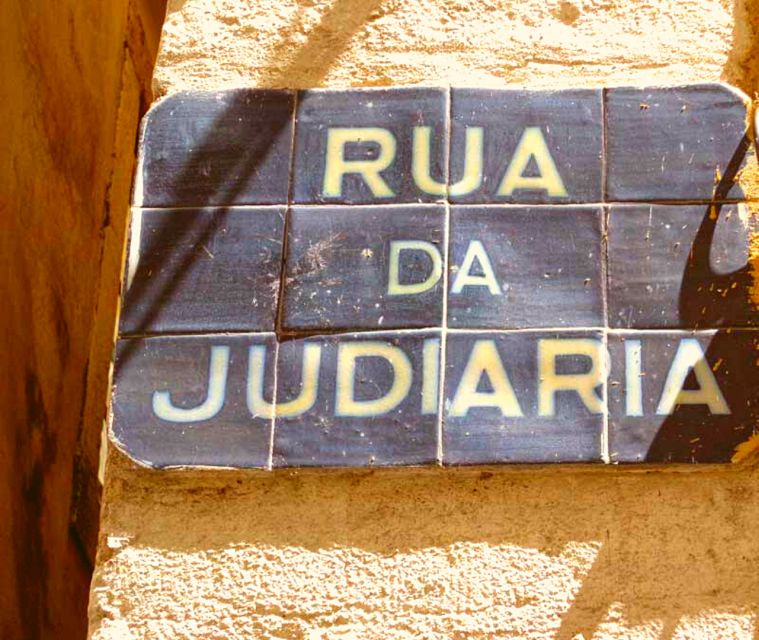
Alfama is where the tour becomes most atmospheric. You’re dealing with steep old neighborhoods and medieval-era urban logic, so even without visible ruins of Jewish life, you can still picture the social boundaries that were enforced. The tour specifically calls out the Alfama Jewish quarter and the medieval segregation that shaped where people could live and how they could move.
When a guide explains segregation on a street-by-street walk, the “why” becomes much easier to grasp. In Lisbon, those old divisions affected everyday life: where neighbors could gather, what exposure looked like, and how long-term pressure built toward conversion or expulsion. That’s the kind of context that makes the rest of the tour click, because you stop treating the story as separate centuries and start seeing it as one chain of cause and effect.
This is also one of the stops where you’ll feel the trade-off many people mention after: there are not many physical Jewish-era artifacts left to point at. Still, the guided interpretation turns the lack of remains into a lesson of its own. You learn what persecution does to architecture, records, and visible markers, and why today’s city can feel quiet on the surface.
Tip for you: take a moment to pause and look back from small viewpoints in Alfama. Even if you’re focusing on the guide’s words, the view itself helps your brain map the medieval logic.
Baixa and forced conversions, explained through city routing
Next comes the Baixa District, a part of Lisbon that people often know for its open squares and classic storefront energy, but the tour reframes it. This section is aimed at the forced conversions theme, explaining how pressure and policy changed identity in public life and how that shift echoed through generations.
What I appreciate here is how the tour uses routing through Lisbon’s central areas to explain social movement. You’re not just hearing names and dates. You’re watching a guide connect power centers to vulnerable communities, and you see how the city’s layout supported the realities people faced.
Baixa also helps you understand why the Jewish story in Lisbon often shows up indirectly today. When conversion was forced, outward markers could disappear or transform. So the absence of obvious Jewish sites in modern Lisbon is not a coincidence, it’s part of the historical mechanism the guide discusses.
This section is usually the point where people who expected more visible sites feel the biggest shift. My advice: go in with the right mindset. You’re paying for guided interpretation of neighborhoods, not for a scavenger hunt of surviving monuments.
Rossio, the 1506 Pessah massacre, and how Lisbon tension shaped events
The tour includes Rossio and connects it to the 1506 Pessah massacre. That’s a heavy topic, and the tour handles it as part of Lisbon’s broader atmosphere of suspicion and hostility, not as an isolated tragedy.
The value of placing this moment in Rossio is that it helps you feel how public space can amplify conflict. Squares are where people gather, where rumors travel, and where authorities can enforce order quickly. When you hear this story while standing in a historic public hub, it’s easier to understand why these events mattered so much socially.
From the practical side, Rossio is also where you can reset your legs. If your group is walking at a comfortable pace, you’ll likely reach this stage with enough energy to process the story. If you are sensitive to long walks, this is the moment to decide whether you want slower pacing for the next segments.
Other trips that start in Lisbon and end well:
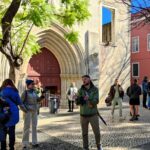



Hidden layers: Resistance museum, Mouraria, and the modern Lisbon connection
Between the central squares and the older quarters, the tour routes through areas tied to Lisbon’s later struggles and identity. The itinerary includes the Resistance museum, plus Mouraria and Praça da Figueira.
This modern thread matters because it changes the tour from “medieval only” into “Lisbon over time.” You’ll hear about the 1940s refugee passage connected to IIWW and how Lisbon linked to wider movements of people and ideas. The tour also sets the Jewish diaspora story in motion from Lisbon outward, reaching the Atlantic, the Mediterranean area, Asia, and northern Europe.
I like this approach because it avoids turning history into a single static chapter. The Jewish story in Lisbon becomes a bridge between centuries, shaped by trade routes, political pressure, and migration patterns.
Also, one of the more interesting add-ons you might encounter with certain guides is a stop connected to hidden Roman remains and churches. That kind of contextual “layering” can make Lisbon feel like one continuous text, where different eras overlap in the same stones.
Price and what you actually get for $106
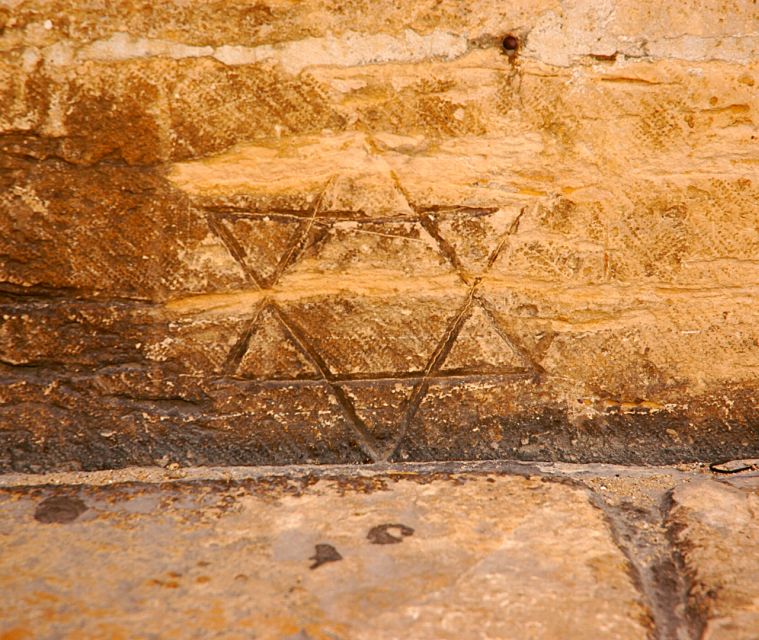
The price is $106 per person for a 3-hour guided tour. On paper, that may sound like a normal walking tour rate, but here’s how I think about value.
You’re paying for a live guide who can answer questions and keep the group engaged, not just point at buildings. Many of the strongest notes from prior bookings praise guides like Jose, Filipa, Rita, Sofia, Jorge, and José Antunes for being engaging, staying focused for the full time, and answering questions clearly. That matters because this tour leans on oral storytelling. If the guide is bland, the experience suffers. If the guide is sharp, the lack of physical artifacts becomes manageable.
It’s also a private group, which is a big deal if you’re traveling with friends or family and you want your questions answered right away. If your group includes people who hate long museum lineups, the tour’s included skip the ticket line benefit helps keep things moving.
Budget note: hotel pickup and drop-off aren’t included, and food and drinks aren’t included. So you’re in charge of your pre and post-meal timing. For a 3-hour walk, that’s usually fine, just plan a snack stop outside the official tour window.
Who this tour suits best
This is a strong fit if you like history that’s tied to streets, not just buildings. You’ll enjoy it most if you’re okay with a tour that relies on context, social change, and place-based storytelling rather than lots of surviving markers.
It also works well for:
- People who want an introduction to Jewish history in Portugal, especially Lisbon
- Travelers who like Q and A, and want a guide who can answer questions in real time
- Anyone who enjoys walking neighborhoods like Alfama and Mouraria, even when it gets steep
If you’re the type who needs visible ruins or museum-quality artifacts at every stop, you should mentally prepare for a tour that is partly interpretive. The scarcity of physical remains is a recurring theme, and the tour’s strength is how it handles that reality.
If you have mobility limits, you should still consider it, but plan your expectations around uneven streets and walking time. The tour is described as lots of walking, and while some guides are attentive to rest needs, the city itself still sets the pace.
Should you book Lisbon Walker’s Jewish History Tour of Lisbon?
Yes, you should book it if you want a structured, guided walk that connects Alfama, Baixa, and Rossio to major Jewish-history turning points in Lisbon, plus a modern thread reaching the 1940s. I’d also book it if you value a private format and a guide who can keep you engaged and answer questions instead of stopping every five minutes for lecture slides.
Skip it only if your main goal is to see lots of physical Jewish-era artifacts and monuments. This is a tour of context. Lisbon’s Jewish story survives today mostly through explanation, geography, and the careful reading of what’s missing.
If you go in with comfortable shoes and the right mindset, you’ll walk away with a clearer map of how medieval segregation and forced conversion shaped lives, and how Lisbon stayed connected to Jewish movement far beyond Portugal.
FAQ
How long is the Lisbon Jewish History Tour?
The guided portion is 3 hours. It’s offered as a 1-day activity, with starting times based on availability.
What does the tour cost?
The price is $106 per person.
Is this a private group tour?
Yes, it’s listed as a private group.
What languages are available?
The live guide is available in English and Portuguese.
Where do we meet the guide?
Meet under the big triumph arch at Praça do Comércio. The guide will be wearing an orange backpack or a Totebag with the Lisbon Walker big logo.
What’s included in the price?
The price includes the 3 hours guided tour.
Are food and drinks included?
No. Food and drinks are not included.
Is hotel pickup or drop-off included?
No. Hotel pickup and drop-off are not included.
Does the tour help with ticket lines?
Yes, it includes skip the ticket line.
What should I bring?
Bring comfortable shoes since the experience involves walking.
What’s the cancellation policy?
You can cancel up to 24 hours in advance for a full refund. The activity also offers a reserve now & pay later option.
Fresh across the seven hills
- Full-day Private Tour: Fátima Sanctuary, Batalha, Nazaré, Óbidos
★ 5.0 · 6 reviews - Porto Private Tour from Lisbon
★ 4.5 · 6 reviews - VIP transfer from the airport to Lisbon hotels
★ 5.0 · 6 reviews - Lisbon Photoshoot: Capture Your Adventure
★ 5.0 · 6 reviews - Lisbon: Romantic Sunset Cruise With Wine & Portuguese Tapas
★ 5.0 · 6 reviews - Arrábida Wine Tour – 3 Wineries, Traditions & Views from Lisbon
★ 4.5 · 6 reviews - Lisbon: Sintra, Pena Palace, Belém Tour + sunset Boat Cruise
★ 5.0 · 6 reviews
Historical Tours, compared.
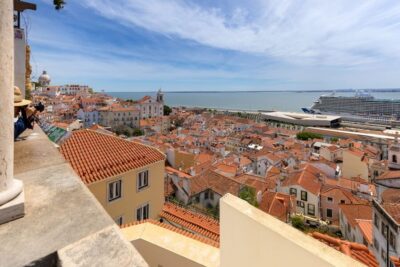

Daytime or Sunset Boat Cruise with History and Wine
Read our review →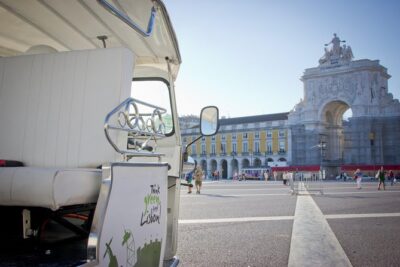
Explore Lisbon by Tuk Tuk: History and Viewpoints
Read our review →
Private Tuk Tuk Tour Through Lisbon’s Historical Streets
Read our review →
Lisbon Sunset Sailing with Portuguese Wine and History
Read our review →
Live Fado Show in Historic Alfama with Port Wine
Read our review →
Private Lisbon-Arrábida Wine Tour: 3 Wineries, Coast & Heritage
Read our review →
Browse the lists this tour appears in