
Reviewed · CITY TOURS
Lisbon Private Tour – The best introduction to the city
Lisbon can feel like a puzzle at first. This private walk turns the pieces into a clear, map-like picture by linking big squares, old churches, and miradouros in two of the city’s most meaningful neighborhoods. You’ll cover Alfama and Mouraria, and you’ll do it with a professional guide who helps the streets make sense fast.
What I like most is the way the tour hits major landmarks without wasting time, including the Lisbon Cathedral area and the viewpoint stops that make photos easy. Second, you get a real feel for street-level Lisbon, with fado landmarks like Calcada da Amalia and the Mouraria fado vibe around Berço do Fado.
One thing to consider: this is a walking-focused experience. Expect cobblestones and some uphill streets, and there’s no food or drinks included, so plan a snack or meal before or after.
In This Review
- Key Highlights You’ll Feel Right Away
- Start at Praça do Comércio, Then Let Lisbon Reveal Itself
- Igreja de Nossa Senhora da Conceição Velha and the Old-Synagogue Surprise
- Casa dos Bicos: Manueline Style Meets José Saramago’s Lisbon
- Saint Anthony’s Birthplace Church, Then Lisbon Cathedral at Its Earliest Core
- Alfama on Foot: The Streets You Came to See
- Miradouro Das Portas do Sol and Miradouro de Santa Luzia
- Calcada da Amalia: Fado in Stone, Not Just in Songs
- Miradouro da Graça and Sophia de Mello Breyner Andresen
- Mouraria Berço do Fado: Moors, Old Streets, and Where Fado Lives
- How the Private Format Changes Your Day (In a Good Way)
- Price and Time: Why This $181.48 Private Tour Can Be Good Value
- What to Bring and How to Pace Yourself
- Should You Book This Lisbon Private Tour?
- FAQ
- How long is the Lisbon private tour?
- What is the price?
- How many people are in a private group?
- What language is the tour offered in?
- Where does the tour start and end?
- Is a mobile ticket used?
- Are food and drinks included?
- What neighborhoods does the tour cover?
- What is the cancellation policy?
Key Highlights You’ll Feel Right Away
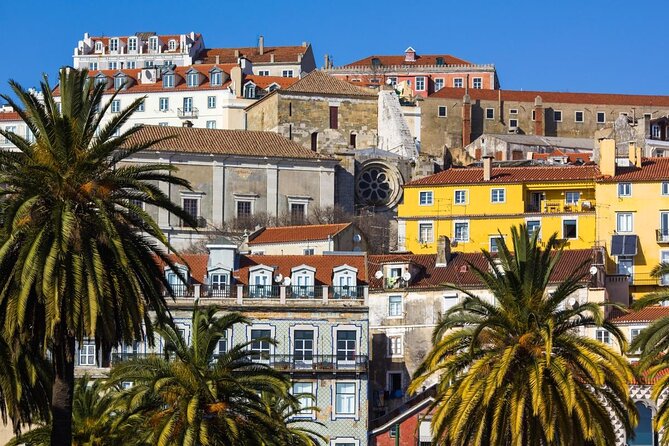
- A smart half-day route that stitches together old Lisbon, from Praça do Comércio into Alfama and Mouraria
- Viewpoints with context, not just photo stops, including Portas do Sol, Santa Luzia, and Graça
- Fado and place names you’ll understand on the walk, especially around Calcada da Amalia and Mouraria Berço do Fado
- Layered religious history you can see walking, from former synagogue ground to churches and the cathedral
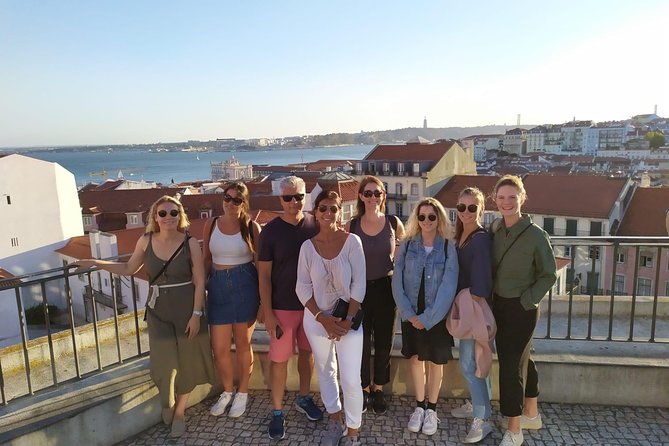
- A private group up to 6, so you can set the pace and ask questions
- Guides called out for engagement and flexibility, with names like Sarah, Clayver, and Keiber showing up in people’s praise
Some other seven-hills days worth pricing up
- True 4Hour Private Tuk Tuk Tour: Discover Lisbon with a Local!★ 5.0 · 8,008 reviews
- Lisbon: Private Guided Tuk-Tuk Tour with Hotel Pickup★ 4.9 · 4,552 reviews
- Private Lisbon Sightseeing Tuk-Tuk Tour: Alfama, Belém & More★ 5.0 · 4,277 reviews
- Lisbon Highlights: Private Tuk Tuk Tour Adventure Sightseeing★ 5.0 · 3,284 reviews
Start at Praça do Comércio, Then Let Lisbon Reveal Itself
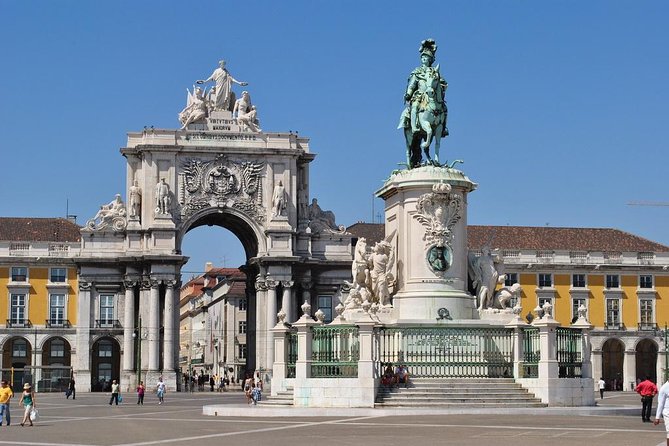
Your tour begins at Praça do Comércio, the grand, open square that acts like a gateway into the rest of Lisbon. Standing here, you can almost feel the city’s layout. The square’s scale makes a big difference on a first visit. It gives you a reference point before you start winding into narrower neighborhoods.
From there, the route is designed to do more than check off sights. It helps you understand Lisbon’s “up and down” logic. In a short time, you’ll go from broad spaces to tight lanes and steep streets, which is exactly how Lisbon works day to day.
Practical tip: wear shoes you can trust. Lisbon’s sidewalks can be uneven, and you’re going to be walking more than you might at first expect, even though the total time is about 3 hours.
Igreja de Nossa Senhora da Conceição Velha and the Old-Synagogue Surprise
One of the most intriguing early stops is Igreja de Nossa Senhora da Conceição Velha. The big reason it’s worth your attention is what the site represents: a church built on the place of an older synagogue ground from the 1500s.
Even if you know nothing about Portuguese history, the guide will help you see why that matters. It’s not just a building. It’s a reminder that Lisbon is layered, with different cultures and eras overlapping in the same footprint.
This is also a good moment to ask questions. Early in the walk, you’re still fresh, and your guide can connect later places back to this first example of historical layering.
Casa dos Bicos: Manueline Style Meets José Saramago’s Lisbon
Next comes Casa dos Bicos, a palace known for its Manueline style look. It’s the kind of place where details reward slow attention, and your guide will point out what to look for without turning it into a lecture.
Today, it’s tied to Jose Saramago’s Foundation, which gives the building a modern cultural purpose. That blend, old architecture plus a living literary legacy, is one of the reasons I like starting early stops like this. It keeps the day from becoming all “stone and legends.” You’re building a Lisbon that includes art, ideas, and storytelling.
If you’re the type who likes architecture, you’ll probably linger here for a minute longer. If you’re not, you’ll still walk away with an easy mental image of Lisbon’s visual language.
Saint Anthony’s Birthplace Church, Then Lisbon Cathedral at Its Earliest Core
As the walk continues, you’ll reach a Roman Catholic church marking the place where Saint Anthony of Lisbon was born. This kind of stop is valuable even if you’re not chasing religious sites. Why? Because saints in Lisbon are not abstract. Their story shows up in local devotion, festivals, and place names. A short explanation here helps you recognize references later as you keep exploring on your own.
Then comes Lisbon Cathedral, described as the oldest church in Lisbon, built on the site of an older mosque. That tells you the whole story in one sentence: Lisbon’s religious and cultural history shifted many times over centuries, and buildings carried those changes forward.
When you stand at a place like this, you’re not just looking at an old church. You’re looking at a site that has been important across different eras. Your guide’s job is to connect that physical fact to what you see around you next.
Quick consideration: cathedral and church areas can have changes in access or activity depending on the day. In a private tour, you can usually follow your guide’s timing and route choices to keep things smooth.
Other trips that start in Lisbon and end well:



Alfama on Foot: The Streets You Came to See
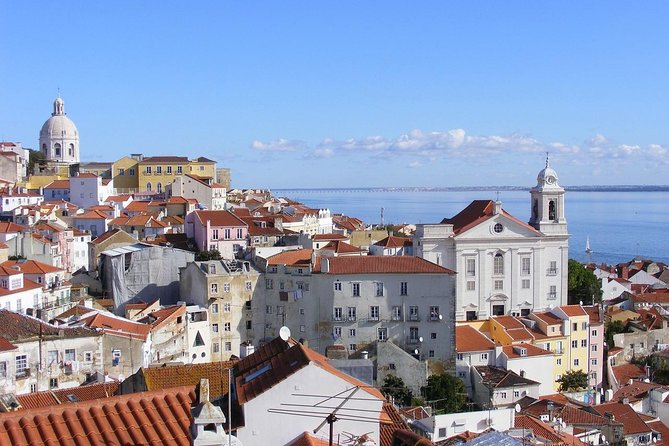
After the denser landmark moments, the tour moves into Alfama, Lisbon’s oldest neighborhood. This is where the experience starts to feel real. Alfama isn’t meant to be rushed. The streets are narrow, the views pop up unexpectedly, and you’ll feel the neighborhood’s character with each turn.
You’ll walk through the kind of lane where it’s hard to tell where one street ends and the next begins. That’s exactly why a guide matters here. Left alone, you can spend your time wandering without understanding what you’re seeing. With a guide, you get a route that reveals the major vibes without draining your energy.
This is also the part where many people value an ability to go off the most crowded paths. In the guide feedback I’m drawing on, names like Keiber and Clayver come up for bringing people into less-trendy corners and helping avoid the heavy crush you can get near major tour routes.
Practical tip: bring a small amount of patience for narrow streets. That’s part of Alfama’s charm. It’s also why you’ll be happier if you keep a steady pace.
Miradouro Das Portas do Sol and Miradouro de Santa Luzia
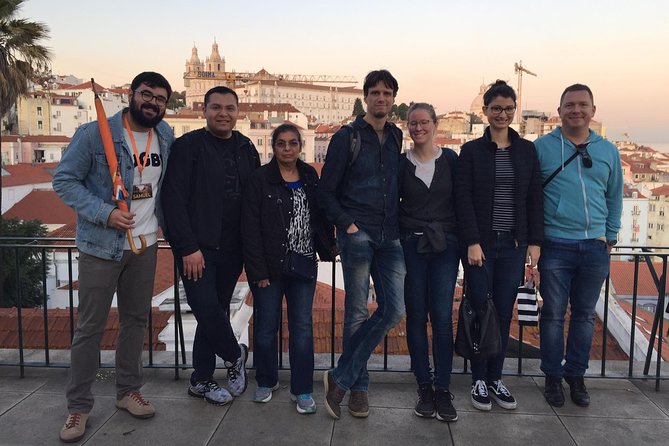
Then you hit the viewpoints, the moments that make Lisbon postcards make sense in real life.
First is Miradouro das Portas do Sol, one of the city’s most loved viewpoints. It’s not just pretty. It’s a geography lesson. From up here, you see why Alfama looks the way it does, and you can connect the street grid down below to the hill lines around you.
Next is Miradouro de Santa Luzia, a square with views connected to Santa Luzia’s church. What I like about pairing these viewpoints is how the scenery changes slightly. You’re still looking over Lisbon, but the angle, the framing, and the sense of depth shift enough to keep it interesting.
Bring your phone, of course, but also look with your eyes first. The best shots often come after you’ve taken a breath and figured out which direction the light is coming from.
Calcada da Amalia: Fado in Stone, Not Just in Songs

Between viewpoints, you’ll stop at Calcada da Amalia, described as a famous stonework featuring the face of Amália Rodrigues, often called the Queen of Fado. This is a quick stop, but it’s one of those “oh, right” moments for first-timers.
You get to see how fado shows up in Lisbon as public art, not just as music in a dark room. It’s also a gentle reminder that Lisbon’s creative identity is stitched into the street texture.
If you like music history or you plan to hear fado later, this stop gives you a starting point. You’ll recognize the name and why it carries weight in the culture.
Miradouro da Graça and Sophia de Mello Breyner Andresen
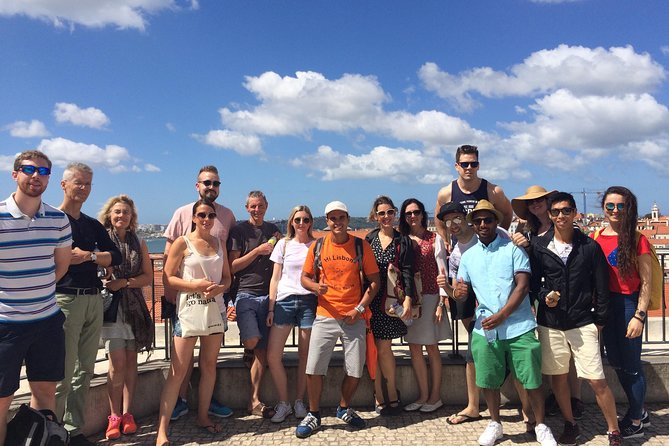
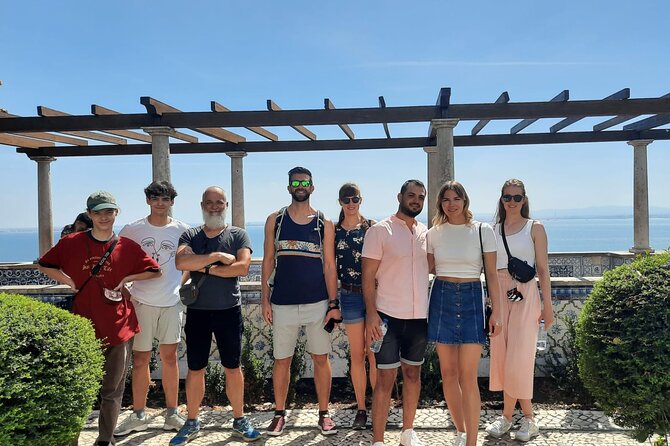
Another major viewpoint is Miradouro da Graça, connected to Sophia de Mello Breyner Andresen. Lisbon viewpoints often feel similar until you slow down and look at what makes each one distinct. This is one of those places where the square layout and view direction help you understand the neighborhood drop-offs and how far the city stretches.
This is also a great place for a guided pause. Your guide can help you “read” what you’re seeing. That matters because viewpoint time can otherwise turn into standing still while your legs quietly complain.
Time check: you’ll get enough of a stop to take photos and take in the view, but it’s not an all-day scenic detour. That’s part of why this works as an introduction.
Mouraria Berço do Fado: Moors, Old Streets, and Where Fado Lives
The tour then shifts into Mouraria, with a stop around Monumento Mouraria Berço do Fado. Mouraria is described as an area built by the Moors after the Christian conquest. That one detail changes how you understand the neighborhood. It’s not just a “cool area to wander.” It’s a place shaped by conquest, cultural mixing, and long-term evolution.
A strong guide will help you notice how Mouraria’s streets feel different from Alfama, even when they’re close together. The vibe is more about lived-in street character and the fado association that people talk about. If you’ve heard fado references and wondered where they fit, Mouraria is where it clicks.
In the feedback style tied to this tour, people often praise guides for being flexible and willing to tailor the walking route. In that spirit, the Mouraria part tends to feel less like you’re marching from one stop to another and more like you’re being guided through a real neighborhood.
How the Private Format Changes Your Day (In a Good Way)
This is a private tour for up to 6 people. That matters more than you might expect. Small groups mean fewer interruptions, smoother pacing, and a higher chance your guide can answer your questions without rushing.
You’ll also be less dependent on “when everyone else moves.” Lisbon is full of small stairs, tight corners, and photo spots that aren’t on a big, obvious schedule. With a private format, your guide can manage that practical reality.
Also, this tour is offered in English, and it uses a mobile ticket. That cuts down on printed hassle and keeps you ready to start at the meeting point.
One more thing: the walk ends at Praça da Figueira, so you’re not returning to the exact same area you started. It’s a nice design choice. You finish somewhere central enough to keep going with meals, tram rides, or a self-guided stroll.
Price and Time: Why This $181.48 Private Tour Can Be Good Value
The price is $181.48 per group for up to 6 people, with a duration of about 3 hours. Private tours can look expensive until you think in terms of cost sharing.
Here’s how I’d frame the value. If you’re traveling as two people, it’s a splurge for a short walk. If you’re a group of four to six, it starts to feel like a smart swap for a more chaotic day of trying to plan your own route. You pay for orientation, pacing, and a guide who knows where the stops fit together.
And those stops are not random. They cover:
- a major Lisbon square to set your bearings
- church and cathedral sites with multiple layers of meaning
- a palace building tied to Manueline style and José Saramago
- Alfama and multiple miradouros
- fado landmarks like Calcada da Amalia and Berço do Fado in Mouraria
That’s a lot of mental map-building for half-day time.
A practical note: since food and drinks are not included, budget for a snack and plan a meal around the end of the walk. Lisbon is too good to leave dining decisions vague.
What to Bring and How to Pace Yourself
Because this walk is built around multiple viewpoints and neighborhood lanes, your comfort will make or break the experience.
Bring:
- comfortable walking shoes with good grip
- water (since food and drinks are not included)
- sun protection if you’re going midday
Pace yourself like a local. In Lisbon, you’re not trying to clock miles. You’re trying to enjoy the street rhythm while getting the big story points from your guide.
If you’re sensitive to walking on cobblestones, tell your guide early. In a private setting, your route can often be adjusted within reason.
Should You Book This Lisbon Private Tour?
Book this if:
- you want a high-quality introduction to Lisbon’s old neighborhoods without spending your day route-planning
- you care about learning how Alfama and Mouraria got their identity, not just taking pictures
- you’ll appreciate viewpoint time with context
- you’re traveling in a small group where the per-person cost makes sense
Skip it or swap to a different style if:
- you’re not comfortable with frequent walking on uneven streets
- you’re hoping for a food-focused experience, because there’s no meal included
- you want a long, slow day with fewer stops, since this one is built to cover a lot in about 3 hours
If you’re arriving in Lisbon and want your bearings fast, this private walk is one of the cleanest ways to start. You leave with a mental map, plus the names and stories that make later wandering much more satisfying.
FAQ
How long is the Lisbon private tour?
It lasts about 3 hours.
What is the price?
The price is $181.48 per group.
How many people are in a private group?
The tour is private for up to 6 people.
What language is the tour offered in?
The tour is offered in English.
Where does the tour start and end?
It starts at Praça do Comércio (1100-148, Portugal) and ends at Praça da Figueira (1100-241, Lisboa).
Is a mobile ticket used?
Yes, it offers a mobile ticket.
Are food and drinks included?
No. Food and drinks are not included.
What neighborhoods does the tour cover?
You’ll spend time exploring Alfama and Mouraria.
What is the cancellation policy?
There is free cancellation, with a full refund if you cancel at least 24 hours before the experience start time.
Fresh across the seven hills
- Full-day Private Tour: Fátima Sanctuary, Batalha, Nazaré, Óbidos
★ 5.0 · 6 reviews - Porto Private Tour from Lisbon
★ 4.5 · 6 reviews - VIP transfer from the airport to Lisbon hotels
★ 5.0 · 6 reviews - Lisbon: Romantic Sunset Cruise With Wine & Portuguese Tapas
★ 5.0 · 6 reviews - Arrábida Wine Tour – 3 Wineries, Traditions & Views from Lisbon
★ 4.5 · 6 reviews - Lisbon Photoshoot: Capture Your Adventure
★ 5.0 · 6 reviews - Lisbon: Sintra, Pena Palace, Belém Tour + sunset Boat Cruise
★ 5.0 · 6 reviews
City Tours, compared.
Lisbon City Center Tour – The Unmissable Lisbon
Read our review →
Daytime/Sunset/Night City Sailboat Tour with Drink
Read our review →




Express Lisbon | City Center and Old Town Tuk Tuk Tour
Read our review →Browse the lists this tour appears in