
Reviewed · LISBON
Lisbon’s Post-Colonial Feast
Lisbon has a food story that comes with footnotes. This tour uses tastings to walk you through the country’s post-colonial communities and the culture-shaping effects of Portugal’s empire. I love the mix of regional dishes like chocolate and chorizo stew with the honest discussion of slavery, repression, and exploitation, and I also like the small group size (up to seven people), which makes the conversation feel human. The main drawback to consider is that the topic can be emotionally heavy, so it may not be for you if you want only light, feel-good food stopping.
A smooth walking day still comes with real structure. You start near Praça do Chile, you hit five focused stops around Lisbon, and you end back where you began, so you are not stuck with a long, awkward trek. One thing I’d flag for your planning: you are outdoors for long stretches, and the experience depends on good weather.
Key points to know before you go
- Post-colonial themes through food, not just tasting. Expect discussion that connects history to what ends up on the plate.
- Max seven people, which keeps the pace friendly and questions easy.
- A 5-hour format with five stops, including a longer final tasting stretch.
- Tastes you might not expect in Portugal, with influences linked to former Portuguese colonies (for example, Brazilian or Goan flavors).
- Guide-led storytelling, including sharp real-world context from professionals like Celia, who impressed at least one group with clear explanations.
In This Review
- Why This Lisbon Food Tour Feels Different Than a Standard Tasting Walk
- Price and Value: What $150 Buys You Here
- A 5-Hour Walk With Real Stops, Not Random Wandering
- Paço da Rainha Stop: Setting the Stage (About 45 Minutes)
- Campo dos Martires da Patria Stop: History and Culture in Focus (About 45 Minutes)
- Avenida da Fonte Luminosa Stop: The Day’s Theme Gets Sharper (About 45 Minutes)
- Jardim do Torel Stop: Find the Next Bite in a More Relaxed Space (About 45 Minutes)
- Largo de Sao Domingos Stop: The Longer Finish With Specialties (About 1 Hour)
- The Food You Should Expect, and the Flavors That Surprise People
- The History Thread: Talking About Slavery Without Making It Feel Abstract
- Pace, Group Size, and Practical Comfort
- Should You Book the Lisbon’s Post-Colonial Feast Tour?
- FAQ
- What is the duration of Lisbon’s Post-Colonial Feast?
- How much does the tour cost?
- How many people are in the group?
- What time does the tour start, and where do we meet?
- Is the tour offered in English?
- What happens if the weather is bad?
Why This Lisbon Food Tour Feels Different Than a Standard Tasting Walk
Most food tours in Lisbon promise flavors. This one promises a lens. You will taste your way through Portuguese cuisine, but you will also learn how Portuguese history shaped what people eat, and how communities across former colonies influenced the food language that traveled back to Portugal.
The biggest “aha” for me is that the tour does not treat history like a boring sidebar. It links the grim parts of the past, including slavery and exploitation, to the everyday reality of food culture. That connection matters. When you understand why certain ingredients or dishes show up in Portuguese kitchens and markets, the meal turns into something you can actually remember, not just something you ate.
The other thing I appreciate is the balance. You get sweetness, savory comfort, and local specialties, not only heavy talk. Yes, the history thread is front and center, but you still spend the day eating, including standout items like chocolate and a chorizo stew that anchors the savory side of the experience.
Deciding between days out? Here are a few more from Lisbon:
- Lisbon City Center Tour – The Unmissable Lisbon★ 5.0 · 22,234 reviews
- Lisbon: Sintra, Pena, Regaleira, Cabo da Roca & Cascais★ 4.7 · 19,656 reviews
- Lisbon Card: 24, 48, or 72-Hour Pass★ 4.5 · 17,944 reviews
- Lisbon: Jerónimos Monastery Entrance Ticket★ 4.1 · 14,164 reviews
Price and Value: What $150 Buys You Here
At $150 per person for about five hours, you should think of this as part guided city walk, part curated meal experience. The value comes from three places.
First, you are paying for a guide to connect flavors to context. That is hard to replicate if you try to DIY the day. The tour is structured around specific places where stories fit naturally.
Second, you get a small-group setup. With a maximum of seven people, you are less likely to be stuck listening over a crowd. Questions make it through. You can ask follow-ups and actually hear the answers.
Third, you are eating multiple stops worth of food. Even from the headline items alone, you can expect a full spread that includes chocolate, chorizo stew, and additional regional specialties. If you like learning while eating, and you want the food to make sense culturally, this price is easier to justify.
If your travel style is strictly “sit, eat, and move on,” you might find the historical discussion adds time. But if you want the meal to land with meaning, the cost feels more fair.
A 5-Hour Walk With Real Stops, Not Random Wandering
This is a start-to-finish walking tour. It begins at 11:00 am at Praça do Chile 2, 1170 Lisboa, and it ends back at the meeting point. You will be on your feet for hours, moving between five scheduled areas. Each stop is roughly 45 minutes, except the final square-based tasting stretch, which runs closer to one hour.
The layout is smart. You do not just shuffle from place to place. You walk through Lisbon’s post-colonial communities with a guiding theme, and the stops are chosen to give the day an arc, from setting the scene to finishing with square-time specialties.
Here is what that means in plain terms, stop by stop.
Paço da Rainha Stop: Setting the Stage (About 45 Minutes)
Your day opens around Paço da Rainha, where you take in sights while the guide starts threading the theme of the walk. This first stop is basically orientation, the moment when you get your bearings and learn what to pay attention to as you move.
Why this matters: early context helps the food stops later make more sense. If the tour started mid-story, you would taste dishes without the “why.” Here, you start with Lisbon’s layers, and you build from there.
A practical note: since it is early, this is a good time to settle your walking rhythm. If you are sensitive to long standing, pace yourself and take advantage of any brief sitting opportunities the guide might allow at the edges of the stop.
Campo dos Martires da Patria Stop: History and Culture in Focus (About 45 Minutes)
Next comes Campo dos Martires da Patria, where you slow down to absorb history and culture linked to the theme of the day. This stop is where you should expect the talk to grow more direct and specific, because you are moving from “here is Lisbon” to “here is what shaped Lisbon.”
The value here is that you are not hearing vague empire talk. You are hearing how those forces connected to communities and to the food influences that traveled. The tour name gives you the promise, and this is where the promise starts to feel real.
Potential consideration: if you are visiting Lisbon for a purely restorative getaway, this is the part where the conversation may feel intense. The guide covers Portugal’s grim history of slavery, repression, and exploitation, and the tone can get serious.
Other trips that start in Lisbon and end well:

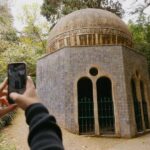

Avenida da Fonte Luminosa Stop: The Day’s Theme Gets Sharper (About 45 Minutes)
At Avenida da Fonte Luminosa, the guide brings the theme into clearer focus. The stop is positioned like a checkpoint, where you connect what you have seen so far with what you are about to eat next.
I like this kind of structure because it prevents the day from turning into a sequence of unrelated snacks. Instead, each tasting feels like the next chapter.
If you are the type who wants to take photos, this is a decent moment for it, since avenues and public spaces often give you better sightlines for both architecture and street life. Just stay aware of the group flow, since you will be moving along as a unit.
Jardim do Torel Stop: Find the Next Bite in a More Relaxed Space (About 45 Minutes)
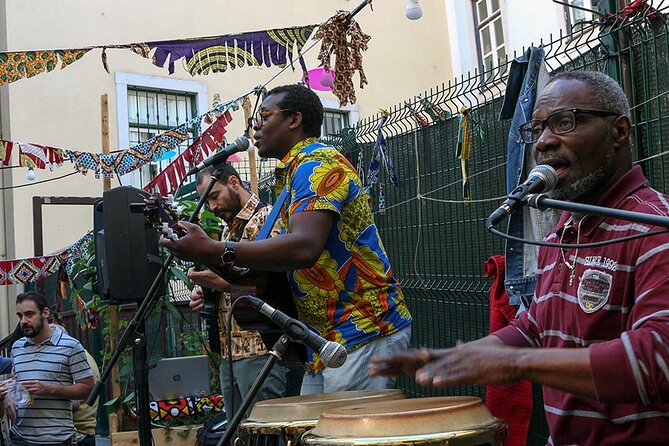
Then you get to Jardim do Torel, a garden stop that changes the texture of the day. You trade hard city lines for a more open, airy setting, and you shift from pure storytelling to the practical question of what you will taste next.
Why this stop matters: gardens like this are good for digesting a heavy topic. You get a mental exhale, which helps when the tour keeps pushing the emotional context while also delivering food.
This is also a stop where the “small group” format can really show. People tend to break into natural conversation when the group is not packed tightly and the setting invites pauses. That makes the food and the history feel less like a lecture and more like a shared exploration.
Largo de Sao Domingos Stop: The Longer Finish With Specialties (About 1 Hour)
You wrap up at Largo de Sao Domingos, a square where you find specialties and a little more time to enjoy them. This is the longest stop, lasting around one hour, which signals that the day is ending with a proper tasting moment rather than a quick in-and-out.
I like endings like this. A longer final stop gives you the chance to slow down, compare what you ate, and ask any last questions that you saved because you were too focused earlier.
One practical thing to know: in at least one case, a specific restaurant stop was closed recently and the tour adapted, leaving the group full and satisfied anyway. That is a reminder to stay flexible. If something is unavailable on your date, the guide will likely keep the theme and the food experience moving.
The Food You Should Expect, and the Flavors That Surprise People
The core promise is Portuguese food shaped by Portuguese history. Expect a spread that includes chocolate and chorizo stew, plus other regional specialties that fit the neighborhoods you are walking through.
The most interesting part, based on feedback I’ve seen, is that you might not immediately think of the particular influences until you are told how they arrived and how they changed. Some people specifically call out that Portuguese menus can include flavors linked to places like Brazil or Goan-influenced cooking, even though that is not what first comes to mind when you picture a Lisbon food tour.
This is where the guide earns the money. Without context, those flavors could just feel random. With context, they become part of a bigger story about movement of people, ingredients, and technique across the Portuguese world.
Also, you should plan on leaving full. One review described the group as so full that a restaurant closure was possibly for the best. That tells me portion sizes are not shy.
The History Thread: Talking About Slavery Without Making It Feel Abstract
If you choose this tour, you are choosing the history topic, even if you did not plan to. The guide explains Portugal’s grim past of slavery, repression, and exploitation, and ties it to how cultures and foodways evolved.
Here is the best way to handle that as a visitor: treat it like a conversation, not like a checklist. Ask questions if you want more clarity, but also give yourself permission to feel uncomfortable. That discomfort is sometimes the point, because it makes the later tastings more meaningful.
I also respect that the tour is not only bleak. Food is emotional. It is comfort, memory, and family. By pairing food with history, the tour encourages you to see how everyday life continues alongside difficult truths.
Pace, Group Size, and Practical Comfort
This is a small group tour with a maximum of seven travelers. In practice, that usually means you get more human interaction and less time spent waiting for the back of the line to catch up.
The tour lasts about five hours, starting at 11:00 am. That is a smart middle-of-the-day slot. You avoid the early morning scramble and you do not end so late that dinner plans become a mess.
Because you are walking and standing for long stretches, wear comfortable shoes. Bring water. The tour requires good weather, and if weather cancels, you will be offered a different date or a full refund.
As for language, it is offered in English, and you’ll get a mobile ticket. It is also described as near public transportation, which is helpful if you are pairing it with other plans in Lisbon.
Should You Book the Lisbon’s Post-Colonial Feast Tour?
Book it if you want more than tasting. If you like food that comes with context, and you appreciate a guide who connects dishes to the movements of people and ingredients across the Portuguese empire, this tour fits your style. I also think it is a great choice for couples or friends because the small group size makes it easier to meet and talk without it turning into a loud party.
Skip it or consider carefully if you are not up for serious history. The tour discusses slavery, repression, and exploitation, and that can feel heavy. Also, if you only want casual sightseeing with zero emotional intensity, you might find the balance shifts too far toward education.
Finally, check your expectations about restaurants. One review mentioned an Angolan restaurant closing shortly before the tour date. Even if the overall theme stays intact, the exact lineup can change, so be open-minded once you arrive.
If you are the type who likes Lisbon best when it surprises you, this is one of the better bets.
FAQ
What is the duration of Lisbon’s Post-Colonial Feast?
The tour lasts about 5 hours.
How much does the tour cost?
The price is $150.00 per person.
How many people are in the group?
The tour has a maximum of 7 travelers.
What time does the tour start, and where do we meet?
It starts at 11:00 am at Praça do Chile 2, 1170 Lisboa, Portugal, and it ends back at the same meeting point.
Is the tour offered in English?
Yes, the tour is offered in English.
What happens if the weather is bad?
The experience requires good weather. If it is canceled due to poor weather, you will be offered a different date or a full refund.
Fresh across the seven hills
- Full-day Private Tour: Fátima Sanctuary, Batalha, Nazaré, Óbidos
★ 5.0 · 6 reviews - Porto Private Tour from Lisbon
★ 4.5 · 6 reviews - VIP transfer from the airport to Lisbon hotels
★ 5.0 · 6 reviews - Lisbon Photoshoot: Capture Your Adventure
★ 5.0 · 6 reviews - Lisbon: Romantic Sunset Cruise With Wine & Portuguese Tapas
★ 5.0 · 6 reviews - Arrábida Wine Tour – 3 Wineries, Traditions & Views from Lisbon
★ 4.5 · 6 reviews - Lisbon: Sintra, Pena Palace, Belém Tour + sunset Boat Cruise
★ 5.0 · 6 reviews