
Reviewed · HISTORICAL TOURS
Queer Lisbon – A Treasure Hunt in LGBT History
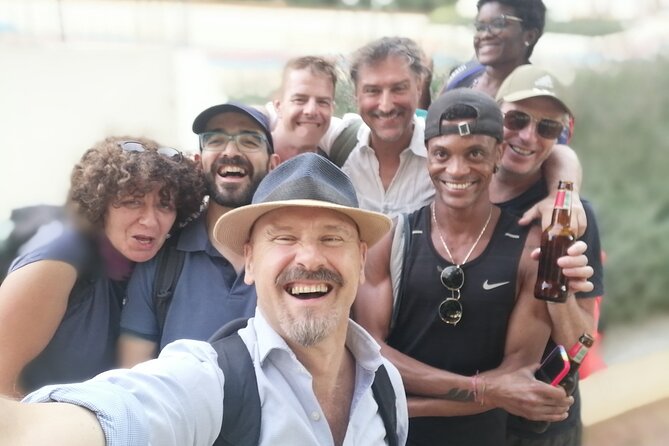
Small-group queer history in Lisbon is hard to find, and this one is different. You follow guide Alex through a string of real places, from Pride squares and legal milestones to the nightlife stops you can still go to. I especially love the laid-back pace and the way the route mixes past struggles with today’s queer scene, plus you get a PDF packed with places to return to later. The main thing to consider is simple: you cover a lot on foot, so comfortable shoes and a moderate walking tolerance really help.
If you want more than the usual Lisbon photo loop, this tour turns streets into stories. You start at Principe Real and end at Late Birds, Lisbon’s large gay hotel, where the group can hang out with a drink and a pub-quiz moment.
One more heads-up: it’s in English and aimed at ages 16+, but the hotel bar at the end is 18+. If you are traveling as a couple, a group of friends, or an ally, this format works best when you enjoy chatting and asking questions along the way.
In This Review
- Key Things I’d Plan Around
- Principe Real Starts the Hunt in the Right Mood
- The Memorial and Pride Stops That Give the Whole Tour Meaning
- Health, Survival, and the Places You Can Still Support
- Nightlife Stops That Feel Mapped, Not Random
- Drag, Lesbian Institutions, and the Fun of Specific Stories
- Cruising History in the Botanical Garden and the Street-Level Scandals
- Legal Challenges, Manifestos, and Why the Court Matters
- Church, Inquisition, and Josephine Baker’s Wartime Disguise
- Writers, Censorship, and the Final Walk to Late Birds
- Price and What You’re Really Getting for It
- Pacing, Walking, and Who Should Book
- Should You Book Queer Lisbon, A Treasure Hunt in LGBT History?
- FAQ
- What is the duration of the Queer Lisbon tour?
- Where does the tour start and end?
- What’s the group size?
- Is the tour offered in English?
- What’s included in the price?
- Do I need to pay admission tickets for the stops?
- Can I cancel and get a full refund?
Key Things I’d Plan Around
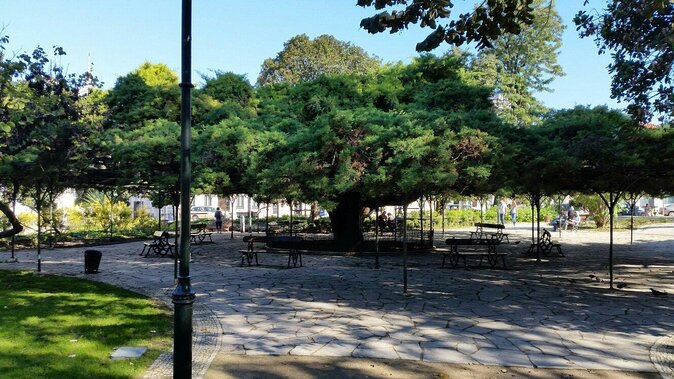
- A small-group treasure hunt that feels like a guided walk with a story focus, not a bus-style tour
- A finish at Late Birds, where you can keep the conversation going in the lounge and outdoor spots
- Free entry at the stops, so you are not juggling museum tickets while you are learning
- Street-level queer history, from Pride and HIV support to drag, lesbian spaces, and legal battles
- Alex’s updated PDF (Alex’s LONG LIST), normally priced at 15 Euros, for after the tour
- A real nightlife thread, with venues you can actually map for a future night out
More of pre-earthquake Lisbon, where it survives:
- Lisbon: History, Stories and Lifestyle Walking Tour★ 4.8 · 10,902 reviews
- Lisbon: Daytime or Sunset Boat Cruise with History and Wine★ 5.0 · 1,053 reviews
- Explore Lisbon by Tuk Tuk: History and Viewpoints★ 5.0 · 840 reviews
- Private Tuk Tuk Tour Through Lisbon’s Historical Streets★ 5.0 · 734 reviews
Principe Real Starts the Hunt in the Right Mood
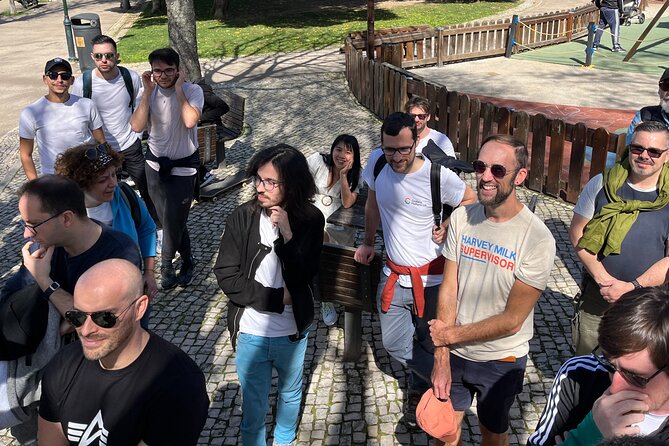
The tour begins in Principe Real, around Praça do Príncipe Real. This is a neighborhood where Lisbon feels human-sized: good sidewalks, lively corners, and enough history layered into the streets that it pays to have someone point out what you might otherwise miss.
What I like most is how the first moments set the tone. You meet the group and get oriented, then you move straight into queer Lisbon’s past and present without spending the first hour on generic landmarks. It is a “pay attention” style of walking, in the best way.
From the start, Alex keeps things friendly and practical. In less-than-perfect weather, he meets you ready with umbrellas, which is the kind of detail that makes the whole experience feel cared for rather than rushed.
The Memorial and Pride Stops That Give the Whole Tour Meaning
You spend real time around Jardim do Principe Real, starting with introductions in the gardens and then moving to the Monument to the victims of homophobia. This part matters because it gives context before the party stories. You are not being asked to just celebrate, you are also being shown what had to change for this queer scene to exist.
Then you shift to Praça do Príncipe Real, Lisbon Pride space and a starting point for EuroPride (with Lisbon flagged as host for EuroPride 2025). Even if you are not planning around Pride dates, it is a helpful way to understand Lisbon as a city that publicly claims queer visibility, not just privately tolerates it.
One practical benefit: these stops are short and focused, usually only minutes each, but they build a clear emotional timeline. You go from remembrance to resilience to momentum.
Health, Survival, and the Places You Can Still Support
A standout stop is GAT Checkpoint LX, where the focus is managing the HIV pandemic and the essential health service info for queer men and women. This is not a lecture you have to pretend to enjoy. It is delivered as part of Lisbon’s real-life history, with a practical angle that connects past to support systems people can still use.
If you are traveling with curiosity rather than just sightseeing energy, this is the kind of moment that makes everything else hit harder. It also grounds the nightlife stops that come later. You get the sense that community spaces were built not only for fun, but also for care, solidarity, and survival.
Nightlife Stops That Feel Mapped, Not Random
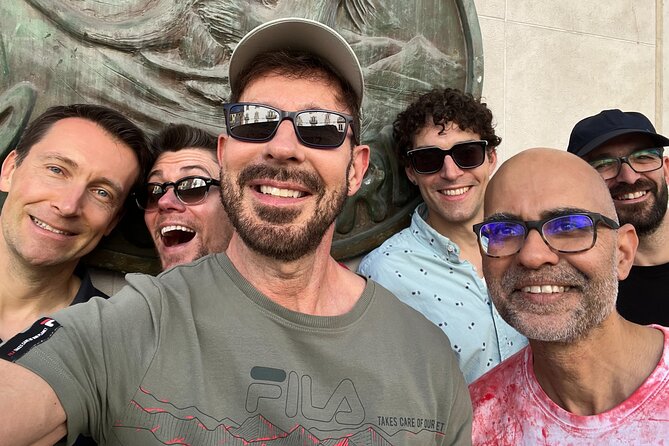
The tour keeps moving into the nightlife world while still staying story-driven. Construction Lisbon Club is part of the route, with attention on dance culture and how neighboring lesbian venues connect into the broader scene. You are not just hearing the names, you are learning why these rooms mattered.
Then you get a big pivot to Trumps, Lisbon’s largest queer nightclub. The details you get are the kind that help on a future night out: it has two floors with two different vibes, and it has been operating since 1980. That date does something important. It signals continuity, not trend-chasing.
If you like to plan nights with a little intelligence, this section is great. You come away with venue context that helps you choose where to go when you do not want to waste an evening wandering without a plan.
Other trips that start in Lisbon and end well:




Drag, Lesbian Institutions, and the Fun of Specific Stories
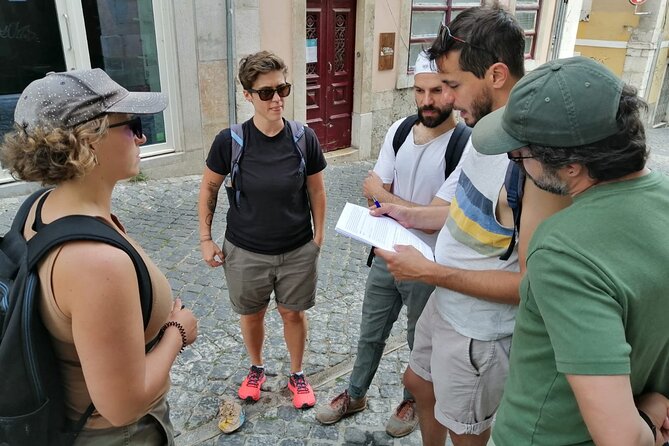
This tour does not treat drag as a single category. It gives you a timeline. Praça das Flores 7 is where the first drag bar in Lisbon gets its moment, and you hear about the rise and fall of Lisbon’s first drag queen. That arc keeps drag history from feeling like folklore. It becomes a story of permissions won, permissions lost, and community creativity.
For lesbian history, you stop at R. de Gustavo de Matos Sequeira 42, tied to Lisbon’s first lesbian bar, O Gato Verde. This kind of place-naming matters because it helps you recognize continuity in the city. The bar is described as an institution with history, so you are not just chasing a trendy Instagram spot.
You also spend time with Finally Club, described as the best and oldest drag place in town, with different shows and different times. That is valuable because it gives you a practical way to use the information later. You can return knowing there is more than one format.
Bar TR3S Lisboa rounds out the bear-themed stops. You hear about bear pride, beach club energy, party nights, a sauna, and even sports sponsorship. It is a reminder that queer culture is not one lane. It is social, sporty, relaxed, and sometimes very playful.
Cruising History in the Botanical Garden and the Street-Level Scandals
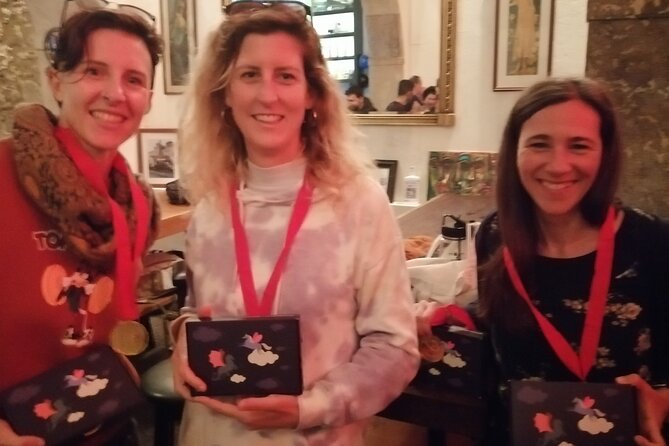
One of the most interesting emotional shifts comes at the Botanical Garden of Lisbon. This stop focuses on cruising in the 1950s parks, the police, and the whole cat-and-mouse reality men faced to protect their privacy. The point is not to sensationalize. The point is to show how public space was navigated under threat.
After that, the tour leans into the kind of Lisbon stories you usually never hear on standard sightseeing routes. You get to R. do Trombeta 10, with the steamy story of the Two Fernandes, a 19th-century scandal tied to saunas and shifting from old love-nest patterns to modern apartment life. It sounds spicy, but the underlying lesson is how sexuality, reputation, and urban change collided.
Even smaller stops can pack in attitude and history. Bar 106 is framed as a place where you can leave a message for friends, Shelter Bar Lisboa covers bears (part one), and Maria Caxuxa is presented as a woman who confounded conventions and dismissed nosey journalists in the 1940s. If you like Lisbon at the street level, you get that feeling here.
Legal Challenges, Manifestos, and Why the Court Matters
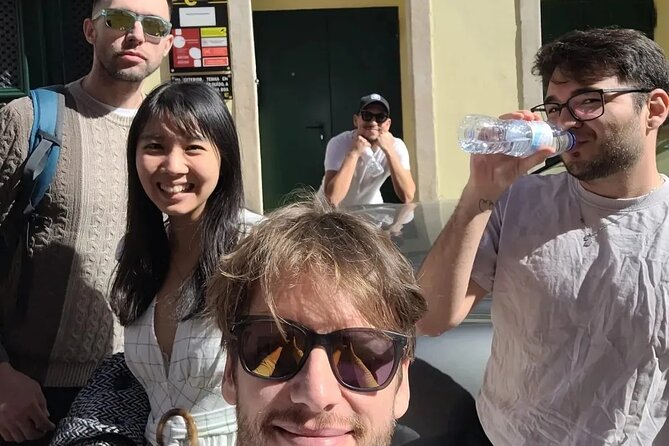
A big tonal shift comes when you reach the Constitutional Court stop. This is where the tour connects queer lived experience to institutions. You hear about legal challenges and Portugal’s long journey from dictatorship values to constitutional protection for LGBTQ rights.
Then you continue with R. Luz Soriano 44, connected to Long Live Homosexuality, an early homosexual manifesto. The story covers early steps that were suppressed and the eventual success. That sequence is powerful because it shows change as a process, not a single victory day.
I also liked how the tour keeps it readable. It is historical, but it never feels like academic homework. You are given enough context to understand why each place mattered, without needing to be a Portugal legal expert.
Church, Inquisition, and Josephine Baker’s Wartime Disguise

I Igreja de Sao Roque is one of the longer stops at about 15 minutes. You are guided through stories linked to the Portuguese Inquisition, including how queer life appears in historical records: sex in church, lesbian nuns, a demonic penis detail, and a trans love story that survived across centuries. It is heavy material, and the tour keeps the tone focused on what endured.
Then you pivot to Teatro da Trindade, where Josephine Baker appears as a bisexual jazz legend with wartime stories, including evading secret police and spying in Lisbon through disguise. This stop is singled out as a favorite in the feedback you provided, and I can see why. It adds personality and drama without losing historical grounding.
For me, this mix is the tour’s strength. It does not treat queer history as only one genre. It includes policy, faith, journalism, nightlife, and performance.
Writers, Censorship, and the Final Walk to Late Birds
Later in the walk, you hit places tied to queer fiction, censorship, and compromised censors at R. da Misericórdia 125. You also hear about Hospital St. Louis and Fernand Pessoa, with the idea of reclaiming his gay writing and his enduring words about love.
The last stop is Tv. André Valente 21 at Late Birds, Lisbon’s largest gay hotel. This is where the tour turns social. You finish in the lounge, bar, and outdoor spaces, with a pub-quiz and prizes. There is also a practical note that if the weather is good, bring a swimming costume, since there is a pool element to the finish.
One simple reason this ending works: you get to decompress right after a concentrated set of stories. You can ask follow-up questions and compare what everyone found most meaningful, without having to leave immediately for another plan.
Price and What You’re Really Getting for It
At $60.34 per person for about 3 hours 30 minutes, I think the value comes from four things that work together.
First, the tour is a small-group format with a maximum of 15 people. That size matters because you get room for questions and conversation, instead of feeling like you are just being marched past plaques.
Second, it includes stories across a huge spread of topics: memorials, Pride, HIV care, drag, lesbian institutions, cruising history, legal challenges, and famous queer-linked cultural figures. For the time, that is a lot to carry away.
Third, most stops are marked as free admission, so you are not paying an extra layer of ticket costs while learning.
Fourth, you leave with Alex’s updated PDF guide, Alex’s LONG LIST, normally 15 Euros. That is not just a souvenir. It is the practical part that helps you turn what you learned into actual next steps: where to return, what to explore, and what to do after the walk.
Pacing, Walking, and Who Should Book
This is a walking tour with short stops, so it stays lively. Still, you should plan for standing and moving through Lisbon streets. The info lists a moderate physical fitness level, and the route makes sense for people who want activity without doing an all-day hike.
It is also a great fit if you:
- like context and want queer history without turning it into a museum sprint
- enjoy nightlife planning with real venue names and an insider angle
- want a small-group social vibe and a friendly guide who answers questions
It may be less ideal if you want a classic highlights tour with long viewpoint time, or if you struggle with frequent stops and walking. The emotional range is also real, from remembrance to discrimination history to joy, so come in ready to feel and learn.
If you are traveling with kids, note the age booking requirement is 16+, and the hotel bar is 18+ for drinks. If you are an ally, this tour tends to work well because the focus is not on spectacle. It is on community stories.
Should You Book Queer Lisbon, A Treasure Hunt in LGBT History?
Yes, if you want Lisbon with a queer lens that is both serious and fun. Book it when you want to understand the city fast, in a way you can build on later with the Alex’s LONG LIST PDF and a mapped sense of where to go at night.
I would especially recommend it to:
- first-time Lisbon visitors who want more meaning than postcards
- people who love stories about places they can still visit
- anyone who appreciates legal and health context alongside nightlife culture
Book ahead if you can. It is commonly reserved about 23 days in advance, which usually means the schedule fills.
FAQ
What is the duration of the Queer Lisbon tour?
It runs for about 3 hours 30 minutes.
Where does the tour start and end?
It starts at Principe Real Playground, Praça do Príncipe Real 1250-184 Lisboa, Portugal, and ends at Tv. André Valente 25, 1200-236 Lisboa, with the final hangout at Late Birds Hotel.
What’s the group size?
The tour has a maximum of 15 travelers.
Is the tour offered in English?
Yes, it is offered in English.
What’s included in the price?
You get the tour experience with stories and stops, a PDF copy of Alex’s LONG LIST (normally 15 Euros), and you finish in the lounge/ bar/ garden/ pool area of Late Birds. A mobile ticket is included.
Do I need to pay admission tickets for the stops?
The stops on the route are marked as free admission on the tour information you provided.
Can I cancel and get a full refund?
Free cancellation is available if you cancel up to 24 hours in advance for a full refund. If you cancel less than 24 hours before the start time, the amount you paid will not be refunded.
Fresh across the seven hills
- Full-day Private Tour: Fátima Sanctuary, Batalha, Nazaré, Óbidos
★ 5.0 · 6 reviews - Porto Private Tour from Lisbon
★ 4.5 · 6 reviews - VIP transfer from the airport to Lisbon hotels
★ 5.0 · 6 reviews - Lisbon Photoshoot: Capture Your Adventure
★ 5.0 · 6 reviews - Lisbon: Romantic Sunset Cruise With Wine & Portuguese Tapas
★ 5.0 · 6 reviews - Arrábida Wine Tour – 3 Wineries, Traditions & Views from Lisbon
★ 4.5 · 6 reviews - Lisbon: Sintra, Pena Palace, Belém Tour + sunset Boat Cruise
★ 5.0 · 6 reviews
Historical Tours, compared.
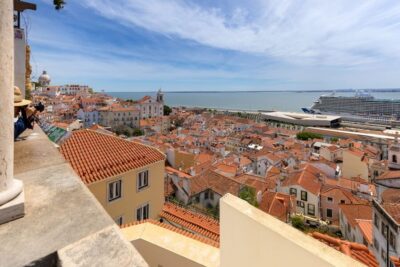

Daytime or Sunset Boat Cruise with History and Wine
Read our review →
Explore Lisbon by Tuk Tuk: History and Viewpoints
Read our review →
Private Tuk Tuk Tour Through Lisbon’s Historical Streets
Read our review →
Lisbon Sunset Sailing with Portuguese Wine and History
Read our review →
Live Fado Show in Historic Alfama with Port Wine
Read our review →
Private Lisbon-Arrábida Wine Tour: 3 Wineries, Coast & Heritage
Read our review →
Browse the lists this tour appears in