
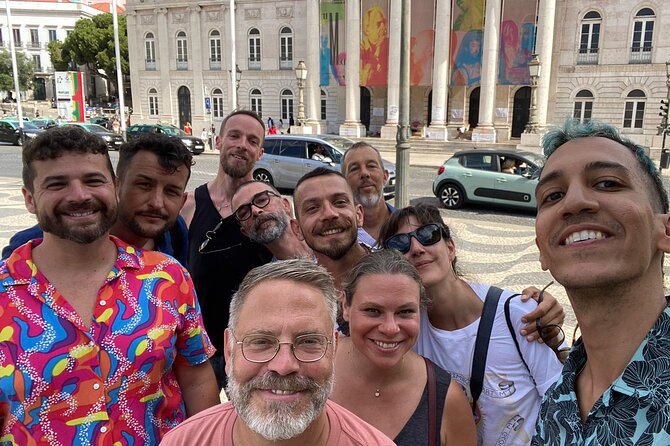
Reviewed · HISTORICAL TOURS
Queer Lisbon Historical Tour
Queer Lisbon has a pulse. This 4-hour tour strings together public queer history, from a memorial for victims of homophobia to today’s debates about inclusion. I especially like how it keeps you oriented in real neighborhoods, with thoughtful stops that turn the city into a history lesson you can actually walk through.
Two things I think you will appreciate fast. First, the tone is earnest and welcoming, run by young entrepreneurs who keep the energy up without turning the serious parts into a lecture. Second, you get an updated Queer Map of Lisbon (PDF) plus a Portuguese and English-speaking local guide, so the story continues after the last stop.
One consideration: the route covers heavy themes like homophobia, sexuality regulation, and dictatorship-era social control. If you want a purely light sightseeing walk, this may feel intense, and you should also plan on some uphill walking since the stops move through Lisbon’s hills.
In This Review
- Key things you’ll notice on this Queer Lisbon walk
- Why this walking tour feels different than a museum visit
- Principe Real: starting with the memorial and the first Pride moments
- Bairro Alto, Bica, and Cais do Sodre: hills, viewpoint time, and day-night changes
- Largo Trindade Coelho: Padre António Vieira and how the church regulated sexuality
- Largo do Carmo: the revolution site and the dictatorship-era family script
- Praca Martim Moniz: contemporary queer movements and immigrant energy
- Ending in Graça and Sao Vicente: paying tribute at a queer-owned venue
- Price and value: what you get for $72.29 in about 4 hours
- Group size, pacing, and why the timing matters
- What to do before you go so you enjoy every stop
- Getting there: meeting point and where you finish
- Should you book this Queer Lisbon Historical Tour?
- FAQ
- How long is the Queer Lisbon Historical Tour?
- How much does the tour cost?
- What languages are offered?
- Where does the tour start and end?
- Is the tour limited to a certain group size?
- Is dinner included?
- Is there a mobile ticket?
- What if the weather is bad?
- Can service animals attend, and is it near public transportation?
- What is the cancellation window?
Key things you’ll notice on this Queer Lisbon walk
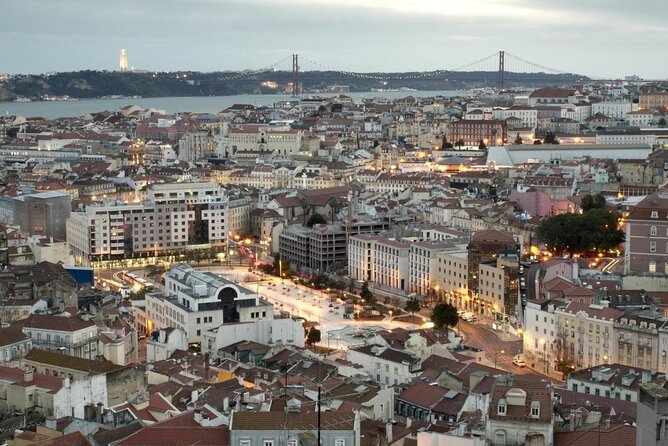
- A six-stop route that connects LGBTQ+ activism then and queer politics now
- Principe Real to Graça, with viewpoints that help you read the city’s hills
- Focused discussions on how institutions shaped sexuality and gender norms
- A visit to the Portuguese revolution setting, linked to dictatorship-era family rules
- Martim Moniz perspectives on contemporary queer organizing and immigrant energy
- A finale at a queer-owned venue honoring Black queer resistance, led by Criolense Kitchen Club
More of pre-earthquake Lisbon, where it survives:
- Lisbon: History, Stories and Lifestyle Walking Tour★ 4.8 · 10,902 reviews
- Lisbon: Daytime or Sunset Boat Cruise with History and Wine★ 5.0 · 1,053 reviews
- Explore Lisbon by Tuk Tuk: History and Viewpoints★ 5.0 · 840 reviews
- Private Tuk Tuk Tour Through Lisbon’s Historical Streets★ 5.0 · 734 reviews
Why this walking tour feels different than a museum visit
A good city tour does two jobs at once: it shows you where to stand, and it teaches you how to see. This one does that by linking Lisbon’s streets to queer history, protest, and the ongoing question of who gets included.
You start at a memorial site and end at a queer-owned venue. That arc matters. It frames LGBTQ+ life not as a side story, but as part of Lisbon’s public identity, shaped by policy, religion, activism, and community building.
And because it is a small group, you get room for questions and real conversation. With a maximum of 20 people, the guide can pace the discussion and keep it from turning into a rush-through.
Principe Real: starting with the memorial and the first Pride moments

The tour opens in Principe Real at a monument honoring victims of homophobia. Before you move anywhere else, you get a brief introduction that sets the emotional tone and gives you a historical backbone for what comes next.
From there, the focus turns to the beginnings of the LGBTQ+ movement in Portugal. You will hear about early public demonstrations and the first Pride March, not as trivia, but as proof that visibility has always been a political act.
This stop is short but meaningful. It is also a smart way to start: you begin with context, so later discussions about institutions and resistance land with more weight. Most people will feel the shift between “a nice neighborhood walk” and “a conversation about rights” right here.
Bairro Alto, Bica, and Cais do Sodre: hills, viewpoint time, and day-night changes
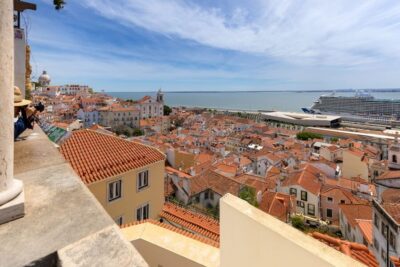
After Principe Real, the route moves through Bairro Alto, Bica, and Cais do Sodre. You pause at a viewpoint where you can take in the hills and the city’s spread. It is not just a photo break. The elevation helps you understand how Lisbon physically separates and connects neighborhoods.
As you keep walking, the guide talks about how the queer neighborhood changes from day to night. You do not just hear about nightlife. You also hear a pointed discussion about access and privilege, and how patriarchal and colonial mindsets show up in day-to-day behavior.
That is the core value of this stop. It asks you to notice patterns, not just find destinations. The guide pushes you to consider questions like: is inclusion in Portugal truly for everyone, and what would it take to make it better?
Practical tip: bring water and plan for some walking effort. Even with a calm pace, this part of Lisbon can feel steep.
Largo Trindade Coelho: Padre António Vieira and how the church regulated sexuality
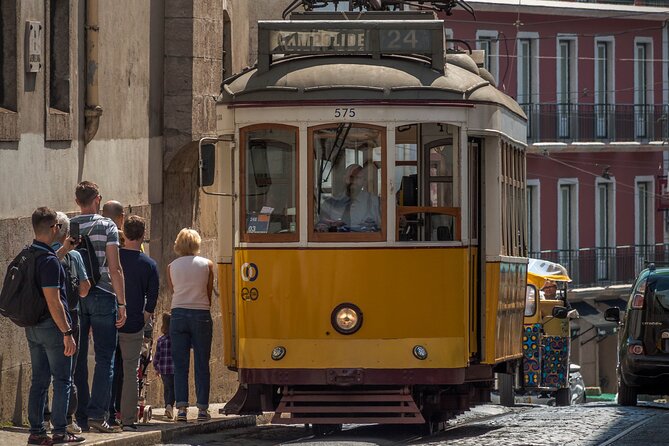
At Largo Trindade Coelho, you observe the monument of Padre António Vieira. Then you shift into a discussion about the church’s role in regulating sexuality and shaping societal attitudes.
This is not presented as vague background. The point is clear: when institutions decide what counts as normal, they influence how people are treated, how identities are policed, and how public expression is judged.
The tour also connects that idea beyond homosexuality alone. The discussion includes any expression that deviates from uniform expectations of homogeneity. That framing helps you see the big mechanism: it is not only about one group. It is about control, stigma, and who gets to exist openly.
One drawback to be aware of: this portion can feel concept-heavy. If you like tours that only point at landmarks, you may want a notebook or phone notes ready so you can keep the ideas organized.
Other trips that start in Lisbon and end well:




Largo do Carmo: the revolution site and the dictatorship-era family script
Next you reach Largo do Carmo. Here, you visit the site where the Portuguese revolution began, then move into the period of dictatorship that lasted as the longest-lasting in Europe.
The guide ties that regime to social mindsets and strict family modeling. The idea is simple but powerful: the regime enforced a narrow picture of what a family should be, a man, a wife, and happy children, with nothing different.
Then the discussion turns to resistance, including key LGBTQ+ figures who pushed back against that worldview. This is where the tour’s format really pays off. You are standing at a historical turning point, so the story is not floating in time. It is anchored in place.
For you, the takeaway is not a list of dates. It is how politics and “normal life” get merged. The tour shows how government influence can seep into private expectations, and how resistance can show up through visibility, organizing, and refusal.
Praca Martim Moniz: contemporary queer movements and immigrant energy
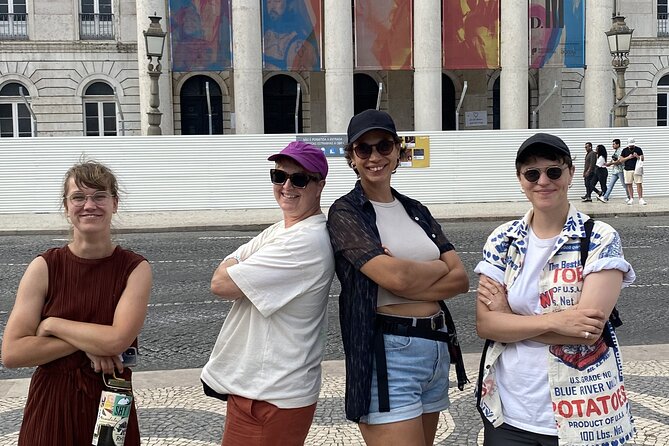
At Praca Martim Moniz, the tone shifts toward what is happening now. The guide talks about contemporary queer movements challenging structures and raising new questions.
This stop also highlights immigrants and how they bring strength and fresh perspectives to LGBTQ+ movements in Portugal. That matters because it adds layers: today’s queer scene is not only about local identity. It is also about arrival, community, and shared organizing across cultures.
If you want a tour that covers both history and present-day debates, this is a key moment. It keeps the experience from becoming a straight line into the past.
And because you are already primed by earlier stops on institutions and control, the discussion lands with clarity. You can hear the difference between older patterns of regulation and current demands for broader inclusion.
Ending in Graça and Sao Vicente: paying tribute at a queer-owned venue

The tour ends in Graça and Sao Vicente at a queer-owned venue. This finale is about honoring Black queer resistance that Criolense Kitchen Club has brought into the Graça neighborhood.
You also get local context about why this area matters to the LGBTQ+ community. The ending is designed as more than a “drop-off point.” It is a respectful closing that connects activism to current community life.
For me, the best part of a good ending is what it does emotionally. This one gives you a sense of continuity. You started with visibility as protest, moved through power structures that limited expression, and finished with community-led resistance that keeps changing what public life can be.
Also, since the tour ends at a venue where you can continue the evening if you want, it pairs well with planning your own meal after.
Price and value: what you get for $72.29 in about 4 hours
At $72.29 per person for roughly four hours, the price sits in the “solid value” zone for a themed guided walk in Lisbon. You are paying for more than route guidance. You are paying for a local guide and a structured storyline that links multiple neighborhoods to LGBTQ+ history and modern queer debates.
Two inclusions make the money feel more useful. The updated Queer Map of Lisbon (PDF) helps you keep exploring after the tour. And the fact that the guide is Portuguese and English-speaking means the storytelling stays accessible even if your Portuguese is a work-in-progress.
You also get a practical format: mobile ticket and a small group capped at 20. That usually means less time waiting and more time learning.
Not included is dinner, so plan to eat on your own after the tour. That is a plus for flexibility, since you can choose something nearby to match your budget and appetite.
Group size, pacing, and why the timing matters
This is about 4 hours, built around six stops. Some stops are around 20 minutes, and the first stop runs a bit longer for introductions and historical framing.
That pacing works well because each location has a point. You are not stuck listening for the entire tour without a change of scenery. You also get enough time to absorb a theme, then carry it into the next neighborhood.
With a maximum group size of 20, you should expect a more conversational experience than a huge bus tour. The guide can slow down if people have questions, and you can get clarification without it feeling rushed.
What to do before you go so you enjoy every stop
This tour runs best when you show up ready to walk and ready to talk. You do not need athletic fitness, but moderate physical fitness helps because Lisbon hills are part of the route.
A few practical moves that will make it smoother:
- Charge your phone, since the ticket is mobile and you will likely reference the map afterward.
- Wear comfortable shoes. You will be on streets and viewpoints, and those add up.
- If you are sensitive to tough topics, mentally prepare for discussion of homophobia, sexuality regulation, and dictatorship-era social control.
Weather matters too. The tour requires good weather, and if it cannot run due to poor conditions, you will be offered another date or a full refund.
Getting there: meeting point and where you finish
You start at Juniper tree arbor, Misericórdia, 1250-095 Lisboa, Portugal. You finish in Graça, Lisbon.
Because it is near public transportation, you can usually fold it into a wider day plan without too much stress. Still, give yourself a little buffer at the start, since groups meet and settle before the guide begins the opening context.
The route ends where many people naturally want to keep going. If you want a relaxed finish with dinner nearby, you are in a good position to do that.
Should you book this Queer Lisbon Historical Tour?
Book it if you want a walking tour with purpose, not just sights. The combination of memorial grounding, neighborhood viewpoints, institutional history, and present-day queer questions gives you a fuller picture of Lisbon than a standard highlights route.
It is also a great fit if you like tours led by people who bring energy and clarity, especially with bilingual Portuguese and English storytelling. The small group size helps the experience feel human and interactive.
Skip it or choose something lighter if you do not want heavy themes. This route openly addresses homophobia, sexuality regulation, and dictatorship-era social control, and the tour includes discussion questions about inclusion and who is left out.
If you are deciding last minute, my advice is simple: bring comfortable shoes, plan a meal afterward since dinner is on you, and go in ready to see the city with new eyes. For the price, the included map and focused guide make it an easy yes for many Lisbon first-timers who want to understand more than the postcard version.
FAQ
How long is the Queer Lisbon Historical Tour?
It runs for approximately 4 hours.
How much does the tour cost?
The price is $72.29 per person.
What languages are offered?
The tour is offered in English, and the guide is Portuguese and English-speaking.
Where does the tour start and end?
It starts at Juniper tree arbor, Misericórdia, Lisbon, and ends in Graça, Lisbon.
Is the tour limited to a certain group size?
Yes. The maximum group size is 20 travelers.
Is dinner included?
No. Dinner is not included, so you pay for your own meal and drinks.
Is there a mobile ticket?
Yes, the tour uses a mobile ticket.
What if the weather is bad?
The experience requires good weather. If it is canceled due to poor weather, you will be offered a different date or a full refund.
Can service animals attend, and is it near public transportation?
Service animals are allowed, and the tour is near public transportation.
What is the cancellation window?
You can cancel for a full refund up to 24 hours in advance. If you cancel less than 24 hours before the start time, the amount you paid is not refunded.
Fresh across the seven hills
- Full-day Private Tour: Fátima Sanctuary, Batalha, Nazaré, Óbidos
★ 5.0 · 6 reviews - Porto Private Tour from Lisbon
★ 4.5 · 6 reviews - VIP transfer from the airport to Lisbon hotels
★ 5.0 · 6 reviews - Lisbon Photoshoot: Capture Your Adventure
★ 5.0 · 6 reviews - Lisbon: Romantic Sunset Cruise With Wine & Portuguese Tapas
★ 5.0 · 6 reviews - Arrábida Wine Tour – 3 Wineries, Traditions & Views from Lisbon
★ 4.5 · 6 reviews - Lisbon: Sintra, Pena Palace, Belém Tour + sunset Boat Cruise
★ 5.0 · 6 reviews
Historical Tours, compared.

Daytime or Sunset Boat Cruise with History and Wine
Read our review →
Explore Lisbon by Tuk Tuk: History and Viewpoints
Read our review →
Private Tuk Tuk Tour Through Lisbon’s Historical Streets
Read our review →
Lisbon Sunset Sailing with Portuguese Wine and History
Read our review →
Live Fado Show in Historic Alfama with Port Wine
Read our review →
Private Lisbon-Arrábida Wine Tour: 3 Wineries, Coast & Heritage
Read our review →
Browse the lists this tour appears in