
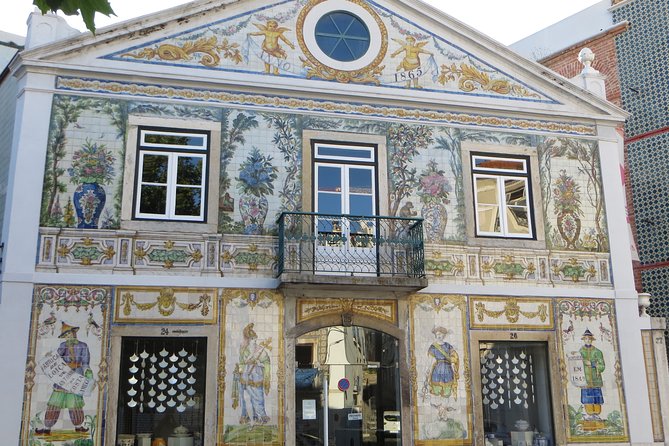
Reviewed · AZULEJO TILE TOURS
The Portuguese Tiles
A street of blue-and-white tiles can feel like a whole history lesson. This 3.5-hour Lisbon walk is a smart, foot-on-the-ground way to understand Portuguese azulejos without getting lost in facts.
I especially like that you see tiles in real settings, churches, shops, and even breweries, not just curated displays. I also like the pacing, with enough stops that you can actually look closely, ask questions, and keep moving. One catch: the tour needs good weather, so if it is raining hard, you may need flexibility.
In This Review
- Key highlights you’ll care about
- Tiles in Lisbon, the fast way to learn what you are actually seeing
- Meet at Av. da Liberdade, then walk the city’s blue clues
- Stop 1: Casa do Alentejo, where tile history begins in a casino-era building
- Stop 2: Convento de São Pedro de Alcântara, the blue-and-white beginnings
- Stop 3: Igreja de São Roque, oldest Lisbon panels and the Moorish-to-Portuguese shift
- Stop 4: Trindade, an entire brewery wrapped in 19th-century tiles
- Stop 5: Largo Rafael Bordalo Pinheiro, Masonic motifs and the man behind the face
- Stop 6: Livraria Bertrand in Chiado, Lisbon’s literary façade in blue tiles
- Stop 7: Alcôa pastry shop, lottery shop roots and a 20th-century ceramic piece
- Stop 8: Praça Dom Pedro IV, tiles meet the city’s big-story center
- Stop 9: Viúva Lamego showroom, two major tile factories and what is left to see
- Stop 10: Rua da Misericórdia, a near-museum tile store across eras
- Miguel Cardoso makes the route work, especially when weather is messy
- How long, how much, and why the value is better than it sounds
- Who should book this Portuguese Tiles tour
- Should you book it? My take
- FAQ
- What is the duration of the Portuguese Tiles tour in Lisbon?
- How much does the tour cost?
- Where does the tour start, and what time is it?
- What language is the tour offered in?
- How big is the group?
- Do I need to buy separate tickets for the stops?
- Is the tour ticket sent to me digitally?
- Does the tour run in bad weather?
- What is the cancellation policy?
- Is the tour accessible for most people?
Key highlights you’ll care about
- 16th to 21st century tile styles in real locations, from early panels in churches to later façades and shopfronts
- Miguel Cardoso’s context, including how tile tastes shift from Moorish influence toward a Portuguese look
- A route built around Lisbon’s tile “layers”, so you notice details all over town afterward
- Small group size (max 9), which makes it easier to ask questions and adjust pace
- Mostly free admissions, with tickets included only where they matter (like the showroom stop)
- A practical start time at 10:00 am, ideal for getting oriented on day one
More tiled walls worth stopping for:
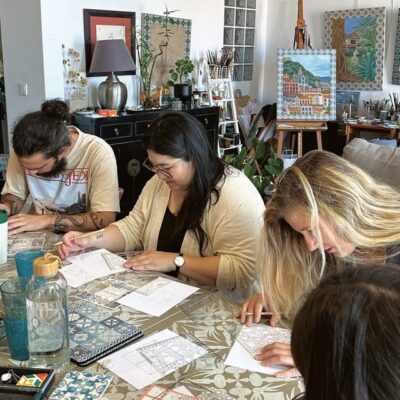
- Lisbon: Azulejos’ Design Create Your Own Tile Workshop★ 4.9 · 420 reviews
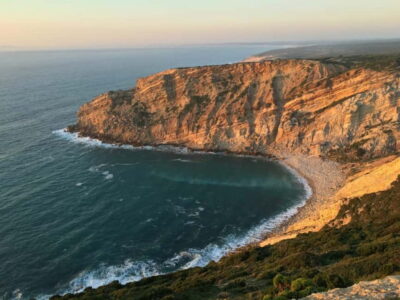
- Arrabida Wine Tour – Lisbon: Wineries-Tastings-Tile Factory★ 4.9 · 179 reviews
- Arrabida Wine Tour from Lisbon: Wineries, Tastings & Tile Factory★ 5.0 · 154 reviews
- Paint your tile and create your unique piece in an art gallery in Lisbon★ 4.9 · 116 reviews
Tiles in Lisbon, the fast way to learn what you are actually seeing
If you like art but you want it to make sense, start with tiles. Lisbon’s azulejos are not just decoration. They are storytelling plastered to walls: religious shifts, city life, trade, politics, and changing tastes over centuries.
This tour is built so you are not just looking at blue-and-white squares, you are learning the visual language. You’ll hear how Moorish tradition influenced early decoration, then how Portuguese styles evolved. You’ll also get context for big historical moments that shaped the city, including the 1755 earthquake and later political change mentioned in the guide’s explanations.
You’ll be walking a lot, but it never feels like a marathon. One thing I like is that the route moves through neighborhoods and landmark interiors where tiles are already part of the experience. Another plus is that you are not stuck waiting outside. Many stops are set up for short, focused visits.
Meet at Av. da Liberdade, then walk the city’s blue clues
The tour starts at Av. da Liberdade 6 at 10:00 am. It ends in a different location than where you begin, so it helps to keep your next plan flexible. The group stays small, up to 9 travelers, which matters when you are trying to see details in churches and narrow street façades.
You’ll also use a mobile ticket. That is one less thing to manage while you are already scanning walls. And you will be in English, which is a big deal for a subject like tilework where the differences are subtle.
Because it is a walking tour, bring shoes you trust. Even if the pace is gentle, slick stone floors are real in churches. One reviewer mentioned how the guide helped them stay safe during rain, slowing down and adjusting choices so everyone could keep their footing.
Stop 1: Casa do Alentejo, where tile history begins in a casino-era building
The first stop is Casa do Alentejo, a historic house with layers of changing use. It was once an aristocratic home, then remodeled in the 19th century to house Lisbon’s first casino. That matters because it sets the tone: tile decoration in Lisbon often followed shifting cultural moments, not just religious needs.
You’ll see Moorish-influenced decorative ideas that match the romanticism of the era. It is a good opener because it frames what you will keep noticing: how styles travel, mix, and get reused.
What to watch for: look for repeating geometric patterns and any subtle blend between floral motifs and architectural ornament.
Possible drawback: it is early in the route, so if you arrive already exhausted from jet lag or a long morning, you may want to pace your attention and save the deep looking for later stops.
Stop 2: Convento de São Pedro de Alcântara, the blue-and-white beginnings
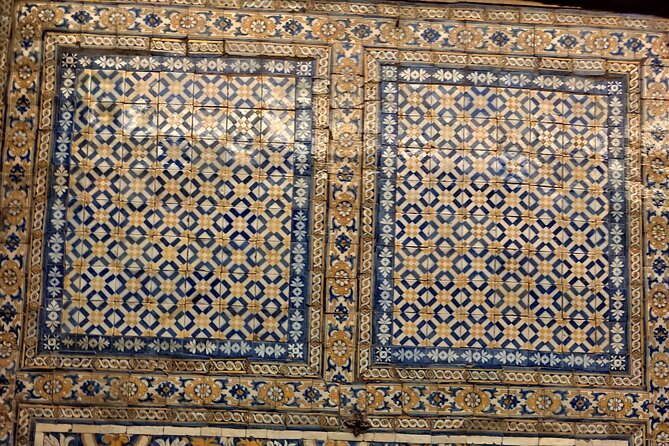
Next is Igreja de São Pedro de Alcântara, where you get one of the clearest tile origin stories. This church is described as a place where you can see the beginnings of Portugal’s blue-and-white tile tradition. Here, the tiles come from the late 17th century into the early 18th century.
That date range is a gift. Tiles don’t evolve overnight, so being able to anchor what you are seeing to a timeframe helps your brain build a map.
Why it is worth your time: you are not just seeing pretty work, you are meeting an early phase of the Portuguese azulejo look.
Time note: this is a short stop, around 15 minutes, so focus on the key surfaces the guide points out.
Other trips that start in Lisbon and end well:




Stop 3: Igreja de São Roque, oldest Lisbon panels and the Moorish-to-Portuguese shift
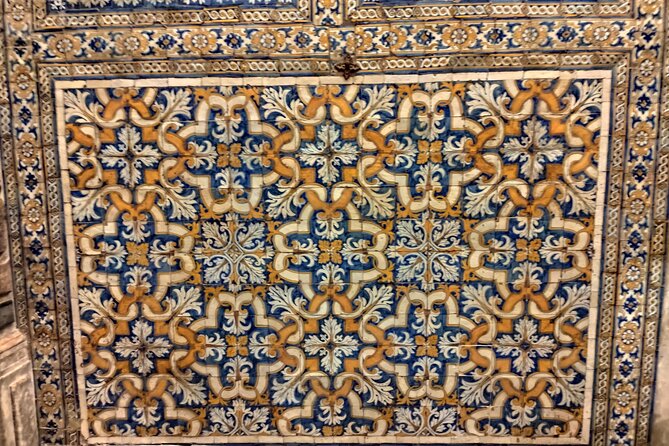
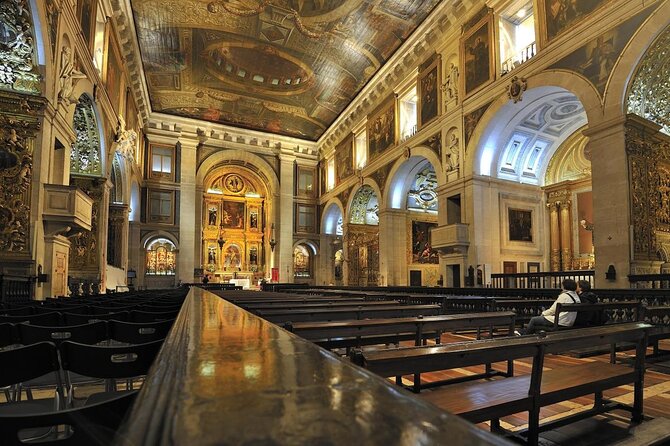
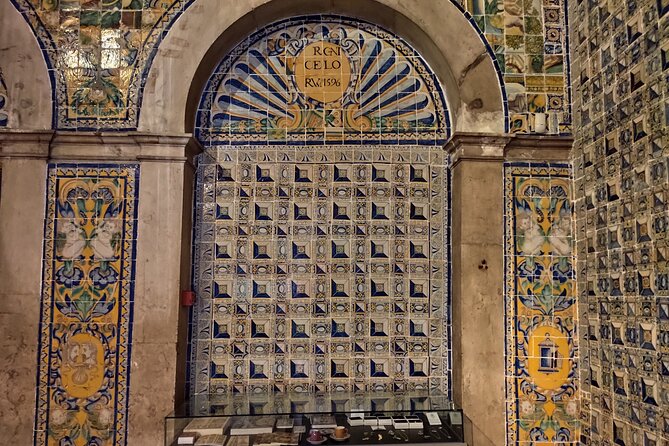
At Igreja de São Roque, you’ll find some of the oldest tile panels in Lisbon still in place. These are signed 16th-century panels, and the story here is the transition from Moorish tradition to a more distinctly Portuguese tile identity.
This stop tends to be a turning point in how people see the whole city. Once you understand the transition, you start spotting different tile grammar elsewhere.
What to look for: signed details and any stylistic shift that feels less “transferred” and more “Portuguese.”
Practical tip: keep your phone handy, but don’t rush photos. The guide’s value is in explaining what each change means.
Stop 4: Trindade, an entire brewery wrapped in 19th-century tiles
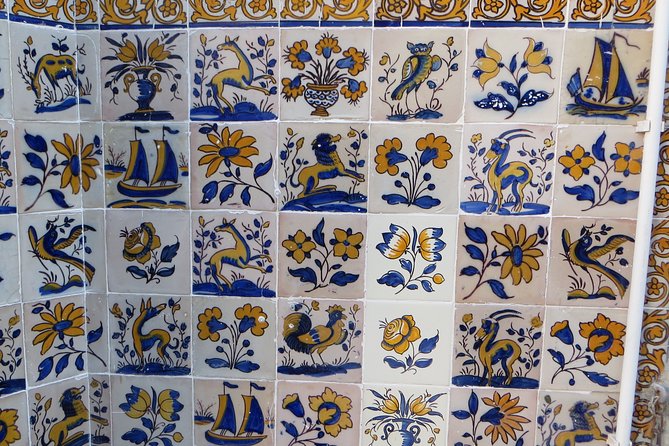
Then you get a different vibe at Trindade, the oldest brewery in town, covered with 19th-century tiles.
This is where tile appreciation stops being academic and starts being fun. Lisbon tiles are often tied to institutions, commerce, and public life. Seeing them on a brewery façade tells you that this art was also for everyday spaces.
Nice payoff: you’ll get a sense of how tilework acted like a visual brand long before marketing existed in the way we know it.
Watch-outs: keep an eye on footing outside and inside, especially if it is wet.
Stop 5: Largo Rafael Bordalo Pinheiro, Masonic motifs and the man behind the face
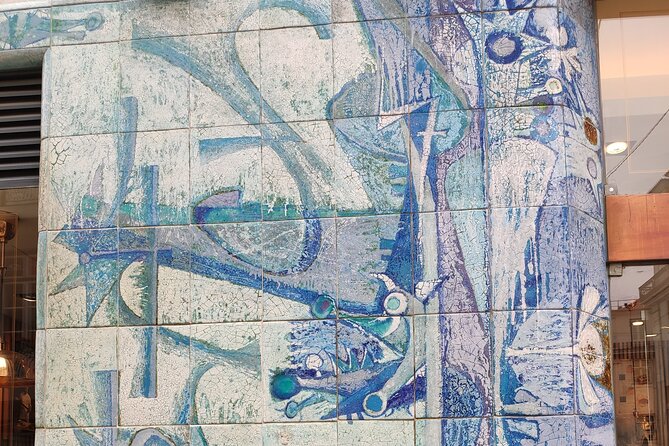
At Largo Rafael Bordalo Pinheiro, the tile façade includes Masonic motifs. You’ll also hear history about the person connected to this iconic Lisbon façade.
This is a short stop, around 5 minutes, but it is memorable because it shows how tilework could carry symbolic language, not just landscapes or decorative borders.
Stop 6: Livraria Bertrand in Chiado, Lisbon’s literary façade in blue tiles
Now you hit Livraria Bertrand in Chiado, the oldest bookstore still operating. The building’s façade is covered with 19th-century blue-and-white tiles.
It’s a great pairing: books and tiles both hold stories, and this stop makes the connection feel natural. You’ll also get a sense of Lisbon as a city that treats culture as something you can walk past every day.
Why this works on a tour: you get a landmark you likely already heard about, but tiles turn it into a deeper visit than a quick photo stop.
Time note: another brief stop, about 5 minutes, so use it to look closely at the façade details the guide highlights.
Stop 7: Alcôa pastry shop, lottery shop roots and a 20th-century ceramic piece
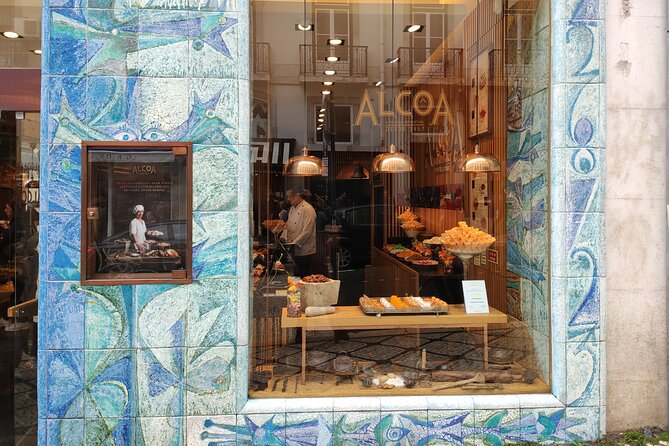
Next is Alcôa, known today for pastry. The interesting part is that it used to be a lottery shop, and in that context it was covered with ceramic work by one of Portugal’s greatest potters of the 20th century.
This is a reminder that tilework in Lisbon was often installed for public-facing life: commerce, foot traffic, and community habits. So you are seeing art shaped by the city’s routines, not just by patrons in galleries.
What you’ll get out of it: a quick cultural link between everyday places and high craftsmanship.
Practical note: you may spot tile surfaces tied to the building’s original function, which adds meaning if you like tracing how places change over time.
Stop 8: Praça Dom Pedro IV, tiles meet the city’s big-story center
Then it is Praça Dom Pedro IV, described as the most important square in Lisbon, full of history and stories.
This stop is less about a single tile panel and more about context. Squares are where cities perform their identity, and Lisbon’s tiles often act like visual signage for different eras.
If you like to understand a city’s “why,” this is the moment to let the guide’s timeline connect. One review also praised how the guide folded in broader Portuguese history, which makes stops like this feel more than a break in walking.
Stop 9: Viúva Lamego showroom, two major tile factories and what is left to see
At Viúva Lamego (Viuva Lamego), the tour shifts from streets to a showroom. This location was once the site of one of the two most important tile factories in Lisbon. Today it is their showroom, and this stop has admission included.
This is one of the most valuable stops because it helps you connect street-level tilework to the industrial process behind it. You see why tiles became so widespread in Lisbon, and how the city’s tile look could come from strong production traditions.
Why I think this is worth the ticket: you stop guessing and start recognizing how tiles get designed for real buildings.
Time note: around 10 minutes.
Stop 10: Rua da Misericórdia, a near-museum tile store across eras
Your final stretch is Rua da Misericórdia, a tile-focused shop described as almost a museum. Here you can enjoy tiles from almost every era.
This is the part of the tour where you convert facts into personal taste. After seeing early church panels and 19th-century façades, you’ll have an easier time noticing what changed stylistically and what stayed consistent.
Practical tip: if you are the type who likes souvenirs, this is where you can browse without the pressure of it being random. If you are not shopping, still go slow here, because the display can teach you more than the explanation if you take a few extra minutes.
Miguel Cardoso makes the route work, especially when weather is messy
The tour’s reputation is strongly tied to the guide. In multiple accounts, Miguel Cardoso is described as warm, patient, and able to handle real-world issues like rain. One highlight: during bad weather, he suggested options so older travelers felt safe and the tour stayed enjoyable.
Another theme is how he connects tile details to Lisbon’s broader story. You hear about changes over time from Phoenician and Roman layers to Arabic and Jewish influences, plus later history like the earthquake and political shift. Even if you are not a history buff, those connections help tile motifs make sense.
You’ll also get practical Lisbon support. Several reviews mention that Miguel gave restaurant suggestions and helped people plan the rest of the trip. That is bonus value, because it turns your tile tour into a starter map for the whole stay.
How long, how much, and why the value is better than it sounds
The tour runs about 3 hours 30 minutes and costs $60.24 per person. That price is not low compared to generic walking tours, but this one is built around frequent, high-signal stops, and many admissions are free at the locations you visit.
The math is simple: you are paying for a guided route that gives meaning to each stop. And because the group is capped at 9, you get more attention than you would on a big bus crowd.
Also, it is scheduled for 10:00 am. That is a smart slot because you get the city’s tile language early. After this, you will notice tilework everywhere, even on streets you walk without a guide.
One more practical point: the experience is commonly booked about 37 days in advance, which suggests it is popular. If your dates are fixed, booking earlier is a safer move.
Who should book this Portuguese Tiles tour
This tour fits best if you like one or more of these:
- You want Lisbon orientation on day one, but you also want real culture, not just landmarks.
- You love architecture, religious art, or how design changes over time.
- You prefer a small group, where you can ask questions without feeling rushed.
- You care about accessibility to specific sites and want a guide to help you pick what is worth your limited time.
It also can work for older travelers, since the guide has shown he can adjust pacing and respond to slippery conditions.
If you want a super short “see it, leave it” photo sprint, this likely will feel too focused and too story-driven. But if you like to understand what you are looking at, it is an excellent use of half a day.
Should you book it? My take
Yes, I think you should book this Portuguese Tiles tour if you want a high-meaning introduction to Lisbon. The route is well designed: church panels for origin, civic buildings for public life, a brewery for how tiles became everyday branding, and a factory showroom to connect the dots.
My only hesitation would be weather. Because the experience requires good weather, you should plan with a little backup flexibility. If you can handle a route adjustment when rain hits, the experience becomes even better, not worse, based on how the guide responds.
Overall, it is not just a tile hunt. It is Lisbon’s visual history taught through places you can actually stand in.
FAQ
What is the duration of the Portuguese Tiles tour in Lisbon?
It runs for about 3 hours 30 minutes.
How much does the tour cost?
The price is $60.24 per person.
Where does the tour start, and what time is it?
It starts at Av. da Liberdade 6, 1250-144 Lisboa, Portugal at 10:00 am.
What language is the tour offered in?
The tour is offered in English.
How big is the group?
The maximum group size is 9 travelers.
Do I need to buy separate tickets for the stops?
Many stops have admission listed as free, and one stop, Viúva Lamego, includes admission. The exact ticketing you’ll use depends on each stop.
Is the tour ticket sent to me digitally?
Yes, it uses a mobile ticket.
Does the tour run in bad weather?
The experience requires good weather. If it is canceled due to poor weather, you will be offered a different date or a full refund.
What is the cancellation policy?
Free cancellation is available up to 24 hours in advance for a full refund. If you cancel less than 24 hours before the start time, the amount paid will not be refunded.
Is the tour accessible for most people?
Most travelers can participate, and service animals are allowed.
Fresh across the seven hills
- Porto Private Tour from Lisbon
★ 4.5 · 6 reviews - VIP transfer from the airport to Lisbon hotels
★ 5.0 · 6 reviews - Full-day Private Tour: Fátima Sanctuary, Batalha, Nazaré, Óbidos
★ 5.0 · 6 reviews - Lisbon Photoshoot: Capture Your Adventure
★ 5.0 · 6 reviews - Lisbon: Romantic Sunset Cruise With Wine & Portuguese Tapas
★ 5.0 · 6 reviews - Arrábida Wine Tour – 3 Wineries, Traditions & Views from Lisbon
★ 4.5 · 6 reviews - Lisbon: Sintra, Pena Palace, Belém Tour + sunset Boat Cruise
★ 5.0 · 6 reviews
Azulejo Tile Tours, compared.
Arrabida Wine Tour – Lisbon: Wineries-Tastings-Tile Factory
Read our review →
Arrabida Wine Tour from Lisbon: Wineries, Tastings & Tile Factory
Read our review →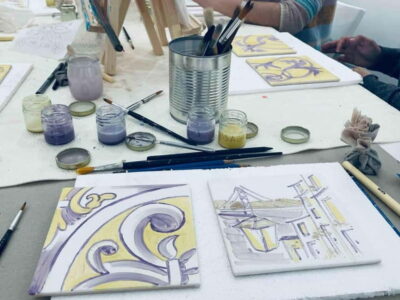
Paint your tile and create your unique piece in an art gallery in Lisbon
Read our review →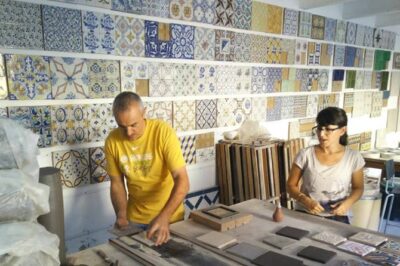
Tiles and Tales: Workshop and National Tile Museum Visit
Read our review →
Private Lisbon Wine & Tile Painting Tour – Sesimbra & Traditions
Read our review →
PRIVATE Tour to Factory of Tiles, Setúbal and Évora from Lisboa
Read our review →
Browse the lists this tour appears in