
Reviewed · BELéM DISTRICT TOURS
Tour Tuk Tuk Lisbon-Belem 4 H Free Pick-up
A 4 hour tuk tuk loop can turn Lisbon from a map into a memory. I like how this tour mixes major landmarks with multiple miradouros so you get the city in fast slices.
Two things I especially like: the private ride means you are not waiting on strangers, and the pacing builds a natural story from Moorish roots and royal churches to Belém’s riverfront Portuguese Discoveries.
One possible drawback: tuk tuks ride on cobblestones and can be bumpy, and if rain gear is up it can limit sightlines a bit. If you go expecting a smooth, bus-like tour, you might not love it.
In This Review
- Key highlights worth your time
- Why a 4-hour tuk tuk loop makes sense for Lisbon
- Logistics that affect your comfort: bumpy roads and quick stop-and-go
- Lisbon Cathedral and the start of the story: 1147 and the Moors to Christians shift
- Miradouro das Portas do Sol: Tagus views and a viewpoint with earthquake memory
- Senhora do Monte and the Hermitage: the legend of the chair
- São Vicente de Fora and the Bragança connection
- Panteão Nacional: Amália, Eusébio, and why this place matters
- Alfama: oldest neighborhood energy, with Arabic roots in the name
- Praça do Comércio, Martinho da Arcada, and the grand entrance feel
- Rua Cor-de-Rosa and Chiado: nightlife street meets literary Lisbon
- São Roque and its Baroque chapels, including Saint John the Baptist
- Miradouro São Pedro de Alcântara and the eastward view
- Bairro Alto in brief: old streets and the nightlife pattern
- Basilica da Estrela: marble interior and a royal vow story
- Belem National Palace and São Bento Palace: official power glimpses
- Pastéis de Belém: warm custard, and why the timing matters
- Jerónimos Monastery: where voyages, tombs, and art meet
- Torre de Belém and Padrão dos Descobrimentos: defense meets memory
- Price and tickets: what $150.85 buys you, and what to plan for
- Who this tuk tuk Lisbon to Belém tour is best for
- Should you book this tour?
- FAQ
- How long is the tour?
- What is the price per person?
- Is the tour in English?
- Is pickup included?
- Is a private tour included?
- What is included in the price?
- Is food or drink included?
- Are admission tickets included for all stops?
- What is the weather requirement?
- What is the cancellation window?
Key highlights worth your time
- Miradouros in short bursts: Portas do Sol, Senhora do Monte, and São Pedro de Alcântara keep the best angles close together.
- Old Lisbon religious stops that teach as you look: Lisbon Cathedral, São Vicente de Fora, São Roque, and more.
- Bragança Dynasty and fado in one stop: Panteão Nacional connects Portuguese power and culture in a way most tours miss.
- Belém done efficiently: Pastéis de Belém plus Jerónimos and the river defenses (Torre de Belém, Padrão dos Descobrimentos).
- English-speaking guides: the tour is offered in English, and the best guides make quick work of complex history.
- Flexible time at walking spots: you should have short moments to step out, take photos, and read the room.
More time around Belem and its tower:
- Private Lisbon Sightseeing Tuk-Tuk Tour: Alfama, Belém & More★ 5.0 · 4,277 reviews
- Age of Discoveries Walking Tour in Belém★ 5.0 · 1,513 reviews
- Lisbon: Bike Tour from Lisbon to Belém + Liquor & Pastry★ 4.7 · 688 reviews
- Bike Tours Lisbon – Center of Lisbon to Belém★ 5.0 · 686 reviews
Why a 4-hour tuk tuk loop makes sense for Lisbon
Lisbon is a city of slopes. In a short visit, that means a normal walking tour can feel like cardio with a side of viewpoints. A tuk tuk is the practical answer, because it gets you uphill and back down without turning your day into steep stair practice.
This tour is about 4 hours and uses private transportation, so your group stays together. It is also offered in English, which matters here because the stops are packed with dates, dynasties, and architectural styles.
You also get a tight concentration of what Lisbon does best. You are moving through old neighborhoods like Alfama and central areas like Chiado and Bairro Alto, then you finish toward Belém’s monument zone.
Logistics that affect your comfort: bumpy roads and quick stop-and-go
A tuk tuk is fun, but it is not a luxury sedan. Expect bumps on cobblestones. In a few minutes you can feel it in your back, so go into it with the right attitude: sit steady, keep your phone secure, and enjoy the views between jolts.
If the weather turns, you might see rain protection in place, and that can slightly reduce what you can photograph from inside. On the flip side, the rain setup often lets you keep moving without canceling the day.
Pick-up is part of the deal, and that helps you start the tour without wasting time. Since it is private for your group, you are less likely to lose minutes at regroup points.
Lisbon Cathedral and the start of the story: 1147 and the Moors to Christians shift
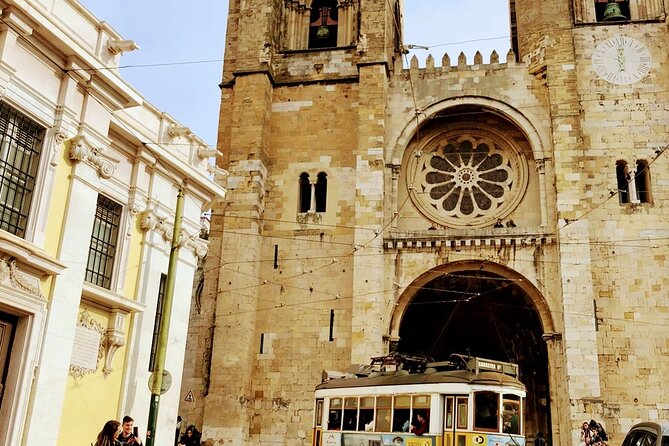
Your first real anchor is Lisbon Cathedral. This church dates back to the 12th century building phase, starting in 1147 after Lisbon was captured from the Moors. Even if you only spend about 15 minutes here, it gives you a core reference point for the rest of the day.
Look for the fact that this is not just an old building. It is the kind of landmark that explains why so much of Lisbon’s “layers” feel religious, political, and architectural at the same time.
Admission is not included for this stop. That is one of the few places where you may need to plan your entry ticket ahead, depending on what you want to see up close.
Miradouro das Portas do Sol: Tagus views and a viewpoint with earthquake memory
Next comes Miradouro das Portas do Sol, one of the most famous angles over the Tagus River. The name ties to the old Porta do Sol, built into Lisbon’s Moorish-era fence line. The 1755 earthquake ruined that original structure, and the viewpoint sits in the same historic area.
This is a short stop, around 10 minutes, which is ideal for a quick photo set and a calm reset. You get the view, and you move on before the crowds swallow your patience.
No entry ticket is required here. That makes it a good “time-efficient” stop if you are trying to keep the whole day flowing.
Other tuk-tuk climbs through the old quarters:




Senhora do Monte and the Hermitage: the legend of the chair
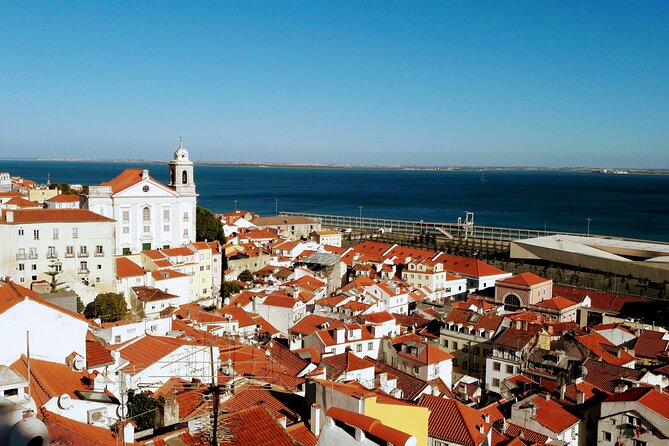
Another viewpoint takes you to Miradouro da Senhora do Monte. From here you can scan a lot at once: to the south you see areas toward São Jorge Castle and parts of Baixa, and toward the Tagus estuary. It is the kind of view where the city looks planned, even though you know you are on hills and winding streets.
Right nearby is the small and ancient Hermitage of Nossa Senhora do Monte, founded in 1147 and consecrated to Saint Gens, tied to a local martyrology tradition. Inside the story gets extra human with a legend about a stone chair. It is said that pregnant women who sat there had easier births, and a royal figure, D. Maria Ana de Austria, is mentioned in that tradition.
This stop is also about 10 minutes, and admission is free. If you like history that includes everyday beliefs, this is one of the most memorable moments in the tour.
São Vicente de Fora and the Bragança connection
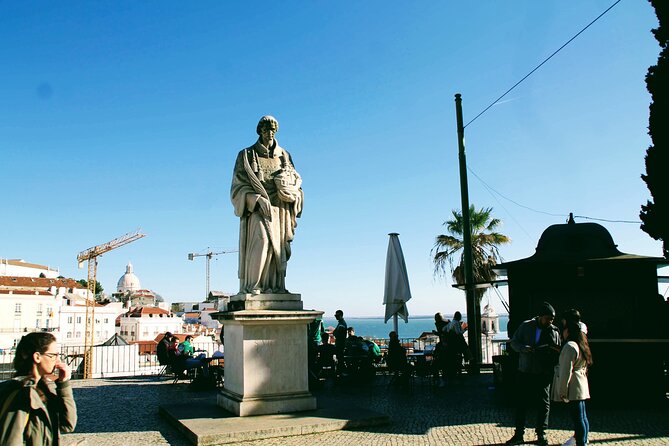
Then you switch from viewpoints to a church that carries serious Portuguese weight: Igreja de São Vicente de Fora. Construction began in 1582 on a site that traces back to earlier plans tied to D. Afonso Henriques. Architecturally, you can see multiple layers, including traces of Mannerism in Portugal, plus Gothic and Baroque styles.
The big reason to care is what the church holds: the Pantheon of the Dukes of Bragança, with several Portuguese kings buried there. If you want to understand why Portugal’s dynastic story feels so present in Lisbon, this is a stop that grounds it fast.
Admission is free for this church in the tour format, and you typically only have about 10 minutes. That is enough time to spot the major style cues and absorb the name connections.
Panteão Nacional: Amália, Eusébio, and why this place matters
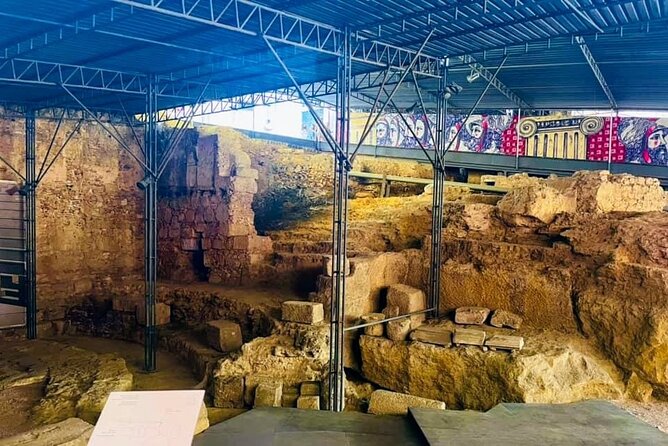
After that you head to Panteão Nacional, located in the Church of Santa Engrácia. Construction started in 1682 and was not finished until 1966, which gives the place an unfinished, long-arc feeling even if you only see it briefly.
This stop pays off if you connect Portugal’s identity to its people. Here you find graves including Amália, the fado diva, and Eusébio, the football player. It is a reminder that culture and sports are part of national recognition, not separate from it.
Admission is not included for this stop. If you want to spend more time inside than the tour window allows, you may need to handle tickets on your own.
Alfama: oldest neighborhood energy, with Arabic roots in the name
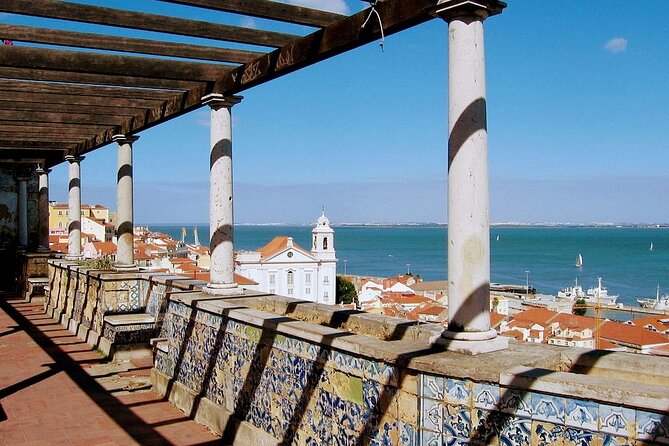
Then it is time for neighborhood texture. Alfama is Lisbon’s oldest district and one of its most “typical” areas. The tour connects the name to Arabic al-hamma, meaning fountain or hot water baths, because the area was historically known for thermal waters.
Even with only about 10 minutes, you can feel the difference in street layout and atmosphere. It is also a strong place for a quick photo of stonework and those tight, turning streets that make Lisbon feel like a lived-in maze.
No admission is required here. It is a walk-by stop, which is the right approach for a half-day.
Praça do Comércio, Martinho da Arcada, and the grand entrance feel
From Alfama you get a shift to Lisbon’s wide-open “stage”: Praça do Comércio. This square was the site of the kings of Portugal for around two centuries. It is one of the largest squares in Europe, and the scale matters, especially after Alfama’s tight streets.
In the square you can find Martinho da Arcada, a long-running café often described as Lisbon’s oldest. It is tied to Fernando Pessoa, which gives you a direct literary thread to pull on later if you want.
The north side of the square includes the Rua Augusta Triumphal Arch, which fits the theme of entry and ceremony. The marble steps at Cais das Colunas are referenced as a noble arrival point where major figures came from the river.
This portion also helps you see how Lisbon mixes monarchy, commerce, and public life in one sweep.
Rua Cor-de-Rosa and Chiado: nightlife street meets literary Lisbon
Your route then takes you near Rua Cor-de-Rosa, also called Pink Street. It is known as a nightlife center, and it is the kind of street where people linger late for drinks and clubs.
From there the tour shifts into the Chiado area. This neighborhood is described as bohemian and emblematic, with strong ties to writers and artists. You also see the cultural side in the details, including chic cafés like Brasileira, with a statue of Fernando Pessoa, and Baroque churches such as Igreja de Loreto and the Church of Our Lady of the Incarnation.
You also pass Largo Luis de Camões, tied to the Portuguese poet who wrote Os Lusíadas. If you like seeing culture stitched into street names and corners, this part feels satisfying.
São Roque and its Baroque chapels, including Saint John the Baptist
Next comes one of Lisbon’s most rewarding church stops: Igreja de São Roque. Built at the end of the 16th century, it belonged to the Society of Jesus and was their first church in Portugal. It is also noted as one of the early Jesuit churches in the world, and it survived the 1755 earthquake unscathed.
The tour also references plague history linked to a cemetery in the surrounding Largo da Misericórdia. That matters because it adds social context, not just art history.
If you want an inside highlight, focus on the church chapels. In particular, there is a notable chapel dedicated to Saint John the Baptist, said to be a masterpiece of Italian art and unique in the world. Admission is free here, which is a nice extra when you are balancing a half-day schedule.
Miradouro São Pedro de Alcântara and the eastward view
Back to the viewpoints with Miradouro São Pedro de Alcântara. This one is praised for its beauty and it overlooks the east side of Lisbon, including part of Baixa.
It is another short stop, around 10 minutes, and admission is free. I like this kind of viewpoint because it gives you a fresh angle on the day without turning into a long wait.
Take a few minutes to look for patterns. If you can trace where Baixa sits relative to the hills, your later self-guided walking around Lisbon will feel less like wandering.
Bairro Alto in brief: old streets and the nightlife pattern
Then you pass through Bairro Alto. It is described as old and picturesque, with narrow, cobbled streets and centuries-old houses. Since the 1980s it has been Lisbon’s best-known nightlife area, with many bars, restaurants, and fado clubs.
This stop is less about museums and more about understanding how Lisbon’s energy shifts after dark. Even if your evening plans are elsewhere, Bairro Alto helps you visualize where nightlife clusters.
Basilica da Estrela: marble interior and a royal vow story
Stop to Basilica da Estrela (also known as the Royal Basilica and other related names in the tour description). It is a Catholic temple and former convent of Carmelite nuns. The story begins with D. Pedro III and D. Maria I, who made a vow they would build a church if they had a son to inherit the throne.
Construction began in 1799, but the boy died two years before finishing the church. That tragic detail makes the architecture feel like a monument to both faith and loss.
A big practical reason to care is the interior materials, described as marble in grey, pink, and yellow. Admission is free, and the tour gives you about 10 minutes, which is good timing for a quick look at what makes Estrela feel different.
Belem National Palace and São Bento Palace: official power glimpses
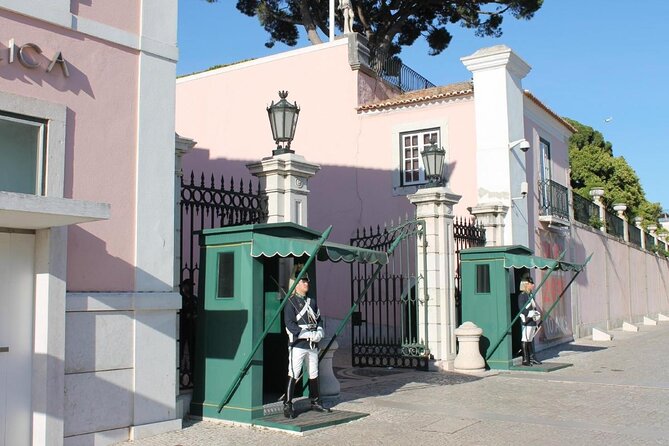
As you move toward Belém, the route includes two important political landmarks: Belém National Palace and São Bento Palace. Belém National Palace is the official residence of the President of the Republic, with a construction timeline tied to the reign of D. Manuel and later ownership changes.
São Bento Palace is described as neoclassical in style, built at the end of the 16th century as the Benedito Monastery. After political shifts, it became known as the Palace of the National Assembly, which is its role today in the tour narrative.
These stops are typically best for exterior viewing and getting a sense of Lisbon’s power centers, not a deep museum-style experience. Use them as scene-setting before the riverfront monuments.
Pastéis de Belém: warm custard, and why the timing matters
No Lisbon to Belém day is complete without Pastéis de Belém. The tour explains that the pastries were sold in 1837 as a way for clerics to survive, and that Lisbon and Belém were connected by steamboats at the time. It also links the recipe to a pastry chef’s decision after the monastery closed following the Liberal revolution.
Traditionally, you eat them warm with powdered sugar and/or cinnamon. That simple detail is not just food lore. Warm and fresh is the whole point, so plan to stop and eat, not just grab and go.
Admission is free for the pastry stop in this tour format, and it runs about 15 minutes. If you like practical food moments in busy areas, this is usually one of the easiest wins.
Jerónimos Monastery: where voyages, tombs, and art meet
Then you reach the Mosteiro dos Jerónimos (Monastery of Santa Maria de Belém). The tour connects it to the age of navigation, noting vigils held by major explorers before sea voyages, including Pedro Álvares Cabral and Vasco da Gama.
The narrative also covers the construction process, starting with an earlier hermitage ordered by Infante D. Henrique in 1452. King D. Manuel I later requested a larger monastery, and the site became associated with tombs, including those of Camões and Vasco da Gama, plus others mentioned in the description.
This is a stop where 15 minutes can feel short. Still, it is valuable because it frames Belém as more than “a pretty river.” It is the symbolic place where Portugal’s sea story becomes stone and ceremony.
The tour includes a longer mention of Jerónimos as a pantheon too. Use your quick time here to pick one or two tombs or chapels to focus on, and let the rest be atmosphere.
Torre de Belém and Padrão dos Descobrimentos: defense meets memory
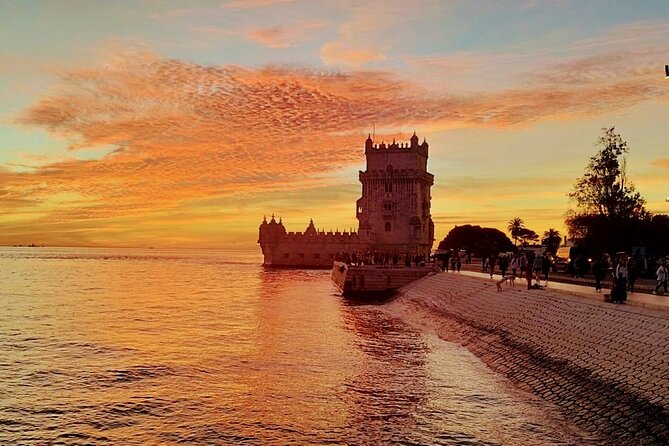
Finally you hit the river defenses and commemorations. Torre de Belém was formerly known as Torre de São Vicente a Par de Belém. Its function was to defend the Tagus riverbank, part of a defense formation tied to the nearby towers mentioned in the tour description.
Admission is not included for the tower stop, and the time is short, around 5 minutes. That means your best strategy is visual first: note its role as a defensive watch point before you decide whether you want to pay for deeper access on a separate visit.
Nearby is Padrão dos Descobrimentos, or Monument to the Discoveries. It was built in 1940 for an exhibition and later a replica was inaugurated in 1960, in concrete and stone. It is a good final stop because it turns the day’s historical themes into one clear statement about the era of Portuguese exploration.
Price and tickets: what $150.85 buys you, and what to plan for
At $150.85 per person for about 4 hours, you are paying mostly for time compression and transport. In practical terms, you are not just buying “sightseeing.” You are buying a private tuk tuk ride that strings together multiple neighborhoods and viewpoints that would take much longer by foot or with multiple taxis.
Private transportation is included. Food and drink are not included. Also, some admissions are not included, specifically at stops like Lisbon Cathedral, Panteão Nacional, and Torre de Belém, based on the tour details.
So I plan my day like this: I assume at least a couple entrances are on me, and I treat Pastéis de Belém as the main snack break rather than expecting a full meal. Bring a bottle of water, wear shoes that handle cobblestones, and pack a light rain layer if the forecast is uncertain.
If you hate paying for tickets on the spot, you can still enjoy the free stops, especially the viewpoint segments and the church exteriors where entry is listed as free.
Who this tuk tuk Lisbon to Belém tour is best for
This tour is great for:
- First-timers who want a fast orientation of Lisbon neighborhoods plus Belém’s monument zone
- People who want history explained while still spending time looking out over the city
- Travelers with limited time who do not want to fight hill logistics
- Groups that want private time together rather than chasing a standard bus schedule
It is also a good match if you care about church architecture and Portuguese cultural identity, because the route strings together cathedrals, dynastic pantheons, and Jesuit baroque.
Should you book this tour?
I would book it if you want a high-impact half-day that mixes viewpoints, key monuments, and recognizable Lisbon streets, all in one coordinated ride. It is especially worth it when you want to finish your trip with Belém’s signature moments, like Pastéis de Belém and the riverfront icons.
I would hesitate if you are very strict about maximizing indoor entry at every site, because some admissions are not included and time is limited at several stops. Also, if you are sensitive to bumpy cobblestones or issues getting in and out of small vehicles, plan for that and consider bringing a rain layer or thinking about alternative transport.
FAQ
How long is the tour?
The tour is approximately 4 hours.
What is the price per person?
The listed price is $150.85 per person.
Is the tour in English?
Yes, the tour is offered in English.
Is pickup included?
Yes, free pick-up is part of the tour.
Is a private tour included?
Yes, it is a private tour/activity, meaning only your group participates.
What is included in the price?
Private transportation is included.
Is food or drink included?
No, food and drink are not included.
Are admission tickets included for all stops?
No. Some stops list admission tickets as not included, while others are free. For example, Lisbon Cathedral and Panteão Nacional indicate tickets not included, while several viewpoints and churches are free.
What is the weather requirement?
The experience requires good weather. If it is canceled due to poor weather, you are offered a different date or a full refund.
What is the cancellation window?
You can cancel up to 24 hours in advance for a full refund. If you cancel less than 24 hours before the experience starts, the amount paid is not refunded.
Fresh across the seven hills
- Full-day Private Tour: Fátima Sanctuary, Batalha, Nazaré, Óbidos
★ 5.0 · 6 reviews - Porto Private Tour from Lisbon
★ 4.5 · 6 reviews - VIP transfer from the airport to Lisbon hotels
★ 5.0 · 6 reviews - Lisbon Photoshoot: Capture Your Adventure
★ 5.0 · 6 reviews - Lisbon: Romantic Sunset Cruise With Wine & Portuguese Tapas
★ 5.0 · 6 reviews - Arrábida Wine Tour – 3 Wineries, Traditions & Views from Lisbon
★ 4.5 · 6 reviews - Lisbon: Sintra, Pena Palace, Belém Tour + sunset Boat Cruise
★ 5.0 · 6 reviews
Belém District Tours, compared.

Private Lisbon Sightseeing Tuk-Tuk Tour: Alfama, Belém & More
Read our review →
Bike Tour from Lisbon to Belém + Liquor & Pastry
Read our review →
Bike Tours Lisbon – Center of Lisbon to Belém
Read our review →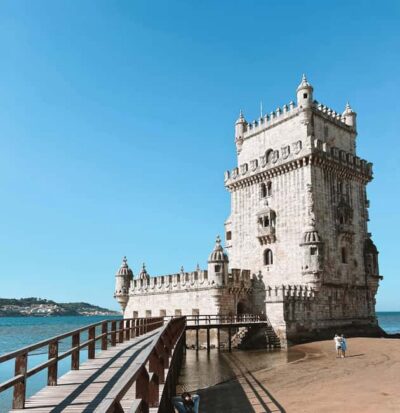
Belém Walking Tour with Jerónimos Monastery Ticket
Read our review →
Belem Walking Tour with Jeronimos Monastery Ticket
Read our review →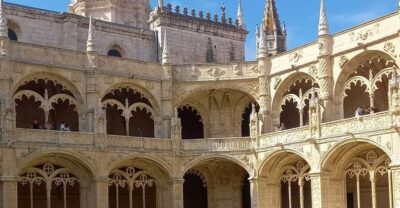
Belem, Jeronimos Monastery, and Coach Museum Tour
Read our review →Browse the lists this tour appears in