
Reviewed · BELéM DISTRICT TOURS
Walking Tour in Alfama with Castle and Belém by Car
Lisbon’s steep streets have a way of tiring you fast. This half-walking, half-driving day turns that problem into a plan, with Alfama hills handled by elevators and a guided route that links viewpoints and historic spots. It also layers in Belém after lunch, so you finish with the big UNESCO hits and a very Lisbon dessert moment.
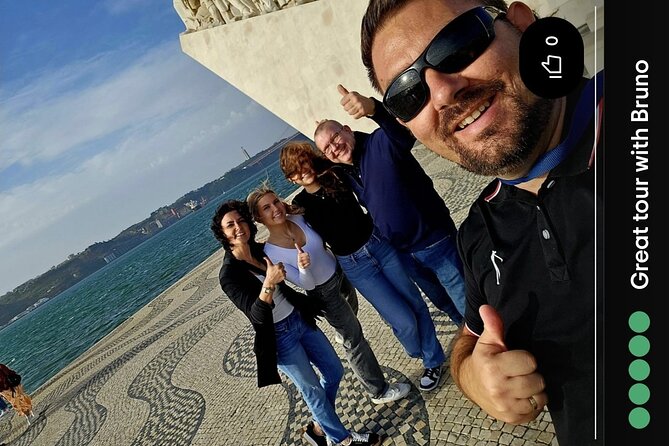
Two things I really like: the pace. You walk the meaningful parts of Alfama, then you get back in a comfortable car for the longer jumps later. The other standout is the guide, Bruno Miguel, who keeps the stories clear and fun, not just a list of names.
One consideration: it is still a full day. The hill section in Alfama is real, and the tour requests moderate physical fitness. Also, São Jorge Castle admission is not included, so you should budget the extra 15 euros.
In This Review
- Key takeaways before you go
- The smartest Lisbon rhythm: Alfama on foot, Belém by car
- Rossio Square, a Jewish memorial, and St. Dominic’s Church
- Figueira Square, King John I, then straight into Alfama
- São Jorge Castle: wall-walk views, plus the castle-guard game
- Portas do Sol to Sé Cathedral: viewpoint first, then the oldest church
- St. Anthony’s Church and a crypt moment with Pope John Paul II
- Praça do Comércio and Rua Augusta Arch: Lisbon’s 18th-century comeback
- Elevador de Santa Justa and Largo do Carmo ruins
- Pastéis de Belém: factory tour, tasting, and why the recipe matters
- Jerónimos Monastery: Manueline detail and the Age of Discoveries link
- Torre de Belém outside view, plus the 1922 airplane note
- Padrão dos Descobrimentos: Prince Henry and the big world map
- Value and practicalities: is the 238.28 price tag fair?
- Who should book this tour, and who might not love it
- Should you book Bruno Miguel Tours for Alfama and Belém?
- FAQ
- How long is the tour?
- What is the meeting time?
- Is hotel pickup and drop-off included?
- Is this tour private?
- Is the tour offered in English?
- Is the tour mostly walking?
- What is included in the price?
- Is the São Jorge Castle ticket included?
- Is lunch included?
- What is the cancellation policy?
Key takeaways before you go
- Private, English-guided day with hotel pickup and drop-off, so you are not hunting meeting points all morning
- Alfama hills with elevators, then a car ride later, for a smarter effort level
- São Jorge Castle wall-walk and tower views, plus you get to play the role of castle guards
- Major Lisbon landmarks in sequence, from Miradouro viewpoints down to Sé Cathedral
- Belém highlights with real time to see, including Jerónimos, Torre de Belém from the outside, and the Discoveries monument
- Pastéis de Belém tasting included, not just a quick photo stop
More wandering through Alfama:
- Alfama Tour in Lisbon Old Town★ 5.0 · 4,936 reviews
- Private Lisbon Sightseeing Tuk-Tuk Tour: Alfama, Belém & More★ 5.0 · 4,277 reviews
- Lisbon: Hills, Alfama, and Mouraria Tour by Electric Bike★ 4.8 · 3,438 reviews
- Best of Lisbon Walking Tour: Rossio, Chiado & Alfama★ 4.9 · 2,700 reviews
The smartest Lisbon rhythm: Alfama on foot, Belém by car
This is the kind of day plan that makes Lisbon feel doable. You start in central areas, then you move into Alfama, the neighborhood of tight lanes and big views. The key is that the route is built around the hills, with elevators used where they help, and the group walking at a pace that keeps the climbs manageable.
By the time you reach Belém, the day shifts gears. You are not trying to conquer Lisbon’s hills with your legs the whole time. Instead, you get the sightseeing value with less friction, so you can actually enjoy the places, not just survive the transit.
It is also structured like a story. You do religious sites and memorials early, then fortress and viewpoint moments, then a big earthquake rebuilt square and a revolution-linked convent square, and finally the maritime monuments and bakery classic in Belém. That arc makes each stop feel connected.
Rossio Square, a Jewish memorial, and St. Dominic’s Church
Your morning begins in Praça de D. Pedro IV, also called Rossio Square. This is Lisbon’s historic center beat, with Pombaline-era architecture and mosaic pavement details underfoot. It is a good place to start because it is livelier than the backstreets, and you get oriented fast.
From there, you visit the Jewish Memorial and St. Dominic’s Church, with the tour bringing in Portugal’s Inquisition period. This is one of those stops that helps you understand Lisbon as more than scenery. If you only see viewpoints and churches, you miss how power and religion shaped the city.
The time here is short, about 30 minutes, so it works best if you listen closely. You do not need to be an expert on Portuguese history, but you will get more out of it if you keep an eye on names, dates, and what changed for different communities.
Figueira Square, King John I, then straight into Alfama
Next you reach Praça da Figueira. It started as a market square and still feels like a hub, with cafes, shops, and the daily flow of people around it. The equestrian statue of King John I anchors the square, and it is a neat contrast after Rossio.
Then comes Alfama, the part most people come to photograph and then sweat through. Alfama is a maze of narrow streets and colorful buildings, with that classic sense of getting a little lost in a good way. The tour handles the practical part for you: you tackle the steep hills with elevators when possible and still keep moving.
In other words, you get the atmosphere without paying for it with exhaustion. And because you are with a guide, you do not just wander. You learn the origin of names, you hear how Moorish presence influenced the region, and you connect that background to what you see in the streets.
São Jorge Castle: wall-walk views, plus the castle-guard game
São Jorge Castle is one of Lisbon’s best skyline perches, sitting on the highest hill. Its story stretches far back, with Phoenicians, Carthaginians, Romans, and Moors linked to the site before the Portuguese monarchy expanded it into a royal fortress. Today, you feel that layering as you move through walls, towers, and viewpoints.
This stop is not just “look at castle.” You get invited to take on the role of guards, walking the walls and towers while you hunt for enemies in a playful way. It sounds silly until you realize it works: it gives structure to the walk and makes the viewpoint moments feel like part of the game, not a checklist.
The big practical detail: São Jorge Castle admission is not included. Plan around the 15 euros fee. If you are cost-sensitive, that is the only predictable add-on in the day. If you want views that make Lisbon look like a model city, this is worth paying for.
More time around Belem and its tower:


Portas do Sol to Sé Cathedral: viewpoint first, then the oldest church
From Alfama, you head to Miradouro das Portas do Sol. This is one of those Lisbon viewpoints where you immediately understand why the city is famous. You see terracotta rooftops and the Tagus River stretching out, and you get a wide sense of how the hills create natural “rooms” of neighborhoods.
Here you also learn about the St. Vicente statue, the one holding a boat with two ravens, tied to the legend of the city’s patron saint. It is a quick lesson, but it makes the statue feel like more than decoration.
Then you descend through Alfama toward the Lisbon Cathedral (Sé de Lisboa). Sé dates to the 12th century and combines Romanesque and Gothic styles. It is also tied to the 1755 earthquake, a reminder of how often Lisbon rebuilt itself. The tour includes time inside, about 30 minutes, and it is a great “slow down” stop after the uphill viewpoint.
The walk-down includes passing by the old Fernandin wall area, which protected the city. That small detail matters because it shows you the city’s defenses were built into the geography, not added later like an afterthought.
St. Anthony’s Church and a crypt moment with Pope John Paul II
Next is the Church of Saint Anthony of Lisbon, with a focus on the crypt. The church is Baroque-Rococo in its current form, rebuilt after the 1755 earthquake. That rebuild detail matters here, because you are seeing the results of disaster recovery, not a frozen postcard.
The crypt sits on the site linked to where Saint Anthony was born in 1195. And yes, you get a chance to kneel and pray in the same kind of space associated with Pope John Paul II’s visit in 1982. That is the sort of detail that makes the stop feel real, not scripted.
Time is about 30 minutes. If you like religious art and sacred spaces, you will appreciate the chapels and altars. If you are less into church interiors, focus on the crypt area and the meaning behind why this place remains important.
Praça do Comércio and Rua Augusta Arch: Lisbon’s 18th-century comeback
After Alfama’s tight lanes, you switch to an open, grand space: Praca do Comercio, also known as Terreiro do Paco. This is one of the largest squares in Europe, and it was built after the 1755 earthquake. Lisbon rebuilt on a plan, and the square shows that ambition.
You spend time uncovering the major events connected to this space and how it functioned as the main port of trade during the Age of Discoveries. This is more than history trivia. It helps you connect what you saw earlier with what you will see later in Belém, where Portugal’s maritime reach is on full display.
Then you walk Rua Augusta, a pedestrian-only street from Praça do Comércio toward Rossio. You also see the Rua Augusta Arch, a landmark that offers city views. It is a good pause for photos and a breather from moving constantly.
Elevador de Santa Justa and Largo do Carmo ruins
Lisbon has a gift for turning transportation into sightseeing, and the Elevador de Santa Justa is a perfect example. This Art Nouveau-style lift links Baixa to Largo do Carmo, and the ironwork design makes it look like part of the skyline, not just infrastructure. You get short time here, about 15 minutes, plus the lift itself gives panoramic views.
Then you head to Largo do Carmo. The square is dominated by the ruins of Carmo Convent, which also tie back to the 1755 earthquake. Today, the convent houses the Archaeological Museum of Carmo, and the square is popular with locals and tourists because it is calmer than the streets around it.
Largo do Carmo also has a connection to the Carnation Revolution of 1974. That’s a second layer of modern political change on top of older disaster history, and it adds weight to a stop that could otherwise feel like just “ruins in a square.”
Pastéis de Belém: factory tour, tasting, and why the recipe matters
Then you shift to Belém and the day’s most delicious payoff: Pastéis de Belém. This stop is more structured than just buying a pastry. You get a guided tour through Fábrica dos Pastéis de Belém, plus a tasting.
The story is part of the fun: custard tarts tied to a secret recipe connected with monks from Jerónimos Monastery, and production here since 1837. Even if you have eaten similar tarts before, this experience explains why this one is treated like a national institution.
Time is brief, about 15 minutes. Plan to treat it as both food and context. The practical win is that you do not have to go hunting for where to try the classic version, and you are not left with the stress of long lines on your own.
Jerónimos Monastery: Manueline detail and the Age of Discoveries link
Next is Mosteiro dos Jerónimos in Belém, a UNESCO site and a top Manueline architecture example. The guide points out maritime motifs and the complex carving style associated with Portugal’s late 15th-century style.
You get about 40 minutes. That is enough time to actually look, not just pass through quickly. You also learn the monastery was commissioned by King Manuel I and built to commemorate the Age of Discoveries. Inside the church, it is a final resting place for notable figures, including Vasco da Gama and Luís de Camões, which helps you connect the monument to named people, not only ships and dates.
If you like architecture, this is your “take your time” moment. If you prefer speed, you can still get the main points without doing every corner.
Torre de Belém outside view, plus the 1922 airplane note
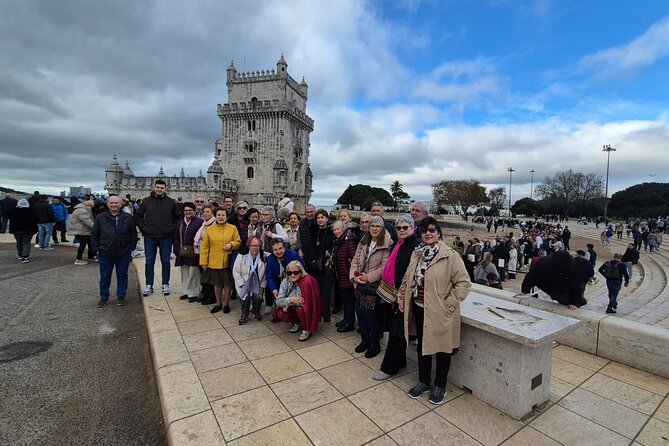
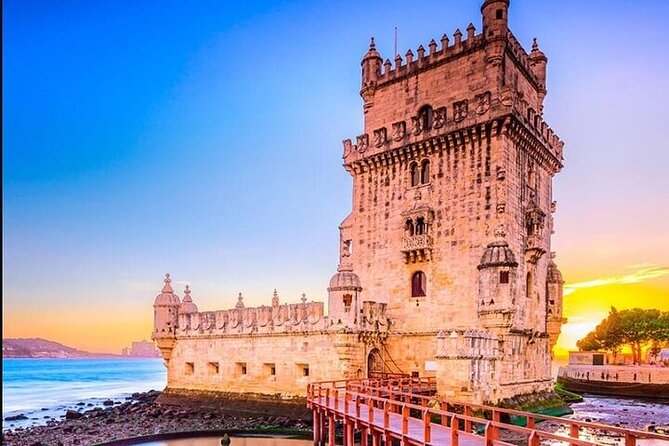
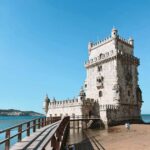
At Torre de Belém, the plan is lighter: you visit from the outside with time for photos. It is still a powerful stop. The tower is tied to early 16th-century defensive work on the Tagus and is another UNESCO landmark with Manueline style and marine-themed details.
You also learn a very specific detail: the first airplane to cross the South Atlantic in 1922. That connection is a clever way to keep the site from feeling like only a medieval military structure. It bridges the Age of Discovery to early aviation and shows how Portugal’s outward-looking mindset kept evolving.
Time is about 30 minutes. Because you are not going inside, focus on composition, angles, and the way the tower sits against the river.
Padrão dos Descobrimentos: Prince Henry and the big world map
Finally, you visit the Padrão dos Descobrimentos (Monument to the Discoveries). This caravel-shaped monument completed in 1960 highlights Portuguese maritime history. You see Prince Henry the Navigator prominently, with sculptural figures representing other explorers connected to the Discoveries.
There is also an interesting historical artifact note tied to global reach: a map of the world offered to Portugal by the Republic of South Africa, which gives you a glimpse into how the Portuguese Empire influenced the 16th century world.
Time here is about 30 minutes. It is enough to read the sculptural details and understand the message without feeling rushed. This is a good final mental “wrap” after Belém’s buildings and river views, because it turns the visuals into one clear theme: Portugal looked outward, and it left a worldwide imprint.
Value and practicalities: is the 238.28 price tag fair?
At $238.28 per person for about 8 hours, the value depends on what you want most from Lisbon. You are getting hotel pickup and drop-off, an airconditioned car or van, bottled water, a guide, and parking and toll fees. You also get Pastéis de Belém included, which saves you both time and decision-making.
The two items that can change your final cost are simple and predictable: São Jorge Castle admission is extra (15 euros), and lunch is not included. Tips are also not included.
If you hate figuring out transit and you want someone to explain what you are seeing while keeping the day flowing, this feels like a fair deal. If you prefer to roam on your own and you do not care much about guided context, you might find cheaper options. But you would likely trade away that structure, especially for Alfama’s hills.
Who should book this tour, and who might not love it
This tour is ideal if you want a guided day that mixes neighborhoods, monuments, and food without turning Lisbon into a multi-day marathon. It also works well if you like history that connects to real places you can stand in front of, from Rossio memorials to Belém maritime monuments.
It might feel less ideal if you want only one area in depth and you prefer slower pacing. The day is long, and even with elevators and a car for later sections, you will still be on your feet at multiple stops.
Should you book Bruno Miguel Tours for Alfama and Belém?
Yes, if you want a smart Lisbon route that reduces hill stress and gives you the big hits in a guided way. The highlight for many people is how the day balances walking and time on a comfortable van, and that Bruno Miguel keeps the stories engaging with a sense of humor and a personal feel.
If you are budgeting tightly, remember the São Jorge Castle ticket add-on and that lunch is on you. But if you want a one-day plan that feels focused and well-timed, this is a strong pick.
FAQ
How long is the tour?
The tour runs about 8 hours.
What is the meeting time?
The start time is 9:00 am.
Is hotel pickup and drop-off included?
Yes. Pickup and drop-off are included, and you are called 24 hours before pickup.
Is this tour private?
Yes. It is a private tour, so only your group participates.
Is the tour offered in English?
Yes, the tour is offered in English.
Is the tour mostly walking?
It includes a walking route in Alfama with help from elevators for the hills, plus car time during the day.
What is included in the price?
Included items are the guide, bottled water, a Pastel de Belém, hotel pickup and drop-off, and parking and toll fees (with an airconditioned car or van depending on group size).
Is the São Jorge Castle ticket included?
No. Admission to São Jorge Castle is not included, and it costs 15 euros.
Is lunch included?
No. Lunch is not included.
What is the cancellation policy?
You can cancel for free up to 24 hours in advance of the experience start time for a full refund. Canceling less than 24 hours before start time is not refunded.
Miradouros Linked on Foot
- Lisbon: History, Stories and Lifestyle Walking Tour
★ 4.8 · 10,902 reviews - Best of Lisbon Small-Group Guided Walking Tour
★ 5.0 · 4,869 reviews - Lisbon: Food and Wine Small Group Walking Tour
★ 4.9 · 4,082 reviews - Sintra & Cascais Day Tour with Pena Palace Entry and Gardens Walk
★ 5.0 · 962 reviews
Fresh across the seven hills
- Full-day Private Tour: Fátima Sanctuary, Batalha, Nazaré, Óbidos
★ 5.0 · 6 reviews - Porto Private Tour from Lisbon
★ 4.5 · 6 reviews - VIP transfer from the airport to Lisbon hotels
★ 5.0 · 6 reviews - Lisbon Photoshoot: Capture Your Adventure
★ 5.0 · 6 reviews - Lisbon: Romantic Sunset Cruise With Wine & Portuguese Tapas
★ 5.0 · 6 reviews - Arrábida Wine Tour – 3 Wineries, Traditions & Views from Lisbon
★ 4.5 · 6 reviews - Lisbon: Sintra, Pena Palace, Belém Tour + sunset Boat Cruise
★ 5.0 · 6 reviews
Belém District Tours, compared.

Private Lisbon Sightseeing Tuk-Tuk Tour: Alfama, Belém & More
Read our review →
Bike Tour from Lisbon to Belém + Liquor & Pastry
Read our review →
Bike Tours Lisbon – Center of Lisbon to Belém
Read our review →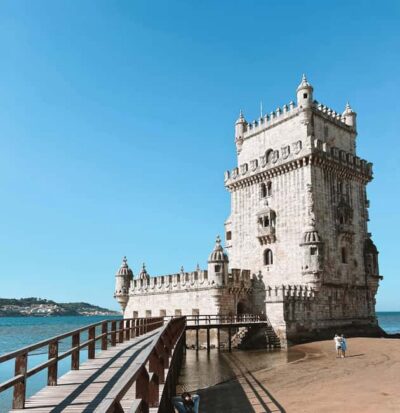
Belém Walking Tour with Jerónimos Monastery Ticket
Read our review →
Belem Walking Tour with Jeronimos Monastery Ticket
Read our review →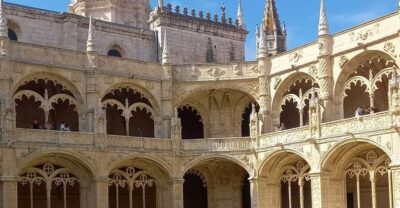
Belem, Jeronimos Monastery, and Coach Museum Tour
Read our review →Browse the lists this tour appears in