
Reviewed · WALKING TOURS
Half-Day Walking Tour about the African Presence in Lisbon
A city can teach you who it tried to hide. This half-day walk connects Lisbon landmarks to Africa’s presence in stories you can follow on foot. You get a small-group format that keeps things personal, plus a guide-led route that turns ordinary squares into meaningful places.
I especially like the way the tour uses Alfama and the old-city core to show long, layered connections, not a one-note theme. I also like the pace: it’s built for strolling, so you can actually look at the churches, fountains, and viewpoints without feeling rushed.
One thing to plan for: if your priorities are comfort stops and zero waiting time, keep expectations flexible. A couple of people noted issues like a late start or limited, not-so-welcoming restroom breaks, and the price is on the high side for a walking tour, so it pays to be sure this theme is your thing.
In This Review
- Key things I’d plan around
- Why an African Presence in Lisbon Tour Works So Well
- Price and time: what you’re really paying for
- Praça dos Restauradores: the smart meeting point
- Alfama first: from Arab foundations to African connections
- Chafariz d’El Rei and Campo das Cebolas: class, port, and first arrivals
- Terreiro do Paço: where Lisbon’s center connects to the slave trade
- Rua Rosa de Lisboa and Time Out Market: work, women, and the present-day city
- Jardim Dom Luis and the symbol of abolition
- Brazilian Consulate viewpoint and Igreja de S Domingos: transatlantic links and faith
- Praca Dom Pedro IV and Rossio station: empire, Berlin Conference, and independence
- How to get more from the guide’s stories
- Comfort notes: shoes, walking pace, and bathroom timing
- Who should book this African Presence in Lisbon walking tour?
- Should you book this tour?
- FAQ
- How long is the African Presence in Lisbon walking tour?
- Where does the tour start and end?
- Is the tour offered in English?
- How much does the tour cost per person?
- How many people are on the tour?
- Are entrance fees required for the stops?
- Are service animals allowed?
- Can I get a full refund if I cancel?
Key things I’d plan around
- Max group size of 15 means you can ask questions and hear the guide clearly.
- 3 to 4 hours on foot is the real time commitment, so wear good shoes.
- English guided tour makes the context easy to follow.
- All stops are free to enter based on what’s listed, so you’re paying mainly for the storytelling and route.
- Alfama to Rossio coverage helps you connect neighborhood life to major historical sites.
- Some guides may add wine at the end, but don’t assume it every time.
More Lisbon miradouros linked on foot:
- Lisbon: History, Stories and Lifestyle Walking Tour★ 4.8 · 10,902 reviews
- Best of Lisbon Small-Group Guided Walking Tour★ 5.0 · 4,869 reviews
- Lisbon: Food and Wine Small Group Walking Tour★ 4.9 · 4,082 reviews
- Best of Lisbon Walking Tour: Rossio, Chiado & Alfama★ 4.9 · 2,700 reviews
Why an African Presence in Lisbon Tour Works So Well
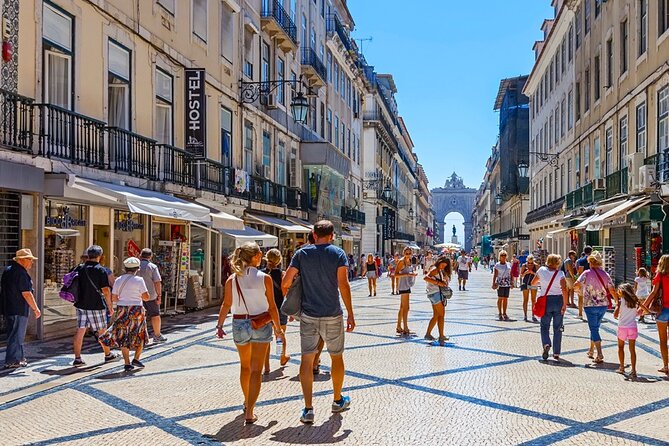
Lisbon has a way of making history feel close. A walk like this is effective because it doesn’t treat the past like a museum label. Instead, you move from place to place and the guide’s stories give you a map for understanding African presence in Portuguese society, from Moorish roots to the Atlantic slave trade.
The value here is the connections. You’re not just seeing famous spots, you’re learning how different forces shaped the city and how communities lived side by side. That includes religion, everyday work, and the ways social class showed up in public spaces like fountains and central squares.
It’s also a smart format for first-timers. If you only have a half day in Lisbon, this route helps you get bearings while tackling an important topic that many visitors never hear about.
Price and time: what you’re really paying for
The cost is $179.74 per person for about 3 to 4 hours. That’s not a budget price, so I’d treat it like a guided experience where the guide matters as much as the sights.
Here’s the practical value case:
- Small-group experience: max 15, and reviews describe intimate groups of 4 at times. Less crowd noise usually means better conversation.
- Free admissions at listed stops: you’re not stacking extra entry fees as you go, so the money goes into guiding and context.
- Walking route that covers multiple neighborhoods: instead of hopping by taxi, you stitch together Lisbon’s story in a coherent flow.
Booking tends to happen earlier than you might expect, with an average booking window of about 37 days. If your dates are fixed, it’s worth reserving sooner rather than later.
Praça dos Restauradores: the smart meeting point
The tour starts at Praça dos Restauradores (Praça dos Restauradores, 1250-001 Lisboa). Ending back at the same place is convenient, especially after a few hours on foot.
This is also a practical location. The tour info notes it’s near public transportation, which helps if you want an easy link to the rest of your day. Start time is 9:00 am, and that’s a good slot for cooler walking and clearer sightlines around the older streets.
If you’re planning the rest of your day, keep it simple. After a 3 to 4 hour walk, you’ll want a relaxed plan nearby instead of a long cross-town trek.
Alfama first: from Arab foundations to African connections
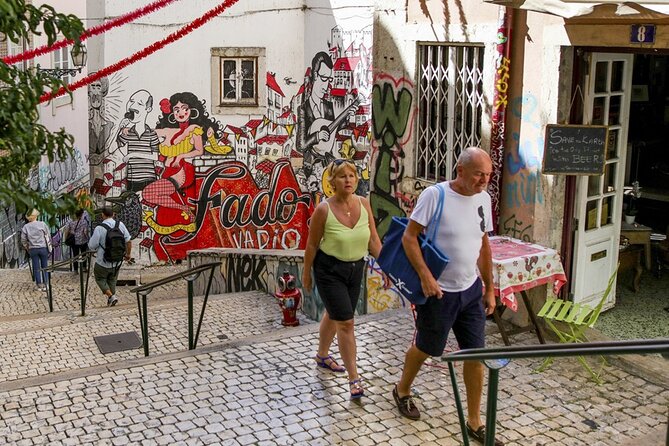
Your first stop is Alfama, Lisbon’s oldest neighborhood, described as founded by the Arabs. This opening matters because it sets the tone: the guide connects Africa’s history and roots to the city’s early foundations, not just to the colonial era.
Expect narrow lanes, strong architecture, and those classic Alfama views that make you slow down even when you’re trying to keep moving. The listed stop time is short, around 20 minutes, so you’ll mostly use it as an orientation moment. Think of it as the “why Lisbon looks like this” chapter.
This is also where the tour’s theme becomes tangible. If you’re someone who likes seeing how cultures overlap on real streets, this beginning will feel purposeful rather than abstract.
Some other seven-hills days worth pricing up



Chafariz d’El Rei and Campo das Cebolas: class, port, and first arrivals
Next you visit Chafariz d’El Rei, a fountain that points to divisions of social classes in the Middle Ages, including representation of Africans. It’s only about 10 minutes, but the stop works well because fountains are public places. They show how societies structured access, visibility, and daily life.
Then comes Campo das Cebolas, tied to the old port of Lisbon and the arrival of the first African slaves in Europe. Again, the listed time is brief, about 10 minutes, but it’s a heavy topic. A good guide will pace the moment so it lands without rushing past it.
These two quick stops are worth treating like “slow reading” moments. Even if you only spend ten minutes each, they add depth because they tie major history to specific urban spaces, not vague timelines.
Terreiro do Paço: where Lisbon’s center connects to the slave trade
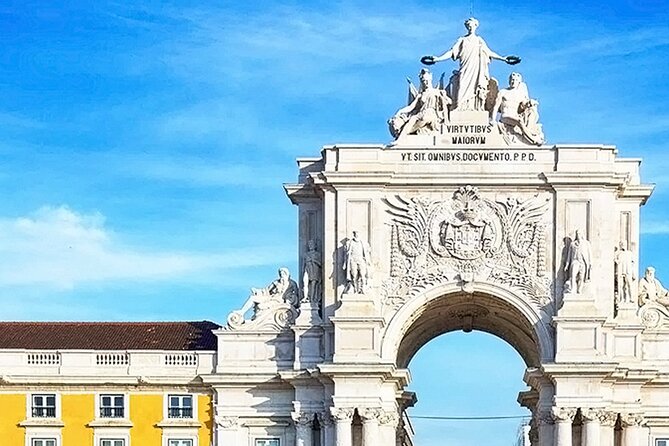
At Praca do Comercio (Terreiro do Paco), you’re in one of Lisbon’s emblematic spaces. The route frames this area as a key stage for events in Portuguese history, including the slave trade, and the time here is about 20 minutes.
This stop is powerful because it’s a big open space compared to the tight streets of Alfama. That contrast helps your brain separate “city life” from “city power.” You can look around and understand why a central square mattered to commerce and governance.
The tour also includes discussion of how the central area was destroyed by the 1755 earthquake and how the story continues in the rebuilt city. If you like historical context that explains the physical city you’re standing in, this portion will make the landscape feel less random.
Rua Rosa de Lisboa and Time Out Market: work, women, and the present-day city
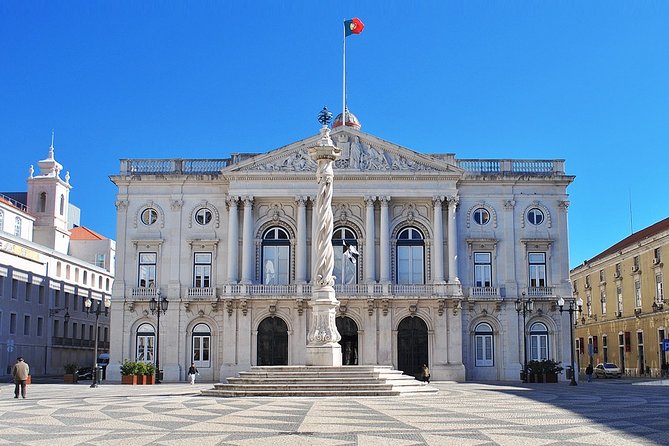
Then the tour shifts to Calle Rosa de Lisboa, described as the place where several African women provided services. The stop is short, around 10 minutes, but it’s a reminder that the African presence was not only about big events. It was also about daily work and survival.
Right after, you reach Time Out Market Lisboa. Today it’s a famous food and culture spot. In the past, the area is described as a place of work for many Africans. The listed stop time is about 10 minutes.
This is where I like a walking tour’s strength: you see how modern Lisbon repurposes older spaces. You don’t just learn what happened then, you notice what exists now and how the city layers meaning over time.
If you’re thinking about lunch, this stop can work well for a post-tour bite. Just don’t plan a deep sit-down meal at the exact end of the walk. You’ll likely want time to regroup first.
Jardim Dom Luis and the symbol of abolition
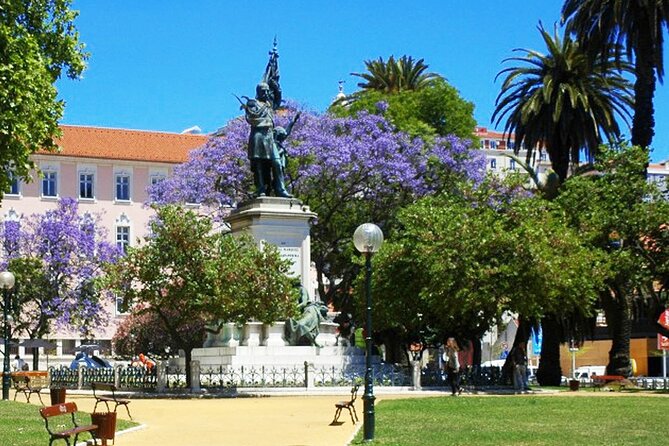
In Jardim Dom Luis, the tour focuses on the statue of the Marquis Sá da Bandeira, described as responsible for the abolition of slavery in Portuguese territory and colonies. This is listed as about 5 minutes.
It’s short, but it provides a contrast. Many walking routes about the Atlantic slave trade end with tragedy and never address the later political shifts. Here, the stop gives you a clear reference point for abolition and Portuguese policy changes, which helps you understand the story doesn’t simply stop at one grim chapter.
This is a garden stop, so you’ll likely get a moment to breathe and refocus before the route moves back into dense urban streets.
Brazilian Consulate viewpoint and Igreja de S Domingos: transatlantic links and faith
The tour then addresses transatlantic history in front of the Consulate-General of the Federative Republic of Brazil in Lisbon, framed as a discussion of transatlantic slave traffic and its consequences. The listed stop time is about 10 minutes.
Even without a museum setting, a consulate area gives the conversation a modern edge. The story isn’t only about Lisbon. It’s about what happened between continents and what people lived through afterward.
Next is Igreja de S Domingos, where the guide explains integration of Africans in Catholic religion and achievements. The stop is about 10 minutes.
If religion matters to you as a lens, this is an important stop. It helps you see how integration can be both cultural and social, and how communities shaped religious life, not only adapted to it.
Praca Dom Pedro IV and Rossio station: empire, Berlin Conference, and independence
Two of the route’s most central stops are Praca Dom Pedro IV and Estacao do Rossio.
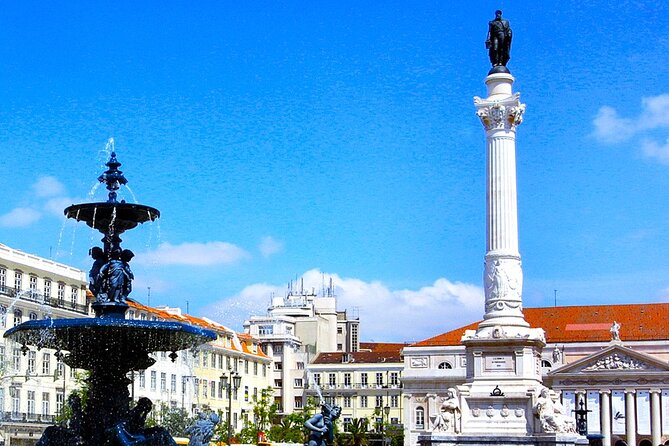
At Praca Dom Pedro IV, the tour talks about integration of Africans and the creation of colonies, with a listed time of about 10 minutes. Another historical thread connected to African involvement is tied to Portugal’s restoration of independence from Spain, where many African slaves fought. This is the kind of detail that changes how you interpret Lisbon’s central monuments and busy streets.
Then you reach Estacao do Rossio, built during the 19th century with a Manueline architectural style. The guide connects it to Portugal’s golden times and explains how Portugal wanted a place among European powers tied to African colonization, including the Berlin Conference of 1884. This stop is about 10 minutes.
This is a good close to the walk because it ties the city’s grandeur to empire politics. After hours of intimate neighborhood stops, the station’s scale helps you understand how power expressed itself in stone and design.
How to get more from the guide’s stories
The quality of the experience seems tightly linked to the guide. Multiple reviews name Alcides and Al, with praise for being patient, kind, and very effective at storytelling. One review also highlights the guide’s Cape Verdean ancestry as part of how the route feels personal and contextual.
Here’s how you can make this tour pay off even more:
- Bring questions. The best moments are usually when you ask for more context about how the story connects to what you’re seeing.
- Stay alert during the short stops. Each one is brief by design, so listen for the connections the guide keeps repeating across locations.
- If you’re sensitive to late starts, plan a little cushion in your schedule. A late start was noted once in feedback.
If you’re hoping for extra perks, keep an open mind. One person mentioned wine tasting at the end, but the main promise is the walk and the education, so treat any extra food or drink as a bonus, not the foundation.
Comfort notes: shoes, walking pace, and bathroom timing
This is a walking tour and it’s not pretending otherwise. One review specifically says to wear good shoes and suggests pain relief medication before you go. That lines up with what you should assume when a route is 3 to 4 hours and keeps moving.
The tour also states a moderate physical fitness level is expected. You don’t need to be a marathon runner, but you should be ready for uphill moments and cobbled streets.
Restrooms are the one practical risk. One review says the tour did not organize restroom breaks well, with a random stop at a hotel that was not welcoming. So if restrooms are a priority for you, I’d plan to use one before meeting and keep a quick buffer for timing while you’re on the move.
Who should book this African Presence in Lisbon walking tour?
I think this tour is a strong fit if:
- You want a history-focused Lisbon day that still feels like sightseeing, not a slideshow.
- You care about connections between Lisbon, North Africa and the Atlantic world, including Moorish influence and later Portuguese colonial power.
- You like small groups and the chance to ask questions directly.
It might be less ideal if:
- You hate walking and want a mostly seated experience.
- You’re on a tight budget. At $179.74 per person, it’s a premium for a half-day.
- You need very clear restroom planning and a rigid schedule. That part can vary.
Should you book this tour?
If your goal is to understand Lisbon beyond the postcard version, I’d book it. The route uses iconic areas like Alfama, Terreiro do Paco, and Rossio, while still putting the African presence into the center of the story, including class, work, religion, and the transatlantic consequences that followed.
Just go in with the right expectations: it’s mostly a walk, with short stops and a guide doing the heavy lifting through story and context. If you’re careful about shoes and you like asking questions, you’ll likely feel the price is justified by the attention and clarity you get from the guide.
FAQ
How long is the African Presence in Lisbon walking tour?
The tour runs about 3 to 4 hours.
Where does the tour start and end?
It starts at Praça dos Restauradores in Lisbon and ends back at the meeting point.
Is the tour offered in English?
Yes, it is offered in English.
How much does the tour cost per person?
The price is $179.74 per person.
How many people are on the tour?
The maximum group size is 15 travelers.
Are entrance fees required for the stops?
The provided stop details list admission tickets as free, so you are not paying entry fees for the listed stops.
Are service animals allowed?
Yes, service animals are allowed.
Can I get a full refund if I cancel?
You can cancel for a full refund if you cancel at least 24 hours before the experience start time. The experience may also be canceled due to poor weather, in which case you would be offered a different date or a full refund.
Fresh across the seven hills
- VIP transfer from the airport to Lisbon hotels
★ 5.0 · 6 reviews - Full-day Private Tour: Fátima Sanctuary, Batalha, Nazaré, Óbidos
★ 5.0 · 6 reviews - Porto Private Tour from Lisbon
★ 4.5 · 6 reviews - Lisbon Photoshoot: Capture Your Adventure
★ 5.0 · 6 reviews - Lisbon: Romantic Sunset Cruise With Wine & Portuguese Tapas
★ 5.0 · 6 reviews - Arrábida Wine Tour – 3 Wineries, Traditions & Views from Lisbon
★ 4.5 · 6 reviews - Lisbon: Sintra, Pena Palace, Belém Tour + sunset Boat Cruise
★ 5.0 · 6 reviews
Walking Tours, compared.
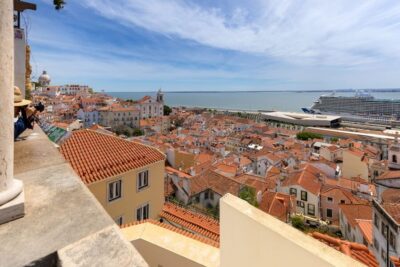
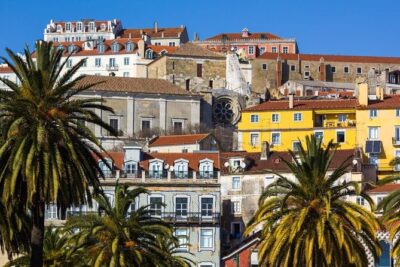
Best of Lisbon Small-Group Guided Walking Tour
Read our review →
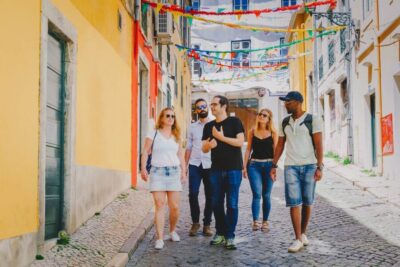
Best of Lisbon Walking Tour: Rossio, Chiado & Alfama
Read our review →

Sintra & Cascais Day Tour with Pena Palace Entry and Gardens Walk
Read our review →
Lisbon Roots – Small group Food & Culture Walking Tour w/tastings
Read our review →
Starter Walking Tour to the highlights in German
Read our review →Browse the lists this tour appears in