
Reviewed · WALKING TOURS
Lisbon: Starter Walking Tour to the highlights in German
Lisbon can feel like a puzzle at first. This starter walk helps you get your bearings fast, with a German live guide and a route packed with real neighborhoods, not just postcard stops. I especially like the small group size (up to 12) and the way the guide explains Lisbon’s history and present-day life in the same breath. The one real consideration is that you’ll need comfortable shoes, and you should be fine with a few stairs, so it is not built for wheelchair users.
You’ll start at Rossio Square, wind through Baixa and Chiado, and then head toward Bica and the river area. Along the way, you’ll spot the city’s signature azulejos tiles, see famous landmarks like Santa Justa Lift and Carmo Convent Ruins, and end at Time Out Market for an easy meal plan.
In This Review
- Key highlights worth your time
- Rossio Square North Fountain: the easiest place to start
- Baixa and Rossio Square: learning Lisbon’s layout while you walk it
- Santa Justa Lift: more than a famous viewpoint
- Carmo Convent Ruins: history you can stand inside
- Chiado and Praça Luís de Camões: everyday Lisbon in a short window
- Elevador da Bica and the viewpoint: a cable car you can actually feel
- Mercado da Ribeira and the Time Out Market Lisboa finish
- How the German guide makes the city feel less confusing
- Price and value: is $33 per person a smart deal?
- What to bring, and how rain can change the last stretch
- Who this tour is best for, and who should skip it
- Should you book this German Starter Walking Tour?
- FAQ
- Where is the meeting point for the tour?
- What language is the tour guide speaking?
- How long is the walking tour?
- How large is the group?
- What is included in the tour price?
- Is hotel pickup and drop-off included?
- What should I bring with me?
- Does the itinerary change if it rains?
Key highlights worth your time
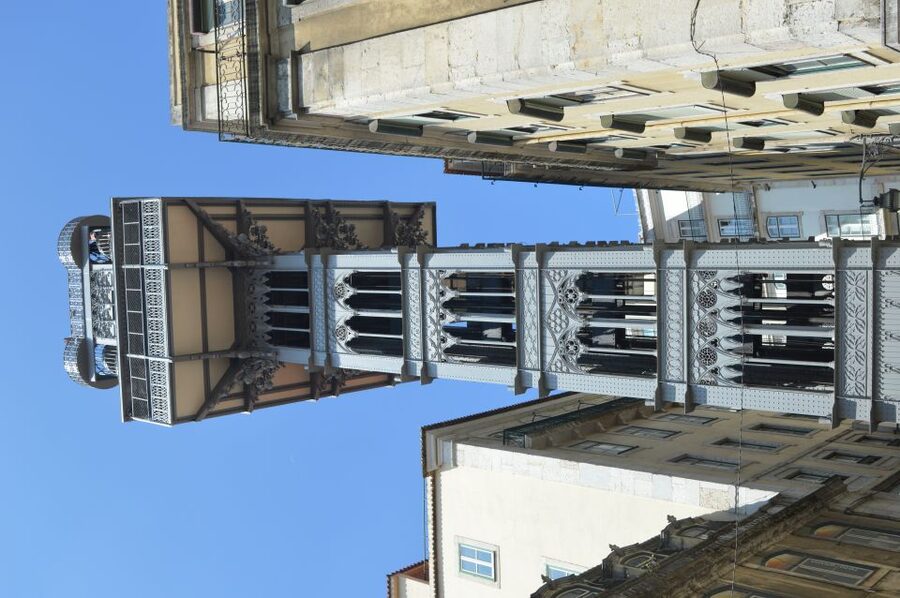
- German-speaking guide who keeps the pace easy and answers questions
- Small group (max 12), so you get more attention on a 2-hour route
- Santa Justa Lift and Carmo Convent Ruins with context, not just locations
- Azulejos and Art Nouveau details that are easy to miss on your own
- Elevador da Bica viewpoint stop for a quick, satisfying city overview
- Mercado da Ribeira area and Time Out Market finish to continue your day
More Lisbon miradouros linked on foot:
- Lisbon: History, Stories and Lifestyle Walking Tour★ 4.8 · 10,902 reviews
- Best of Lisbon Small-Group Guided Walking Tour★ 5.0 · 4,869 reviews
- Lisbon: Food and Wine Small Group Walking Tour★ 4.9 · 4,082 reviews
- Best of Lisbon Walking Tour: Rossio, Chiado & Alfama★ 4.9 · 2,700 reviews
Rossio Square North Fountain: the easiest place to start
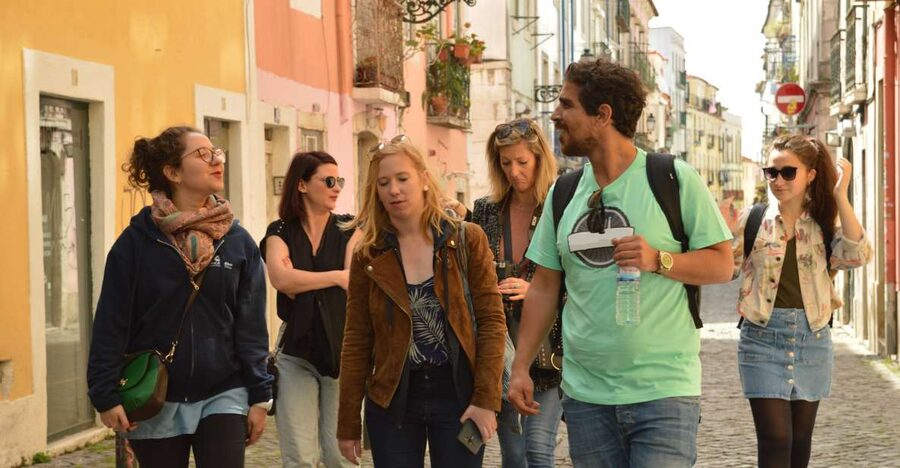
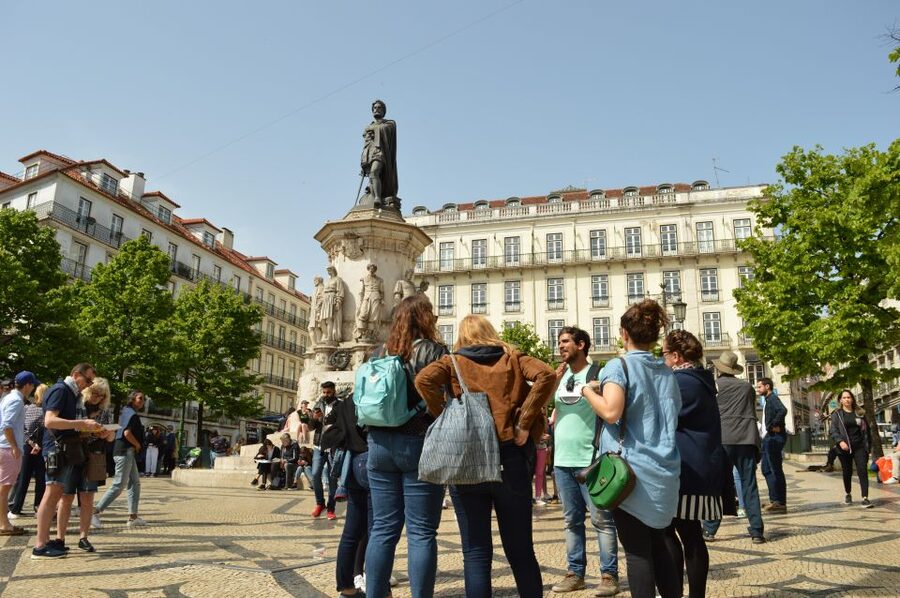
The tour meets at Rossio Square, also called Praça Dom Pedro IV, at the north fountain. You’ll find your guide between the National Theater and the Royal Statue, and you’ll know them by their mint-colored WALK ‘N’ ROLL T-shirt or mint-colored burlap bag.
Starting here matters. Rossio is one of the main pulse points in the historic center, so it is a smart launchpad. You also avoid the “wrong side of town” feeling that happens when you start too far from the neighborhoods you actually want to walk. Within minutes, you shift from standing around to moving through the city’s older streets, and that helps your brain map Lisbon quickly.
The route is designed to be walkable, but it is still a walk through uneven old-town streets. Bring comfortable shoes and plan to keep your attention on corners and details. That is where the tour starts to pay off.
Baixa and Rossio Square: learning Lisbon’s layout while you walk it
Once you’re moving, you’re in Baixa de Lisboa, the part of Lisbon many people picture first. It is the classic central district, and the guide uses the streets as a teaching tool. You’ll get explanations that link the city’s design to its history, so it starts to make sense in real time.
What I like about this style is that you stop treating Lisbon like a series of attractions. Instead, you start seeing why these places connect. Baixa gives you a clean framework, and then Rossio Square reinforces it. The guide points out what you’re looking at and what it means, from the look of the streets to the way the area works today.
Keep an eye out for the city’s decorative wall tiles. Lisbon’s azulejos are not just pretty backgrounds. They often show up as a clue to cultural influence and local taste, and the tour helps you notice that without turning it into a lecture.
Practical note: this is a short tour, so you will not get to wander for long. If you like stopping for photos, plan a few quick snapshots and trust that the guide will guide you to the next “worth-it” moment.
Santa Justa Lift: more than a famous viewpoint
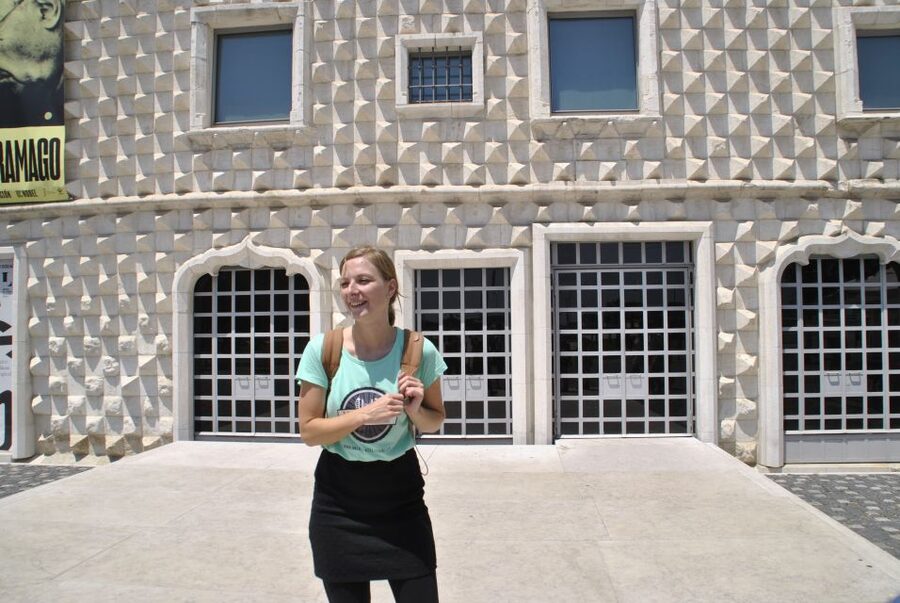
Santa Justa Lift is one of those Lisbon landmarks that people talk about even if they cannot place it on a map. In this tour, you get there with context, and that makes the stop feel more meaningful.
The lift itself is built for movement, connecting different levels of the city. That is the key idea the guide helps you understand as you approach. You are not just seeing a structure, you’re seeing how Lisbon solves its own geography, with steep slopes and neighborhoods at different elevations.
A big plus here is pacing. Santa Justa Lift sits right in the middle of the route flow, so it does not feel like a detour. You get the landmark moment, and then you move on while your legs are still warmed up.
The guide also helps you look at the surrounding streets differently. Once you know what to focus on, the area starts to feel like a lived-in city with layers, not an outdoor museum.
Carmo Convent Ruins: history you can stand inside
Next up is Carmo Convent, specifically the ruins. This is where Lisbon shifts from “pretty streets” to “real survival.” You get the sense that the city has been through serious moments, and you understand why this site matters beyond the photo angle.
Carmo is special because it is not restored into a perfect, polished monument. The ruins keep their emotional edge. The guide adds the missing glue by explaining what you’re looking at, and how it fits into Lisbon’s broader story.
This is also a good stop for understanding Portuguese culture in a practical way. You see how Lisbon remembers, how it repurposes space, and how people live around history without wiping it away.
If you’re the type who likes history but gets bored by long storytelling, this part works because the space itself does a lot of the talking. The guide’s job is to point you toward what to notice while you’re standing there.
Other trips that start in Lisbon and end well:




Chiado and Praça Luís de Camões: everyday Lisbon in a short window
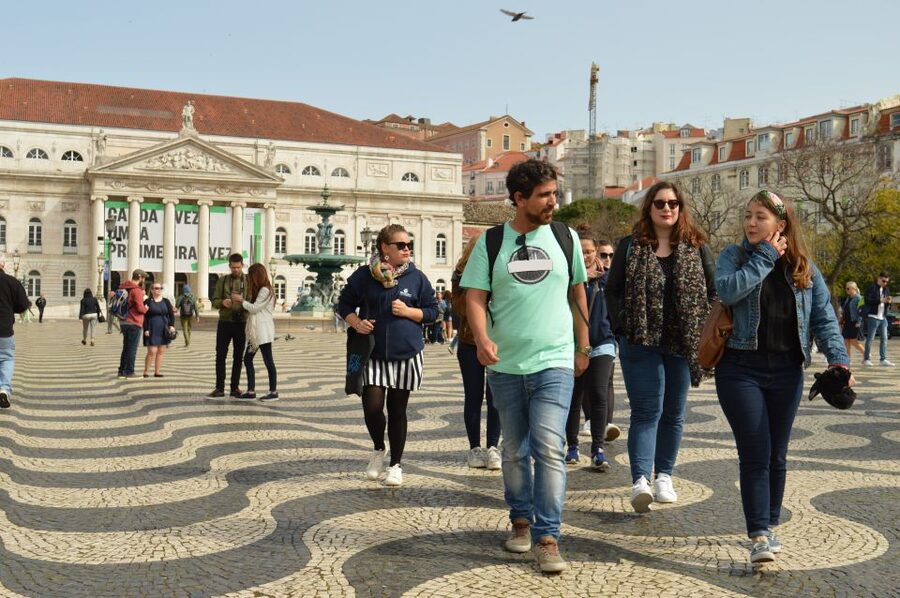
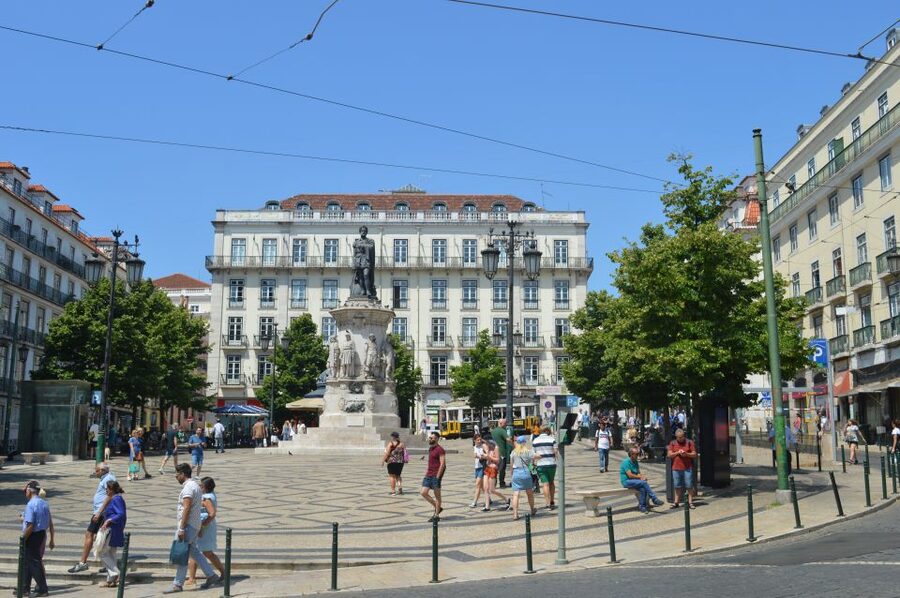
From Carmo you move toward Chiado, and the vibe changes. Chiado feels more “in motion,” like a place where people actually run errands, meet friends, and browse. The tour keeps you walking through the area instead of dumping you at a viewpoint and calling it a day.
In Chiado and around Praça Luís de Camões, you get explanations that connect the neighborhood look to the city’s development. It is not only about what happened in the past. The guide also shares insight into what Lisbon feels like now, including how locals talk about their own city.
This is one of the most praised parts of this experience, because it gives you something you cannot easily get from a map: the sense of daily life. The tour aims for more than landmarks. It tries to teach you how to read Lisbon as a living place.
Tip for you: if you want great photos, look for architectural details and street-level tile work. The tour focuses on azulejos, but the real win is that you start scanning for details on your own after this.
Elevador da Bica and the viewpoint: a cable car you can actually feel
Bica is where Lisbon starts to feel more dramatic. The stop here includes the cable car, Elevador da Bica, which helps you experience the city’s slopes without fighting every stair step.
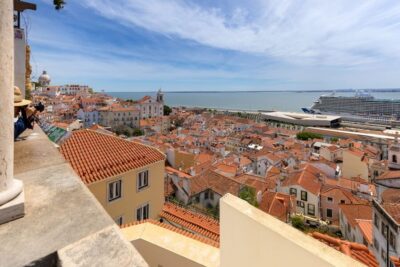
The guide also builds in a viewpoint. That matters because Lisbon’s beauty is tied to the way neighborhoods stack above each other. You get a clearer mental picture once you see how the layers fit together.
The catch is simple: Bica is old city walking plus a few stairs along the way. You do not need to be an athlete, but you do need to be comfortable moving steadily for the full two hours. This tour is not designed to slow down at every corner.
I also like that the tour treats the lift like part of the city’s everyday system, not just a thrill ride. Once you understand that, it feels less like a tourist gimmick and more like a local convenience that happens to be scenic.
Mercado da Ribeira and the Time Out Market Lisboa finish
Near the end, you reach Mercado da Ribeira, the modern market hall near the Tagus River. This is a great pivot point. You’ve spent the day in the historic center, then you connect Lisbon’s old fabric to the city’s current food and social life.
The guide’s approach here is practical. You get insider tips on where to eat and what to explore next. That is exactly what you need after a starter tour, because it turns your remaining time into something you can plan instead of something you guess.
Then the tour finishes at Time Out Market Lisboa. Even if you do not eat there, the location is useful. It is a natural “landing zone” for your next step, whether you want a quick bite or you want to keep walking with a clearer sense of where you are.
If you like food markets but you also worry about language barriers, you will appreciate this sequence. You get oriented, then you end up near a place where it is easy to choose something that fits your mood.
How the German guide makes the city feel less confusing
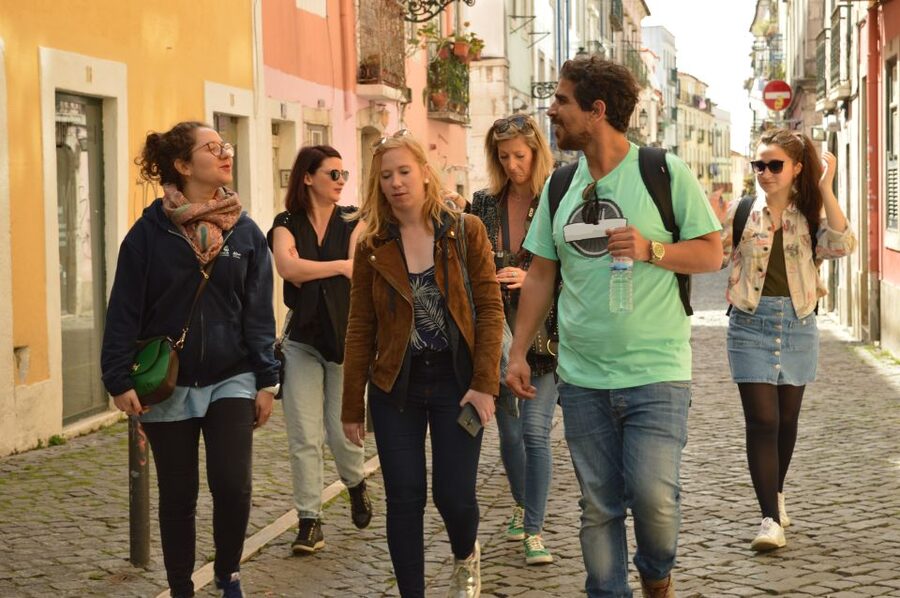
The tour is offered with a live guide in German, which is a real value if you prefer hearing explanations in your own language. It is not just about comprehension. It changes the whole feel of the walk, because you can ask questions without translating your thoughts first.
One thing I love about this format is that the guide is described as friendly and open for questions. When a guide invites dialogue, the tour becomes less like a checklist and more like a conversation with someone who understands how visitors get lost in Lisbon’s hills and neighborhood boundaries.
You will also hear both history and current events. That blend helps you avoid the classic problem where you walk through “old stuff” and then feel stuck when you try to enjoy the present-day city. Here, the guide helps you hold both ideas at once.
Group size helps too. With a maximum of 12 participants, you are less likely to feel shuffled along. You can pay attention, and the guide can adjust if people have questions.
Price and value: is $33 per person a smart deal?
At about $33 per person for a 2-hour walking tour, the value comes from what’s included: a walking tour plus a local guide. You are getting multiple major stops, including Santa Justa Lift and Carmo Convent Ruins, plus a route through Baixa, Chiado, and Bica.
This price makes more sense when you consider the time cost. If you tried to self-tour the same “high points with context,” you would spend time figuring out order, logistics, and what to notice. The guide compresses that work into two hours, and you leave with practical next-step tips for food and sightseeing.
It also helps that the group is capped at 12. A small group is not just a comfort detail. It improves the quality of the explanations, and it makes the tour feel more personal on a short timeline.
What is not included is also part of the value equation. You are not paying for hotel pickup, and food and drinks are on you. That keeps the tour focused on walking and learning, and it makes it easier to pair with a meal plan afterward.
What to bring, and how rain can change the last stretch
Come prepared for walking. Bring comfortable shoes, sunscreen, and water. Lisbon sun can catch you when you’re busy looking around, and hydration matters on a hilly, old-street route.
Rain is handled with a simple adjustment. If it rains, the itinerary may be changed for the last 30 minutes to avoid slippery slopes. So if you want a guaranteed ending, keep your expectations flexible.
Also note what is not allowed: baby strollers, and luggage or large bags. If you are traveling with a big bag, plan for lighter logistics, because this is meant to be an easy walk, not a baggage expedition.
Who this tour is best for, and who should skip it
This is a good fit if you:
- want a fast way to orient yourself in Lisbon’s historic center
- prefer a German guide and easy, conversational explanations
- like seeing a mix of famous highlights and everyday neighborhood life
- want food ideas for the rest of your day, with an end stop at a major market
You might want to look at something else if you:
- use a wheelchair or have mobility impairments, since it is not suitable for wheelchair users
- struggle with short stair climbs, since moderate fitness is required
Should you book this German Starter Walking Tour?
I think you should book it if you want your first Lisbon day to feel structured. In two hours you cover a lot of ground, hit major landmarks like Santa Justa Lift and Carmo Convent Ruins, and still get the human side of the city through neighborhood explanations and local-life insights.
It is also a strong choice if German is your comfort language. A live guide who can handle questions in German makes the experience feel smoother and more satisfying.
The only time I would hesitate is if you know you cannot handle stairs and uneven old streets. If that is you, choose an option designed for mobility needs.
If you are planning a first trip to Lisbon and you want a smart starting point that sets up the rest of your itinerary, this one is worth it.
FAQ
Where is the meeting point for the tour?
Meet your guide at Rossio Square (Praça Dom Pedro IV) at the north fountain, between the National Theater and the Royal Statue.
What language is the tour guide speaking?
The live tour guide speaks German.
How long is the walking tour?
The tour lasts about 2 hours.
How large is the group?
The group experience has a maximum of 12 participants. A private tour option is also available.
What is included in the tour price?
The tour includes the walking tour and a local guide.
Is hotel pickup and drop-off included?
No, hotel pickup and drop-off are not included.
What should I bring with me?
Bring comfortable shoes, sunscreen, and water.
Does the itinerary change if it rains?
If it rains, the itinerary may be changed for the last 30 minutes to avoid accidents on slippery slopes.
Fresh across the seven hills
- Porto Private Tour from Lisbon
★ 4.5 · 6 reviews - VIP transfer from the airport to Lisbon hotels
★ 5.0 · 6 reviews - Full-day Private Tour: Fátima Sanctuary, Batalha, Nazaré, Óbidos
★ 5.0 · 6 reviews - Lisbon Photoshoot: Capture Your Adventure
★ 5.0 · 6 reviews - Lisbon: Romantic Sunset Cruise With Wine & Portuguese Tapas
★ 5.0 · 6 reviews - Arrábida Wine Tour – 3 Wineries, Traditions & Views from Lisbon
★ 4.5 · 6 reviews - Lisbon: Sintra, Pena Palace, Belém Tour + sunset Boat Cruise
★ 5.0 · 6 reviews
Walking Tours, compared.
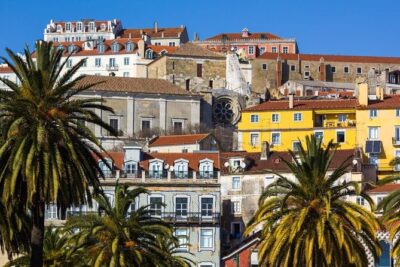
Best of Lisbon Small-Group Guided Walking Tour
Read our review →
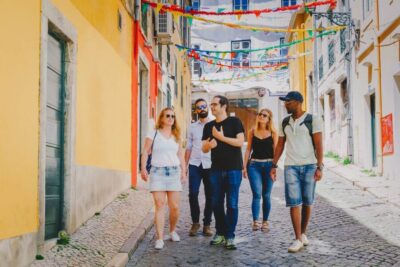
Best of Lisbon Walking Tour: Rossio, Chiado & Alfama
Read our review →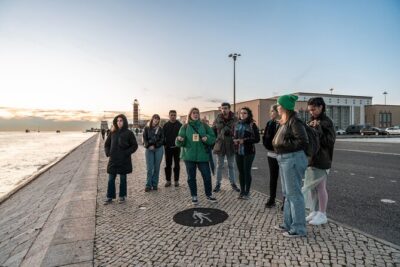

Sintra & Cascais Day Tour with Pena Palace Entry and Gardens Walk
Read our review →
Lisbon Roots – Small group Food & Culture Walking Tour w/tastings
Read our review →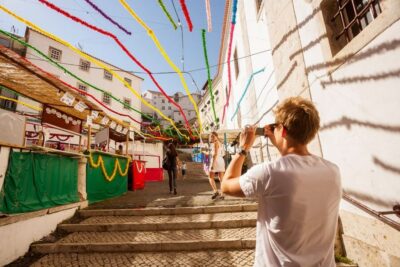
Browse the lists this tour appears in