
Reviewed · WALKING TOURS
Lisbon Tram No. 28 Ride & Walking Tour
Tram 28 is Lisbon on a spine of steel. I love the historic Tram 28 ride through tight Old Town streets, especially when the tram climbs and turns the city and river into a panorama. I also love how the tour moves from the rails straight into Alfama, where you get real context for daily life and Fado, not just photo stops. One consideration: the tram is public transport, so traffic and timetable chaos can affect pacing, and you may find yourself wanting more time on the tram once the walk starts.
This works best because it is a small group (up to 10), led in English, with a guide who knows how to explain Lisbon without turning it into a lecture. I’d bring comfortable shoes because the Old Town walking is steep and uneven, even when the pace stays friendly.
In This Review
- Key things that make this tour worth your time
- Meeting at Praça Luís de Camões, then jumping into Old Town
- Why Tram 28 feels like Lisbon’s signature ride
- Getting the best views, without spending your whole trip stuck on the tram
- Alfama on foot: steep lanes, small squares, and real neighborhood texture
- Sé de Lisboa: the medieval cathedral where time feels stacked
- Mosteiro de São Vicente de Fora and the Pantheon’s dome legend
- Fado in tiny bars and cafés: why this music fits these streets
- When the route includes Feira da Ladra (Tuesdays and Saturdays)
- Price and time: is $23 a smart value for what you get?
- Who this tour suits best, and who should think twice
- Practical tips so you enjoy every hill
- Should you book this Tram 28 and Alfama tour?
- FAQ
- Where is the meeting point for the Lisbon Tram No. 28 Ride & Walking Tour?
- How much does the tour cost, and how long is it?
- Is the tour guided in English?
- What is included in the price?
- Is pickup or drop-off included?
- Do I need comfortable shoes?
- Can tram timing change during the tour?
- Is it possible to get a refund if my plans change?
Key things that make this tour worth your time
- Tram 28 ride plus a guided walking plan, so you are not stuck guessing what to see next
- Panoramic views when the tram climbs, with the city and river coming into focus
- Alfama on foot, steep lanes and tiny squares where the vibe feels local
- Old Town landmarks tied to centuries of Lisbon, including Sé de Lisboa
- Fado context in the places where the music belongs, tiny bars and cafés
- Feira da Ladra (Tuesdays and Saturdays), Lisbon’s famous flea market added to the route
More Lisbon miradouros linked on foot:
- Lisbon: History, Stories and Lifestyle Walking Tour★ 4.8 · 10,902 reviews
- Best of Lisbon Small-Group Guided Walking Tour★ 5.0 · 4,869 reviews
- Lisbon: Food and Wine Small Group Walking Tour★ 4.9 · 4,082 reviews
- Best of Lisbon Walking Tour: Rossio, Chiado & Alfama★ 4.9 · 2,700 reviews
Meeting at Praça Luís de Camões, then jumping into Old Town
The tour starts at Praça Luís de Camões, near the statue. Look for your guide carrying a black backpack with the Lisbon Spirit logo. Arrive a few minutes early if you can, because Lisbon streets are a little too easy to get turned around in.
This is a 3-hour outing with no pickup or drop-off, so you are on your own for getting to the meeting point and then continuing your day after. The upside is you keep things simple and start sightseeing fast. English guide, small group of up to 10, so it feels more like a guided stroll with a local than a crowded bus tour.
Why Tram 28 feels like Lisbon’s signature ride
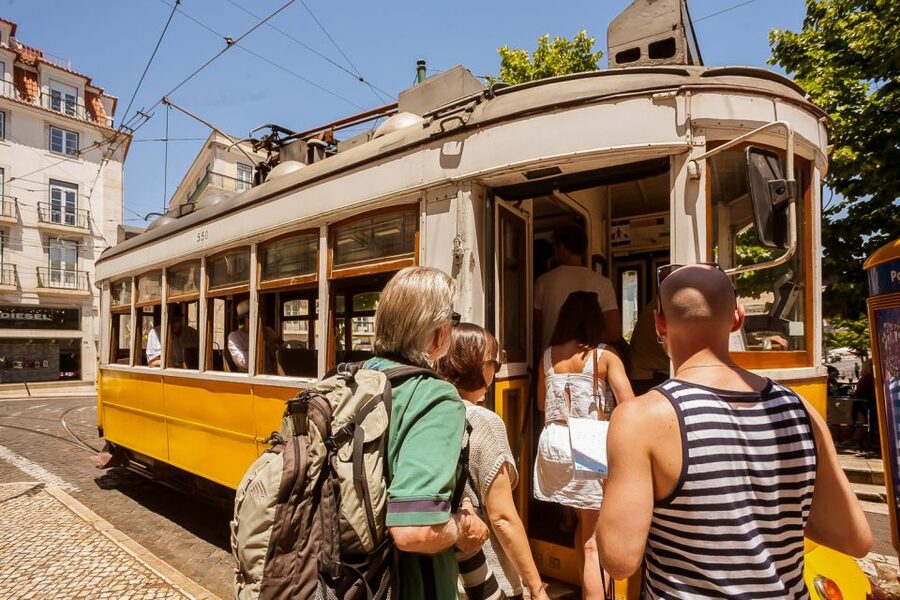
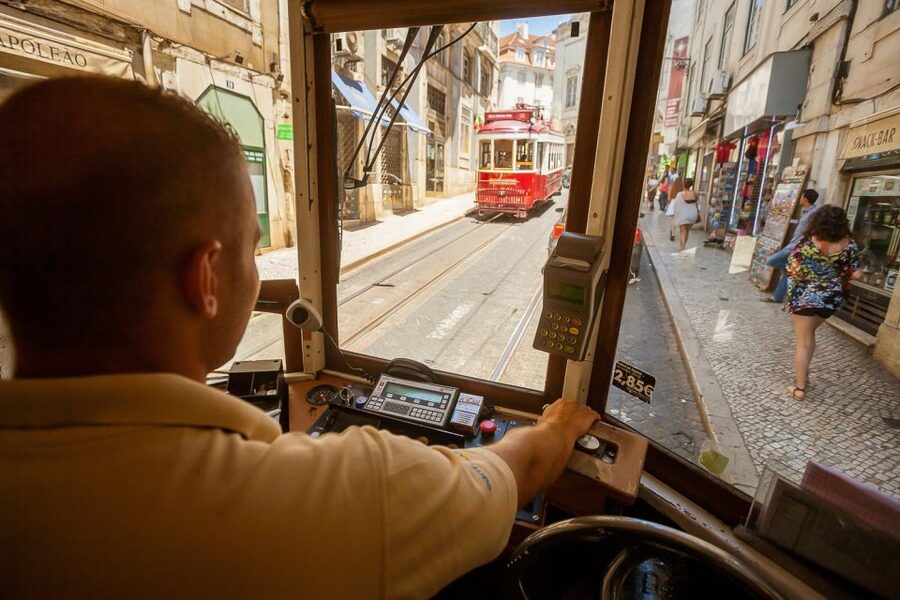
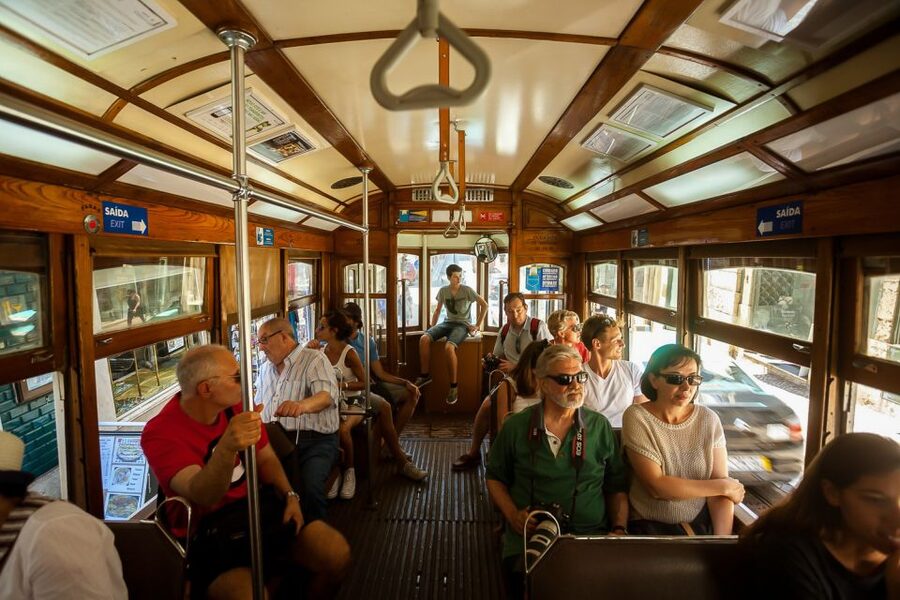
Tram No. 28 is famous for a reason. When you hop on, you ride a historic line through Old Town streets that feel narrow enough to squeeze your shoulders in. The tram’s clunky charm is part of the point, and the best moments come when it starts climbing Lisbon’s hills.
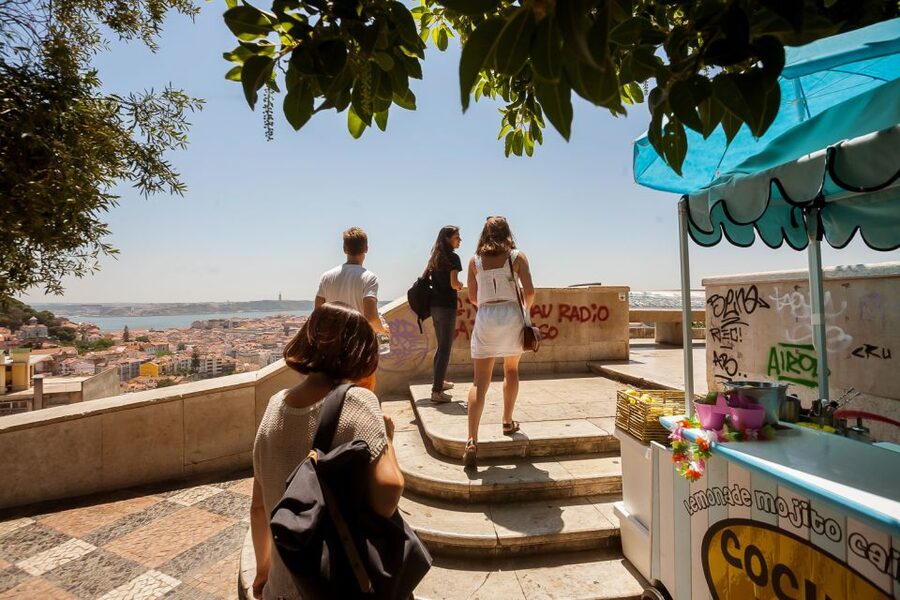
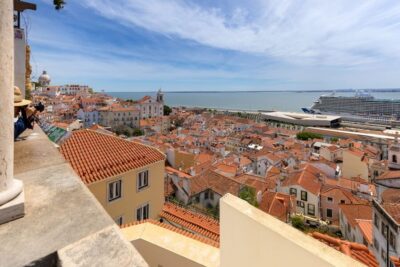
As the tram ascends, you get breathtaking panoramic views across the city and toward the river. It is not just a scenic bonus, it helps you understand why Lisbon grew on these slopes. From up on the hill, you see the logic of the grid giving way to winding streets, and you start to read the city in layers.
One practical note: your ride is still public transport. That means traffic and the real-life messiness of the city can slow things down or shift how you move through the area. The tour is designed with walking time to keep momentum, but if you are the kind of person who wants everything perfectly timed, plan for a little flexibility.
Getting the best views, without spending your whole trip stuck on the tram
A lot of people book this because they want the Tram 28 experience, then worry they will lose the day waiting in crowds. The smart part of this tour is that it uses the tram as the entry ticket to the neighborhood, not the entire plan.
You still get the iconic tram ride, with the classic hill climb and the city-river outlook, but the guide then steers you off the main track so you can explore where you would likely miss on your own. In other words, you are not just collecting a famous ride, you are turning it into a route that teaches you Lisbon.
If you want the tram only, you can always ride again later at your own pace. But as a first orientation experience, the mix makes sense. It gives you a story you can remember, not just an Instagram clip.
Alfama on foot: steep lanes, small squares, and real neighborhood texture
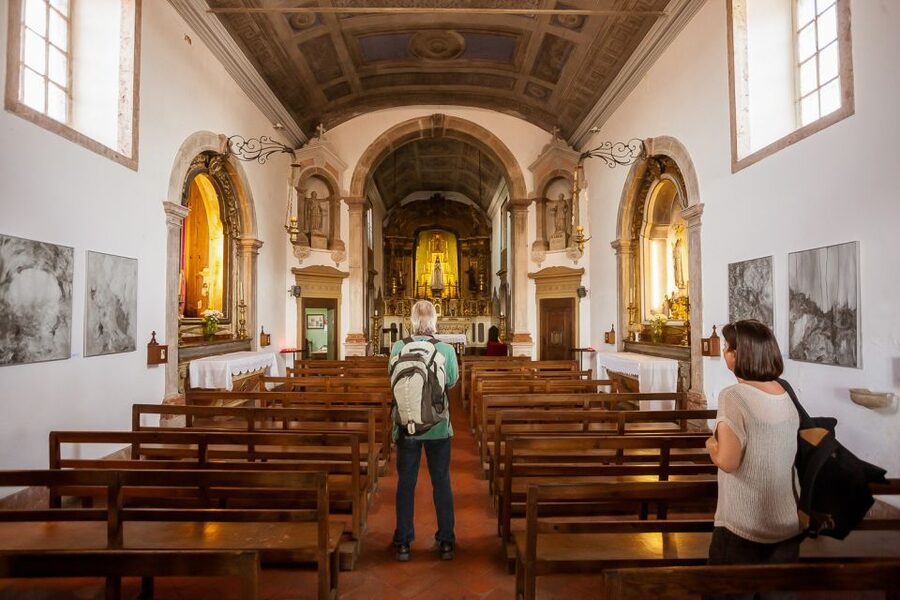
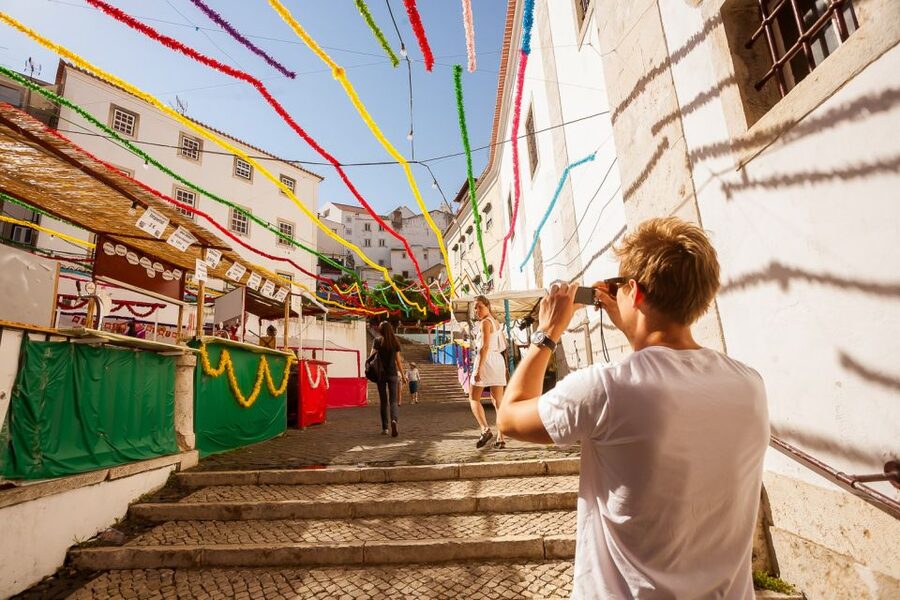
After the tram, the tour switches gears to walking. This is where Alfama earns its reputation. Expect a maze of narrow streets and steep steps that lead you toward small squares that feel tucked away from the tourist map.
This walking time is not just about movement, it is about perspective. You get to see how people actually live in a historic slope neighborhood, with the street itself shaping what you notice. You’ll find yourself slowing down for doorways, viewpoints, and little corners that make Lisbon feel human, not staged.
Your job here is simple: wear shoes you can trust on uneven surfaces. Even when the guide keeps a comfortable pace, you will be on hills. If you know you handle stairs fine but hate sudden drops or slippery cobblestones, still bring traction-ready footwear.
Other trips that start in Lisbon and end well:




Sé de Lisboa: the medieval cathedral where time feels stacked
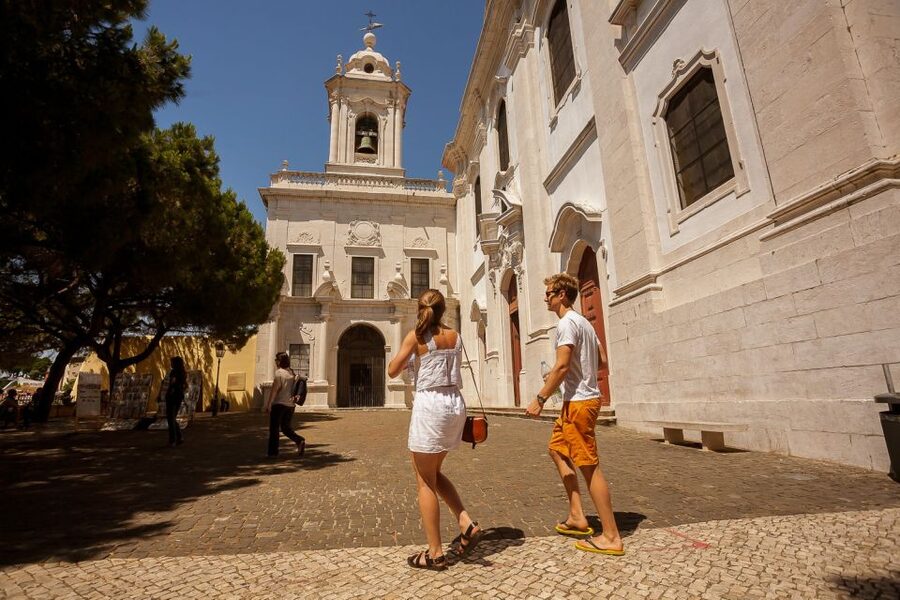
One of the landmark highlights is Sé de Lisboa, the medieval cathedral. The tour frames it as more than a pretty church stop. The story centers on how the walls conceal and reveal nearly 1,000 years of history, which is a great way to understand what Lisbon feels like: a place that keeps rewriting itself, layer by layer.
From a visitor perspective, Sé de Lisboa works because it anchors your walk. Alfama and the surrounding hill feel ancient, but it can be hard to “date” the vibe in your head. This stop gives you that timeline hook. You start noticing details with less guessing and more meaning.
If you like architecture but also like context, this part clicks. If you prefer purely scenic walking with no stops, you may want to mentally treat this like a short history pause, not a long museum visit.
Mosteiro de São Vicente de Fora and the Pantheon’s dome legend

Two more big cultural anchors come next: Mosteiro de São Vicente de Fora and Panteão Nacional.
The monastery stop helps you feel the weight of religious and civic life on this hill. Then the tour turns to the Pantheon area, including a legend connected with Panteão Nacional, especially the iconic dome shape that shows up in Lisbon skylines.
This is valuable because it ties together “where” and “why.” Lisbon’s hilltop landmarks are not random. They reflect status, belief, and power, and the guide’s explanations help you connect the dots while you are still in the neighborhood, not an hour later when your feet are hurting.
Fado in tiny bars and cafés: why this music fits these streets

Fado is often presented as a show, but this tour treats it like a local language. You learn about traditional Portuguese Fado and how it connects to neighborhoods like Alfama, where the setting matters as much as the sound.
What I like about this approach is that it gives you a framework before you hear any music elsewhere. Even if you are not sure what to listen for yet, you start understanding the themes and the cultural role. Then, if you later pop into a bar for a performance, you have something to hang the experience on.
Important practical reality: the tour description mentions tiny bars and cafés as part of the learning moments. That means you should expect a cozy, close-quarters feel. If you hate small interiors or crowded spaces, still plan for a quick stop mentality, not a long sit-down.
When the route includes Feira da Ladra (Tuesdays and Saturdays)
If your timing lines up, Tuesdays and Saturdays add a fun twist: Feira da Ladra, Lisbon’s famous flea market. The tour frames it as the lively old-school market scene on the oldest days of the week.
This works well because flea markets are not just shopping. They are a slice of how a city trades stories through objects. Even if you don’t buy anything, you feel the rhythm of the neighborhood.
Because this is a special add-on, it is also a reason to pick a tour date that matches your schedule. If your trip falls on another day, you simply miss that market piece, but you still get the tram ride, Alfama walking, and the historic landmarks.
Price and time: is $23 a smart value for what you get?
At $23 per person for a 3-hour experience, the value comes from what is included: a ride on Tram 28 and a guided walking tour of Alfama. That combination is the point. You are not paying just for someone to point at buildings. You are paying for an efficient route that helps you see the right places in the right order.
You also get an English-speaking live guide, and the group stays small. Small group matters in Lisbon because hills and narrow streets make large groups slow and stressful. You spend more time moving through sights and less time waiting for people to shuffle along.
Where value can feel different: if you are a tram obsessive and want hours exclusively on Tram 28, this is probably not enough. The trade-off is that this tour gives you broader context, which is why it rates well and why many people leave feeling oriented instead of exhausted.
Who this tour suits best, and who should think twice
This tour fits you if:
- You want a first-time Lisbon plan that covers Tram 28 plus Alfama
- You care about history and how it connects to modern street life
- You like learning Fado in context, not just chasing nightlife
- You prefer a small group and a guide who can explain as you walk
Think twice if:
- You have limited mobility or struggle with steep, uneven streets
- You expect a slow, long scenic tram ride with no walking
- You get irritated when public transport timing shifts, because the tram can be affected by real-world conditions
Also, it helps to know that you may not finish exactly where you started. Plan how you will get back to your hotel or next stop so you do not feel rushed at the end.
Practical tips so you enjoy every hill
A few small decisions make a big difference here:
- Wear comfortable shoes you trust on uneven ground. This is not a flat-city stroll.
- Bring water if you run warm, especially if your day is sunny.
- Keep your phone accessible for viewpoints, because the best views arrive when you least expect them.
- Have a flexible mindset about the tram. It is part of the charm, but it is still public transport.
- If the guide adjusts the plan due to traffic, treat it as part of Lisbon reality, not a problem. You still get the same core sightseeing.
Should you book this Tram 28 and Alfama tour?
Yes, if you want the famous Lisbon tram experience plus a guided walk through Alfama with real landmarks and Fado context, this is a strong pick. The biggest reason is balance: you get panoramic views on Tram 28, then you get Lisbon’s historic hill neighborhood on foot, including Sé de Lisboa, Mosteiro de São Vicente de Fora, and the story around Panteão Nacional’s dome.
I would not book it if you want only Tram 28 time or you cannot handle steep walking. But for most visitors, the mix of route efficiency, small group size, and a guide who keeps the day moving makes this feel like a well-spent few hours.
FAQ
Where is the meeting point for the Lisbon Tram No. 28 Ride & Walking Tour?
Meet at Praça Luís de Camões, near the statue. The guide will be wearing a black backpack with the Lisbon Spirit logo.
How much does the tour cost, and how long is it?
The price is $23 per person, and the duration is 3 hours.
Is the tour guided in English?
Yes, it is a live guided tour in English.
What is included in the price?
You get a ride on Tram 28 and a walking tour of Alfama.
Is pickup or drop-off included?
No, pickup or drop-off is not included.
Do I need comfortable shoes?
Yes. Comfortable shoes are recommended because the tour includes walking through narrow, steep streets.
Can tram timing change during the tour?
Yes. Tram 28 is public transport, so it can be affected by traffic and other unpredictable situations outside the activity provider’s control.
Is it possible to get a refund if my plans change?
Yes. Free cancellation is available up to 24 hours in advance for a full refund.
Fresh across the seven hills
- Full-day Private Tour: Fátima Sanctuary, Batalha, Nazaré, Óbidos
★ 5.0 · 6 reviews - Porto Private Tour from Lisbon
★ 4.5 · 6 reviews - VIP transfer from the airport to Lisbon hotels
★ 5.0 · 6 reviews - Lisbon Photoshoot: Capture Your Adventure
★ 5.0 · 6 reviews - Lisbon: Romantic Sunset Cruise With Wine & Portuguese Tapas
★ 5.0 · 6 reviews - Arrábida Wine Tour – 3 Wineries, Traditions & Views from Lisbon
★ 4.5 · 6 reviews - Lisbon: Sintra, Pena Palace, Belém Tour + sunset Boat Cruise
★ 5.0 · 6 reviews
Walking Tours, compared.

Best of Lisbon Small-Group Guided Walking Tour
Read our review →

Best of Lisbon Walking Tour: Rossio, Chiado & Alfama
Read our review →

Sintra & Cascais Day Tour with Pena Palace Entry and Gardens Walk
Read our review →
Lisbon Roots – Small group Food & Culture Walking Tour w/tastings
Read our review →
Starter Walking Tour to the highlights in German
Read our review →Browse the lists this tour appears in