
Reviewed · WALKING TOURS
Lisbon Highlights Guided Walking Tour
Lisbon has a way of layering time on top of time, and this walk makes that easy to see. In about 2.5 hours, you cover major central sights while your guide ties it all together, from the 1755 earthquake reshaping the city to the viewpoints that help you frame great photos. I especially like the steady pacing and the practical, in-the-street explanations that turn landmarks into something you can remember. One thing to consider: it is mostly walking in a hilly city center, so comfy shoes matter.
Two other highlights for me are the way the route hits big-picture moments fast, and the guide personalities people consistently name, including Jose, Jose Guia, Telma, and Shiri. Plus, the tour finishes with an ideal viewpoint area, which means you’re not stuck searching for the best view after the last stop. If you hate crowds, you’ll want to plan around busy times, since it can draw repeat interest and keeps a small group size rather than going private.
This is a smart pick for a first visit or a first day in town. You get the essentials without feeling rushed, and the route is designed to help you orient yourself for the rest of your trip.
In This Review
- Key Highlights Worth Knowing Before You Go
- Entering Lisbon’s Story at Praça do Comércio
- Augusta Street and the Triumphal Arch Moment
- Municipal Square, Rossio, and the Monarchies That Changed
- Santa Justa Elevator: A Lisbon Icon You Can See Fast
- São Domingo Church and the Sad Episode Behind It
- Ginjinha Stop: How a Simple Drink Became a Lisbon Institution
- Casa do Alentejo and Moorish Influence in Plain Sight
- Avenida da Liberdade: Lisbon’s Answer to a Grand Boulevard
- Rossio Station and the Architecture Style You’ll Recognize
- Chiado’s Carmo Square: Why the Church Is Unfinished
- Luis de Camões Square, Cafe A Brasileira, and Writer-Spotting
- Ending at Miradouro São Pedro de Alcântara for Real-World Photos
- Pace, Group Size, and Why the Guides Matter
- Price and Value for Budget Travelers in Central Lisbon
- Who Should Book This Lisbon Highlights Walk
- Should You Book It?
- FAQ
- How long is the Lisbon Highlights Guided Walking Tour?
- What is the price per person?
- Is the tour offered in English?
- Where do I meet the guide, and where does the tour end?
- How large is the group?
- What happens if weather is bad?
Key Highlights Worth Knowing Before You Go
- Earthquake 1755 story: You’ll connect the biggest square in Lisbon to how the city was rebuilt after 1755 and damaged much of it.
- Landmark-to-landmark flow: The walk links Praça do Comércio, Augusta Street, Rossio Square, and Chiado in a logical route.
- Photo-friendly ending: You close near Miradouro São Pedro de Alcântara, a classic Lisbon viewpoint.
- Free-entry stops (as listed): Each named stop has admission ticket marked as free for this experience.
- Small group feel: Maximum group size is 20 people, which keeps it easier to hear and ask questions.
- Guides who add local tips: Several named guides are praised for restaurant recommendations and keeping the pace right.
More Lisbon miradouros linked on foot:
- Lisbon: History, Stories and Lifestyle Walking Tour★ 4.8 · 10,902 reviews
- Best of Lisbon Small-Group Guided Walking Tour★ 5.0 · 4,869 reviews
- Lisbon: Food and Wine Small Group Walking Tour★ 4.9 · 4,082 reviews
- Best of Lisbon Walking Tour: Rossio, Chiado & Alfama★ 4.9 · 2,700 reviews
Entering Lisbon’s Story at Praça do Comércio
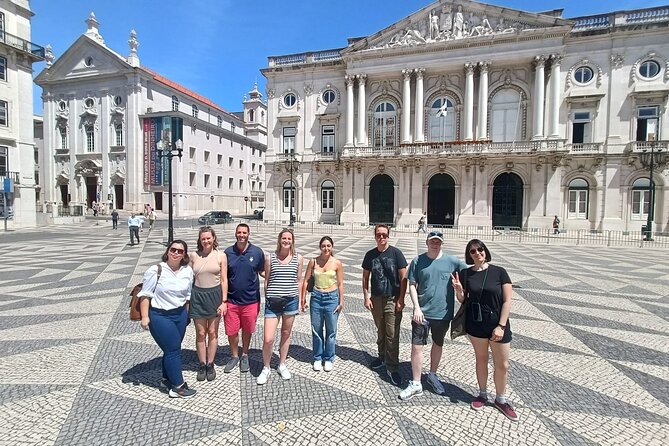
This tour starts in the grand setting of Praça do Comércio, Lisbon’s biggest square. Even before you move, you’re looking at a place that feels like a city stage, and that matters because your guide immediately gives you the turning point: the Great Earthquake of Lisbon in 1755, when roughly 80% of the city was destroyed. That one fact changes how you see the next neighborhoods, because you start noticing what looks like it “belongs” to later rebuilding and planning.
You’ll also hear how the city’s physical layout and mood shifted after the catastrophe, and why that still echoes in Lisbon today. It’s not just a dramatic history beat. It’s a lens. When your guide later points out street design and square locations, you’ll get why these places weren’t accidental.
Stop 1 is only about 10 minutes, so it works even if you arrive a bit jet-lagged. If you like history, you’ll find it grounded in places you can actually point at. If you’re not a history person, it still gives you a simple narrative anchor, so the rest of the walk doesn’t feel like a checklist.
Augusta Street and the Triumphal Arch Moment
From Praça do Comércio you move toward Augusta Street and the imposing arch that sits at the entrance to it, the Arco do Triunfo. You’ll spend only a few minutes here, but it’s a good “pause and look” stop because the arch is one of the visual bookends for the area. You’ll hear what it represents to the city and why the structure is tied to Lisbon’s identity.
Then it’s on to Rua Augusta, which your guide frames as Lisbon’s most important street and explains why the area was planned with a grid-like layout. That part is useful because it’s the kind of detail you would miss if you were just walking through. A lot of Lisbon feels organic, with hills and winding streets. A grid street feels different. You’ll know you’re seeing a planning decision, not just a random straight line.
This section is also a good reality check for your legs. Rua Augusta is not a “museum sidewalk” experience. It’s active city walking, in the middle of Lisbon life. Wear shoes you trust and bring a bottle of water if it’s warm.
Municipal Square, Rossio, and the Monarchies That Changed
Next comes Municipal Square, where the city’s hall is located. Here the focus is political change, including the end of Portugal’s monarchy. Even if you only remember one thing from the stop, it helps you understand why Lisbon’s squares are not just pretty backdrops. They were built to matter for governance, public life, and ceremonies.
From there, the route shifts toward Rossio Square (Praca Dom Pedro IV), one of the oldest squares in Lisbon, with roots that go back to the 13th century. Your guide connects the square to major national events, including stories around the Portuguese royal family’s escape to a foreign country. It’s the kind of moment that adds emotional weight to a place you might otherwise treat as a photo spot.
Rossio also gives you a rhythm break. You’ve been moving through wide, iconic spaces. At Rossio, the square feels like a hub. It helps you orient yourself because it’s near where you’d naturally start planning day trips and subway or train connections.
Santa Justa Elevator: A Lisbon Icon You Can See Fast
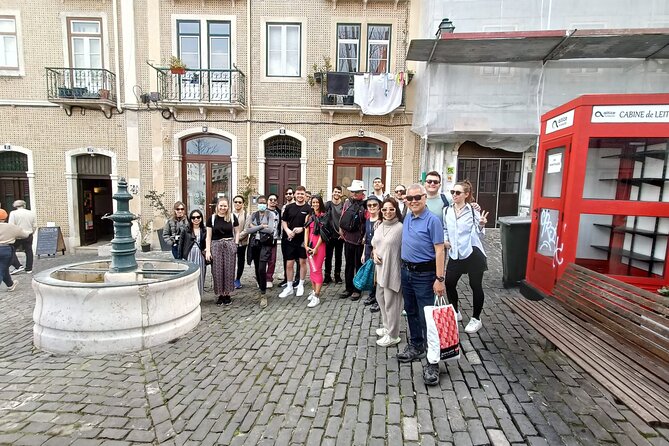
A short stop brings you to Elevador de Santa Justa, the famous elevator associated with views and landmark architecture. Even if you do not ride it, seeing it on foot is still worth it because it’s an easy photo target and a striking piece of engineering style.
Your guide also explains the connection to the Eiffel Tour, which helps you place the design in a broader European context. That connection is the kind of “wait, really?” detail that makes a landmark more memorable than a quick glance.
This stop is only about 7 minutes, so it’s not a slow, ticket-based attraction. It’s more about recognition. You’ll leave knowing what it is and why it’s important, and you can decide later if you want to spend extra money and time to ride it.
Some other seven-hills days worth pricing up




São Domingo Church and the Sad Episode Behind It
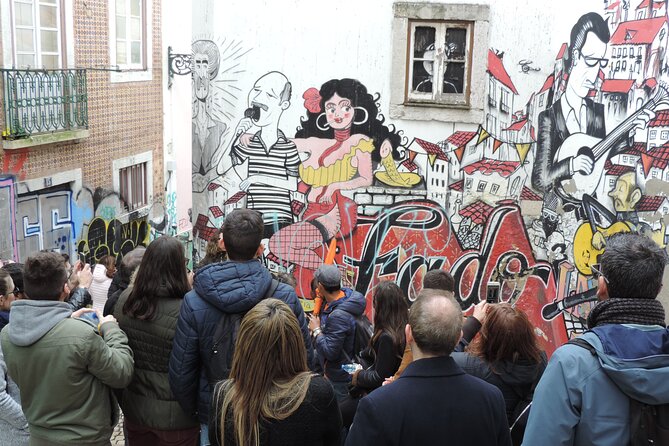
The tour then moves into a deeper tone with Igreja de São Domingos. Your guide highlights that it is one of the more unique churches in the world and shares one of the saddest episodes connected to Lisbon’s history.
Church stops can go two ways on tours. Either they’re quick exterior photos, or they become a story you remember. Here, the time is about 10 minutes, but it’s framed so you understand why the church has a special place in Lisbon’s emotional memory. It gives context, not just architecture.
If you’re aiming for the “best photos,” keep expectations realistic. This is not sold as an all-day church visit, and your time is limited. But if you like learning what you’re looking at, this stop does a good job of matching the time you have.
Ginjinha Stop: How a Simple Drink Became a Lisbon Institution
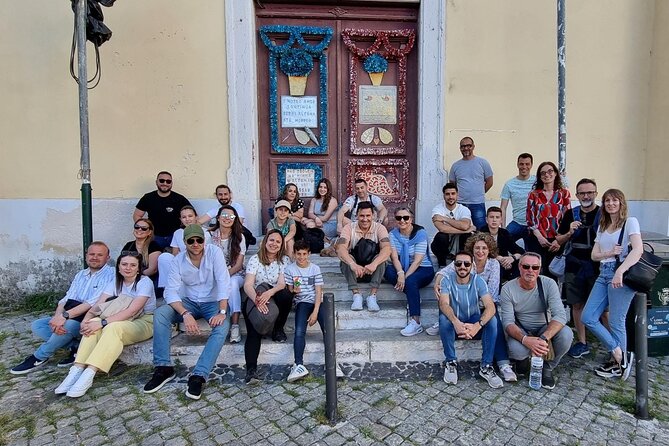
Next is the stop centered on A Ginjinha, tied to ginjinha, Lisbon’s most famous liquor. This isn’t just a food tangent. Your guide uses the story of the shop becoming an institution to explain how local traditions stick around and become identity.
Even if you do not plan to buy anything during the walk, this stop helps you understand what people mean when they say Lisbon has its own rituals. Ginjinha is one of the easiest “yes, I want to try that” items to add to your trip, and the guide’s explanation makes it feel less random.
This stop lasts around 10 minutes, and it’s a nice break from pure monument time. It also works well if you’re traveling with mixed interests, because food and drink stops keep energy up.
Casa do Alentejo and Moorish Influence in Plain Sight
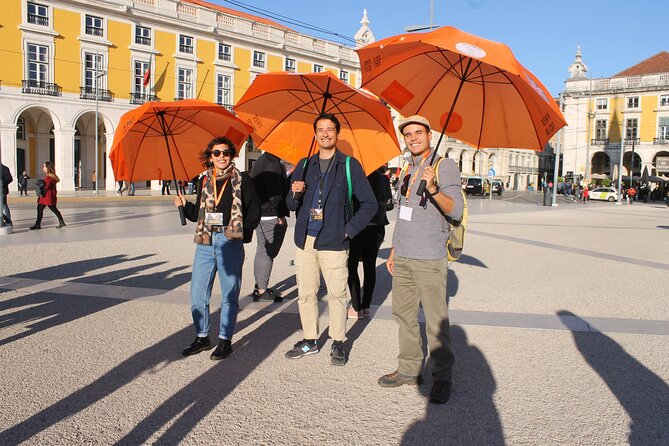
Then you’ll see Casa do Alentejo, one of the most unique buildings in Lisbon, and you’ll learn about Moorish influence in Portugal’s history. This is one of those stops that works because it’s visual first and historical second. You look at the building style, then you get the “why.”
It’s about 10 minutes, which makes it a good “side chapter” before the route shifts into larger central-city landmarks again. If you like architecture but hate long museum detours, this is a comfortable middle ground.
Avenida da Liberdade: Lisbon’s Answer to a Grand Boulevard
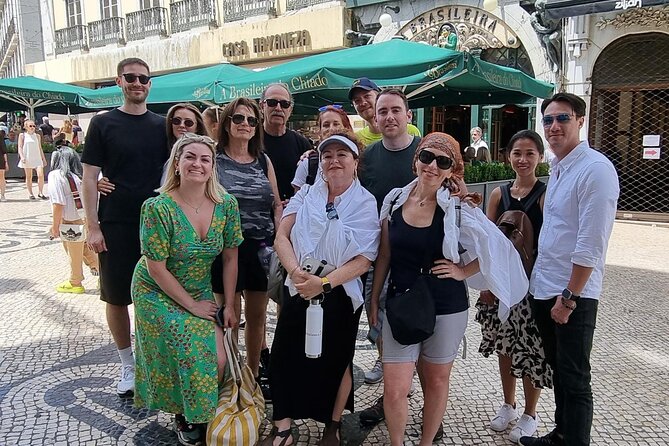
Avenida da Liberdade is next, described as Lisbon’s Champs Elysees. This is a quick one at about 5 minutes, so don’t come expecting a full walk-and-shop session. Instead, the value is in the interpretation: your guide covers when it was built and helps you understand why this boulevard matters in how Lisbon presents itself.
Even a short stop here helps you see Lisbon in a wider European frame. You’ll start to spot how certain areas are designed for prestige and how styles spread over time.
If you do want more time here later, you’ll be ready to continue exploring because you’ll know what to look for.
Rossio Station and the Architecture Style You’ll Recognize
Next, you’ll pause at Estacao do Rossio and hear about the history behind Rossio Station, described as the first central station in Lisbon. Your guide also points out the magnificent architecture style, with mention that it’s a style found in Portugal.
Again, the emphasis is on recognition. A station can feel like just a transit stop. Here it becomes a “what is this building doing?” moment, which helps you appreciate the city even when you’re walking between sights.
This stop is about 10 minutes. It fits perfectly into a route that’s meant to keep your pace moving, not stall your day.
Chiado’s Carmo Square: Why the Church Is Unfinished
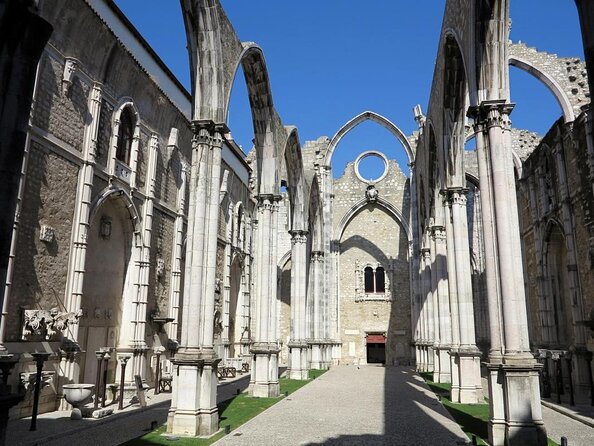
As you reach the Chiado area, you’ll visit Carmo Square and learn why the church there is unfinished. You’ll also hear about the Portuguese dictatorship and the revolution that put an end to it.
This is one of the stops where context makes a difference. An unfinished church is easy to notice and easy to ignore. But when your guide explains what shaped it and connects it to later political change, it stops being a curiosity and becomes a historical marker.
Time here is around 15 minutes, so you get enough to absorb the story without it turning into a long lecture. It also helps break the route emotionally, because the dictatorship and revolution topic gives Lisbon a modern political dimension beyond the earthquake era.
Luis de Camões Square, Cafe A Brasileira, and Writer-Spotting
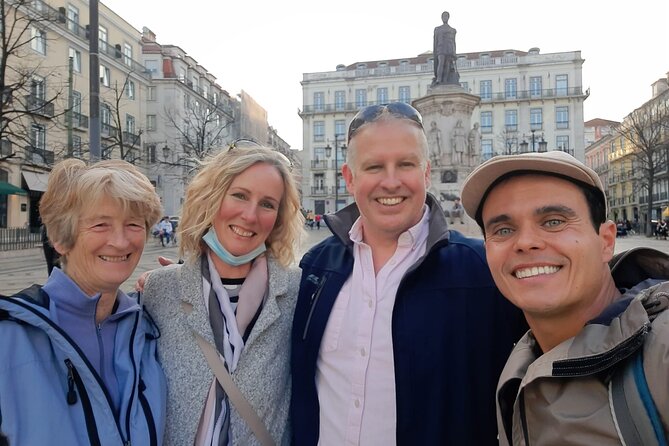
Then you’ll walk around Chiado, including Praca Luis de Camões. Your guide points out fancy shops from the area and mentions Café A Brasileira as a meeting point for writers and poets in the 20th century.
If you like cultural details, this stop is a treat because it helps you see Chiado as more than shopping streets. It becomes a place where ideas and people clustered. You’ll also hear about Luis de Camões as a major Portuguese poet and see why his square is one of the notable meeting points in Lisbon.
This section is about 10 minutes, so it’s more about giving you a cultural map than shopping time.
Ending at Miradouro São Pedro de Alcântara for Real-World Photos
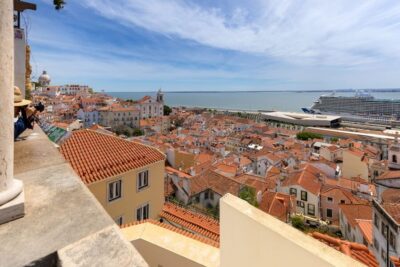
The tour ends with Miradouro São Pedro de Alcântara, the viewpoint at São Pedro de Alcântara. If you’ve ever tried to find a good view at the end of the day, you know how easy it is to waste time. Here, the walk is designed so you finish where the light and angles often work for city photos.
You also end around Praça Luís de Camões, next to the monument, which makes sense because the viewpoint is in that immediate area. The route ends with that photo-friendly payoff, so you can stop thinking like a tourist doing a checklist and start thinking like someone enjoying the city.
Your final 10 minutes at the viewpoint feel short, but that’s the point. It keeps you from turning the end into a stress session.
Pace, Group Size, and Why the Guides Matter
A big part of the value is that this is a small-group walk, max 20 people. That tends to mean you hear the guide without straining and you can ask quick questions if something grabs you.
The other reason people love this tour is the pacing. Several named guides, including Jose, Jose Guia, Telma, Shiri, and Ann-Elisa, are repeatedly praised for keeping the walk moving at the right speed. You’re on the go, but you’re not sprinting between stops. It’s built for a first-time introduction, where you want your brain to absorb something, not just get tired.
I also like that guides often add practical context, including restaurant recommendations. That kind of tip is gold on day one, because it takes you beyond monuments and into what to actually do next.
Price and Value for Budget Travelers in Central Lisbon
At $21.72 per person for about 2 hours 30 minutes, the value comes from how much ground you cover, and how many major landmarks you see in one connected route. This is not priced like an attraction ticket. It’s priced like orientation, storytelling, and time-saving.
You also get professional guidance, and the tour lists all fees and taxes as included. Most of the listed stops are marked with admission ticket free, which helps keep the cost predictable.
The practical downside is that you are paying for a tour experience, not individual attraction entries. If you want to go beyond the sight-seeing layer, you may need to plan extra time and money later. But for a budget-friendly first pass at central Lisbon, this price is very reasonable.
Who Should Book This Lisbon Highlights Walk
I’d book this if:
- You want a first-day Lisbon orientation with clear landmarks and a story thread.
- You like history explained through real places, from the 1755 earthquake to monarchy and dictatorship-era changes.
- You want a guided plan that ends at a proper viewpoint for photos.
I might skip it if:
- You need long stops at indoor attractions or want a ride-heavy day.
- You hate walking on hills, even with a shorter, 2.5-hour route.
It’s also a good fit for people traveling in mixed ages. The walk is short enough to work across generations, and the pacing is repeatedly described as just right.
Should You Book It?
Yes, if your goal is to get your bearings fast and learn the Lisbon story behind the postcard scenes. This tour is built for efficient sightseeing, with a strong stop sequence from Praça do Comércio through Chiado, and a satisfying finish at Miradouro São Pedro de Alcântara.
A small note before you decide: this experience is often booked about 43 days in advance, so if you have specific dates, it’s wise to lock it in early. Also, it needs good weather, so keep your day flexible if forecasts look iffy.
If you want a guided walk that feels like a conversation, includes the key landmarks, and saves you from guesswork, this one is a very solid choice.
FAQ
How long is the Lisbon Highlights Guided Walking Tour?
It lasts about 2 hours 30 minutes.
What is the price per person?
The price is $21.72 per person.
Is the tour offered in English?
Yes. The tour is offered in English.
Where do I meet the guide, and where does the tour end?
You start at Praça do Comércio 574, 1100-148 Lisboa, Portugal. The tour ends at Praça Luís de Camões, next to the monument.
How large is the group?
The tour has a maximum of 20 travelers.
What happens if weather is bad?
This experience requires good weather. If it’s canceled due to poor weather, you’ll be offered a different date or a full refund.
Fresh across the seven hills
- Full-day Private Tour: Fátima Sanctuary, Batalha, Nazaré, Óbidos
★ 5.0 · 6 reviews - Porto Private Tour from Lisbon
★ 4.5 · 6 reviews - VIP transfer from the airport to Lisbon hotels
★ 5.0 · 6 reviews - Lisbon Photoshoot: Capture Your Adventure
★ 5.0 · 6 reviews - Lisbon: Romantic Sunset Cruise With Wine & Portuguese Tapas
★ 5.0 · 6 reviews - Arrábida Wine Tour – 3 Wineries, Traditions & Views from Lisbon
★ 4.5 · 6 reviews - Lisbon: Sintra, Pena Palace, Belém Tour + sunset Boat Cruise
★ 5.0 · 6 reviews
Walking Tours, compared.
Best of Lisbon Small-Group Guided Walking Tour
Read our review →
Best of Lisbon Walking Tour: Rossio, Chiado & Alfama
Read our review →
Sintra & Cascais Day Tour with Pena Palace Entry and Gardens Walk
Read our review →
Lisbon Roots – Small group Food & Culture Walking Tour w/tastings
Read our review →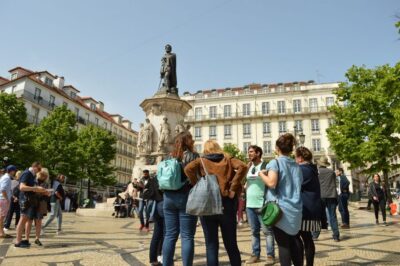
Starter Walking Tour to the highlights in German
Read our review →Browse the lists this tour appears in