
Reviewed · MUSEUMS
Lisbon: Museu do Oriente Entry Ticket to All Exhibitions
Asian art in Lisbon is wonderfully specific. The Museu do Oriente gives you a ticket to all exhibitions in a museum devoted to Asian material and intangible heritage, told through two collections: Portuguese Presence in Asia and Kwok On. I love how hands-on the display feels, with objects like porcelains, textiles, jewellery, furniture, ivory pieces, and cabinets doing the storytelling. I also like that it does not stop at artifacts, it connects you to Asian performative arts too.
One heads up before you go: this is a museum with a strict no-touch policy and lots of items you cannot bring in, so plan to travel light and leave time to follow the rules calmly.
In This Review
- Key things I’d zero in on
- Museu do Oriente in Alcântara: what your ticket really buys
- The collections framework: Portuguese Presence in Asia and Kwok On
- Porcelain, textiles, jewellery, and cabinets: how the craft becomes the story
- Portuguese presence across Asia: trade plus science plus daily life
- China’s porcelain nucleus: what to look for in the ceramics
- Namban art: early Japan, European encounters, and object style
- Asian performative arts: what to expect beyond the cases
- Pacing your day: how to fit it in without rushing
- Practical value: is an $11 ticket worth your time
- Who should book this ticket for
- Should you book Museu do Oriente entry to all exhibitions?
- FAQ
- Where do I exchange my voucher?
- How long is the Museum of the Orient ticket valid?
- What does the ticket include?
- What should I bring with me?
- Is the museum wheelchair accessible?
- What items are not allowed inside?
- Are there any special free entry days?
Key things I’d zero in on
- Portuguese links to Asia, shown through trade, science, technical exchange, and religious contact across India, Sri Lanka, China, Macao, Japan, and East Timor
- China’s porcelain focus, including a “nucleus” of porcelain production that anchors the ceramic story
- Namban art, a distinctive style connected to early European encounters with Japan
- A mix of categories, not just paintings, but everyday luxury and display objects like cabinets, furniture, jewellery, and textiles
- A museum setting that’s on the riverside, in Alcântara, so the day feels both cultural and easy to pace
Some other seven-hills days worth pricing up
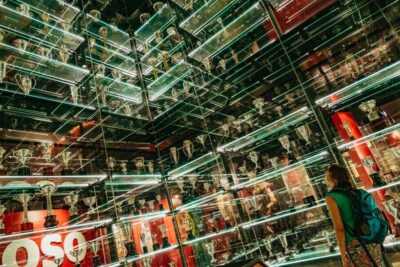
- Lisbon: Luz Stadium Tour & SL Benfica Museum Entry★ 4.7 · 4,102 reviews
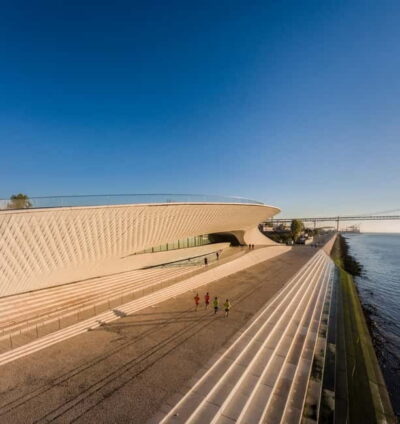
- Lisbon: MAAT Gallery and MAAT Central Entry Tickets★ 4.0 · 559 reviews
- Lisbon: Banksy Museum Permanent Exhibition Entry Ticket★ 4.7 · 506 reviews
- Lisbon: Belem, Jeronimos Monastery, and Coach Museum Tour★ 4.8 · 478 reviews
Museu do Oriente in Alcântara: what your ticket really buys
This ticket is simple: you get admission to the Museum of the Orient (Fundação Oriente) and access to all current exhibitions on display. The museum is in Alcântara, on Lisbon’s riverside front, in a building that feels made for wandering. You start by exchanging your voucher at the ticket counter before your visit begins, so do not arrive expecting to walk in instantly with the voucher alone.
With a full day ticket valid for 1 day, you can slow down. You can also pick your route and come back to favorite rooms, if your timing works. The museum’s theme is not “Asia in general,” it is material and intangible heritage from several Asian countries, using the evidence of objects and the context of lived experience, including Portuguese presence across Eastern territories.
And yes, it is worth knowing the museum is opened in 2008, so it feels modern and intentional, not like an old, cramped warehouse. That matters because many of the exhibits are about objects and craft, and you want good flow, clear viewing, and room to stand.
The collections framework: Portuguese Presence in Asia and Kwok On
What makes the museum click is how it frames the story. One collection, Portuguese Presence in Asia, focuses on what happened when Portugal’s presence overlapped with places like India, Sri Lanka, China, Macao, Japan, and East Timor. That overlap was not just about ships and goods. It included cultural life, scientific and technical exchange, and religious encounters too.
The other collection is Kwok On, which is where you get a major payoff for anyone who loves ceramics and decorative arts. You’ll see how the museum uses objects to show relationships, not just to show things. This is why the museum feels more like a conversation than a scroll of labels.
If you like museums that explain how people influenced each other through practical contact, this format will feel satisfying. You are not just staring at pretty items. You are tracking how global movement changes what gets made, collected, displayed, and valued.
Porcelain, textiles, jewellery, and cabinets: how the craft becomes the story
Your ticket puts you in front of craft objects across several categories: porcelains, textiles, jewellery, furniture, and cabinets, plus ivory objects. Some museums treat craft as background. Here, the objects are the point.
Here is what that means for you on the floor. First, you can spend real time with surfaces, patterns, and form. Second, you can notice the museum’s logic, it groups objects in ways that help you connect the dots between regions and contact. Even if you do not read every label, you will feel the museum nudging you toward the “why” behind the “what.”
A practical tip: because you cannot touch exhibits, your best tool is your eyes. Start wide, then step in close enough to see details without crossing boundaries. If you are a photo person, remember flash photography is not allowed, so plan to rely on natural light and your camera’s normal settings.
Portuguese presence across Asia: trade plus science plus daily life
The Portuguese Presence in Asia section is where the museum becomes more than a craft museum. The story includes trade relations, but it also includes cultural experience, scientific and technical exchanges, and religious contact.
That mix matters because it helps you understand why you might see objects that look like they belong to more than one cultural sphere. People did not just exchange products. They exchanged skills, ideas, and ways of using materials. You will likely come away thinking about the early modern world as something more connected and less orderly than most textbook timelines.
If you enjoy history that follows real materials instead of only dates, this is a strong fit. It makes the global story feel concrete, like you are seeing the “evidence” in the glass cases.
Other trips that start in Lisbon and end well:




China’s porcelain nucleus: what to look for in the ceramics
The museum’s porcelain focus is a major highlight, described as a remarkable nucleus of porcelains produced in China. That phrase can sound abstract until you see it. Here, the porcelain pieces are not random. They function like a backbone for the museum’s wider Asian art story.
When you’re planning your time, you might want to devote extra minutes to the porcelain rooms, because ceramics can reward slow looking. Notice how different pieces vary in color, glaze quality, and decorative style. Even without doing deep research, you can learn a lot just by comparing sets and patterns.
This is also a good area to reset your brain. After you work through the Portuguese presence story, the porcelain focus feels like a payoff. It shows you how a single material tradition can echo through trade networks and cross-cultural collecting.
Namban art: early Japan, European encounters, and object style
One of the most distinctive mentions from the museum’s highlights is Namban art. If you only take one “special theme” from the visit, this is likely it. Namban art is tied to early European contact with Japan, and the museum treats it as a unique artistic manifestation.
What makes this section compelling is the way style can carry history. When European presence intersects with Japanese aesthetics, you can see that in the forms, motifs, and the overall design logic. It is not just decoration. It is adaptation, translation, and what happens when cultures meet in the real world.
If you like art history that has a cause and effect behind it, Namban art is your zone. Look for how the objects communicate encounter, not just beauty.
Asian performative arts: what to expect beyond the cases
The museum promises you will be transported to various Asian performative arts, and that idea matters. It suggests the museum is not purely a room of static objects.
You should expect an experience that connects material culture to performance traditions. In other words, you’re not just learning what objects look like. You’re getting a sense of how these cultural worlds express themselves through movement, ritual, music, and staged expression.
Now, don’t go in expecting a full evening show. The data you have points to exhibitions that connect to performance, not a separate live event. But even within exhibitions, the museum’s goal is to help you feel the connection between objects and the living traditions that shaped them.
Pacing your day: how to fit it in without rushing
Your ticket gives access for 1 day. Access to exhibitions is only allowed up to 30 minutes before closing, so you want to arrive with enough time to finish your last rooms without stress. This kind of museum rewards planning because you can easily end up racing if you underestimate how much you want to see.
A good approach for your day:
- Exchange your voucher at the museum ticket counter first
- Start with the sections that match your interests most, like porcelain and Namban art
- Leave room at the end for second looks, because your favorites might shift after you see more
Also, you cannot bring luggage or large bags, and you cannot bring backpacks, umbrellas, bags, or selfie sticks. So if you are visiting as part of a Lisbon walking day, travel light. Plan to store what you can outside, then go in with only what you need. This is the kind of museum where people often get annoyed by rules, but the rules also keep the exhibits safe and visitors comfortable.
Practical value: is an $11 ticket worth your time
At about $11 per person, this ticket is good value if you like museums that use objects as primary sources. A lot of museums charge similar money, but not all of them give you access to everything. Here, the ticket explicitly includes visiting all current exhibitions.
For your money, you are getting:
- Coverage of multiple Asian regions through a Portuguese lens and a second major collection
- A major porcelain highlight with China as a core focus
- Distinctive art, including Namban art
- A museum experience that connects material heritage to performative arts
The main “cost” is mental time. You should be willing to slow down. If you want a quick hit and you hate reading, you might find it too much. But if you enjoy craft, cultural contact, and looking closely, the ticket price is easier to justify.
Who should book this ticket for
I’d book this if you:
- Love ceramics, textiles, and decorative arts, especially porcelain
- Want a museum that links art to history and cultural exchange
- Enjoy Portugal’s overseas story, not as a lecture, but as objects and categories of material life
- Like a clear, organized museum flow in a Lisbon setting that feels easy to reach from the riverside
I would skip it if you:
- Only want blockbuster paintings and large-scale sculpture
- Need frequent breaks that involve going in and out with bulky items, since storage and restrictions are strict
- Want a hands-on museum, since you cannot touch exhibits
Should you book Museu do Oriente entry to all exhibitions?
Yes, you should book if you want a focused day of Asian art and cultural exchange, without adding a complex tour plan. This ticket is straightforward, it covers everything on display, and the highlights are specific enough to make the visit feel targeted, not generic.
If you’re the kind of traveler who likes to see how materials move across borders, porcelains in particular, and you’re curious about Namban art, you’ll probably leave with a more coherent sense of the early encounter story than you’d get from a quick overview. Just go prepared to follow museum rules, keep your bag situation simple, and give yourself time to look carefully.
FAQ
Where do I exchange my voucher?
You must exchange your voucher at the museum ticket counter before the visit begins.
How long is the Museum of the Orient ticket valid?
The ticket is valid for 1 day. You can check availability for starting times.
What does the ticket include?
Your entry ticket includes a visit to all exhibitions on display at Museu do Oriente.
What should I bring with me?
You should bring a passport or ID card.
Is the museum wheelchair accessible?
Yes, the museum is wheelchair accessible.
What items are not allowed inside?
Food and drinks are not allowed, and you also cannot bring luggage or large bags, pets (assistance dogs allowed), selfie sticks, flash photography equipment, backpacks, umbrellas, bags, or touch the exhibits.
Are there any special free entry days?
Yes. Free entrance days are listed as 17.02.26 for Chinese New Year and 08.05.26 for the museum anniversary.
Fresh across the seven hills
- Porto Private Tour from Lisbon
★ 4.5 · 6 reviews - VIP transfer from the airport to Lisbon hotels
★ 5.0 · 6 reviews - Full-day Private Tour: Fátima Sanctuary, Batalha, Nazaré, Óbidos
★ 5.0 · 6 reviews - Lisbon Photoshoot: Capture Your Adventure
★ 5.0 · 6 reviews - Lisbon: Romantic Sunset Cruise With Wine & Portuguese Tapas
★ 5.0 · 6 reviews - Arrábida Wine Tour – 3 Wineries, Traditions & Views from Lisbon
★ 4.5 · 6 reviews - Lisbon: Sintra, Pena Palace, Belém Tour + sunset Boat Cruise
★ 5.0 · 6 reviews
Museums, compared.
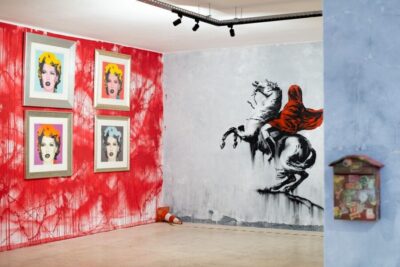
Banksy Museum Permanent Exhibition Entry Ticket
Read our review →
Belem, Jeronimos Monastery, and Coach Museum Tour
Read our review →
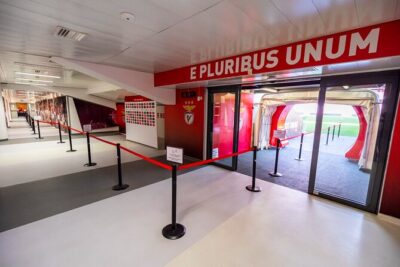
Lisbon SL Benfica Stadium & Museum Tour with Scarf
Read our review →
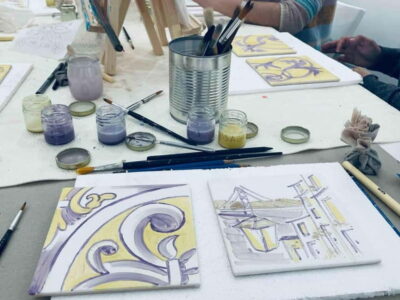
Paint your tile and create your unique piece in an art gallery in Lisbon
Read our review →Browse the lists this tour appears in