
Reviewed · MORNING
Lisbon: Portuguese School of Equestrian Art Morning Training
Watching horses work in real time is oddly moving. This Portuguese School of Equestrian Art experience lets you get behind the scenes at Queluz and then take your seat for a training session at the Henrique Calado Arena, all in a tight, easy-to-follow morning slot. I especially liked the practical, behind-the-scenes feel as handlers and riders prep, and I also really enjoyed seeing how the Lusitano horses move with that controlled, court-style precision you usually only see in performances.
The big thing to consider is simple: you are paying to observe a training window that runs from 12pm to 1pm (or exhibitions on Wednesday). If you expected a full, long show, plan your expectations around this being a focused, one-session viewing.
In This Review
- Key things worth knowing before you go
- The Portuguese School of Equestrian Art: What You’re Actually Paying For
- Getting There: Meeting Point at Calçada da Ajuda
- Nora Pateo Interpretative Route (11am to 12pm): History You Can Watch
- Behind the Scenes Warm-Up and Agility: What Changes When You Watch Up Close
- Henrique Calado Arena Training (12pm to 1pm): The Main Viewing Window
- Do You Also Need Queluz National Palace and Gardens Tickets?
- Price and Value: Why This $9 Morning Can Be a Smart Lisbon Choice
- Who This Experience Suits Best (And Who Might Want to Skip)
- A Practical Reality Check Before You Go
- Should You Book This Morning Training Session at the Portuguese School of Equestrian Art?
- FAQ
- What is the duration of the Lisbon Portuguese School of Equestrian Art morning training?
- How much does it cost?
- Where do I meet for the experience?
- What time does the Nora Pateo interpretative route run?
- When is the Henrique Calado riding ring training?
- What happens on Wednesday at Henrique Calado?
- Is the Queluz National Palace ticket included?
- Is access to the Queluz National Gardens included?
- Is food and drink included?
- Is the experience wheelchair accessible?
Key things worth knowing before you go
- Behind-the-scenes preparation: You see how riders and handlers warm up and get horses ready before the more choreographed parts.
- Period costume adds context: You are not just watching movement, you are watching it as part of Portuguese equestrian tradition.
- The Nora Pateo interpretative route: It adds meaning, with history and technique guidance tied to Portuguese Equestrian Art.
- Henrique Calado Arena is the main event: A training session or, on Wednesday, an exhibition from 12pm to 1pm.
- Lusitano horses are the star: You’ll notice the elegance and agility in how they respond during warm-ups and drills.
- Value at a low price: At about $9, you get multiple parts of the visit, not just one brief viewing.
Some other seven-hills days worth pricing up
- Sailboat Tour in Lisbon with drinks included | Morning and Sunset★ 4.5 · 867 reviews
- Lisbon: Tagus River Cruise, Morning, Day, Sunset, or Night★ 4.9 · 640 reviews
- Lisbon: Morning of Equestrian Art with Lusitano Horses★ 4.4 · 87 reviews
- Morning Sailing Tour in Tagus River from Lisbon★ 5.0 · 68 reviews
The Portuguese School of Equestrian Art: What You’re Actually Paying For
This is not a vague “horse show” outing. It’s a structured morning that combines three distinct pieces: a behind-the-scenes look at preparation, an interpretative route that explains history and technique, and then a live training session or performance at the arena.
The setting matters, too. You get to experience traditional Portuguese equestrian art tied to the 18th-century Portuguese court in the gardens of the National Palace of Queluz. That location is a big part of the atmosphere. Even if you are not a horse expert, the setting makes the routine feel like a living craft rather than a staged tourist spectacle.
From a value perspective, the ticket price is hard to ignore. You pay around $9 per person for entry to the Portuguese School of Equestrian Art, access to the Henrique Calado Arena, and the Nora Pateo interpretative route. What that means for you is you are not just buying seats. You’re buying context, then buying the training itself.
Getting There: Meeting Point at Calçada da Ajuda
Your meeting point is CALÇADA DA AJUDA, near the number 23. That matters because this is a fixed-time experience with a short opening window, so you’ll want to arrive with enough time to feel settled.
Also note that there is no hotel pickup or drop-off included. So if you are staying in Lisbon proper, you’ll need to handle local transport on your own. The good news is the experience itself is compact and does not drag into the afternoon. You should be able to plan the rest of your day without it taking over your schedule.
One practical tip: this visit runs during opening hours between 11am and 1pm, so treat that as your time box. If you show up late, you can miss parts like the Nora Pateo visit window.
Nora Pateo Interpretative Route (11am to 12pm): History You Can Watch
The visit starts with the interpretative route at Nora Pateo, with visits scheduled from 11am to 12pm. This part is where the experience stops being only visual. It becomes instructional.
You’ll get insight into the history and techniques of Portuguese equestrian art, which is the difference between watching movement and understanding what you’re seeing. That matters for your enjoyment because Portuguese equestrian tradition is specific, not generic “horse dancing.”
This is also where the behind-the-scenes vibe begins. You’ll start to notice the workflow: preparation, warm-up, then agility exercises. Even if you just watch silently, you can often pick up patterns like how horses are handled before any choreographed work happens.
Why this part is valuable: it gives you a mental key for the arena session later. Without it, you may still enjoy the performance. With it, you are more likely to appreciate the discipline behind the elegance.
Possible drawback: if you’re short on patience for explanations, the Nora Pateo segment might feel like “waiting around” before the main training. For me, the best way to make it work is to treat it as your warm-up too, so you are ready to focus once the arena session starts.
Behind the Scenes Warm-Up and Agility: What Changes When You Watch Up Close
One of the most interesting parts of the morning is the warm-up. You’ll witness how handlers and riders prepare the horses for the balletic shows, with riders dressed in authentic period costumes.
That costume detail is not just decoration. It signals that this is traditional Portuguese equestrian art, tied to court culture. When you watch the warm-up in that context, you start to see the training as a system, not random drills.
During this stage, you’ll likely notice:
- The horses are being readied for control and agility, not just speed.
- Riders follow a routine that keeps the horse comfortable while sharpening responsiveness.
- Handlers and riders move with purpose, suggesting training discipline that goes beyond the visible choreography.
The experience highlights also mention health and training preparation for high-level galas and performances. Translation for you: the morning is not only about the final showy moments. It’s about how horses get there safely and consistently.
This is also where the experience earns its “peek behind the scenes” label. If you’ve only ever seen equestrian events from a distance, seeing the preparation can be surprisingly satisfying.
Other trips that start in Lisbon and end well:
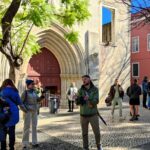



Henrique Calado Arena Training (12pm to 1pm): The Main Viewing Window
The headline moment is at the Henrique Calado Arena. You attend a training session or performance, with the schedule depending on the day.
- Training sessions run 12pm to 1pm from Tuesday, Thursday, Friday, Saturday, and Sunday (training except Wednesday).
- On Wednesday, it shifts to Henrique Calado Riding Ring Exhibitions from 12pm to 1pm.
Either way, you’re in the same place at the same time window: a one-hour live session where riders and horses perform choreographed routines to music, recreating the ambiance of the Portuguese court.
The arena stage lighting is part of the appeal. It helps turn what you might think of as “training” into something cinematic. You get movement in a controlled space, enhanced by light and sound. For a lot of people, this is the moment where the whole morning clicks.
One consideration for your expectations: this is an hour. You’re not getting a multi-hour gala. If you love equestrian arts and want technique and rhythm, the focused session can be a win. If you want a long, nonstop performance marathon, this format might feel brief.
Do You Also Need Queluz National Palace and Gardens Tickets?
No, and it’s important for planning. The experience does not include Queluz National Palace entry ticket or the Queluz National Gardens entry ticket.
So you have two different layers:
- You get access tied to the Portuguese School of Equestrian Art experience, plus the interpretative route and the arena.
- You may need separate tickets if you want to roam the broader palace and gardens beyond what’s part of this equestrian program.
If you’re trying to keep costs down, treat this as the equestrian-focused portion of Queluz, not an all-day palace visit. The $9 ticket gives you the equestrian program pieces. Any extra palace time is on top.
Price and Value: Why This $9 Morning Can Be a Smart Lisbon Choice
At about $9 per person for the experience duration of 1 day, this stands out as a good value for three reasons.
First, it includes more than one element. You’re not just paying for one seat in one room. You get the interpretative route at Nora Pateo and access to the Henrique Calado Arena.
Second, you get live viewing during a structured training window. Training sessions tend to be repeatable and disciplined, which means you see the “how,” not only the “wow.”
Third, you’re paying for a specific cultural art form, the traditional Portuguese Equestrian Art associated with an 18th-century court. That specificity is hard to replicate elsewhere in Lisbon.
The main trade-off is time and scope. You only have opening hours between 11am and 1pm, with the main arena session locked to 12pm to 1pm. That’s a selling point if you like focused experiences. It can feel limiting if you wanted a longer show.
Who This Experience Suits Best (And Who Might Want to Skip)
This is a strong match if you:
- Love horses, even if you’re not a technical equestrian.
- Prefer cultural craft and live training to big flashy theater-style productions.
- Enjoy experiences with context, not just visuals.
- Want a compact Lisbon outing that fits inside a morning.
It may be less ideal if you:
- Only want a long performance and dislike anything that includes explanation or a limited viewing window.
- Are hoping for full access to every part of Queluz beyond the program areas, since palace and gardens tickets are not included.
Also, accessibility is partially good, partially limited. The activity is wheelchair accessible, but there are accessibility restrictions to reach the cabin and the south stall due to stairs. If that area matters to you, plan accordingly.
A Practical Reality Check Before You Go
Because this experience is time-based, your schedule needs to stay flexible. Here’s the reality to plan around:
- Opening hours are 11am to 1pm.
- Nora Pateo is 11am to 12pm.
- Arena training or exhibitions are 12pm to 1pm.
If you can, arrive early enough to avoid rushing. That’s the easiest way to get the most out of a morning where you only get one shot at each slot.
One more heads-up based on real-world issues people can run into: sometimes the voucher process can be messy. Have a backup plan in mind in case your ticket proof does not scan properly. If that happens, you may need to purchase a new ticket at the desk. If you’re the kind of person who hates last-minute surprises, it’s worth arriving calm and prepared.
Should You Book This Morning Training Session at the Portuguese School of Equestrian Art?
I think you should book if you want a small, focused window into traditional Portuguese equestrian practice. The morning format is efficient: you get explanation at Nora Pateo, then you watch discipline and rhythm come alive at the Henrique Calado Arena during the 12pm to 1pm slot. At around $9, the value is strong, especially if you’re the kind of traveler who enjoys “watching how it works.”
If you’re expecting a long, uninterrupted spectacle that fills your whole afternoon, you might feel shortchanged. This is better described as training you can appreciate, not a mega show.
If your ideal day in Lisbon is structured, cultural, and hands-on through observation, this is a very reasonable choice.
FAQ
What is the duration of the Lisbon Portuguese School of Equestrian Art morning training?
The experience runs for 1 day, with activities scheduled within the 11am to 1pm opening window.
How much does it cost?
The price is $9 per person.
Where do I meet for the experience?
Meet at CALÇADA DA AJUDA, near the number 23.
What time does the Nora Pateo interpretative route run?
Nora Pateo visits run from 11am to 12pm.
When is the Henrique Calado riding ring training?
Henrique Calado Riding Ring training runs from 12pm to 1pm (except Wednesday).
What happens on Wednesday at Henrique Calado?
On Wednesday, the 12pm to 1pm slot is exhibitions at the Henrique Calado Riding Ring, rather than the training session.
Is the Queluz National Palace ticket included?
No. The Queluz National Palace entry ticket is not included.
Is access to the Queluz National Gardens included?
No. The Queluz National Gardens entry ticket is not included.
Is food and drink included?
No. Food and drinks are not included.
Is the experience wheelchair accessible?
Yes, it is wheelchair accessible, but access to the cabin and south stall has restrictions due to stairs.
Fresh across the seven hills
- Full-day Private Tour: Fátima Sanctuary, Batalha, Nazaré, Óbidos
★ 5.0 · 6 reviews - Porto Private Tour from Lisbon
★ 4.5 · 6 reviews - VIP transfer from the airport to Lisbon hotels
★ 5.0 · 6 reviews - Lisbon Photoshoot: Capture Your Adventure
★ 5.0 · 6 reviews - Lisbon: Romantic Sunset Cruise With Wine & Portuguese Tapas
★ 5.0 · 6 reviews - Arrábida Wine Tour – 3 Wineries, Traditions & Views from Lisbon
★ 4.5 · 6 reviews - Lisbon: Sintra, Pena Palace, Belém Tour + sunset Boat Cruise
★ 5.0 · 6 reviews
Morning, compared.
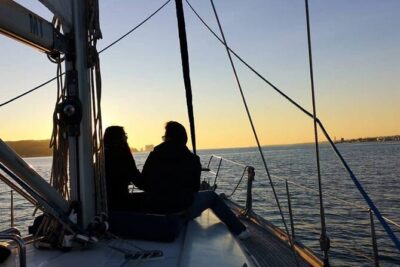
Sailboat Tour in Lisbon with drinks included | Morning and Sunset
Read our review →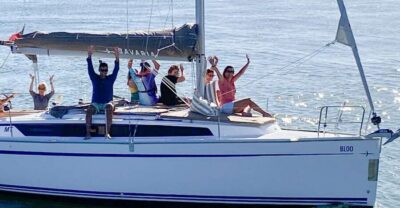
Tagus River Cruise, Morning, Day, Sunset, or Night
Read our review →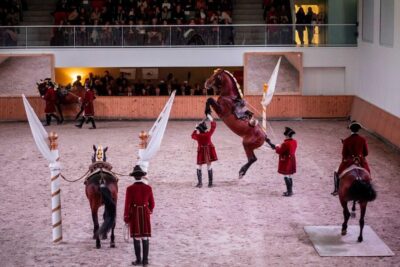
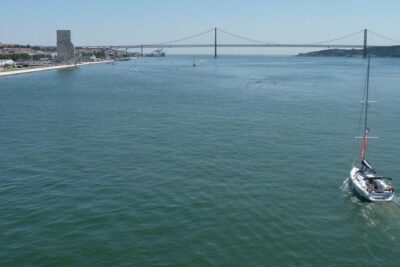
Morning Sailing Tour in Tagus River from Lisbon
Read our review →
Lisbon Original Morning Food Tour by Food Lover Tour
Read our review →
Early Morning TukTuk Tour – hotel/cruise ship pickup
Read our review →
Browse the lists this tour appears in