
Reviewed · WALKING TOURS
Lisbon´s Private Walking Sightseeing Tour
Lisbon clicks into place on foot. I love the way this private guide tailors the route, and I also like the São Jorge Castle fast-track help that saves time. The main drawback is you cover a lot of hills and cobblestones, so bring comfortable shoes and keep a moderate pace.
This is a focused walk through Lisbon’s old town, with short stops that add up into a really clear first-pass map of the city. Expect about 4 hours (around 5 hours at a relaxed pace), with an English-speaking guide and a mobile ticket. The tour starts at Arco da Rua Augusta and ends up near Miradouro de São Pedro de Alcântara, so you finish with a final viewpoint.
One more practical note: entrance fees are not included, so you choose how many interiors you want to pay for. Your guide can also assist with faster access for the castle, but the ticket itself is still something you’ll pay for.
In This Review
- Key points to know before you go
- Private walking in Lisbon: why this style fits the city
- From Arco da Rua Augusta into Baixa Pombalina and Rossio
- Terreiro do Paço and the Rua Augusta arch, Lisbon’s symbolic gateway
- Lisbon Cathedral and the rare Holy Door
- Roman Olisipo at Museu de Lisboa – Teatro Romano
- São Jorge Castle, how fast-track changes the experience
- Miradouro de Santa Luzia: viewpoint time with an Alfama focus
- Alfama lanes and Bairro Alto climbs, the city’s “two moods”
- Largo do Carmo and the Convento do Carmo ruins near Chiado
- Elevador de Santa Justa: smart engineering trivia with payoff views
- Praça Dom Pedro IV and the dark side of Lisbon’s public punishments
- Price and logistics: is $60.01 worth it?
- What to expect on the ground: pace, shoes, and language
- Who this tour is best for
- Should you book this Lisbon private walking tour?
- FAQ
- How long is the Lisbon walking tour?
- Is this tour private?
- What is included in the price?
- Are entrance tickets included?
- Where does the tour start and end?
- What language is the tour offered in?
- What happens if the weather is bad?
Key points to know before you go
- Private, you and your guide, so you can ask questions and adjust the pace on the spot
- Fast-track help for São Jorge Castle (ticket not included), which cuts down waiting time
- Old town focus, not Belém, so you get a tighter feel for Lisbon’s core neighborhoods
- Viewpoints built into the route, including Santa Luzia for a direct look into Alfama
- Historic layers on display, from Roman Olisipo to Moorish and Christian Lisbon
- It can be weather and preference-adjusted, with stop order changing if needed
More Lisbon miradouros linked on foot:
- Lisbon: History, Stories and Lifestyle Walking Tour★ 4.8 · 10,902 reviews
- Best of Lisbon Small-Group Guided Walking Tour★ 5.0 · 4,869 reviews
- Lisbon: Food and Wine Small Group Walking Tour★ 4.9 · 4,082 reviews
- Best of Lisbon Walking Tour: Rossio, Chiado & Alfama★ 4.9 · 2,700 reviews
Private walking in Lisbon: why this style fits the city
Lisbon rewards slow walking. The streets curve, the views pop into frame, and the hills make it feel like the city is always repositioning you. A private setup matters here because you are not stuck pacing with a big crowd. You can stop when something catches your eye, ask for a quick explanation, then move on.
I also like that the tour is designed around the historic center. If you only have a day or two, this kind of route helps you understand where Lisbon’s “story” lives: downtown rebuilding after the 1755 earthquake, medieval forts above, old Alfama lanes, and the mix of Catholic landmarks plus darker political history. You get a first-time map of the city that actually makes later exploring easier.
The value is also in the time savings. The itinerary includes several meaningful landmarks, but the biggest practical win is the castle line situation. If you have ever waited in a long queue in the sun, you already know why that matters.
From Arco da Rua Augusta into Baixa Pombalina and Rossio
The meeting point is right at the Arco da Rua Augusta area, a smart kickoff because it puts you at the seam between the grand downtown and the older neighborhoods above.
Stop 1 is Baixa Pombalina, Lisbon’s rebuilt downtown heart. This area was reconstructed after the devastating 1755 earthquake, and it shows in the layout: straight avenues, large squares, and 18th-century architecture. You get a sense of “planned Lisbon” here, which is a useful contrast later when the streets suddenly get tight, steep, and winding.
What I’d watch for at this stage is pacing. Baixa is visually impressive, but the “wow” comes fast. If your guide offers context about why the squares connect the way they do, you’ll enjoy the rest of the walk even more, because you’ll start seeing the city’s logic.
Terreiro do Paço and the Rua Augusta arch, Lisbon’s symbolic gateway
From Baixa you move toward Terreiro do Paço. This is the area where Rua Augusta is treated as Lisbon’s opening to the world. Passing under the arch is also described as a shift from darkness and ignorance to light and wisdom. Even if you don’t buy the metaphor word for word, it still works as a way to orient your brain.
Practically, this stop is short, which is fine. It is not about sitting around. It is about giving you a mental marker: this is the “portal” zone, and from here you are moving deeper into Lisbon’s layers.
If you want photos, do them here while the space is open and the lines are usually easier to manage. Later, viewpoints and alleys are more crowded and more time-consuming to frame.
Lisbon Cathedral and the rare Holy Door
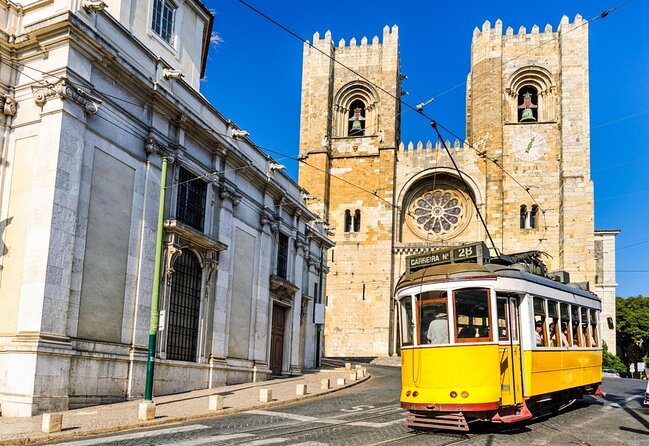
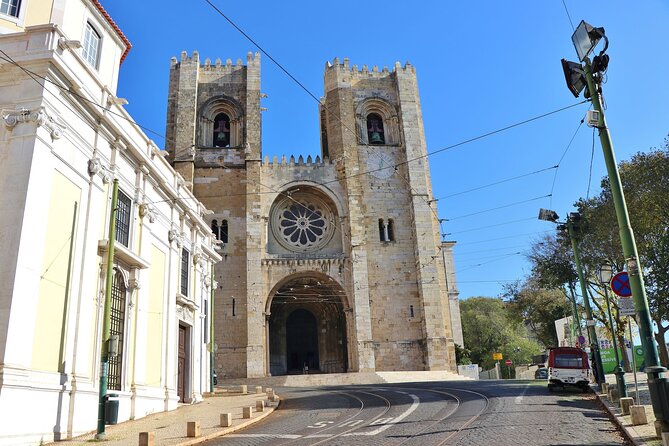
Stop 3 is Lisbon Cathedral, built in the 12th century, after Lisbon’s conquest from the Moors, when the site shifted from mosque to Christian church. The standout detail is that it has a Holy Door, described as the only church in Portugal with one, and one of a few in the Christian world.
I like this kind of stop because it gives you more than architecture. You learn the “why” behind the symbols, and Lisbon becomes less of a list of buildings and more of a living timeline of belief and power.
You’ll have limited time inside, since the stop is about 30 minutes. If you care about religious art or want time to read details rather than just glance, ask your guide at the start where to spend your interior minutes.
Some other seven-hills days worth pricing up




Roman Olisipo at Museu de Lisboa – Teatro Romano
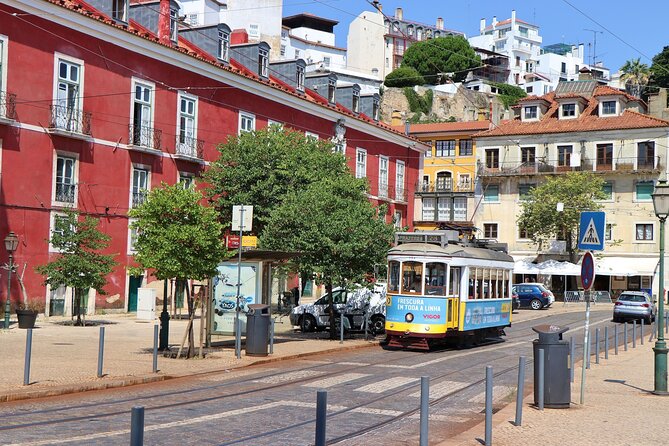
Next is the Museu de Lisboa – Teatro Romano, focused on the Roman Theatre. This theatre dates to the first century in the era of Emperor Augustus. You also hear how the Roman city was named Felicitas Iulia Olisipo, and how wealth and trade links shaped the place.
Here’s the practical payoff: Lisbon is often marketed as Moorish and medieval, but the Roman layer gives it extra depth. And the story about discovery is compelling: the Roman theatre was abandoned in the fourth century, then discovered in 1798, after the 1755 earthquake, during Lisbon’s rebuilding.
Because the stop is brief, you might want to decide early: do you want more time reading about the Roman city, or do you want to focus on the physical scale of the theatre space? Either way, it’s a memorable contrast to the castle hill that comes next.
São Jorge Castle, how fast-track changes the experience
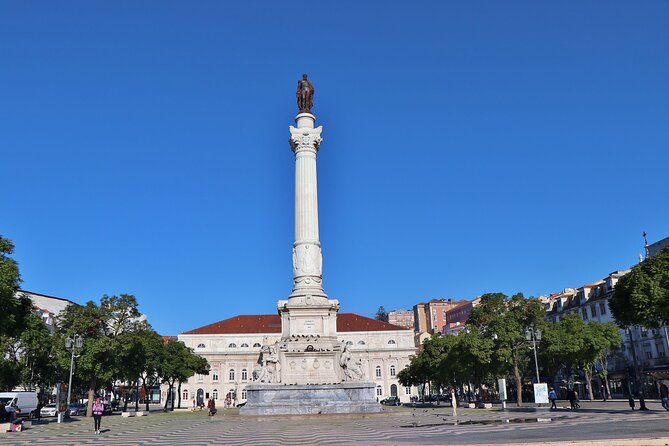
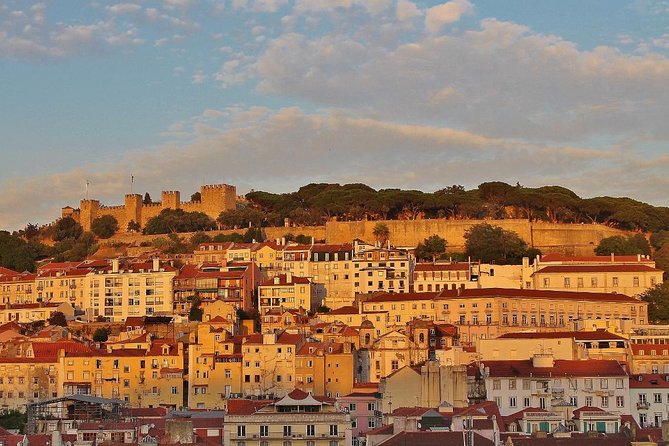
Stop 5 is Castelo de São Jorge, tied to Lisbon’s medieval defense and Muslim fortifications. The narrative here is clear: Moors fortified the medieval citadel, and in 1147 D. Afonso Henriques took the castle after a three-month siege, expelling Muslims and shifting it to Christian rule.
The tour includes a smart practical offer: if you want to visit inside, your guide can buy tickets for you with fast-track access. The key detail is that the ticket is not included, but the guide’s help can reduce how long you wait for your entry.
This is where private feels worth the money. In a group tour, people often spend time stuck at ticket desks or in lines. Here, the goal is to keep the day moving so you enjoy the castle viewpoints rather than just standing in queues.
One more reality check: São Jorge Castle is on a hill. Even if you are not going inside, you will be walking on uneven ground. If you’re sensitive to steep climbs, plan on taking breaks and using your guide’s pacing to keep you comfortable.
Miradouro de Santa Luzia: viewpoint time with an Alfama focus
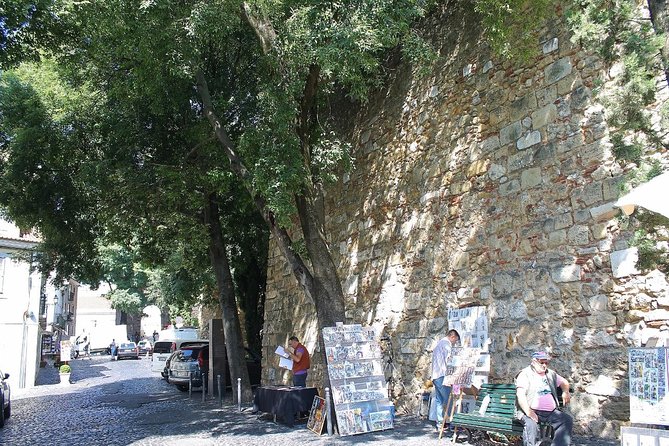
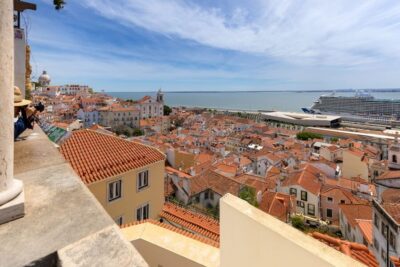
Stop 6 is Miradouro de Santa Luzia. This is one of Lisbon’s nicer lookout points because it frames Alfama directly below. On clear days, you can also see the mountain range toward the Arrabida Natural Reserve, around 50 km south.
This is a classic Lisbon moment: a viewpoint that makes you instantly understand why Alfama feels protected and perched. It also helps you prepare for what comes next. When you walk into Alfama after seeing it from above, you feel the neighborhood as a physical space, not just a name.
If the weather is hazy, don’t treat it as a disappointment. Use this time to focus on the shapes of rooftops and the street patterns. Those still tell the story even when far distances fade.
Alfama lanes and Bairro Alto climbs, the city’s “two moods”
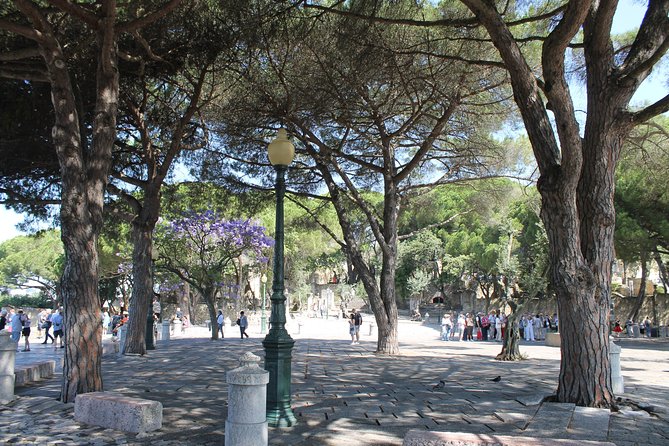
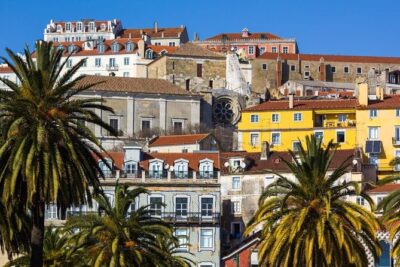
Stop 7 is Alfama, Lisbon’s oldest and one of its most typical neighborhoods. The name connects to Moorish roots, described as al-hamma, meaning baths or fountains. That etymology matters because it hints at daily life and water culture, not just architecture.
Then the route climbs to Stop 8, Bairro Alto, for a feel of what Lisbon offers for the rest of your stay. Bairro Alto is different from Alfama. You get more of the “evening Lisbon” vibe idea, but your guide’s job is to help you connect the dots so you don’t treat it as just another hill neighborhood.
Both stops are short, which means you will not do deep exploration like a dedicated neighborhood tour. But that’s the point. You are getting orientation and mood. If you like what you see, the rest of your Lisbon days will be easier because you’ll know exactly where you want to return.
Largo do Carmo and the Convento do Carmo ruins near Chiado
Stop 9 is Largo do Carmo, placed at the edge of the Chiado area. Here you’ll notice the historical jacaranda trees and the lingering ruins of the Convento do Carmo, built in the 14th century.
What’s useful is that this stop connects Lisbon’s Catholic past to what you can see today: the archaeology and Carmo Museum are installed in/around the former convent ruins. So even if you don’t enter museums, you understand why the space looks the way it does.
If you want museum time, ask your guide if it fits your interests. Entrance fees are not included, so your “yes” to a museum is a budgeting decision.
Elevador de Santa Justa: smart engineering trivia with payoff views
Stop 10 is Elevador de Santa Justa, described as a neo-Gothic structure built in 1902. You don’t have to ride it on this tour to enjoy the payoff, because the stop centers on the view from the top, looking back over Lisbon and toward Rossio Square.
The interesting engineering detail: the designer is Raoul Mesnier du Ponsard, and the guide will likely share the common Eiffel connection rumor. The tour’s information points out that it is not the Eiffel link people assume, and that Ponsard applied some French techniques and materials.
This kind of trivia is not random. It gives you a reason to pay attention when you see the structure again later in Lisbon. It also makes the viewpoint stop feel more like a conversation than a sightseeing checkbox.
Praça Dom Pedro IV and the dark side of Lisbon’s public punishments
The final historical stop is Praca Dom Pedro IV. This is where the tour shifts tone. The square is described as a center of the Holy Inquisition in Portugal, with public punishments, tortures, and killings happening there.
This is not comfortable content. But it’s also part of Lisbon’s past, and that matters if you want the city to feel honest. The stop is short, but it gives context for why certain public spaces carry heaviness, even when today they look like normal squares.
Then the tour ends near the viewpoint of Miradouro de São Pedro de Alcântara, which is a thoughtful way to close. You come down from the darkness of history into open air and a final look over the city.
Price and logistics: is $60.01 worth it?
At $60.01 per person, you’re paying for three things: private time with a professional guide, a tightly grouped set of historic stops, and one meaningful time-saver.
First, it’s private. That’s not a small detail in Lisbon. One person needs a slower pace, another wants extra photos, someone else wants more history. A private guide can handle those shifts, including adjusting the itinerary to your interests.
Second, the São Jorge Castle fast-track help is a real value point. Castle lines can eat your morning. If you arrive at the right time and avoid waits, you gain hours of sightseeing energy.
Third, entrance fees are not included. That’s worth knowing before you book. You might choose not to enter every stop, and you’ll likely spend money based on what you pick. For some people, that’s a plus because you control costs. For others, it means the final total depends on your choices.
Given the route includes multiple major sites across several layers of Lisbon’s past, the pricing feels fair if you want a guided first-timer orientation. If you already know Lisbon well and prefer DIY walking with no guide, you might find this less economical.
What to expect on the ground: pace, shoes, and language
This is a walking tour with moderate physical requirements. That matches the reality of Lisbon: hills, stairs, and cobblestones. Bring comfortable shoes and sunscreen, and plan to move at a pace that keeps you comfortable rather than rushing for photos.
Language is listed as English, and some guides are praised for strong communication. Still, English can vary from guide to guide anywhere you go. If you want high-detail explanations without any strain, ask a question or two right at the start. You’ll quickly feel if the guide is matching your expectations.
Also, note that the stop order can change due to your preferences or weather. This is good news, because Lisbon weather and Lisbon hills can make schedules shift.
Who this tour is best for
This is a great fit for:
- First-time visitors who want a guided map of Lisbon’s historic center
- People who like stories tied to specific places, not just facts read off a plaque
- Anyone who values flexibility, especially with photos and pace
- Travelers who want a viewpoint-driven itinerary without having to plan every stop
It may be less ideal for:
- Anyone who wants a long list of museum entrances included in the price
- People who struggle with steep, uneven walking and do not like hills
- Travelers who prefer purely independent sightseeing with no guided explanation
If you fall into the first group, you’ll likely come away with a much clearer sense of Lisbon neighborhoods and how they connect.
Should you book this Lisbon private walking tour?
If you want an efficient, guided way to understand Lisbon’s old town, I’d book it. The private format plus the São Jorge Castle fast-track help are the kinds of practical details that improve the day immediately. And the mix of downtown rebuilding, Moorish and Christian shifts, Roman traces, and viewpoint stops creates a route that feels like you learned something, even if you only planned to sightsee.
I would book with one mindset: use the guide to decide what to enter. Entrance tickets are not included, so spend your money where you genuinely want it. If you do that, this tour becomes a smart foundation for the rest of your Lisbon days.
FAQ
How long is the Lisbon walking tour?
It lasts about 4 hours, with the description also referencing a private 5-hour experience depending on pacing and conditions.
Is this tour private?
Yes. It is a private tour, meaning only your group and your guide participate.
What is included in the price?
You get a professional guide, private guiding for your group, explanations inside monuments or locations, and guaranteed help to skip long lines at São Jorge Castle (fast-pass). The experience can also be adjusted to your interests, and your guide can share tips for the rest of your stay.
Are entrance tickets included?
No. Entrance tickets to monuments or parks are not included, so you decide what to enter and pay separately.
Where does the tour start and end?
It starts at Arco da Rua Augusta, R. Augusta 2, 1100-053 Lisboa, Portugal, and ends at Miradouro de São Pedro de Alcântara, R. de São Pedro de Alcântara, 1250-238 Lisboa, Portugal.
What language is the tour offered in?
It is offered in English.
What happens if the weather is bad?
This tour requires good weather. If it is canceled due to poor weather, you are offered a different date or a full refund.
Fresh across the seven hills
- Porto Private Tour from Lisbon
★ 4.5 · 6 reviews - VIP transfer from the airport to Lisbon hotels
★ 5.0 · 6 reviews - Full-day Private Tour: Fátima Sanctuary, Batalha, Nazaré, Óbidos
★ 5.0 · 6 reviews - Lisbon Photoshoot: Capture Your Adventure
★ 5.0 · 6 reviews - Lisbon: Romantic Sunset Cruise With Wine & Portuguese Tapas
★ 5.0 · 6 reviews - Arrábida Wine Tour – 3 Wineries, Traditions & Views from Lisbon
★ 4.5 · 6 reviews - Lisbon: Sintra, Pena Palace, Belém Tour + sunset Boat Cruise
★ 5.0 · 6 reviews
Walking Tours, compared.
Best of Lisbon Small-Group Guided Walking Tour
Read our review →
Best of Lisbon Walking Tour: Rossio, Chiado & Alfama
Read our review →

Sintra & Cascais Day Tour with Pena Palace Entry and Gardens Walk
Read our review →
Lisbon Roots – Small group Food & Culture Walking Tour w/tastings
Read our review →
Starter Walking Tour to the highlights in German
Read our review →Browse the lists this tour appears in