
Reviewed · WALKING TOURS
Mouraria: The Multicultural District – Private Walking tour
Lisbon has neighborhoods that tell different stories, and Mouraria is one of them. This private walking tour threads together viewpoint stops, ornate churches, and street art, all while explaining how this once-messy district shaped the city’s cultural identity. You also get a guide who can slow things down and connect the dots, especially around Moorish influence and the roots of Fado music.
What I like most is the mix of stuff you would normally see separately. You get street art on historic walls, then you pivot to places like Largo da Severa where the story of Fado is linked, and finally you end in a square that reflects Lisbon’s urban change. I also love that the experience is private, so Luis can tailor pacing and attention to your group.
One thing to consider: this is a 3-hour walk with many short stops, so it is not the kind of outing where you can take long breaks or wander off on your own without losing the thread. If your group wants lots of free time, you might feel a bit guided the whole way.
In This Review
- Key highlights worth your time
- Mouraria feels like Lisbon’s cultural crossroads
- 3 hours and a private group: what you get for the money
- Starting where Intendente meets Mouraria
- Miradouro Chao do Loureiro: your quick orientation over downtown
- Igreja Paroquial de Sao Cristovao e Sao Lourenco: styles stacked in one square
- Casa da Achada and Mario Dionísio: street art in a cultural hub
- Largo dos Trigueiros and Camila Watson: art that sounds like a story
- Rua Marquês de Ponte de Lima: the old remnant you might miss
- Igreja de Nossa Senhora do Socorro: Moorish suburbs and a surprising nickname
- Largo da Severa: the cradle of Fado music
- Praca Martim Moniz and Largo do Intendente Pina Manique: multicultural, then renewed
- How to get more out of the guide and the photos
- What you should wear and how to pace yourself
- Who this tour is best for
- Should you book Mouraria: The Multicultural District (private walking tour)?
- FAQ
- How long is the Mouraria private walking tour?
- What language is the tour offered in?
- Is this tour really private?
- What does the tour include?
- Are tickets or admissions required during the stops?
- What is the cancellation policy?
Key highlights worth your time

- Street art with historical context in a neighborhood you might otherwise pass through fast
- Fado origin stops, including Largo da Severa, tied to the district’s Moorish past
- Churches and squares that mix styles, from Mannerist to Baroque elements
- A viewpoint over downtown at Miradouro Chao do Loureiro near Alfama and Mouraria
- Photo help with a dedicated professional photographer guide on the walk
More Lisbon miradouros linked on foot:
- Lisbon: History, Stories and Lifestyle Walking Tour★ 4.8 · 10,902 reviews
- Best of Lisbon Small-Group Guided Walking Tour★ 5.0 · 4,869 reviews
- Lisbon: Food and Wine Small Group Walking Tour★ 4.9 · 4,082 reviews
- Best of Lisbon Walking Tour: Rossio, Chiado & Alfama★ 4.9 · 2,700 reviews
Mouraria feels like Lisbon’s cultural crossroads

Mouraria is the part of Lisbon where you can still feel the city’s layers in the streets. The tour keeps you moving through that story, from old religious buildings to everyday squares, and it connects it to Moorish history. That matters because it helps you read Mouraria as more than just a trendy photo spot.
I like that the route doesn’t treat history like a museum lecture. Instead, it uses specific places, and it points you toward why people associate the area with the origins of Fado. Even if you already know some Fado basics, the neighborhood context makes the music feel more rooted in place.
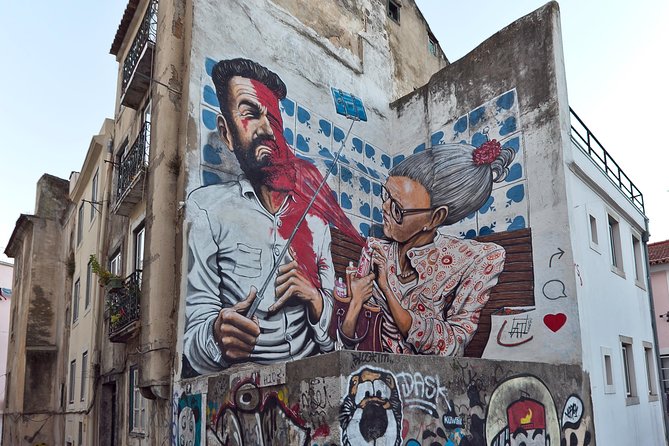
The street art focus is a big part of the appeal. Mouraria has historic architecture, but it is also a living neighborhood, and the tour shows how contemporary art now shares wall space with older life.
3 hours and a private group: what you get for the money
The price is $32.51 per person for about 3 hours, and you are booking a private tour, meaning only your group participates. You are also getting not just a guide, but a local guide plus a professional photographer guide, which changes the feel of the experience. If you care about photos, this alone can make the outing feel more efficient than “just walking and hoping for good shots.”
Another value point: the scheduled stops show free admission tickets for each location on the route. So you are not stacking the day with extra entry fees. That keeps the cost more predictable.
A quick practical note. The tour requires a minimum of 2 people per booking, so it is not built for solo travelers who might be hoping to book single. If you are traveling as a pair or with friends, the pricing and private access start to feel much more worthwhile.
Starting where Intendente meets Mouraria
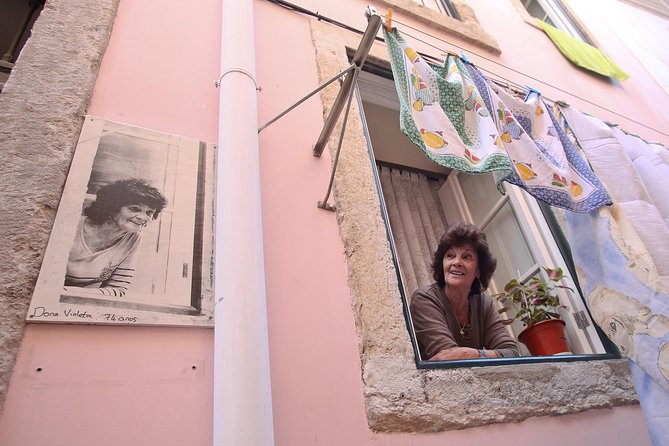
You start at R. dos Fanqueiros 170 and end at Largo do Intendente Pina Manique. Both are near public transportation, and the walk is oriented around the Intendente area, which is convenient if you are already using the metro to get across town.
This start-to-finish setup is helpful. You are not turning around repeatedly, and you are walking a route that makes geographic sense, from higher viewpoint ground down through the neighborhood’s main squares and art stops.
If you want the best timing, plan to arrive a few minutes early so your group can meet up, settle in, and get moving without a rushed start.
Miradouro Chao do Loureiro: your quick orientation over downtown
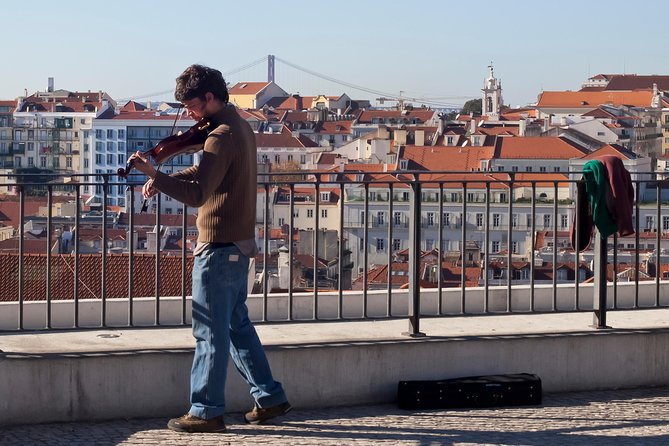
The tour’s first stop is Miradouro Chao do Loureiro, a viewpoint hanging over downtown Lisbon between Alfama and Mouraria. You get around 20 minutes here, and because it is a viewpoint rather than an indoor site, it is a great early “get your bearings” moment.
Viewpoints in Lisbon do more than show pretty buildings. They help you understand street geography, why certain areas feel tight and winding, and how the hills shape daily life. After this, Mouraria’s streets make more sense, because you have already seen the wider layout.
This stop also sets a relaxed tone. It is free, it is scenic, and it is an easy way to start a walking tour without immediately feeling like you are rushing from one doorway to the next.
Some other seven-hills days worth pricing up




Igreja Paroquial de Sao Cristovao e Sao Lourenco: styles stacked in one square

Next comes Igreja Paroquial de Sao Cristovao e Sao Lourenco, described as a Mannerist church with Baroque palace elements and even a Gothic door. The tour pairs this building with one of the Mouraria quarter’s most popular squares.
Why this stop matters for you: church architecture in Lisbon can look similar at street level unless someone points out the details. Here, you get help noticing stylistic shifts, and you learn to read the building as a timeline rather than one static landmark.
You also get a social moment. Squares are where Lisbon life happens in plain view, and this stop gives you a good break between walking legs. Admission is free, so you can focus your time on looking and listening instead of paying a ticket and moving on.
Casa da Achada and Mario Dionísio: street art in a cultural hub
Then you shift to Casa da Achada – Centro Mario Dionísio, a social and cultural center rooted in Mario Dionísio’s legacy. The stop is built around a contrast: medieval buildings on one side and modern street art energy on the other.
This is where the tour’s “old and new” rhythm really clicks. You are not only seeing pretty murals, you are learning that street art is part of how Mouraria expresses identity today. It helps you notice the difference between random graffiti and intentional art attached to community space.
You get about 15 minutes here. That is enough time to look around, take photos, and understand what you are seeing without turning it into a long indoor detour. If your group likes contemporary culture, this is the stop that will likely feel most current.
Largo dos Trigueiros and Camila Watson: art that sounds like a story

Largo dos Trigueiros is the next artistic checkpoint, focused on the soulful street art projects of Camila Watson. Expect about 15 minutes, and treat this as a chance to slow down and really look at the walls, not just take a quick snapshot.
What you can do during this stop: use the photographer guide. Ask for a couple of angles where the art and the street texture both show up. In tight Lisbon lanes, this kind of help saves you from the classic tourist problem of getting blurry faces and cropped murals.
Since entry is free, you can keep your budget simple here. The value comes from interpretation, and the guide context is the difference between seeing street art and understanding why it is where it is.
Rua Marquês de Ponte de Lima: the old remnant you might miss
The tour continues on Rua Marquês de Ponte de Lima, where you get talk about the first modern street of Mouraria compared with the older palaces, churches, and convents nearby. You also learn about the only genuine tower of the Old Remparts.
This stop is short, around 15 minutes, but it is the kind of detail that makes a neighborhood feel real. Lisbon is full of history, but it is easy to walk right past it if you do not know what to look for. Learning what makes this tower distinct gives you a concrete landmark to anchor the story.
Think of it as a visual “memory hook.” Later, when you pass similar walls elsewhere, you will have a better sense of what is genuinely preserved versus what is just implied by architecture.
Igreja de Nossa Senhora do Socorro: Moorish suburbs and a surprising nickname
Next is Igreja de Nossa Senhora do Socorro, described as the hub of Mouraria since the time it was a Moorish suburb. The tour also connects it to the Company of Christ legacy and the astonishing phrase little Punjab.
This stop matters because it shows how Mouraria’s identity has been shaped by more than one chapter. The Moorish connection gives you the historical layer, and the modern demographic nickname points to the neighborhood’s later evolution.
You get about 15 minutes. It is not a long religious visit, so you should treat it as an observation stop. You will get more out of it if you look at the building, listen for what the guide highlights, and then notice how the area around the church functions as a community hub.
Largo da Severa: the cradle of Fado music
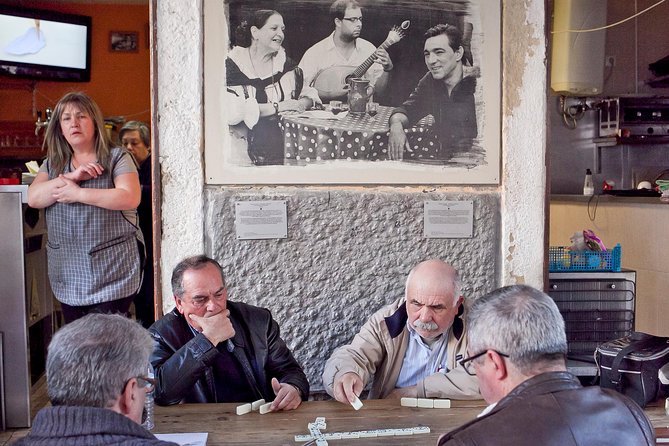
At Largo da Severa, the focus shifts directly to the theme of Fado. This is one of the most important stops on the route, and it is planned for about 20 minutes. The tour describes it as the cradle of Fado music.
Even if you do not plan to attend a Fado show that evening, this stop helps you connect the music to a specific geography. Fado is not just a sound. It is a style associated with everyday life, neighborhood identity, and history. Mouraria gives you the setting.
Use your time well here. Let your guide explain the connections, and then look around the square as if you were trying to picture how people would gather in earlier eras.
Praca Martim Moniz and Largo do Intendente Pina Manique: multicultural, then renewed
The tour makes its multicultural stop at Praca Martim Moniz, described as one of Lisbon’s most multicultural squares. You get about 20 minutes, which is a generous window for a square stop. This is where you can observe daily diversity in a very tangible way, and it is a good moment to reset your energy.
Then comes Largo do Intendente Pina Manique, a case study in Lisbon urban renewal. The timing is about 15 minutes. This is not just a “pretty place” stop. It is a reminder that neighborhoods change, and Mouraria’s story includes shifts in how the city developed, repaired, and rethought public spaces.
If you like understanding the city at street level, you will probably enjoy these final two stops. They pull the story forward into modern Lisbon, so you leave with a neighborhood that feels like an ongoing chapter, not a closed chapter in the past.
How to get more out of the guide and the photos
One of the strongest reasons to choose a private version is that you can ask questions and get follow-ups. In particular, the guide approach here is known for being passionate and accommodating, with a focus on how Mouraria history connects to Fado and neighborhood identity.
Add in the professional photographer guide, and the tour becomes easier if you care about photos. You can ask for help composing shots that show both the street art and the historic surroundings. You are also more likely to get clear images than if everyone is trying to coordinate photos while walking.
A practical tip: during each short stop, pick one thing to photograph and one thing to remember. For example, in church stops, photograph a door or facade detail, then note the style the guide points out. In street art stops, photograph a wall section that includes context, then listen for why the art is placed there.
What you should wear and how to pace yourself
This is a walking tour with multiple short stops over about 3 hours. So wear shoes that are comfortable enough for uneven sidewalks and tight lanes, and plan to stand, look, and photograph more than you sit.
Since most stops are described as free admission, your time is the only real cost. If you get tired easily, tell the guide early so they can adjust pacing. A good guide will help you keep the flow without making you feel like you are falling behind.
Also, keep your expectations realistic. This is not a slow, sit-down history lecture. It is a guided walk where every stop is designed to add a piece of the Mouraria story quickly and clearly.
Who this tour is best for
This tour is a strong fit if you want:
- A guided way to understand Mouraria’s multicultural and Moorish past
- A street-level approach to Fado origins, especially through Largo da Severa
- Street art plus architectural detail, not street art alone
- A private format that works for couples and small groups
It is also a good option for people who want structure. If you have only a few hours in Lisbon and you do not want to build a route yourself, the “start at R. dos Fanqueiros, end at Largo do Intendente Pina Manique” flow gives you a clear plan.
If you are the type who prefers huge monuments and long museum hours, you might find Mouraria more about streets, squares, and storytelling than about monumental interiors. But if you enjoy getting a neighborhood’s mood in a few hours, this hits the mark.
Should you book Mouraria: The Multicultural District (private walking tour)?
I think you should book if your ideal Lisbon day includes street art with context, church details explained in plain language, and a neighborhood story that connects Moorish history to the popular idea of where Fado took shape. The private format plus the photographer guide makes it feel more like a planned experience than a random wander.
I would hold off if your group wants lots of downtime, or if you are traveling solo and do not meet the minimum of 2 people per booking. Also consider that the outing is only about 3 hours, so it is best when you want a focused neighborhood sampler rather than a deep, all-day exploration.
If Mouraria is on your list, this one is a smart way to see it with direction, and it should leave you with photos and stories you can actually connect later.
FAQ
How long is the Mouraria private walking tour?
The tour lasts about 3 hours.
What language is the tour offered in?
It is offered in English. It may also be operated by a multi-lingual guide.
Is this tour really private?
Yes. It is a private tour, so only your group participates.
What does the tour include?
It includes a local guide, a professional guide, a professional photographer guide, and the private tour experience.
Are tickets or admissions required during the stops?
The stops listed on the route show admission tickets as free.
What is the cancellation policy?
You can cancel for a full refund up to 24 hours before the experience’s start time.
Fresh across the seven hills
- Full-day Private Tour: Fátima Sanctuary, Batalha, Nazaré, Óbidos
★ 5.0 · 6 reviews - Porto Private Tour from Lisbon
★ 4.5 · 6 reviews - VIP transfer from the airport to Lisbon hotels
★ 5.0 · 6 reviews - Lisbon Photoshoot: Capture Your Adventure
★ 5.0 · 6 reviews - Lisbon: Romantic Sunset Cruise With Wine & Portuguese Tapas
★ 5.0 · 6 reviews - Arrábida Wine Tour – 3 Wineries, Traditions & Views from Lisbon
★ 4.5 · 6 reviews - Lisbon: Sintra, Pena Palace, Belém Tour + sunset Boat Cruise
★ 5.0 · 6 reviews
Walking Tours, compared.
Best of Lisbon Small-Group Guided Walking Tour
Read our review →
Best of Lisbon Walking Tour: Rossio, Chiado & Alfama
Read our review →

Sintra & Cascais Day Tour with Pena Palace Entry and Gardens Walk
Read our review →
Lisbon Roots – Small group Food & Culture Walking Tour w/tastings
Read our review →
Starter Walking Tour to the highlights in German
Read our review →Browse the lists this tour appears in