
Reviewed · TUK TUK TOURS OF LISBON
Tour TukTuk 3 hours Lisbon Free Pick-up
Lisbon’s hills turn a trip into a workout. This 3-hour tuktuk loop covers big sights without wearing you out, with quick stops at miradouros, churches, and historic neighborhoods. I like how the route mixes viewpoints with street-level details, so you get both the postcard views and the real Lisbon textures.
Two things I really like: first, the private group setup means you can move at your pace, and the guide can explain what you’re seeing without rushing. Second, the stops are timed well, with short visits to places like the Miradouro das Portas do Sol and Miradouro da Graça so you’re not trapped in ticket lines. One drawback to consider is that some major places have entrances not included, so you may still want to budget a bit for tickets if you choose to go inside.
In This Review
- Key highlights you should know
- Tuktuk comfort, plus a smart route
- Price and logistics that actually matter
- Meeting point to finish: what to expect from start to end
- Stop by stop: what you’ll get out of each moment
- Lisbon Cathedral: oldest roots, quick orientation
- Miradouro das Portas do Sol: the Tagus view that sells Lisbon
- Amália Rodrigues pavement art: street-level Lisbon culture
- Miradouro da Graça: tiles, convent area, and the long hill story
- Vila Berta: industrial heritage, explained on the go
- Miradouro da Senhora do Monte: maximum panoramic payoff
- Church of St. Vincent de Fora: outside viewing, big symbolism
- Saint Clara market area: market streets and fair days
- National Pantheon: where fado and sports meet
- Alfama: the oldest neighborhood, explained from the street
- Chafariz de Dentro: a fountain with a political past
- House of Brás de Albuquerque and Saramago: layered materials and eras
- Igreja de Nossa Senhora da Conceição Velha: Pombaline rebuilding after 1755
- Praca do Comercio: Lisbon’s grand entrance to the river
- Cais do Sodré, Pink Street, and Chiado: nightlife and culture zones
- Igreja de São Roque: one of the Jesuit survivors
- Miradouro São Pedro de Alcântara and the Convent area: views plus quiet structure
- Bairro Alto and the Carmo ruins: streets after dark energy
- The guide makes or breaks it, and this one usually wins
- Small time saver: what not to expect
- Who should book this tuktuk tour
- Should you book this 3-hour Lisbon tuktuk tour?
- FAQ
- Is this a private tour?
- How long is the tour?
- What language is the tour offered in?
- Does the price include entrance tickets to monuments?
- Where does the tour start and end?
- Are children allowed?
- Can I bring a large suitcase?
- Is smoking or alcohol allowed during the tour?
- What if the weather is poor?
Key highlights you should know
- Tuktuk comfort for the hills: see more without walking climb after climb
- Miradouro sequence: Portas do Sol, Graça, Senhora do Monte, and São Pedro de Alcântara in one flow
- History through neighborhoods: Alfama, Chiado, Bairro Alto, and the riverfront grouped logically
- Photo-ready details: the Vhils street artwork of Amália Rodrigues and the tiled views around Graça
- Engaging guides: rides with guides like Rodrigo, Miguel, Fernanda, Alexandra, and Thiago are described as fun and informative
- Flexible rescheduling: the company works with you if weather changes the plan
Other tuk-tuk climbs through the old quarters:
- True 4Hour Private Tuk Tuk Tour: Discover Lisbon with a Local!★ 5.0 · 8,008 reviews
- Lisbon: Private Guided Tuk-Tuk Tour with Hotel Pickup★ 4.9 · 4,552 reviews
- Private Lisbon Sightseeing Tuk-Tuk Tour: Alfama, Belém & More★ 5.0 · 4,277 reviews
- Lisbon Highlights: Private Tuk Tuk Tour Adventure Sightseeing★ 5.0 · 3,284 reviews
Tuktuk comfort, plus a smart route
This is a private tuktuk tour built for getting your bearings fast. Lisbon can feel like it’s all stairs and steep turns, so the tuktuk is not just fun, it’s practical. In about three hours, you get a broad sweep of the city’s main viewpoints and districts, plus a few architecture stops that help the whole place make sense.
The best part for first-timers is how the route is organized. It flows from historic religious landmarks to viewpoint after viewpoint, then shifts toward the neighborhoods and finally the riverfront. You don’t need to plan anything or guess where to go next, which is a relief when you’re tired or your feet are already complaining.
Price-wise, $48.12 per person is a fair deal for a private, guided ride that includes transportation and a guide in English. You are not paying for entrance tickets or meals, so if you want lots of interior access, you’ll spend a little extra. If you mainly want to see exteriors, viewpoints, and key street scenes, this is strong value for the time you have.
Price and logistics that actually matter
Here’s the deal in plain terms. The tour includes private transportation and a guide, but monument entrances are not included. That means places like Lisbon Cathedral and the Pantheon are listed as not included for admission, so you decide whether to add tickets on site.
You also need to be realistic about timing. Several stops are short, often around 5 to 15 minutes. That’s exactly why the tour works, because you’re seeing many locations in a single loop. If your travel style is slow and lingering, you might feel a little “briefly here” at some points. Still, the short stops can be a big win for photos, orientation, and quick learning.
The tour notes include a few practical limits: no children under 7, large suitcases aren’t allowed, and there’s no smoking or alcohol on board. If you’re traveling light, you’ll enjoy the ride more because you’re not wrestling bags or trying to fit extra bulk into a small vehicle.
Meeting point to finish: what to expect from start to end
The tour starts at Rua do Comércio, 1100 Lisboa, Portugal and ends back near the meeting point. That is useful because it keeps you near the center area by the time you’re done. You can also plan an easy next step afterward, like a late coffee or dinner near the river and downtown.
The operator is Chaparru’s Tours, and the tour is described as private, meaning it’s just your group. Reviews also highlight flexibility when schedules get disrupted, with the guide and the owner coordinating changes when weather moved the original day. That matters in Lisbon, where sudden rain can pop up and change your comfort level fast.
Stop by stop: what you’ll get out of each moment
Some other seven-hills days worth pricing up



Lisbon Cathedral: oldest roots, quick orientation
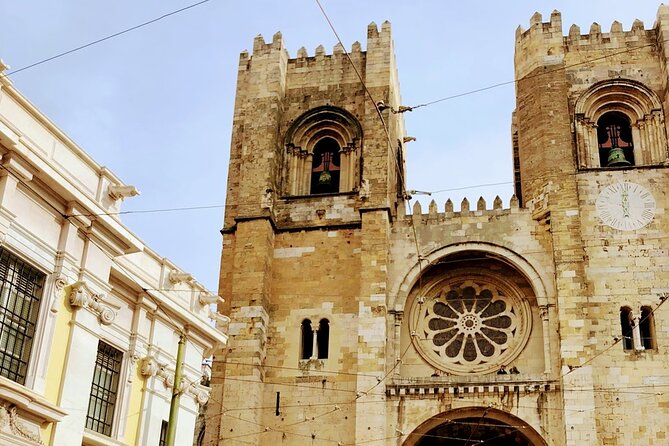
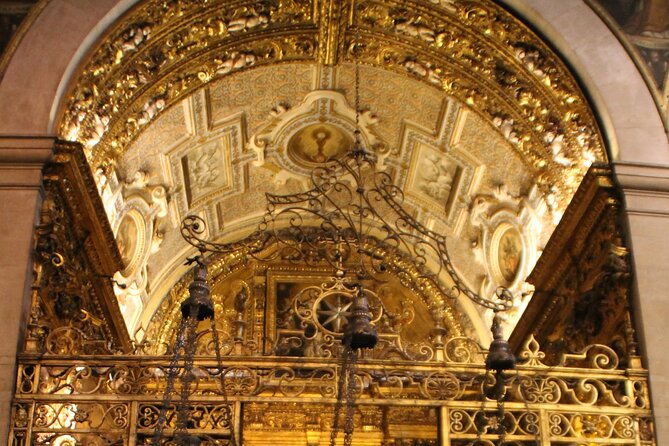
Your first big anchor is Lisbon Cathedral (Sé de Lisboa). It traces back to the aftermath of the Christian capture of Lisbon, with the current cathedral construction starting in 1147, making it the oldest church in today’s Lisbon core. The stop is short (about 15 minutes), and admission is not included, so you’re usually there for the exterior and immediate surroundings unless you opt to buy a ticket.
What I like about starting here is how it gives Lisbon a historical spine. You see the “old Lisbon” form early, then the tour moves toward viewpoints and neighborhoods that show how the city layered itself over centuries.
Miradouro das Portas do Sol: the Tagus view that sells Lisbon
Next comes Miradouro das Portas do Sol. The name ties back to a Moorish-era gate connected to the sun, and the site is also linked to the old walls. This viewpoint is free and about a 10-minute stop.
This is the kind of place where even if you’re not a photo person, you’ll still understand what you’re looking at. The Tagus River stretches out, the city’s rooftops stack together, and the hills start to make sense as more than just obstacles.
Amália Rodrigues pavement art: street-level Lisbon culture
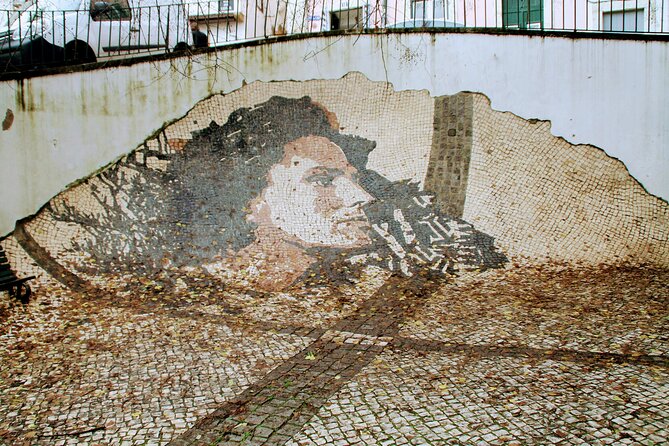
Then you’ll spot the Vhils artwork of Amália Rodrigues in Portuguese pavement. This is a quick stop, and it’s valuable because it shows Lisbon isn’t only monuments. It’s also artists, street craft, and local identity carved into everyday surfaces.
If you’re traveling with someone who loves “small finds,” this stop often becomes the one they remember because it feels current and personal, not like a museum box.
Miradouro da Graça: tiles, convent area, and the long hill story
Miradouro da Graça (with ties to Sophia de Mello Breyner Andresen) is next, close to the Convent of Graça. Admission is not included for the convent-related components mentioned, but the viewpoint stop is free. You also get a chance to notice tile panels and the layers of religious history around the area.
This stop works well because it’s not just a view, it’s a context moment. The story here connects the hill of São Gens and the medieval siege era, then ties into the modern feel of the Graça district. It’s a nice bridge from “old walls and old faith” to “still a lived-in neighborhood.”
Vila Berta: industrial heritage, explained on the go
You’ll also pass through or stop for Vila Berta, described as part of Lisbon’s industrial heritage. The area is tied to housing built for factory workers and reflects how industrial periods shaped neighborhoods, not just factories.
This is a good moment for you if you like social history. It’s also a reminder that Lisbon’s identity isn’t only seaside romance and tiled facades.
Miradouro da Senhora do Monte: maximum panoramic payoff
Then you head to Miradouro da Senhora do Monte, one of the best spots for sweeping views. From here you can see south toward the Palha Sea, parts of central Lisbon, Saint George Castle, and the Tagus estuary. To the west you look toward Bairro Alto and out toward the Monsanto Forest Park, and to the north you get the Avenida Almirante Reis valley line.
This stop is about 15 minutes and is free. Also nearby is the small old Hermitage of Our Lady of Mount, associated with the tradition that King Afonso Henriques camped here in 1147. The tour description includes a legend about a stone chair inside the hermitage, where pregnant women who sat there were said to have easier births. Whether or not you buy legends, it makes the setting feel human and specific.
Church of St. Vincent de Fora: outside viewing, big symbolism
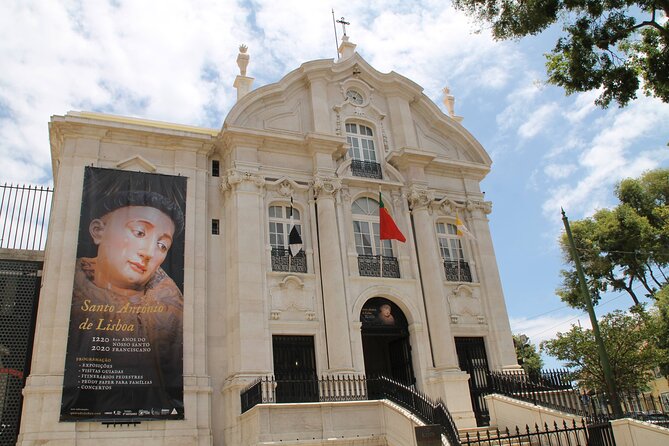
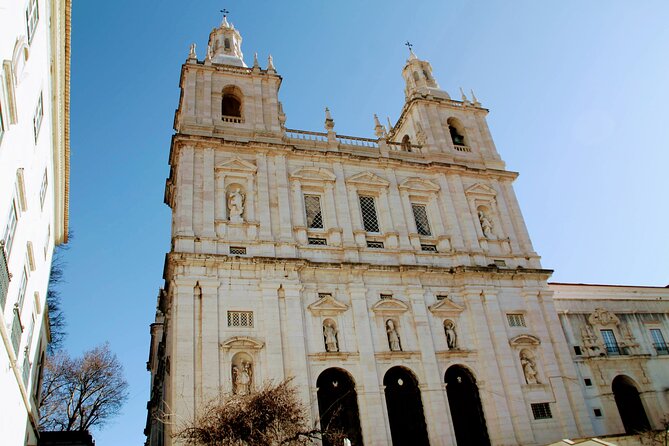
At Church of St. Vincent de Fora, the plan is typically to visit from the outside, and admission is not included. Construction began in 1582, with earlier temple history linked to São Vicente, Lisbon’s patron saint.
You’ll also hear that the church area includes the Pantheon of the Dukes of Bragança, where members of the Bragança Dynasty are buried. Even from outside, this matters because it shows Lisbon’s shift from medieval city to dynastic power and national identity.
Saint Clara market area: market streets and fair days
Next is the Saint Clara market area. The schedule detail matters: there’s a craft and second-hand feel, with a “thief fair” held on Tuesdays and Thursdays, and a second-hand and handicrafts fair on Mondays and Thursdays. The tour frames it as having roots in the 13th century, even if locations changed over time.
Even if you do not shop, this stop is useful because it gives Lisbon a local rhythm. It’s not just a look, it’s a chance to understand how people find their everyday bargains and stories.
National Pantheon: where fado and sports meet
You’ll then reach Panteão Nacional (National Pantheon), located in the Church of Santa Engrácia. The tour says admission is not included and the stop is about 30 minutes, which is generous compared to many other points on the route.
This is one of the places where Lisbon’s identity becomes very clear. The pantheon is intended to honor citizens for services to the country, and it includes the graves of Amália Rodrigues, the fado diva, and Eusébio, the famed football player. The church construction is described as starting in 1682 and finishing in 1966, with lots of church-related stories connected to the site. If you want one interior history stop, this is a good candidate.
Alfama: the oldest neighborhood, explained from the street
Next comes Alfama, Lisbon’s oldest neighborhood, with a quick stop of around 10 minutes. The name is tied to Arabic roots (al-hamma), linked to fountains or hot water baths, and the tour notes that Alfama was a thermal area used for health.
This stop is free. What you’ll enjoy here is the “feel” of the place. Even on a short visit, you can recognize why Alfama is so iconic: narrow lanes, old textures, and the sense that the city’s past is still nearby.
Chafariz de Dentro: a fountain with a political past
At Chafariz de Dentro, you get a fountain story with a sharp edge. It’s located in Alfama, and the oldest record mentioned is from 1285 as Fountain of Horses. The tour adds that in 1373, the Castilians took bronze heads of the fountain after the sack of Lisbon.
This stop is free and about 5 minutes. The tour also shares that the fountain had different waterspouts connected to social groups, with regulation described for how taps were assigned. That detail helps you see infrastructure as power, not just plumbing.
House of Brás de Albuquerque and Saramago: layered materials and eras
The route also references Hause of Nozzles, also known as the House of Brás de Albuquerque, which houses the museum of writer José Saramago on the second floor. The first floor is described with Roman-era salt tanks, a medieval tower, and Mudejar pavement, plus an Italian Renaissance influence in the diamond-shaped stone facade.
Admission is not listed as included, so expect this as a look-through and explanation type stop, not a full museum visit unless you plan for it separately. Still, it’s a great “how Lisbon is built” example: Roman, medieval, and Renaissance influences all in one structure.
Igreja de Nossa Senhora da Conceição Velha: Pombaline rebuilding after 1755
Then you’ll visit Igreja de Nossa Senhora da Conceição Velha. This church blends architectural styles due to reconstruction after the 1755 earthquake. The first church on the site is identified as the Church of Our Lady of Mercy, described as the second largest Manueline temple in Lisbon after Jerónimos in Belém.
This stop is free and about 5 minutes. Even a quick glance helps, because the interior layout and rebuilt style fit the broader story of Lisbon’s resilience.
Praca do Comercio: Lisbon’s grand entrance to the river
Next is Praça do Comércio, one of Europe’s largest squares. The tour notes that it was the site of Portuguese royal palace life for about two centuries. You’ll also hear about Martinho da Arcada, the old café in one of the square’s buildings, and the Triumphal Arch on the north side from Rua Augusta.
Admission is free and the stop is about 15 minutes. This is where Lisbon feels most ceremonial. It’s also a great “reset” moment because the space is open, flat, and calmer than the hill lanes.
Cais do Sodré, Pink Street, and Chiado: nightlife and culture zones
From there, the route shifts into the downtown life zones. Cais do Sodré sits by the river and is connected to dining and nightlife, including the Time Out market area. Then comes Pink Street, noted as a nightlife center and described as being on the New York Times list of favorite European streets. After that, you move toward Chiado, known as a Bohemian, intellectual neighborhood with ties to writers and artists.
This section is not about tickets. It’s about vibe and geography. It helps you understand where you might want to spend an evening, and where you can wander safely for coffee, browsing, and casual people watching.
Igreja de São Roque: one of the Jesuit survivors
At Igreja de São Roque, the tour plans an exterior look and nearby context. It’s described as built at the end of the 16th century, linked to the Jesuit Society, and as one of the Jesuit churches in Portugal that survived the 1755 earthquake unscathed. The tour also mentions chapels in Baroque style, including a notable work dedicated to Saint John the Baptist.
This stop is free and about 15 minutes. It’s also a useful counterpoint to the churches rebuilt after the earthquake, because you see how some parts of Lisbon’s sacred architecture endured.
Miradouro São Pedro de Alcântara and the Convent area: views plus quiet structure
You then hit Miradouro São Pedro de Alcântara, another free viewpoint with views over the east side of downtown. It’s about 10 minutes.
Nearby is the Convent of Saint Peter from Alcântara, founded in the 17th century, with a funerary chapel described as untouched after the earthquake. This is one of those “small but meaningful” stops where the guide can connect the visual calm with the historical weight.
Bairro Alto and the Carmo ruins: streets after dark energy
From viewpoints, the tour moves into Bairro Alto, described as an old neighborhood with narrow cobbled streets and centuries-old houses. The tour notes it’s also Lisbon’s best-known nightlife district since the 1980s, with many bars, restaurants, and fado clubs.
Then you stop by the Carmo Convent area. Some walls remain, because the convent did not survive the 1755 earthquake and was not rebuilt at the time it was damaged. In front of it, you’ll see the Pombalino do Carmo Fountain, replaced in 1786, and described as one of the most important fountains in the city.
This pair of stops is great if you like Lisbon’s contrast. Old stones that survived, plus modern energy that still fills the street at night.
The guide makes or breaks it, and this one usually wins
The biggest strength comes from the human part of the tour. Reviews highlight guides who are enthusiastic and very good at explaining what you’re seeing, with real examples and a knack for making short stops feel complete. Names that stand out include Rodrigo, Miguel, Fernanda, Alexandra, and Thiago.
Also, the flexibility you hear about is practical. When weather changed on a scheduled day, the company worked to reschedule. If you’re trying to fit Lisbon into a tight itinerary, that kind of responsiveness matters more than you might think.
Small time saver: what not to expect
This is not an all-day, ticket-heavy plan. You’ll often be looking from the outside, stopping briefly at viewpoints, and learning in motion. If you want to spend hours inside museums and churches, you’ll need to add separate time.
Also, entrances to monuments are not included, so when you reach a place like Lisbon Cathedral or Panteão Nacional, you’ll decide on the spot whether you want to pay. The tour gives you the option, but it doesn’t force extra costs.
Who should book this tuktuk tour
This works best for you if:
- You want a first-time orientation of Lisbon in a single afternoon
- You want views plus neighborhoods without a big walking day
- Your schedule is limited and you want to reduce decision-making
- You like history explained in plain language while you travel
It might be less ideal if you hate quick stops or if you want long interior visits at multiple landmarks.
Should you book this 3-hour Lisbon tuktuk tour?

If you’re choosing between doing a “somewhere in the city” self-guided day and a structured guided route, I’d lean toward booking this. The combination of tuktuk transport, viewpoint-heavy planning, and a guide who can connect what you see to what Lisbon used to be is a strong value for $48.12.
Book it if you want to see a lot quickly and get your geography straight. You’ll still have to decide about entrances, but the route is built so you can enjoy the best parts even if you only do exteriors and viewpoints.
FAQ
Is this a private tour?
Yes. It’s listed as a private tour or activity, so only your group participates.
How long is the tour?
The duration is approximately 3 hours.
What language is the tour offered in?
The tour is offered in English.
Does the price include entrance tickets to monuments?
No. Entrances to monuments are not included. Some stops are free, and some specify that admission tickets are not included.
Where does the tour start and end?
It starts at Rua do Comércio, 1100 Lisboa, Portugal, and ends back at the meeting point.
Are children allowed?
The tour is not allowed for children under the age of 7.
Can I bring a large suitcase?
Large suitcases are not allowed on board.
Is smoking or alcohol allowed during the tour?
Smoking is not allowed on board, and alcohol is not allowed.
What if the weather is poor?
This experience requires good weather. If it’s canceled due to poor weather, you’ll be offered a different date or a full refund.
Fresh across the seven hills
- Full-day Private Tour: Fátima Sanctuary, Batalha, Nazaré, Óbidos
★ 5.0 · 6 reviews - Porto Private Tour from Lisbon
★ 4.5 · 6 reviews - VIP transfer from the airport to Lisbon hotels
★ 5.0 · 6 reviews - Lisbon: Romantic Sunset Cruise With Wine & Portuguese Tapas
★ 5.0 · 6 reviews - Arrábida Wine Tour – 3 Wineries, Traditions & Views from Lisbon
★ 4.5 · 6 reviews - Lisbon Photoshoot: Capture Your Adventure
★ 5.0 · 6 reviews - Lisbon: Sintra, Pena Palace, Belém Tour + sunset Boat Cruise
★ 5.0 · 6 reviews
Tuk Tuk Tours of Lisbon, compared.

True 4Hour Private Tuk Tuk Tour: Discover Lisbon with a Local!
Read our review →Private Guided Tuk-Tuk Tour with Hotel Pickup
Read our review →
Private Lisbon Sightseeing Tuk-Tuk Tour: Alfama, Belém & More
Read our review →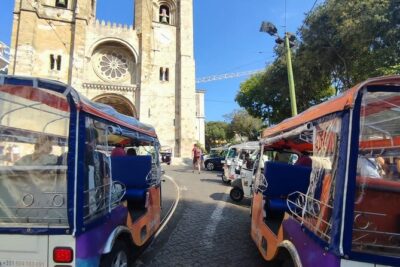
Lisbon Highlights: Private Tuk Tuk Tour Adventure Sightseeing
Read our review →
Welcome Lisbon Tour with Local Guide in Private Eco Tuk Tuk
Read our review →

Old Town TukTuk Tour and Scenic Viewpoints in Alfama
Read our review →
Explore Lisbon by Tuk Tuk: History and Viewpoints
Read our review →Browse the lists this tour appears in