
Reviewed · WALKING TOURS
Lisbon: Iconic Landmarks Walking Tour
Lisbon makes more sense on foot. This 2-hour iconic landmarks walking tour threads together Praça do Comércio, Baixa Pombalina, the Carmo Convent ruins, and the story of modern Portugal, with an English or Spanish live guide keeping it moving and readable.
I especially like the way it ties the big monuments to the turning points that shaped the city, from the Age of Discovery to the 1755 earthquake and the later fall of the Salazar dictatorship. You also get built-in time for photos at key viewpoints like Miradouro de São Pedro de Alcântara and a photo stop for Santa Justa Elevator.
One consideration: this is a walking tour, and it is not suitable for wheelchair users, so comfortable shoes and a steady pace matter.
In This Review
- Key highlights worth your attention
- Praça do Comércio: where your Lisbon tour really begins
- Bairro Alto and Miradouro de São Pedro de Alcântara: street stories with photo breaks
- Carmo Convent ruins: seeing the 1755 earthquake in real form
- Santa Justa Elevator photo stop and Baixa Pombalina: the city rebuilt after disaster
- Praça do Comércio again: a satisfying loop of views and meaning
- The politics lesson: Salazar to the Carnation Revolution, explained without heavy lectures
- Guide-led value: the difference between hearing Lisbon and getting it
- Price and logistics: is $4.72 for 2 hours actually good value?
- Who this tour suits best, and who should look elsewhere
- Should you book this Lisbon Iconic Landmarks walking tour?
- FAQ
- How long is the Lisbon Iconic Landmarks Walking Tour?
- Where does the tour start?
- What languages is the tour offered in?
- Are entrance fees for attractions included?
- Is the tour wheelchair accessible?
- What should I bring?
- Is free cancellation available?
- Can I reserve without paying right away?
Key highlights worth your attention
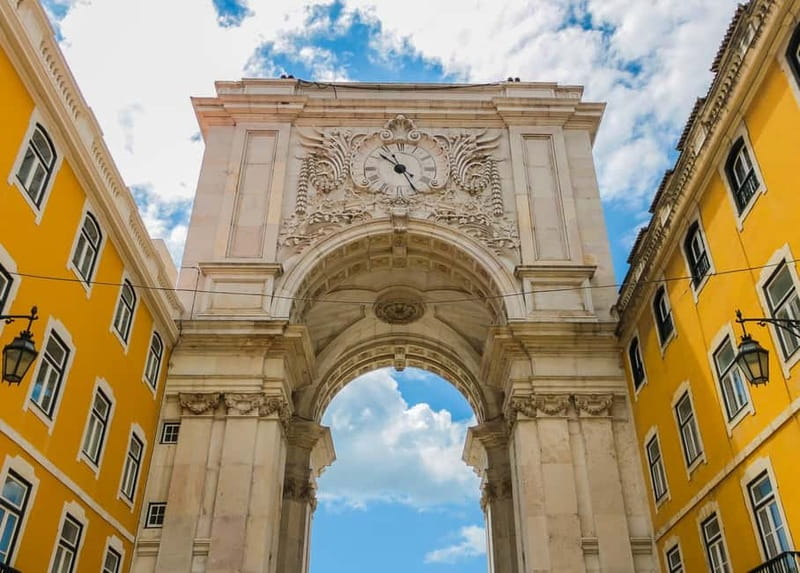
- Praça do Comércio start: a strong first stop that sets the tone for Lisbon’s merchant and traveler history
- Bairro Alto + miradouro photos: a quick taste of Lisbon’s street life plus a viewpoint pause
- Carmo Convent ruins: the earthquake story lands when you see the damage firsthand
- Baixa Pombalina architecture: rebuilt after 1755, and you’ll notice the planning
- Carnation Revolution context: modern Portugal explained in plain language on the streets
- Guide quality shows: clear explanations and extra photo time, with insider food and drink tips
More Lisbon miradouros linked on foot:
- Lisbon: History, Stories and Lifestyle Walking Tour★ 4.8 · 10,902 reviews
- Best of Lisbon Small-Group Guided Walking Tour★ 5.0 · 4,869 reviews
- Lisbon: Food and Wine Small Group Walking Tour★ 4.9 · 4,082 reviews
- Best of Lisbon Walking Tour: Rossio, Chiado & Alfama★ 4.9 · 2,700 reviews
Praça do Comércio: where your Lisbon tour really begins
Your tour starts at Praça do Comércio, at the statue in this huge riverside square. This is not a random starting point. It is Lisbon’s front door to the Tagus River, and it gives you a simple mental map for where the city’s money, shipping, and people flowed.
From here, your guide explains why the square mattered to merchants and travelers, and how Lisbon’s story connects to the sea. You also get panoramic views and the kind of open-air atmosphere that helps you reset your brain before stepping into the narrower streets.
In a tight 2-hour format, this matters. A lot of Lisbon tours jump into steep lanes first. Starting at Praça do Comércio helps you understand the layout and the “why” behind what you’ll see next.
Bairro Alto and Miradouro de São Pedro de Alcântara: street stories with photo breaks
Next you walk into Bairro Alto, a historic district known for tradition and character. The key is that this stop is short, so you are not stuck anywhere too long. You get a feel for the neighborhood and then move toward a viewpoint where the city opens up.
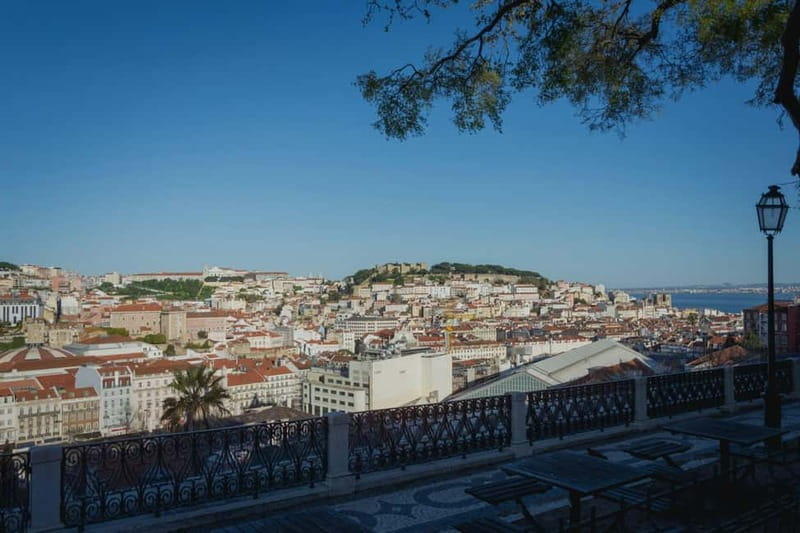
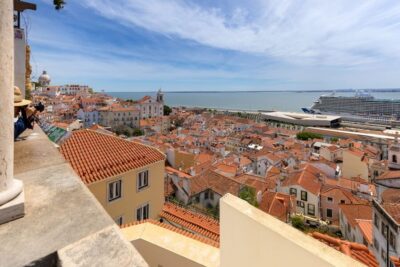
After Bairro Alto, there is a photo stop at Miradouro de São Pedro de Alcântara. Even if you are not a serious photographer, this pause is useful because Lisbon’s beauty is in the layers. From the miradouro you can connect the rooftops, the hills, and the riverfront back to the story your guide is telling.
This section also fits a theme the tour repeatedly returns to: people setting off by sea, then the city surviving major shocks, and later the shift toward democracy. If you pay attention here, you’ll start seeing Lisbon as a place shaped by departures and consequences, not just postcards.
Practical note: this is walk-and-look, not a sit-down museum tour. Bring your patience for quick transitions, and you’ll enjoy the pace.
Carmo Convent ruins: seeing the 1755 earthquake in real form
The Carmo Convent ruins are one of those stops that changes how you understand the city. They are a striking reminder of the 1755 earthquake, and your guide gives the context so it does not become a vague “sad history” stop.
A guided visit around the ruins works because you can read the space. You see broken stone and the way damage can reshape a place. It is the kind of lesson that sticks because it is physical.
And it is not just about tragedy. It is also about resilience. Lisbon rebuilt, and that rebuilding shows up later in Baixa Pombalina, where the city’s planning becomes visible in the streets and architecture. The ruins are the turning point that makes the later “after” feel earned.
Drawback to consider: this is a concentrated history stop. If you are the type who prefers long museum stays, you might want more time here. Still, within a 2-hour tour, it’s a strong use of limited time.
Santa Justa Elevator photo stop and Baixa Pombalina: the city rebuilt after disaster

After the Carmo Convent, the tour shifts toward Lisbon’s rebuilt center. There is a photo stop at Santa Justa Lift (Santa Justa Elevator). Even without going inside for paid attractions, the photo pause helps you orient yourself. You get a sense of vertical Lisbon, and you can picture how the view from above would look over the rooftops.
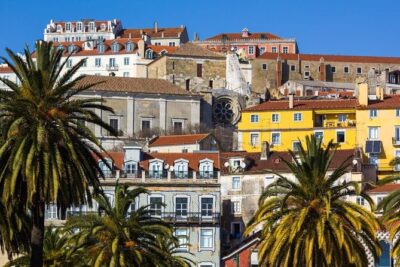
From there, you move into Baixa de Lisboa, including time walking through Baixa Pombalina, the area reconstructed after the earthquake that nearly destroyed the city. This is where the tour becomes more than a history chat. You start noticing how the city looks “designed,” not just grown.
Baixa Pombalina is the payoff for seeing Carmo Convent ruins. The story becomes a before-and-after: damage, then a plan. If you like architecture and city design, this is one of the better ways to learn it quickly, because you are walking the grid and comparing what you saw earlier to what you see now.
Also, the pace helps. You get multiple shorter segments instead of one long slog. In Lisbon, where you can hit steep streets fast, this format keeps the day manageable.
Other trips that start in Lisbon and end well:
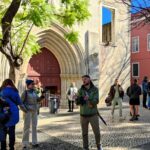



Praça do Comércio again: a satisfying loop of views and meaning
Near the end, you finish with a photo stop back at Commerce Square, Lisbon. This is the kind of practical tour structure that helps your brain. When you return to the starting area, you confirm where everything sits and how the route connects.
It also gives you a final moment to look at the riverfront and the open space around you. After walking through tighter historic streets, the wide view helps you breathe.
Your guide ties the pieces together one more time, including Lisbon’s longer arc from the Age of Discovery to later political change. By the time you reach the end, the city feels less like a collection of landmarks and more like a story with chapters.
The politics lesson: Salazar to the Carnation Revolution, explained without heavy lectures
One reason I think this tour works for a first visit is that it does not treat history like a textbook. It brings politics into the physical city by connecting what happened to the spaces where people lived, traveled, and rebuilt.
You learn about life under the Salazar dictatorship and how the Carnation Revolution of 1974 peacefully restored Portugal’s democracy. The “peaceful” part is important here because it keeps the tone from becoming grim. It also makes the later Lisbon feel more understandable: you are not only seeing monuments, you are seeing the city’s ability to change course.
This is also where having a good guide matters. The best tours on this route are the ones that keep the story clear and human. In the strongest feedback, guides like Antonio are praised for speaking clearly enough that everyone could hear, and for adding extra time for photos without rushing the group. Natalia is specifically called out for giving a short, focused introduction to what matters most, and for making room to explore and even try a local drink during the walk. Nuno also shows up in reviews as friendly and enthusiastic, with explanations that felt easy to follow.
If you want a “what to understand in Lisbon” crash course, this political timeline is one of the tour’s biggest wins.
Guide-led value: the difference between hearing Lisbon and getting it
Price is low enough that you should expect a basic walking tour. But what keeps the experience from feeling basic is the guide style.
You get an expert English-speaking local guide, and the tour runs in Spanish and English. Reviews highlight that guides tend to keep explanations short and purposeful, and they set aside moments for you to look around rather than just march.
Clear speaking is not a small detail. When the group is moving through streets, sound gets lost fast. Strong feedback notes that guides like Antonio keep things understandable so you do not miss key stories.
Food and drink tips are another practical layer. Natalia is praised for recommending places to eat and drink after the tour, and for giving time to try a local drink. I like that approach because it turns a history walk into a starting point for your next hours in Lisbon.
Bottom line: if you pick this tour, pick it for the guide, not just the route.
Price and logistics: is $4.72 for 2 hours actually good value?
At $4.72 per person for a 2-hour walking tour, you are basically buying three things at once: a guided route through major Lisbon landmarks, local perspective, and practical guidance on what to do next.
The value gets better because the included benefits are not just talk. You get insider tips on where to eat, drink, and explore, which can easily save you time and money on your first day. And the route hits multiple “big name” stops: Praça do Comércio, Bairro Alto, Miradouro de São Pedro de Alcântara, Carmo Convent ruins, and Baixa Pombalina, with a Santa Justa Lift photo moment.
Could the price reflect a shorter focus or fewer inclusions? Yes, you should assume paid entries are not part of the standard plan. Entrance to paid attractions is listed as optional after the tour.
Still, for the time commitment and the number of meaningful stops, this is a very efficient deal. If you want your Lisbon primer without spending hours getting oriented, this pricing makes sense.
Who this tour suits best, and who should look elsewhere
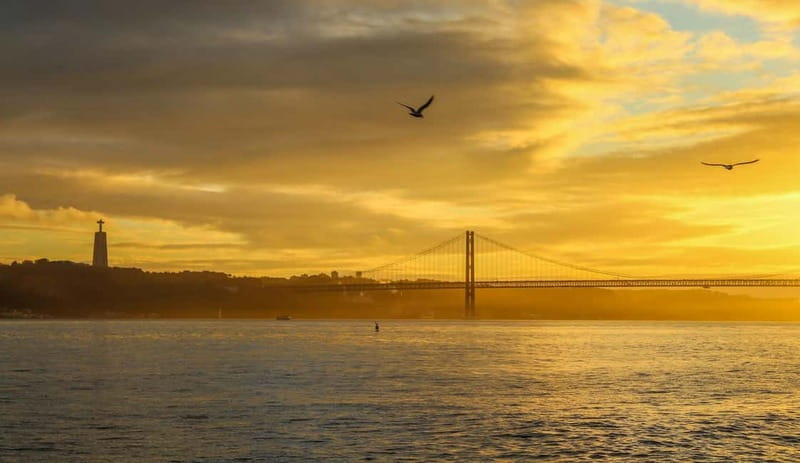
This is a good fit for a first-time visitor who wants a structured “read the city” walk. It is also ideal if you like history but do not want to get stuck in long museum lines. The stops are short, and the guide connects them so the timeline stays coherent.
It is also a fit if you enjoy viewpoints. There are photo stops at Miradouro de São Pedro de Alcântara and a Santa Justa Lift photo pause, which help you understand Lisbon’s layout fast.
If you dislike walking, this may test your patience. It is a walking route, and the tour is not suitable for wheelchair users. If you have mobility limitations, you’ll want to consider alternatives.
What to bring is simple: comfortable shoes. And since it runs rain or shine, pack for weather. Lisbon weather can change quickly, and a 2-hour outdoor tour means you will feel it.
Should you book this Lisbon Iconic Landmarks walking tour?
I’d book it if you want a smooth first-day route that covers Lisbon’s most important landmarks in a tight timeline, and if you care about understanding the story behind what you see. Starting at Praça do Comércio, moving through Bairro Alto, then landing at Carmo Convent ruins, and finishing by revisiting the riverside square is a smart structure. You end with views and meaning, not just footsteps.
I would think twice if you need wheelchair accessibility, or if you want deep, slow museum-style time at a single site. This tour is designed for movement and orientation, not long stops.
If you do book, come ready to take in details and accept that the best parts are the moments between stops, like viewpoint pauses and guide-led context. Get your shoes on, listen for the connections, and you’ll leave Lisbon feeling like you understand how its sea past, earthquake scars, and political turning points fit together.
FAQ
How long is the Lisbon Iconic Landmarks Walking Tour?
The tour lasts 2 hours.
Where does the tour start?
It starts at the statue at Praça do Comércio.
What languages is the tour offered in?
The live tour guide speaks Spanish and English.
Are entrance fees for attractions included?
Entrance to paid attractions is not included. Paid entrances are optional after the tour.
Is the tour wheelchair accessible?
No, it is not suitable for wheelchair users.
What should I bring?
Wear comfortable shoes, since it is a walking tour.
Is free cancellation available?
Yes, you can cancel up to 24 hours in advance for a full refund.
Can I reserve without paying right away?
Yes, it offers a reserve now and pay later option, where you can book your spot and pay nothing today.
Fresh across the seven hills
- Full-day Private Tour: Fátima Sanctuary, Batalha, Nazaré, Óbidos
★ 5.0 · 6 reviews - Porto Private Tour from Lisbon
★ 4.5 · 6 reviews - VIP transfer from the airport to Lisbon hotels
★ 5.0 · 6 reviews - Lisbon Photoshoot: Capture Your Adventure
★ 5.0 · 6 reviews - Lisbon: Romantic Sunset Cruise With Wine & Portuguese Tapas
★ 5.0 · 6 reviews - Arrábida Wine Tour – 3 Wineries, Traditions & Views from Lisbon
★ 4.5 · 6 reviews - Lisbon: Sintra, Pena Palace, Belém Tour + sunset Boat Cruise
★ 5.0 · 6 reviews
Walking Tours, compared.
Best of Lisbon Small-Group Guided Walking Tour
Read our review →

Best of Lisbon Walking Tour: Rossio, Chiado & Alfama
Read our review →

Sintra & Cascais Day Tour with Pena Palace Entry and Gardens Walk
Read our review →
Lisbon Roots – Small group Food & Culture Walking Tour w/tastings
Read our review →
Starter Walking Tour to the highlights in German
Read our review →Browse the lists this tour appears in