
Reviewed · COOKING CLASSES
Lisbon: Portuguese street food cooking class with Drinks
Street food cooking, Lisbon style, in two hours.
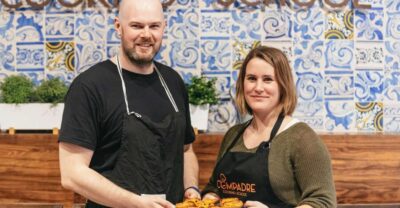
At Compadre Cooking School, you learn the nuts and bolts behind classic Portuguese snacks, then you sit down to eat what you cooked with wine and a final taste of ginja.
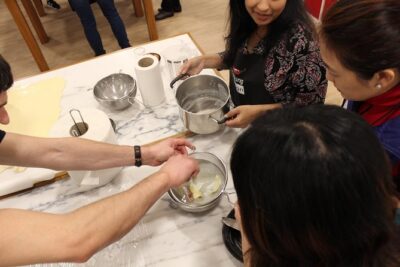
I especially like how you cook at stations that feel set up for real work, not a demo where you just watch. I also like the mix of hands-on cooking with stories about where each dish came from and how it shows up in daily Portuguese life.
One possible drawback is that the teaching style can be very hands-on. If you prefer more step-by-step lecturing before you touch anything, you might feel a bit more “doing” than “explaining.”
In This Review
- Key Highlights You Will Actually Care About
- Lisbon Street Food Cooking at Compadre: What Happens in 120 Minutes
- Meeting Point at Compadre Cooking School Kitchen, and the Feel of the Room
- Bifana Workshop: Pork Sandwich Techniques You Can Repeat
- Caldo Verde: Getting the Collard Greens Soup Just Right
- Peixinhos da Horta and the Tempura Connection
- The Stories Behind Each Dish, Told While You Cook
- Wine, Ginja, and Your Shared Group Meal
- Price and Value: Why 55 Dollars Can Make Sense Here
- What to Watch For, Including One Common Quirk
- Who Should Book This, and Who Should Skip
- Should You Book This Lisbon Cooking Class?
- FAQ
- How long is the cooking class?
- Where is the meeting point?
- What dishes will I learn to make?
- Are drinks included?
- What is included in the price?
- Do I need prior cooking experience?
- What language are the instructors speaking?
- What should I bring to the class?
- Can dietary needs be accommodated, and is it wheelchair accessible?
- What is the cancellation policy?
Key Highlights You Will Actually Care About
- Bifana, Caldo Verde, and Peixinhos da horta are the core recipes, not random “tourist food”
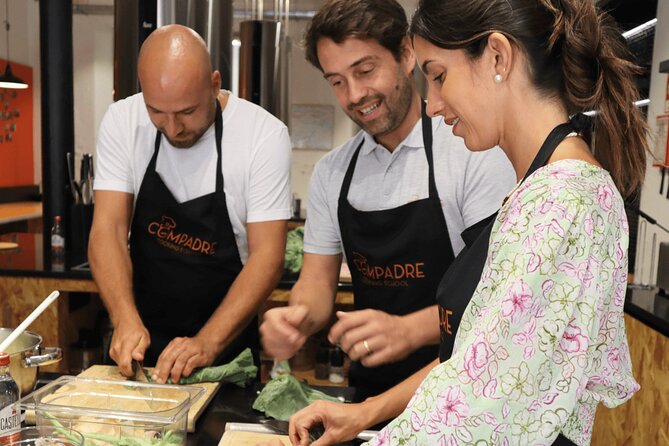
- You work with a local chef at a cooking station, with clear instructions and time to participate
- Instructors like Marta and Anna (and Roy in some sessions) bring the dishes to life with origin stories
- The class ends with a shared meal you eat together, plus wine and ginja
- The recipes are designed to be simple enough to recreate at home after you leave
More Lisbon tascas, ginjinha counters and cellars:
- Winner 2025 Undiscovered Lisbon Food & Wine Tour by Eating Europe★ 5.0 · 6,390 reviews
- Lisbon: Food and Wine Small Group Walking Tour★ 4.9 · 4,082 reviews
- Lisbon Small-Group Portuguese Food and Wine Tour★ 5.0 · 3,972 reviews
- Lisbon: Baixa District Food Tour with Dinner and Drinks★ 4.9 · 1,997 reviews
Lisbon Street Food Cooking at Compadre: What Happens in 120 Minutes
This is a tight 2-hour class focused on Portuguese street food that locals actually eat, not just the country’s best-known postcards. The structure is straightforward: you start with short context, then you cook several dishes, then you finish by eating everything as a group with drinks.
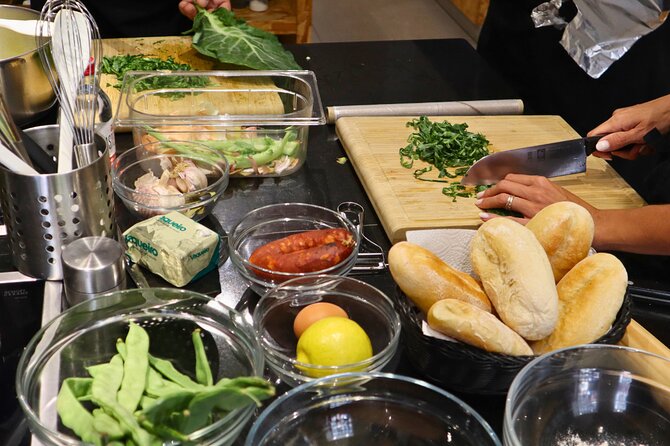
You’ll likely recognize the lineup. You learn Bifana, a famous pork sandwich. You make Caldo verde, a beloved collard greens soup. And you cook Peixinhos da horta, the dish that inspired the world-famous idea of tempura. The time pressure is real, but it keeps the class energetic and practical.
If your goal is a food evening that feels like Lisbon, this hits the sweet spot. You are learning flavor logic, not just copying a plate for a photo. And because the dishes are “street food classics,” you get recipes you can repeat without needing a warehouse of specialty ingredients.
Meeting Point at Compadre Cooking School Kitchen, and the Feel of the Room
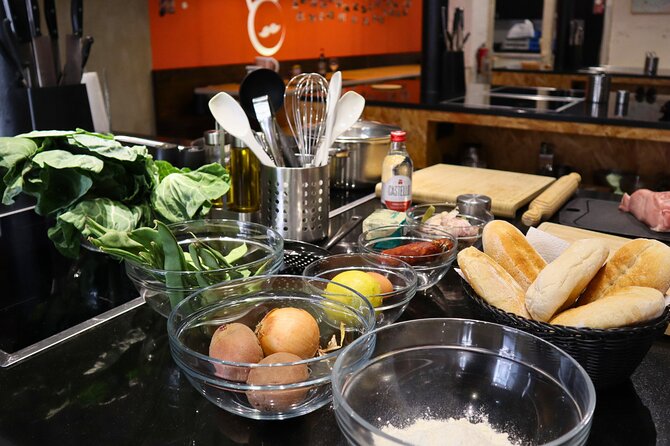
The meeting point is Compadre Cooking School kitchen. It’s a proper cooking space, and multiple recent experiences highlight that the studio is modern and clean, with cooking areas that are spacious enough for people to work at the same time.
What that means for you: the class doesn’t feel chaotic. You can keep your focus, chop and cook without bumping elbows all evening, and actually learn what you’re doing. There are also clear rules: no smoking, and alcohol or drugs are not allowed.
Logistically, you should plan your own ride or walk to the school since transportation isn’t included. Also plan to arrive about 5 minutes early so you can get settled before the group starts cooking.
Bifana Workshop: Pork Sandwich Techniques You Can Repeat
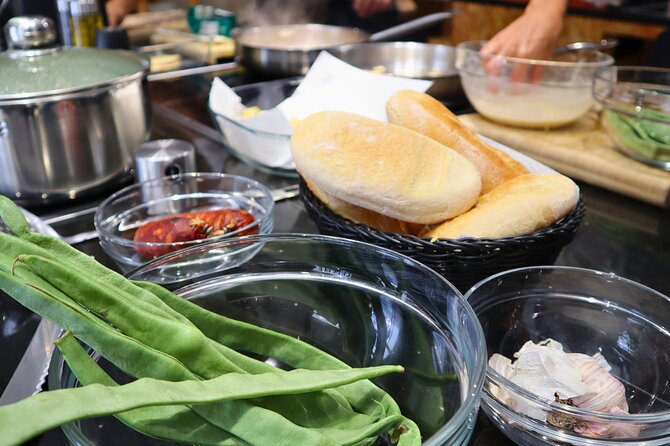
Bifana is one of those Portuguese foods that travels well in your memory. The payoff here is that you’re not just learning the concept of a sandwich. You’re learning how the dish comes together so it tastes right, even when you recreate it later.
In the class flow, you start with an introduction to what makes each dish tick, then you roll up your sleeves and cook. For Bifana, that usually means working through the pork and then assembling the sandwich so it has the right balance of comfort and snap. The goal is a classic snack texture, not a fancy presentation.
Two things I like about this portion:
- It’s simple enough to matter at home. Once you understand how the pork component works, you can troubleshoot your own sandwiches.
- It gives you a feel for Portuguese street food as “real food you can eat standing up,” not “small portions for Instagram.”
Caldo Verde: Getting the Collard Greens Soup Just Right
Caldo verde is Portugal’s comfort soup. In this class, you make it as a real dish with the collard greens element that gives it that recognizable look and flavor. The practical win is that you learn how the soup should feel as it cooks, so you can aim for the right thickness and balance when you try again.
This is also a dish that teaches technique. You can’t fake it just by adding salt at the end. The collard greens need to integrate properly, and the overall soup needs to stay cohesive.
I’m a fan of classes that treat soup as a skill, not an afterthought, and Caldo verde is exactly that. People often call out how great the soup is because it’s forgiving enough for beginners but still requires attention to timing and texture.
Other Lisbon plates worth ordering twice:



Peixinhos da Horta and the Tempura Connection
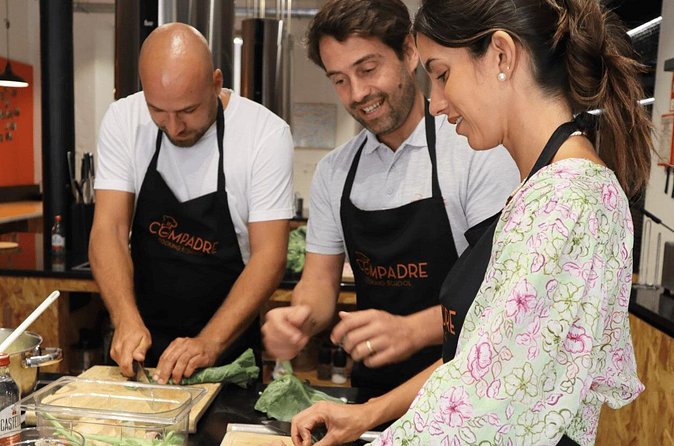
Peixinhos da horta is one of the coolest parts of the menu, and it’s here for a reason. You’re not only cooking fried fritters, you’re learning the origin story that connects them to the broader idea of tempura.
The dish name points to the ingredient, but the bigger lesson is the batter and frying logic. Even if you don’t consider yourself a “fried food person,” this is a useful recipe to learn because it builds your intuition for batter lightness and crispness.
And yes, this is the dish that inspired tempura, according to the class description. So you leave not just with a snack, but with a piece of food history that makes the similarity click when you see tempura elsewhere.
The Stories Behind Each Dish, Told While You Cook
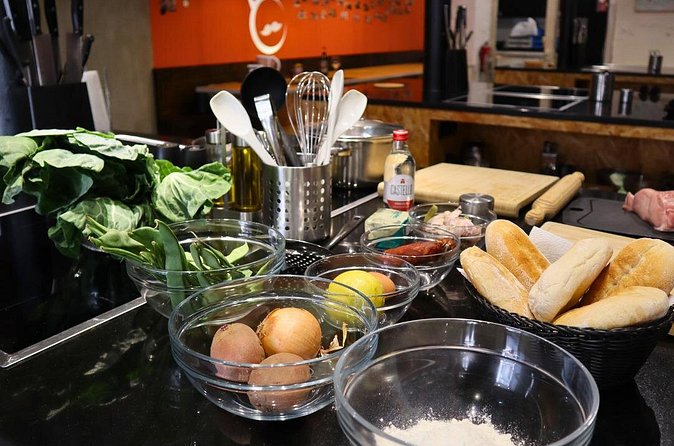
This class doesn’t treat history like trivia. You get short story segments as you go, which helps you remember what you’re doing. You hear origins of the dishes and how they show up in Portuguese daily life, which matters because street food is usually about practicality.
What I like here is the human element. Some sessions are taught by Marta and Anna, and others include Roy, and in all cases the tone is personal and clear. It’s the kind of explanation that makes you taste with more intention.
You also learn that these foods are part of everyday rhythm. That may sound abstract, but it changes how you cook. When you understand why a dish exists, you stop cooking it like a generic recipe and start cooking it like a local would.
Wine, Ginja, and Your Shared Group Meal
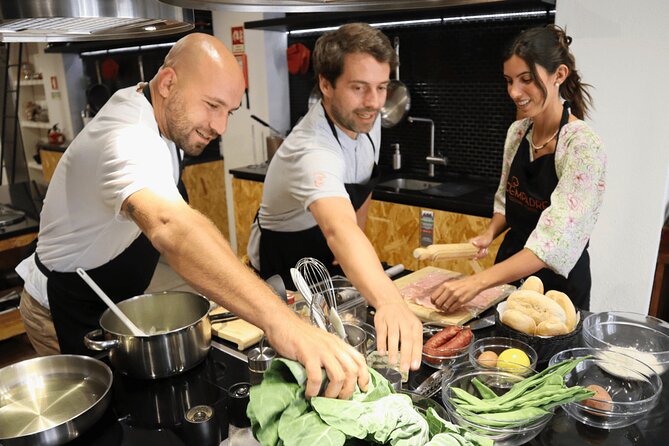
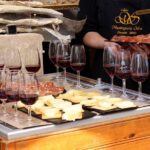
After the cooking, you gather around the table for a shared meal of the dishes you prepared. This is a big part of the value because you are not sprinting through cooking and then leaving hungry. You eat what you made, together, with time to talk.
Drinks are included:
- You get a glass of wine, red or white
- You finish with a tasting of ginja, a traditional Portuguese cherry liqueur
A small but meaningful detail: the included wine is part of the meal pacing. It’s not an open bar, but it makes the end feel like a proper Portuguese night out, not just a cooking class with snacks.
Also, the class has specific boundaries on substances. Smoking is not allowed, and alcohol beyond what’s provided is not included. That keeps things straightforward and helps the focus stay on food.
Price and Value: Why 55 Dollars Can Make Sense Here
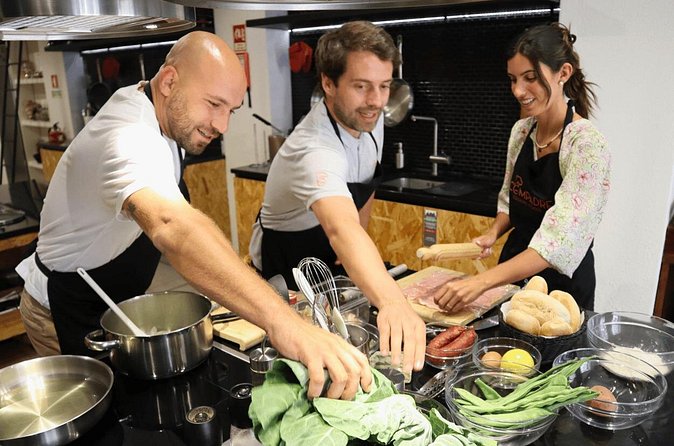
At $55 per person for a 2-hour class, the pricing only feels “worth it” if you see the full package. Here, you get:
- expert chefs guidance
- all cooking ingredients
- a glass of wine (red or white)
- tasting of ginja
- a shared meal of what you cooked
When you add those pieces up, it becomes more like a guided food experience than a simple recipe workshop. You’re paying for time, instruction, ingredients, and the sit-down meal that lets you actually enjoy the results.
The biggest value signal is how repeatable the dishes are. You’re not learning five complicated courses. You’re learning street classics, which are designed to be simple enough to recreate in your own kitchen, according to the class approach.
So if you want a “Portugal in one evening” meal, this is an efficient way to do it without guessing your way through Lisbon’s snack bar maze.
What to Watch For, Including One Common Quirk
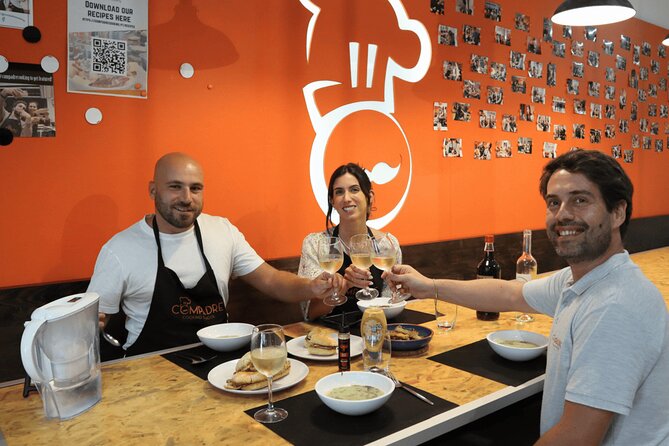
This is a hands-on class, and that’s the point. But it does come with a couple of practical considerations.
First, wear comfortable shoes. You’ll be standing and moving around a cooking setup, and the class expects you to be ready for active work. Comfortable clothing helps too, though only shoes are explicitly required.
Second, if you want a more traditional lecture style, you might find the instruction can lean very practical. One experience noted that the instructor can be quite hands-on rather than lecturing step-by-step for long stretches. That can be great for beginners who learn by doing, but it’s worth knowing if you want lots of talking time.
Third, it isn’t suitable for wheelchair users. If mobility is an issue, you’ll need to consider another option.
Finally, transportation is on you. If you’re coming in from a hotel far from the school, plan for that. The class itself doesn’t include a transfer.
Who Should Book This, and Who Should Skip
This class is best for you if:
- you love eating Portuguese food and want to recreate it
- you want a short, focused experience that still includes dinner and drinks
- you’re a beginner cook or just want to learn core technique without stress
It might not be ideal if:
- you hate hands-on cooking and prefer mostly watching
- you need wheelchair accessibility
- you’re looking for a long food crawl across multiple neighborhoods, because this is concentrated in one kitchen setting
If you’re traveling solo, it can also be a good fit because the final meal is shared. You’ll end up eating with the group rather than eating alone in a restaurant.
Should You Book This Lisbon Cooking Class?
If you want a Lisbon evening that mixes learning, eating, and Portugal culture without dragging into a half-day tour, I’d lean yes. The recipe lineup is strong, the cooking setup seems well run and clean, and the class ends the way good food experiences should end, with you sitting down to eat what you made.
Book it if you’re excited by Bifana, Caldo verde, and Peixinhos da horta, and you want to go home with dishes you can actually cook again. Skip it if you’re specifically seeking a multi-stop sightseeing program, or if you need a more seated, lecture-based experience.
FAQ
How long is the cooking class?
The class lasts 2 hours.
Where is the meeting point?
You meet at the Compadre Cooking School kitchen.
What dishes will I learn to make?
The class focuses on Bifana, Caldo verde, and Peixinhos da horta.
Are drinks included?
Yes. You get a glass of wine (red or white) and a tasting of ginja.
What is included in the price?
Included are expert chefs guidance, all cooking ingredients, a glass of wine, ginja tasting, and a shared meal of the dishes you prepare.
Do I need prior cooking experience?
No prior cooking experience is needed.
What language are the instructors speaking?
The instruction is in English.
What should I bring to the class?
Wear comfortable shoes, and arrive about 5 minutes early to settle in.
Can dietary needs be accommodated, and is it wheelchair accessible?
The class can adapt recipes for specific diets if you contact them in advance. It is not suitable for wheelchair users.
What is the cancellation policy?
You can cancel up to 24 hours in advance for a full refund.
Portuguese Kitchens to Cook In
- Lisbon Portuguese Cooking Class with 3-Course Dinner
★ 5.0 · 445 reviews - Traditional Portuguese Cooking Class in Lisbon
★ 5.0 · 287 reviews - Pasteis de Nata Baking Class from Lisbon
★ 5.0 · 248 reviews - Portuguese Cooking Class in Lisbon
★ 5.0 · 141 reviews
More Workshops in Lisbon
- Lisbon: Pastel de Nata Baking Class
★ 4.9 · 2,106 reviews - Lisbon: Traditional Portuguese Cooking Class
★ 4.9 · 592 reviews - Pastel de Nata Pastry Class: Bake and Enjoy Your Own Treats
★ 5.0 · 485 reviews - Lisbon: 2-Hour Pastel de Nata Cooking Class
★ 4.8 · 461 reviews
Fresh across the seven hills
- Full-day Private Tour: Fátima Sanctuary, Batalha, Nazaré, Óbidos
★ 5.0 · 6 reviews - Porto Private Tour from Lisbon
★ 4.5 · 6 reviews - VIP transfer from the airport to Lisbon hotels
★ 5.0 · 6 reviews - Lisbon Photoshoot: Capture Your Adventure
★ 5.0 · 6 reviews - Lisbon: Romantic Sunset Cruise With Wine & Portuguese Tapas
★ 5.0 · 6 reviews - Arrábida Wine Tour – 3 Wineries, Traditions & Views from Lisbon
★ 4.5 · 6 reviews - Full Day Tour in Évora from Lisbon
★ 5.0 · 6 reviews
Cooking Classes, compared.
Lisbon Portuguese Cooking Class with 3-Course Dinner
Read our review →
Traditional Portuguese Cooking Class in Lisbon
Read our review →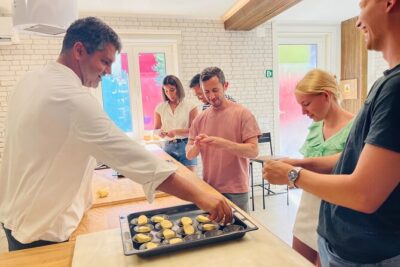

Browse the lists this tour appears in