
Reviewed · WORKSHOPS
Lisbon Tiles and Tales: Full-Day Tile Workshop and Tour
Tiles tell stories you can hold. This full-day tour takes you from an Azeitão workshop, where traditional azulejo methods are still used, to Lisbon’s Azulejo Museum inside the Madre de Deus Convent. You also get hands-on time, after a short lesson, to paint a tile you’ll have made and delivered later.
What I like most is that you’re not just looking, you’re learning how the work is built. You see the process up close, then you paint your own tile after basics are explained by your English-speaking guide, often Nuno. One possible drawback is the day is long, and lunch is on you, plus shipping your finished tile home is not included.
In This Review
- Quick hits before you go
- From Arabic roots to Lisbon street art
- Azeitão workshop: watching azulejo made the old way
- Your finished tile: painting, baking, and delivery
- Lunch between Sesimbra fishing charm and a tile-driven day
- Tile spotting on the ride back into Lisbon
- Madre de Deus Convent: Baroque church as a complete artwork
- Azulejo Museum collection: from 15th-century work to modern schools
- Portuguese masters you’ll see by name
- The guide factor: Nuno and the value of real-time adjustments
- Price and value: is $117 a good deal for an 8-hour art day?
- Who this tour suits best
- Should you book Lisbon Tiles and Tales?
- FAQ
- How long is the tour?
- Is lunch included?
- Does the tour include hotel pick-up and drop-off?
- Is the Azulejo Museum ticket included?
- Is the tour offered in English?
- Can I skip the ticket line?
Quick hits before you go
- Azeitão workshop making: See tile production using old techniques, then copy the look in your own design.
- Paint time that actually matters: You create a tile after learning the basics, not just watch.
- Lisbon tile spotting on the drive: You stop to admire impressive azulejo artwork around the city as you head back.
- Madre de Deus Convent setting: A 15th-century site with a Baroque church where the full interior is designed as one artwork.
- Azulejo Museum, 15th century to today: You’ll see schools tied to Spain and the Netherlands, plus Portuguese masters by name.
- Backup plan if a museum door is closed: In at least one case, guide Nuno shifted the day to see tiles in the Royal Palace in Sintra.
More tiled walls worth stopping for:
- Lisbon: Azulejos’ Design Create Your Own Tile Workshop★ 4.9 · 420 reviews
- Arrabida Wine Tour – Lisbon: Wineries-Tastings-Tile Factory★ 4.9 · 179 reviews
- Arrabida Wine Tour from Lisbon: Wineries, Tastings & Tile Factory★ 5.0 · 154 reviews
- Paint your tile and create your unique piece in an art gallery in Lisbon★ 4.9 · 116 reviews
From Arabic roots to Lisbon street art
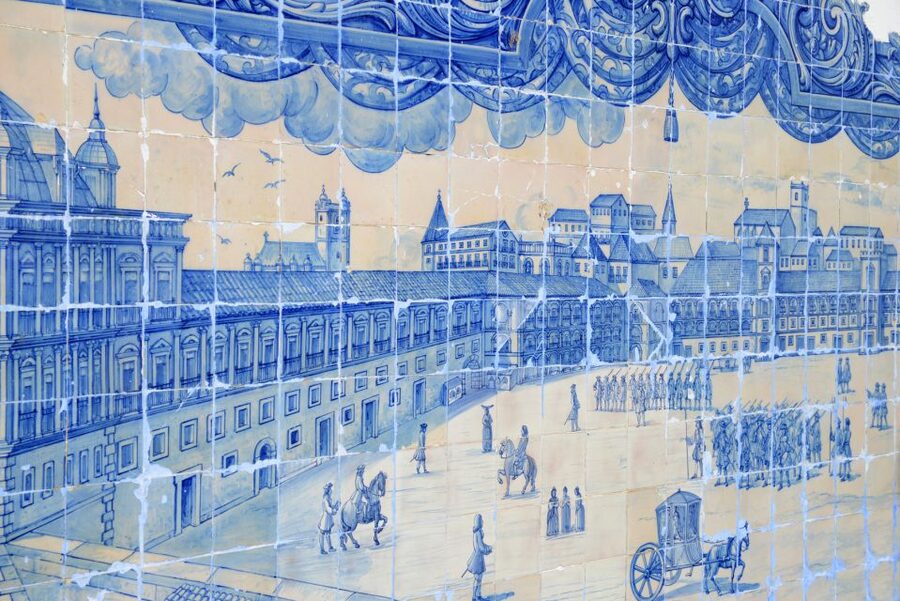
Azulejos look cheerful, but they are serious visual history. The art form took hold in Portugal through waves of influence, including during the Arabic occupation of the Iberian Peninsula, and it grew into something uniquely Portuguese: walls became canvases. That matters on this tour because you spend the day learning what you’re actually seeing.
Before you even reach the museum, you’ll start connecting design choices to craft. The patterns, outlines, and color choices are not random decoration. They’re part of a tradition that survived centuries by being taught, repeated, and refined. Once you understand that, Lisbon’s tile panels stop being background. They become clues.
Azeitão workshop: watching azulejo made the old way
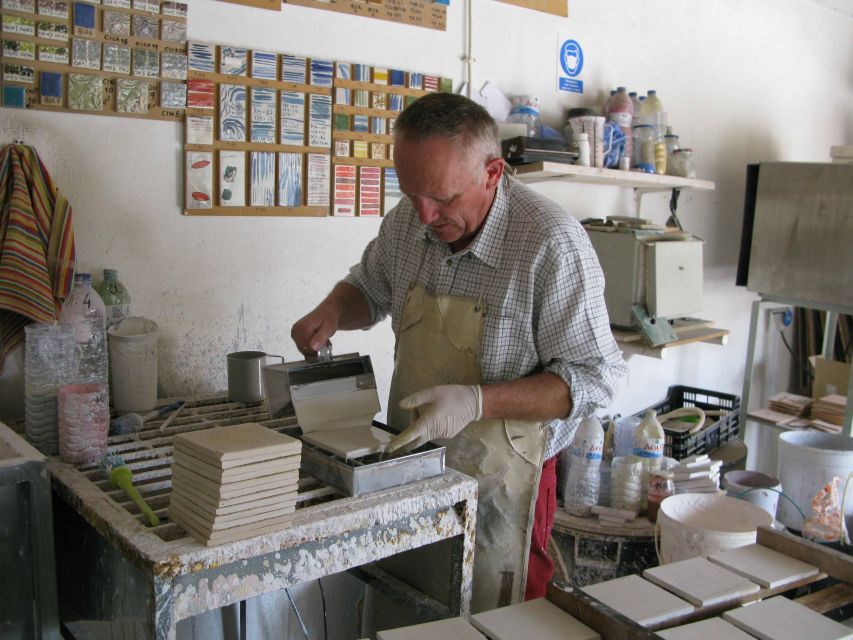
The morning begins south of Lisbon in the Azeitão region at the well-known Azulejos de Azeitão workshop. This is the part that makes the day feel worth the full duration: you’re there for the making, not just the finished product.
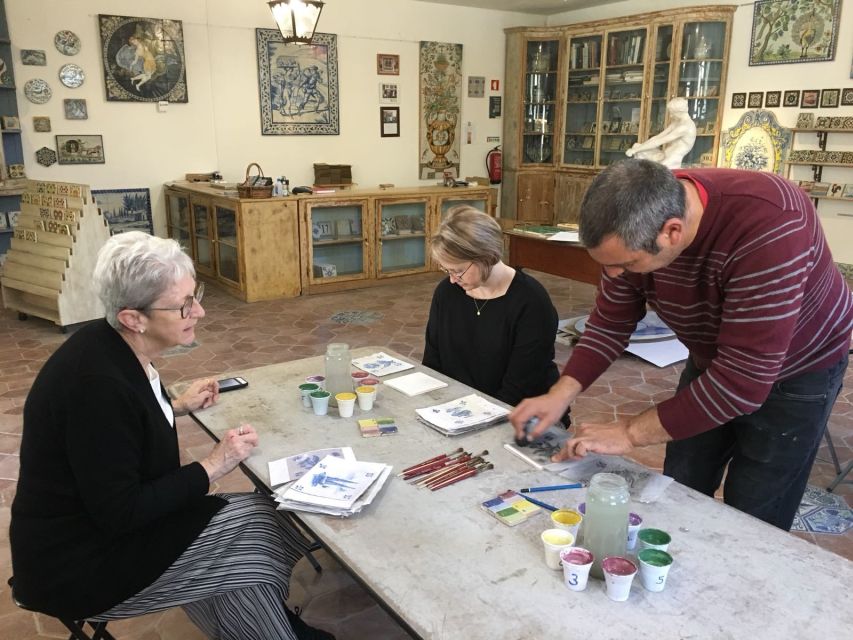
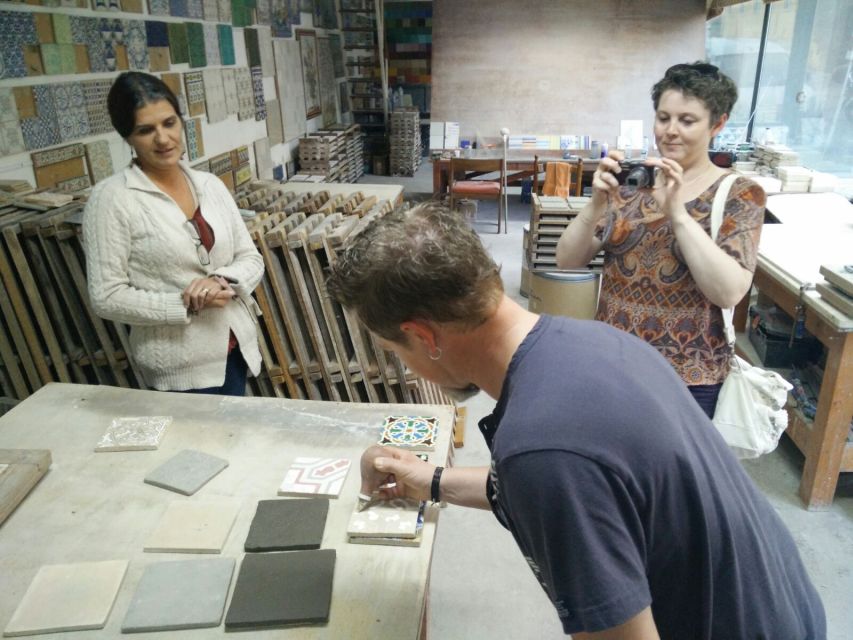
In the workshop, you’ll learn how tiles have been made over the years, with old techniques still used to replicate centuries-old art. Watch for how the craft moves from raw process to final look. Even if you do not catch every technical step, you can see that the finished tile depends on preparation and careful consistency, not luck.
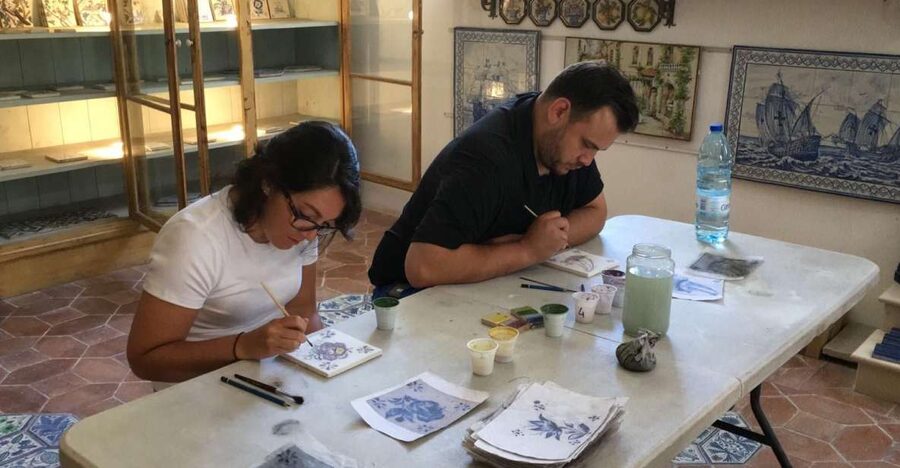
Then comes the part most people book for: you paint your own tile. After the basics are taught, you’ll apply your design in the same spirit as traditional work. It’s guided, so you’re not left staring at blank space. When you finish, the tile isn’t instantly yours to take home, because it needs to be baked later.
Your finished tile: painting, baking, and delivery
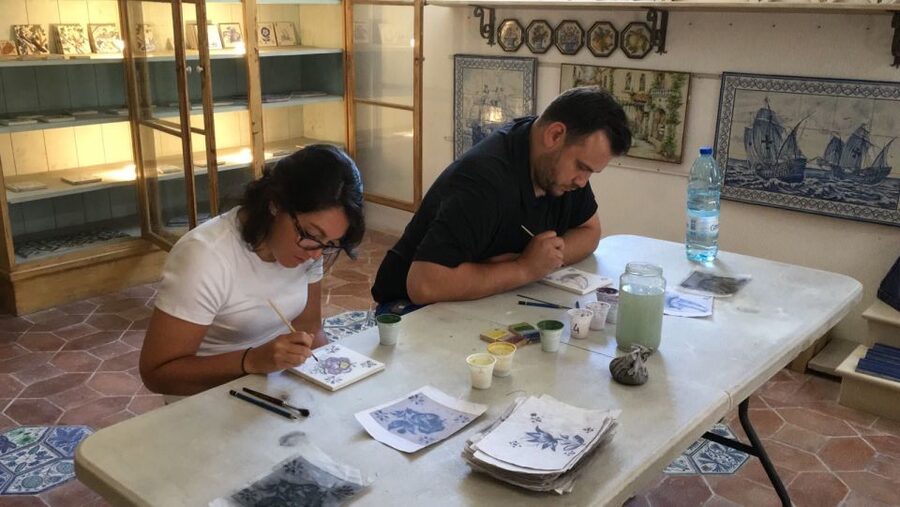
This is one of the clearer “wait, how does that work” moments on the tour, and it’s good you’re told up front. After you paint, your tile will be baked later and sent to your Lisbon hotel or to your home address if you prefer.
Two things to keep in mind. First, shipping cost is not included. Second, because delivery depends on the baking and shipping timeline, this is a souvenir plan, not an in-the-moment purchase you can bring home in a carry-on today.
Still, the payoff is real. You get a physical piece of Portuguese craft art that you made during the day, with your own brushwork embedded in the tradition you just learned about. That’s a different souvenir than a magnet, and you’ll feel it when the tile arrives.
Practical tip: plan your photo time for the workshop portion. Once you start painting, you’ll want a clean view of what you’re doing and where your guide and tools are. Afterward, the museum stop will be the next big “wow” moment, so pace your camera usage.
Lunch between Sesimbra fishing charm and a tile-driven day
After the busy morning, your guide gives you a choice for lunch. The fishing village of Sesimbra is just a short drive away, and it’s presented as the natural option.
Here’s the honest balance. Lunch is not included, so you’ll need to budget for it yourself. But the trade-off is you get a meaningful break in a coastal setting that fits the day. If you’re tired from the workshop focus, Sesimbra can feel like a reset, with sea air and simple food after time spent studying designs.
If you prefer to keep things strictly tight, you may also choose lunch in a way that saves you walking time back to the car. Your guide can help you decide in the moment, since the day is planned around travel between the workshop, Lisbon tile stops, and the afternoon convent visit.
Some other seven-hills days worth pricing up




Tile spotting on the ride back into Lisbon
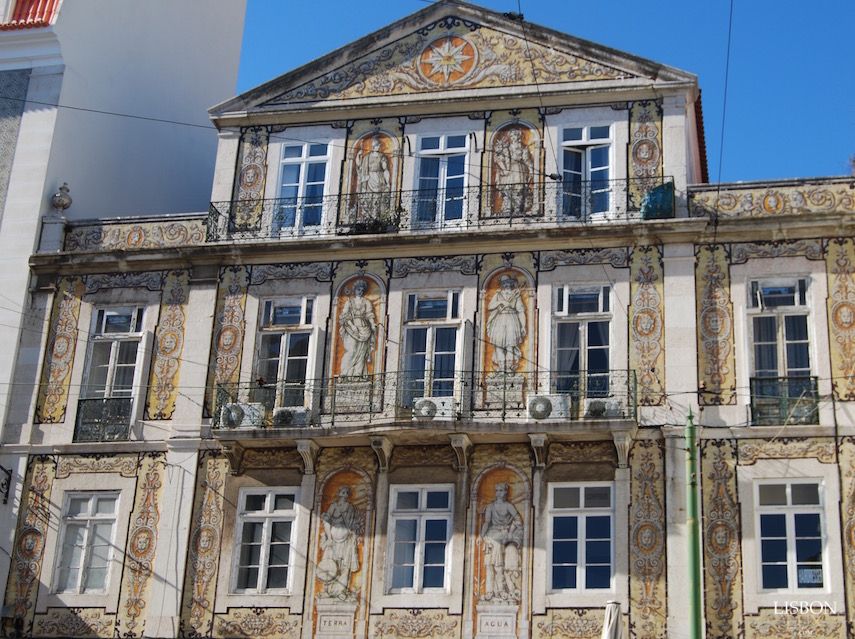
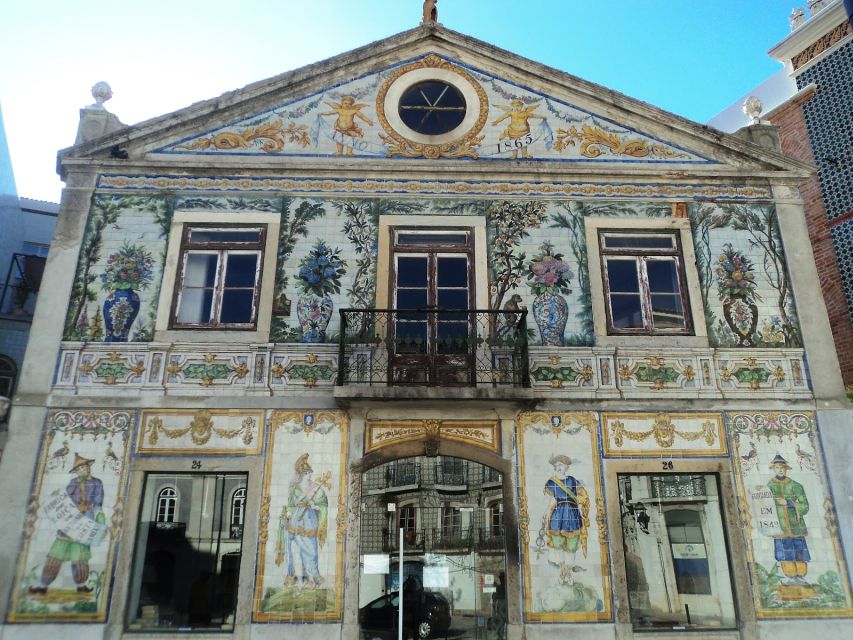
After lunch, you head back toward Lisbon. On the way, you’ll admire some impressive tile artwork around the city. This is more than scenic driving. It’s how the tour turns lessons into recognition.
You start noticing recurring styles, framing patterns, and how tiles appear on buildings like they were always part of the architecture. That’s the key insight: azulejo is public art in the truest sense. It’s not hidden in a gallery. It lives on facades, walls, and interior-looking exterior surfaces you pass without realizing what you’re seeing.
If your brain tends to miss details, focus on one thing at a time. For example, pick a building feature, like borders or scenes, and compare it to the workshop style you saw earlier. You’ll make faster sense of it.
Madre de Deus Convent: Baroque church as a complete artwork
In the afternoon, you visit the Madre de Deus Convent, dating from the 15th century, and home to the Azulejo Museum. The convent adds a layer that you might not expect if you only think of tiles as “decorative.”
The church interior is described as a Baroque masterpiece, designed as a total piece of art, where all elements come together as a whole. That’s useful for you because it explains why azulejos matter here. Tiles are not treated like side decoration. In a setting like this, they become part of an entire visual system.
You’ll also enter the Azulejo Museum and get its collection context. Ticket entry is included, and you can skip the ticket line, which helps when you want your afternoon time to stay focused.
Azulejo Museum collection: from 15th-century work to modern schools
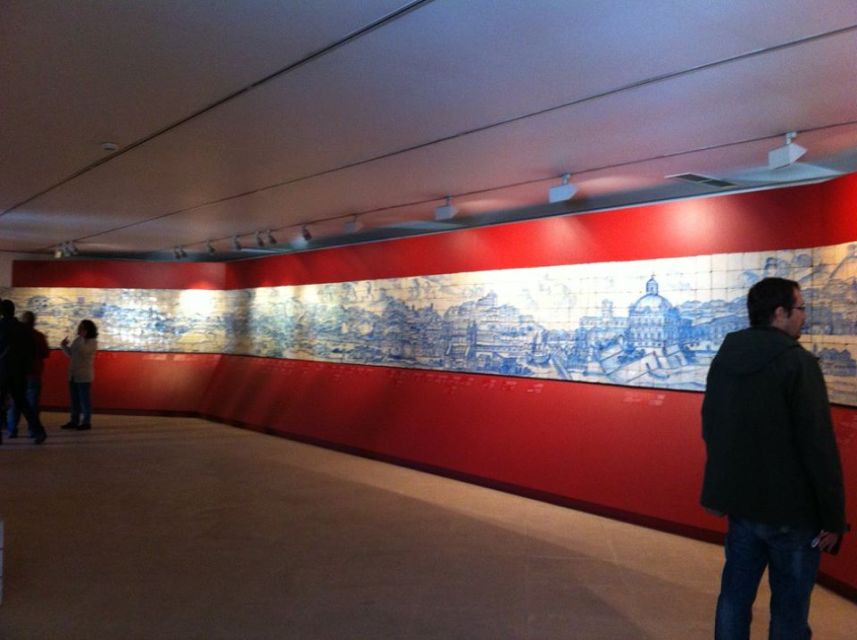
The Azulejo Museum is where the tour turns craft into history you can actually track. You’ll see tiles ranging from the 15th century to contemporary artists. That sweep helps you understand that azulejo did not stop at an old “golden era.” It changed as styles, techniques, and artistic influences shifted.
What I found especially helpful is the museum’s attention to international schools. You’ll see major influences, including Spanish and Dutch schools among others. This gives you a better “map” in your head. When you later spot a style in Lisbon, you can ask, Was this local development, or did it come from outside influence? The museum’s structure makes those comparisons easier.
If you like to learn fast without feeling overwhelmed, aim for a few anchor points instead of trying to read everything. Look for how motifs evolve across centuries, then circle back to the styles that echo what you painted in the workshop.
Portuguese masters you’ll see by name
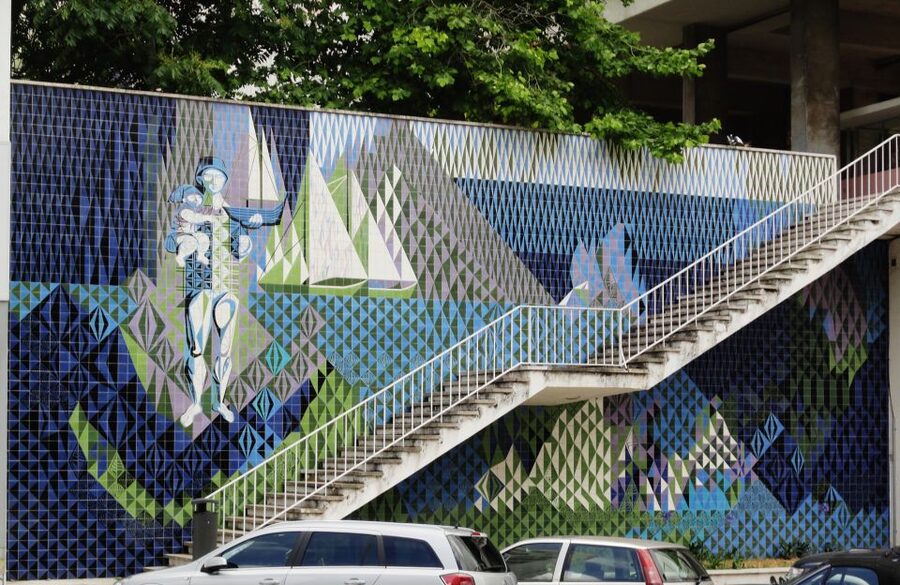
The tour ends with iconic pieces from Portuguese masters. This part is nice because it gives you names you can remember, not just impressions.
Expect to see works connected to Bordalo Pinheiro, Raul Lino, and Maria Keil, among others. Those names matter because they represent different waves of Portuguese tile art, and they help you keep the museum from feeling like a random pile of old walls.
When you finish this stop, you’ll likely start spotting those influences in Lisbon on your own. Even if you don’t know every detail, you’ll recognize the signatures: the way shapes are outlined, how scenes are staged, and how modern and traditional tile styles can feel in conversation.
The guide factor: Nuno and the value of real-time adjustments
One reason this tour earns such strong satisfaction is the guide experience. In the past, Nuno has been specifically praised, and there’s an example worth noting: when the tile museum was closed unexpectedly, Nuno offered alternative options and helped the day still deliver tiles and context.
That kind of flexibility changes how you feel about a long day. You’re not stuck waiting. You’re not left with a reduced experience. Instead, the tour can redirect you to see related tile work, such as visiting the Royal Palace in Sintra for tile-focused viewing.
You should not assume every day runs perfectly. But you can book with more confidence when you know the guide’s job includes adapting, not just following a script.
Price and value: is $117 a good deal for an 8-hour art day?
At $117 per person for an 8-hour experience, the value is strongest if you want more than a “quick look.” Here’s what you’re paying for, and why it adds up.
Included:
- Pick-up and drop-off at your hotel or apartment
- The tile workshop itself
- Azulejo Museum entrance
Not included:
- Lunch
- Shipping cost for your finished tile (if you want it delivered home)
So the math depends on your priorities. If you’d happily pay for a guided museum visit plus a real hands-on class, this is closer to fair than a bargain, especially with transportation included. If you’re only interested in seeing tiles from the outside, you might spend less elsewhere. But if you want the full arc, from making to museum context, $117 starts to feel reasonable.
Also, the workshop tile becomes a souvenir with meaning. You’re not paying just for a classroom. You’re paying for a guided learning process, plus the later baking and shipping arrangement (minus shipping costs).
Who this tour suits best
This is ideal if you like crafts, design, and history you can see. It works well for:
- Couples or solo travelers who enjoy day trips with a clear theme
- Families who can handle a full day and like hands-on work
- Art lovers who want context, not only photos
- Anyone planning more Lisbon walking and wants to “read” azulejos better afterward
It’s less ideal if you dislike long drives, hate museums, or prefer to control lunch entirely with no guidance involved. Also, because your painted tile needs baking and later delivery, this is not a quick “buy and go” souvenir.
Should you book Lisbon Tiles and Tales?
I’d book it if you want a day where the tiles move from street-level beauty to craft understanding, and you want that understanding to result in something you made yourself. The pairing of the Azeitão workshop with Madre de Deus Museum is the big strength. You learn how the work is built, then you see how it’s been shaped by centuries and artists.
I’d think twice if you’re on a tight schedule or you only have interest in a quick museum stop. This tour is built for a full 8 hours, and the best results come from being ready to slow down and look closely.
If you’re deciding, ask yourself one question: do I want to learn the craft enough to recognize azulejo details in Lisbon later? If yes, this is a smart use of a day.
FAQ
How long is the tour?
The experience lasts 8 hours.
Is lunch included?
No, lunch is not included.
Does the tour include hotel pick-up and drop-off?
Yes. Pick-up and drop-off at your hotel or apartment are included.
Is the Azulejo Museum ticket included?
Yes. Entrance to the Azulejo Museum is included.
Is the tour offered in English?
Yes. The live tour guide is English.
Can I skip the ticket line?
Yes, the tour includes skipping the ticket line.
Fresh across the seven hills
- Porto Private Tour from Lisbon
★ 4.5 · 6 reviews - VIP transfer from the airport to Lisbon hotels
★ 5.0 · 6 reviews - Full-day Private Tour: Fátima Sanctuary, Batalha, Nazaré, Óbidos
★ 5.0 · 6 reviews - Lisbon Photoshoot: Capture Your Adventure
★ 5.0 · 6 reviews - Lisbon: Romantic Sunset Cruise With Wine & Portuguese Tapas
★ 5.0 · 6 reviews - Arrábida Wine Tour – 3 Wineries, Traditions & Views from Lisbon
★ 4.5 · 6 reviews - Lisbon: Sintra, Pena Palace, Belém Tour + sunset Boat Cruise
★ 5.0 · 6 reviews
Workshops, compared.



Pastel de Nata Pastry Class: Bake and Enjoy Your Own Treats
Read our review →

Lisbon Portuguese Cooking Class with 3-Course Dinner
Read our review →

Traditional Portuguese Cooking Class in Lisbon
Read our review →
Browse the lists this tour appears in