
Reviewed · WALKING TOURS
Walking tour: Lisbon in the Shadows of World War II
Lisbon changed shape during World War II, and you’ll feel that shift as you walk. This tour focuses on how neutrality under António Oliveira Salazar turned the city into a kind of waiting room for refugees, while also providing a stage for British, German, and American espionage.
I especially like the way the stories connect street-level details to bigger forces, like visa hopes, Portuguese political police, and the constant anxiety of an Axis invasion. And I also like that the tour is led by Leonor Abrantes, with prepared materials that add clarity, not just recitation. One drawback to consider: it’s rain or shine, and it is not suitable for people with mobility impairments.
Key things to look forward to
- WWII Lisbon as a waiting room and a refuge: you’ll track the refugee reality alongside the uncertainty of visas and departure.
- Espionage on normal streets: British, German, and American spy activity is woven into the walk.
- Stops built around conversation hot spots: you’ll spend time on the café culture where news could feel dangerous.
- Small-group energy: small groups, private group format, and a focused 3-hour length keep things personal.
- A clear walk from landmarks to the river: you start near Marquês de Pombal and finish at Cais do Sodré.
In This Review
- Lisbon in the Shadows of WWII, the Version You Can Walk Through
- The Pace, the Group Size, and Why That Matters
- Starting at Marquês de Pombal: Leonor Abrantes Sets the Stage
- Parque Eduardo VII: A Photo Stop With Strategic Mood
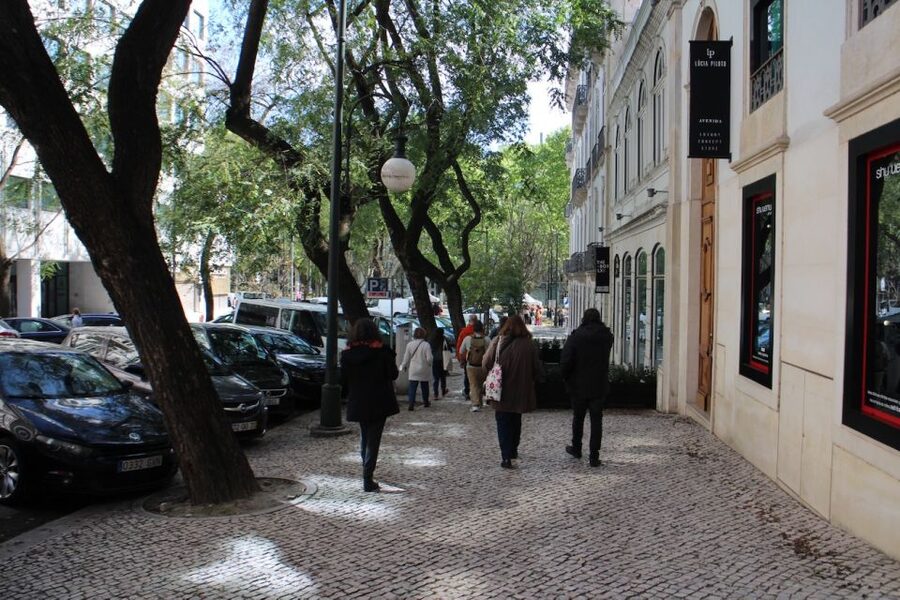
- Avenida da Liberdade and Restauradores Square: Where Big Stories Meet Human Conversations
- Baixa de Lisboa: Learning the City’s Wartime Rhythm
- Chiado and Praça Dom Pedro IV: Refuge, Risk, and the Cafés That Heard Too Much
- Ending at Cais do Sodré: From Espionage Footsteps to a Practical Meal
- Price and Value: Is $170 Worth It?
- Who This Tour Fits Best, and Who Should Skip It
- Should You Book Lisbon in the Shadows of World War II?
- FAQ
- How long is the Lisbon in the Shadows of World War II walking tour?
- What is the price?
- Where do I meet the guide?
- Where does the tour end?
- Does the tour run in bad weather?
- What languages is the tour offered in?
- Is the tour wheelchair accessible?
Lisbon in the Shadows of WWII, the Version You Can Walk Through
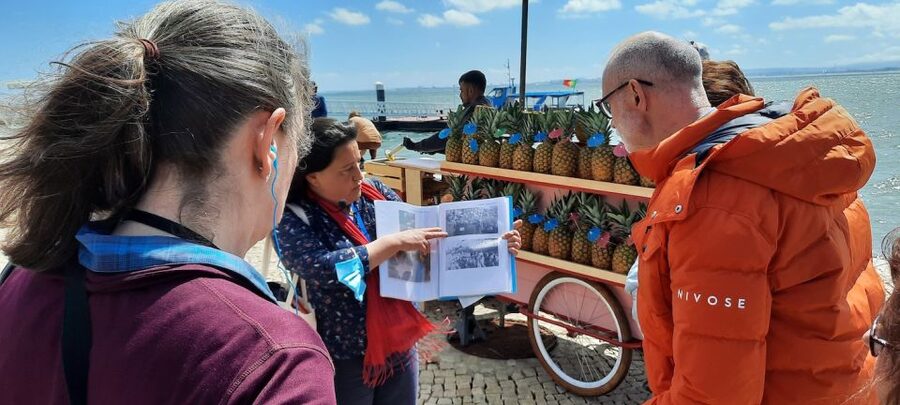
If your idea of history is mostly dates and buildings, this tour will recalibrate that. Lisbon during World War II was not just “neutral,” it was busy, tense, and full of people waiting for permission to survive somewhere else. Portugal stayed out of the war under the Estado Novo dictatorship of António Oliveira Salazar, but the city still absorbed the pressure. Refugees poured in, hoping for visas to leave war-torn Europe, and Lisbon became both a lifeline and a bottleneck.
That tension is the heart of the experience. You’ll hear how the city worked like a waiting room, and how it could also feel like a sad paradise, depending on what stage someone was in. At the same time, Lisbon wasn’t outside the conflict. It was watched. The Portuguese political police kept an eye on people, and spies moved through the city’s everyday spaces.
What makes this worth your time is the balance. You get refugee stories and emotional stakes, but you also get the shadow-world of espionage and why normal conversation could turn risky. This is the kind of walking tour where the sidewalks feel like they have memory.
More Lisbon miradouros linked on foot:
- Lisbon: History, Stories and Lifestyle Walking Tour★ 4.8 · 10,902 reviews
- Best of Lisbon Small-Group Guided Walking Tour★ 5.0 · 4,869 reviews
- Lisbon: Food and Wine Small Group Walking Tour★ 4.9 · 4,082 reviews
- Best of Lisbon Walking Tour: Rossio, Chiado & Alfama★ 4.9 · 2,700 reviews
The Pace, the Group Size, and Why That Matters
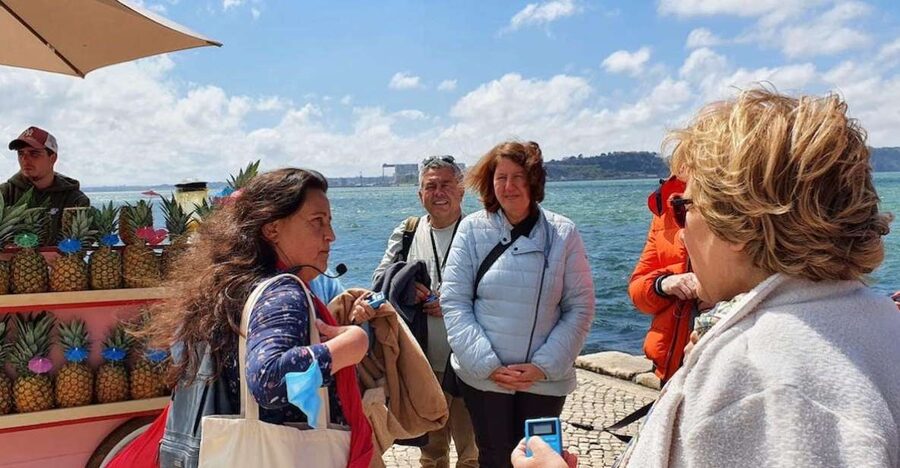
This is a 3-hour walk with a live guide, offered in English and German. It’s run as a small-group tour (up to 12 people), and it’s also described as a private group option, so you can expect a more controlled pace than the big coach-and-herd style.
Why that matters: when the subject is spies, refugees, and political police, the details matter. Leonor Abrantes brings prepared supplemental materials, which helps you keep names and roles straight instead of just absorbing vibes. And a smaller group means you can ask practical questions without feeling like you’re shouting into a crowd.
A note on walking comfort: the tour is marked as not suitable for people with mobility impairments, even though wheelchair accessibility is listed. If you’re dealing with mobility needs, I’d treat that as a prompt to confirm with the provider before you book, not a detail to ignore.
Also, it runs rain or shine. Lisbon weather can be unpredictable, so plan to dress for wet conditions. (No one wants to read secret-police stories while soaking through their shoes.)
Starting at Marquês de Pombal: Leonor Abrantes Sets the Stage
You meet at Praça Marquês de Pombal, in front of Café A Padaria Portuguesa (Praça Marquês de Pombal 12). The tour begins near the once-famous Hotel Aviz area, which helps frame what you’re about to learn. The opening minutes aren’t just orientation. They’re a setup for how Lisbon functioned under Salazar’s rule, and why the city’s neutrality did not mean safety.
From the first stop, you’ll start hearing how Portugal’s government policies shaped refugee movement, and how that same system created openings for espionage. That’s the tour’s basic pattern: people on the move, officials monitoring, and outsiders trying to influence events without drawing attention.
This start point is also practical. Marquês de Pombal is an easy hub to reach, and it gives you momentum for the walk right away.
Parque Eduardo VII: A Photo Stop With Strategic Mood
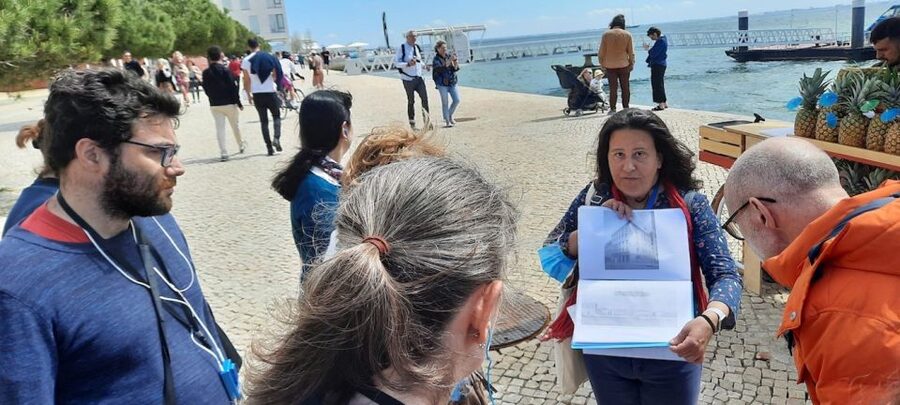
The itinerary includes Parque Eduardo VII for a photo stop and guided tour segment (about 15 minutes). Even without needing fancy explanations, there’s a good reason to begin with a slightly more open space. It gives you a mental overview before you start threading through denser streets and plazas.
Here’s what you should expect your guide to do with that time. The tour theme is Lisbon in the Second World War, when people were constantly calculating risk. A photo stop early on helps you shift from sightseeing mode into “read the city” mode.
If you like history that feels grounded, this is a good transition moment. You’re not stuck doing paperwork in your head. You’re starting to see how neighborhoods link together when the stakes are survival, and when surveillance is part of daily life.
Avenida da Liberdade and Restauradores Square: Where Big Stories Meet Human Conversations
Next come Avenida da Liberdade (around 20 minutes) and then Restauradores Square (about 15 minutes). These are key moments because they’re where the tour’s themes start living side-by-side.
Expect the guide to connect three overlapping realities:
- refugees trying to find aid and visas,
- competing intelligence interests in the city,
- and the sense that Portuguese political police were watching carefully.
This is where the tour becomes more than “what happened.” You’ll start understanding why Lisbon’s social life mattered. In a city under strict oversight, even news over coffee could carry weight. That’s also one reason the tour includes later café stops. It’s not only about food and nostalgia. It’s about how information moved in public.
A practical tip: if you’re the type who likes to take notes, this is where you’ll want your pen ready. The names and nationalities can stack up, and your guide’s prepared materials are most useful when you capture a few anchors.
Other trips that start in Lisbon and end well:

Baixa de Lisboa: Learning the City’s Wartime Rhythm
The itinerary continues into Baixa de Lisboa (about 10 minutes). This part of town is important for the tour’s logic. It’s where you can imagine everyday routines happening alongside extraordinary pressure.
This is where the refugee story takes on a more grounded tone. You’ll hear about humble pensions and compassionate aid organizations that offered support to those seeking refuge. Those details matter because they show that Lisbon’s “neutral” status didn’t operate like a wall. It worked like a system through which people were funneled, helped, delayed, and sometimes protected.
At this stage, ask yourself what you’re learning about the city’s character. The tour doesn’t just tell you Lisbon was important during the war. It shows how the city functioned as a temporary home for those waiting for their lives to change.
Chiado and Praça Dom Pedro IV: Refuge, Risk, and the Cafés That Heard Too Much
Chiado gets about 15 minutes, followed by Praça Dom Pedro IV for about 15 minutes. These are tour segments where the story sharpens.
You’ll be guided through how espionage and refugee desperation could mingle in everyday public life. The guide also brings in the human footprint of the era, including notable figures who spent time in Lisbon either by choice or circumstance, such as Josephine Baker, Alfred Döblin, and Leslie Howard. The effect is simple but powerful: you start recognizing Lisbon as a place where famous names encountered the same underlying pressures as ordinary people.
Now, the tour’s café content is a standout. You’ll visit historic cafés like Café Chave d’Ouro and Pastelaria Suiça. The point is not just that these places existed. It’s that, during wartime, cafés were where people traded news, rumors, and hope. And when spies from opposing factions are nearby, the excitement of war updates can shift into trepidation fast.
One small drawback here: café time can feel like a lot if you’re expecting a traditional “sit and eat” tour. Food is not included, so plan to treat these as story stops. You’ll get the context, and then you can decide what you want to order later.
Ending at Cais do Sodré: From Espionage Footsteps to a Practical Meal
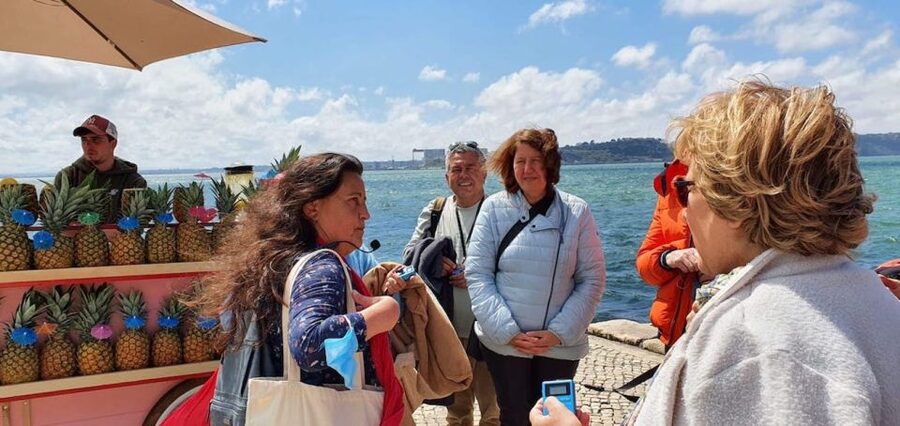
The tour finishes at Cais do Sodré, near the river, and it’s within walking distance of Time Out Market. This matters because it turns your history walk into a real evening plan. When the tour ends, you’re not stuck wondering where to go next. You can grab a snack or light meal nearby.
Cais do Sodré is also a satisfying finish point because it helps you picture Lisbon as a crossroads. During the war, people were constantly trying to move onward, even if the next step took time. Ending near the water keeps that “departure” theme in your mind.
If you want to extend the experience, Time Out Market is a good practical stop. Keep it light. You’ve already done the mental heavy lifting of a 20th-century espionage story.
Price and Value: Is $170 Worth It?
The tour price is $170 per group up to 6, with small-group operation (12 pax cap) and a live guide in English and German. So how does that price play out?
For you, the value depends on two things:
1) how much you want a guided narrative versus reading on your own, and
2) how much you benefit from organized storytelling when the subject is complex.
This is not a generic “see the sights” walk. It’s a focused 3-hour experience built around specific themes: Salazar neutrality under Estado Novo, refugee waiting, Portuguese political police surveillance, and the presence of British, German, and American spies. If those topics are your kind of history, the organized framework is what you’re paying for.
Also, the guide uses supplemental materials, which is a quiet but real quality marker. It usually means fewer confusion moments and more clarity when you’re hearing multiple nationalities, policies, and names in one sitting.
If you’re traveling solo or as a couple, the per-group structure can still work well, but it’s worth comparing your total cost to what you’d pay for other guided Lisbon history walks. If you want a story-driven tour with a strong historical angle, this looks like solid value.
Who This Tour Fits Best, and Who Should Skip It
This tour is a strong match if you like:
- World War II history that feels human, not just chronological,
- espionage stories tied to real places,
- and walking tours where you learn why a city’s politics shaped ordinary lives.
It also makes sense if you want a change of pace from typical Lisbon highlights. Lisbon has plenty of classic sightseeing options. This one leans into the shadows of the 1930s and 1940s, when refugees, visas, and intelligence operations all shared the same streets.
Who should skip it: if you have mobility limitations, it’s marked not suitable for people with mobility impairments. Also, if you strongly dislike wet weather walking, remember it runs rain or shine.
And if you’re expecting food included, don’t. Food and drinks are not included, though you can enjoy a snack or light meal after the tour near Time Out Market.
Should You Book Lisbon in the Shadows of World War II?
Book it if you want a guided walk that treats Lisbon like a living document. The combination of refugee waiting stories, Portuguese oversight, and spy activity makes the city feel layered, not just scenic. And with Leonor Abrantes leading in English and German, plus prepared supplemental materials, you’re likely to leave with a clearer picture of how all those forces intersected in one capital city.
Skip it if you prefer light, casual sightseeing with minimal history. This tour leans serious and political, and it demands steady walking for about three hours. Also, confirm mobility needs first.
If you want one simple decision rule: choose this tour when you’re excited by the idea that a café conversation could be risky, a visa could change everything, and neutrality could still mean surveillance. That’s the Lisbon you’ll meet here.
FAQ
How long is the Lisbon in the Shadows of World War II walking tour?
It lasts 3 hours.
What is the price?
The price is $170 per group up to 6.
Where do I meet the guide?
Meet in front of Café A Padaria Portuguesa at Praça Marquês de Pombal 12.
Where does the tour end?
The tour ends at Cais do Sodré, near the river, and it’s within walking distance of Time Out Market.
Does the tour run in bad weather?
Yes, it takes place rain or shine.
What languages is the tour offered in?
The live tour guide offers English and German.
Is the tour wheelchair accessible?
The activity is listed as wheelchair accessible, but it is also marked as not suitable for people with mobility impairments. If this affects you, check with the provider before booking.
Fresh across the seven hills
- Full-day Private Tour: Fátima Sanctuary, Batalha, Nazaré, Óbidos
★ 5.0 · 6 reviews - Porto Private Tour from Lisbon
★ 4.5 · 6 reviews - VIP transfer from the airport to Lisbon hotels
★ 5.0 · 6 reviews - Lisbon Photoshoot: Capture Your Adventure
★ 5.0 · 6 reviews - Lisbon: Romantic Sunset Cruise With Wine & Portuguese Tapas
★ 5.0 · 6 reviews - Arrábida Wine Tour – 3 Wineries, Traditions & Views from Lisbon
★ 4.5 · 6 reviews - Lisbon: Sintra, Pena Palace, Belém Tour + sunset Boat Cruise
★ 5.0 · 6 reviews
Walking Tours, compared.
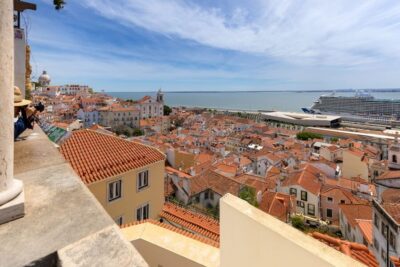
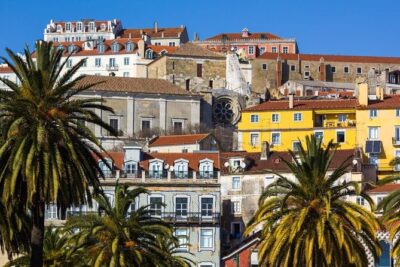
Best of Lisbon Small-Group Guided Walking Tour
Read our review →
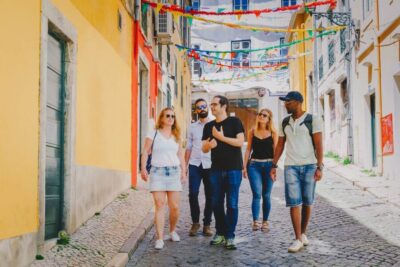
Best of Lisbon Walking Tour: Rossio, Chiado & Alfama
Read our review →
Sintra & Cascais Day Tour with Pena Palace Entry and Gardens Walk
Read our review →
Lisbon Roots – Small group Food & Culture Walking Tour w/tastings
Read our review →
Starter Walking Tour to the highlights in German
Read our review →Browse the lists this tour appears in